
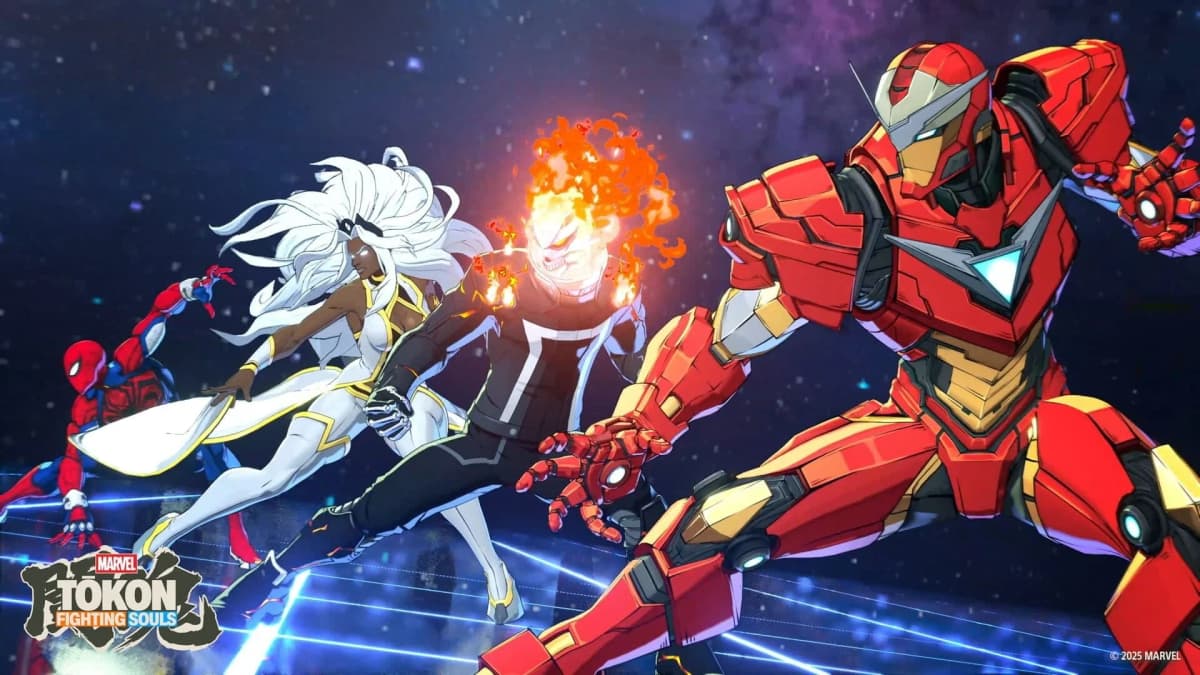
The fastest way to fix Marvel Tōkon: Fighting Souls on Steam is to diagnose the failure before changing graphics settings: verify the installation, repair the Easy Anti-Cheat prerequisites if the game hangs on a black screen, complete shader warm-up if it reaches the menus, then remove overlay and display conflicts. Post-launch PC updates have reduced CPU load and fixed some frame-drop behavior, but the remaining issues still vary by setup.
Keep the tests in this order. A black screen before the menu is usually a startup, anti-cheat, or display-mode problem. Repeated hitches once a match begins are more likely to be shader compilation, Frame Generation, overlays, or frame pacing. Lowering every graphics option first can hide the useful clue and waste time.
Table of Contents (9)
Identify the problem before changing anything
| What happens | Most likely cause | First test to run |
|---|---|---|
| The game opens to a permanent black window | Damaged files, Easy Anti-Cheat prerequisites, overlay hook, or borderless display conflict | Verify Steam files, then test with recording and overlays disabled |
| The menu loads, but the first matches hitch or pause briefly | Shader compilation or shader warm-up being skipped | Run shader warm-up fully, then test in training mode for several minutes |
| Frame rate drops hard during busy effects or tag sequences | Frame Generation, overlay conflict, CPU load, or uneven frame pacing | Disable Frame Generation and all capture tools before trying a 60 fps cap |
| The screen goes black when changing modes or resolutions | Borderless fullscreen or resolution-switching conflict | Use exclusive fullscreen and keep one stable resolution while testing |
A match that runs badly for its first few minutes but settles down after shader warm-up points to compilation behavior. A game that never reaches the menu needs the startup checks below instead; shader warm-up cannot solve a launch that fails before the game can render its interface.
1. Update the Steam build and restart Steam
Start from the current game build. Marvel Tōkon: Fighting Souls received PC-focused updates shortly after its August 6, 2026 Steam launch, including fixes aimed at CPU usage, stuttering, and frame drops. Testing behavior from an older launch-week build can send you toward a workaround that is no longer necessary.
- Open
Steam → Library → MARVEL Tōkon: Fighting Souls → Properties. - Allow any pending update to complete.
- Close Steam completely, reopen it, and launch the game once before changing settings.
This takes roughly two to five minutes when no large update is waiting. If the issue began immediately after a patch, move straight into file verification rather than assuming the patch itself caused a permanent performance regression.
2. Verify Steam files before touching performance settings
File verification is the cleanest first repair because it can replace missing or corrupted game data and restore packaged prerequisite files. It is especially important for a black screen, a hang before the title screen, or a launch that worked before an update.
- In Steam, right-click MARVEL Tōkon: Fighting Souls in your Library.
- Select
Properties → Installed Files. - Choose
Verify integrity of game files. - Wait for Steam to finish, then launch the game once with overlays turned off.
Verification can take around five to 20 minutes depending on the drive and installation size. Let it finish even if Steam reports only a small repair. Skipping this step and jumping directly to resolution, DLSS, or controller changes leaves a broken prerequisite installation untouched.
3. Repair the Easy Anti-Cheat prerequisite path for black screens
If the game still stops on a black screen after verification, check its prerequisite files. Easy Anti-Cheat startup behavior has been linked to failed launches and black windows on affected PC setups, particularly when the game hangs before its menus appear.
- In Steam, right-click the game and select
Manage → Browse local files. - Look for a folder named
Prerequisites, an Easy Anti-Cheat folder, or a similarly named setup directory. - Use the targeted repair route only if you can identify the exact
eos_eac_setupfolder referenced by the workaround. - Delete that
eos_eac_setupfolder, then immediately runProperties → Installed Files → Verify integrity of game filesagain.
The follow-up verify matters: Steam should restore the missing setup folder and its files. Do not delete the whole game directory, random executables, or unrelated folders in an attempt to force a repair. That turns a contained anti-cheat test into a full reinstall without proving what caused the black screen.
Allow roughly five to 10 minutes for this step, then reboot the PC and retry the game. If it finally reaches the menu, go directly to shader warm-up before judging match performance.
4. Complete shader warm-up before testing match performance
When the game offers a shader warm-up prompt, let it complete. This is the key step for launch stutter that appears as small freezes, sudden frame-time spikes, or a pause the first time a character effect appears. PC shader compilation can occur while you play when the warm-up is skipped or incomplete, which is why the first match can look much worse than later matches.
- Enable Shader Warm-Up whenever the game presents the option after an update.
- Leave the game in the foreground while it runs; avoid alt-tabbing during the process.
- After it completes, enter training mode or another offline mode.
- Play for several minutes before deciding whether the stutter remains.
Shader warm-up usually takes five to 15 minutes, with a longer first run possible on some systems. Test the same character effects and busy tag situations more than once. Hitches that fade after the warm-up and a few minutes of offline play strongly suggest that shader compilation was the main issue. Hitches that repeat every round after the warm-up need the next checks.
5. Disable overlays, recording, and capture hooks together
Run one clean test with every non-essential overlay and recording tool closed. These programs can conflict with anti-cheat startup and modern rendering features, producing either launch instability or uneven frame pacing. The clean test is more useful than disabling one tool at a time while several others remain active.
- Disable Steam Background Recording or Steam Game Recording.
- Disable the Discord overlay.
- Disable the NVIDIA App overlay.
- Close Medal and other capture software.
- Close monitoring or recording tools that place an on-screen display over the game.
Launch the game after closing them, complete shader warm-up if it appears, then test an offline match. If the game becomes stable, re-enable only the tools you actually use, one at a time, and retest. That prevents an overlay conflict from returning without a clear culprit.
6. Turn off Frame Generation and use exclusive fullscreen
Frame Generation can make an unstable baseline harder to read. Disable it while troubleshooting, even if you keep your preferred upscaling option enabled. The goal is a stable render path first; the extra generated frames are only worth restoring after matches run consistently without freezes or black-screen behavior.
- Open the game’s graphics or display settings.
- Turn Frame Generation off.
- Change from borderless mode to exclusive fullscreen.
- Keep the same resolution for the test instead of repeatedly switching resolutions.
- Restart the game after changing the display mode, then test a training match.
Exclusive fullscreen has helped affected players avoid the black-screen and frame-pacing problems that can occur during borderless resolution switching. This is also the best display-mode test when the game appears to launch but the monitor stays black or loses signal during startup.
7. Update the GPU driver, then test a 60 fps cap
Update the GPU driver after the game-side checks, then retry with the game’s display settings kept simple: no Frame Generation, exclusive fullscreen, and overlays disabled. A driver update is most useful after the install has been verified and shaders have been warmed, because it removes another variable without obscuring the result.
For NVIDIA users still seeing irregular frame pacing, set a manual 60 fps cap in NVIDIA Control Panel for Marvel Tōkon: Fighting Souls. This should be a later test, not the first fix. A fixed 60 fps target can make the game’s frame delivery more consistent on setups that continue to stutter after shader warm-up and overlay removal.
Keep the cap only if it improves the same offline test you used earlier. If it changes nothing, remove the cap and avoid stacking more driver overrides on top of it.
When to stop troubleshooting and protect the refund window
Use the sequence above as a practical stop point: current Steam build, verified files, targeted anti-cheat repair where needed, completed shader warm-up, no overlays or recording tools, Frame Generation disabled, exclusive fullscreen, and an updated GPU driver. If the game still opens to a black screen or remains severely unstable after that clean test, treat it as a PC-specific compatibility issue rather than spending the rest of the store refund period on repeated reinstalls and random setting changes.
FinalBoss // Gear
Level up your setup
01Graphics cardson Amazon→02Gaming laptopson Amazon→03High-refresh gaming monitorson Amazon→04Discounted game keyson Kinguin→
Affiliate links · As an Amazon Associate, FinalBoss earns from qualifying purchases.
Want to Level Up Your Gaming?
Get access to exclusive strategies, hidden tips, and pro-level insights that we don't share publicly.
Ultimate Guide Strategy Guide + Weekly Pro Tips