
Tag fighters have always had the same door problem: you need three or four characters at a competent level before you’re allowed to have fun. Marvel Tōkon solves it in one line of design. Every character on your team shares one health bar. No fresh body to swap to, no red life ticking back up on the sidelines, no stack of separate meters in the corner.
People are calling that a simplification. It isn’t. A shared bar kills the recovery-tank strategy where you park a hurt character in the back and stall, stops a 4v4 running four times as long as a normal match, and means one character you actually know is enough to be competitive. The other three are tools, not homework. That’s not lost depth, it’s depth you add voluntarily, one character at a time, which is how anybody actually learns a fighting game.
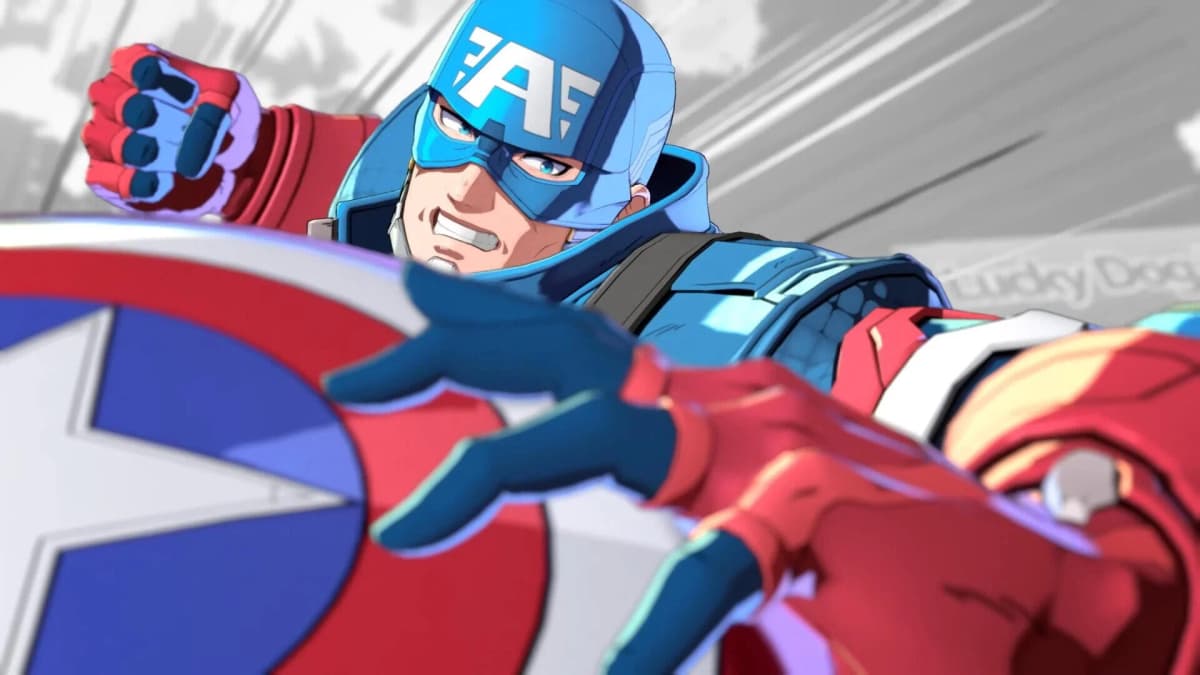
The build order writes itself. Get comfortable with Spider-Man — high-low mix-ups, a couple of bread-and-butter routes, enough web-zip movement to stop being a stationary target — and go online with that alone. Hit his ceiling and Blade is worth learning, because he converts a hit into more damage than Spidey can. Then Magneto slots in as an assist purely to cash out the low half of the mix-up.
Table of Contents (6)
The Assist System Is Genuinely Fussy
This is where Tōkon stops being friendly. A match doesn’t start as a 4v4 at all — you begin with two of your four available and unlock the rest mid-fight: land a light auto combo, hit the opponent near the corner for a stage transition or wall splat, or lose a round. The unlocks aren’t just bodies. Each one raises your total health, adds a bar to the Assemble meter, and strengthens the universal overhead.
Before the match you slot your four into positions — leader, shooter, vertical, assault — and those decide what assist you get. Leader is your current point character, shooter throws a projectile, vertical covers the airspace above you, assault is where the nastiest assist goes. Call any of them in neutral and it’s free. Call one after landing a hit, to extend a combo or cover a blocked move, and you don’t get that character’s assist at all — you get a universal dash attack, and it costs a bar of Assemble.
The timing windows are tight enough that a call slightly early or late simply doesn’t come out. The raw tag rules are stranger: some directional tags into a specific teammate just don’t function, while a neutral tag into that same character works fine. Calling an assist out of blockstun takes an age. None of it is broken, all of it has to be memorised, and it’s why the first few hours feel like the game is fighting you.
What makes it worth eating is the raw tag delay. There’s a beat before a tag-out completes, and you can throw a move during it, so your outgoing character’s attack still covers the screen as the new one walks in, for free. Cancel a normal into a tag-and-special and any move on your team becomes an assist that isn’t the pre-canned one. Compared to 2XKO, where you flip to your assist almost at will, Tōkon’s active tag is on a leash — and given that Peni Parker fills half the screen with drones, Magneto litters the field with junk that powers up his attacks, and Magik drops fire pillars across a quarter of it, the leash is right. Even restrained, this gets hard to read.
Twenty Characters Is Not the Problem
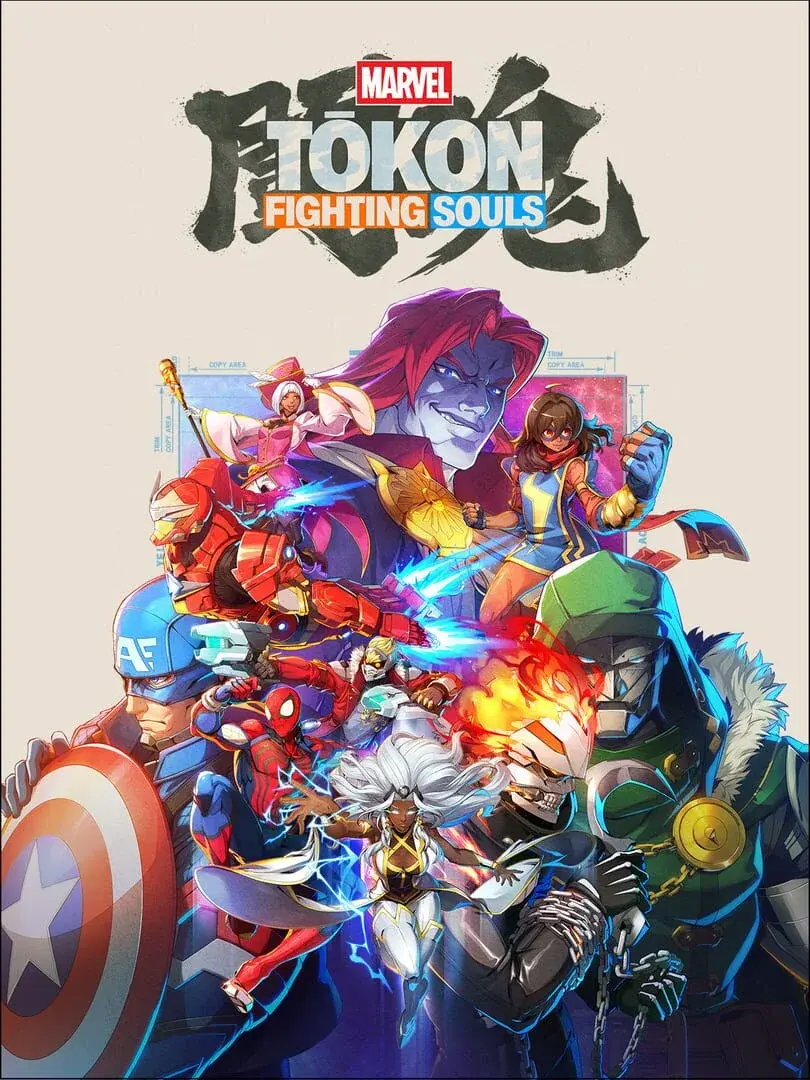
The launch roster is twenty, arranged as five canonical teams of four: the Fighting Avengers (Captain America, Iron Man, Hulk, Black Panther), the Unbreakable X-Men (Storm, Wolverine, Magik, Danger), the Amazing Guardians (Spider-Man, Star-Lord, Ms. Marvel, Peni Parker), the Knights of Doom (Doctor Doom, Magneto, Green Goblin, Carnage) and the Samurai Outriders (Ghost Rider, Blade, Deadpool, Loki). The Champion, the game’s antagonist, unlocks as a twenty-first once you finish an Episode. Four more are scheduled across the Year 1 pass.
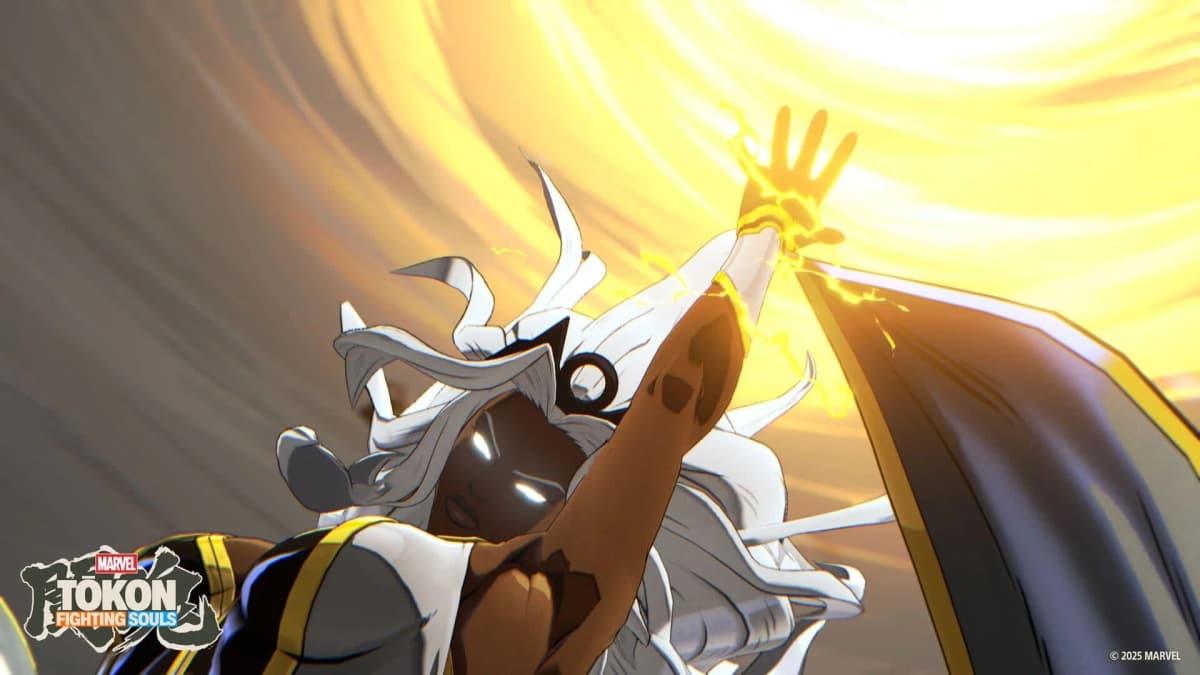
The line I keep hearing is that twenty is too thin for a 4v4 fighter. I don’t buy it. The real constraint isn’t headcount — it’s that most players will know one character properly and slot the other three by function. What you need is twenty fighters who each do something nobody else does, and that’s what’s here: Storm dragging you half a screen with a wind command grab, Deadpool’s kit built almost entirely out of other studios’ special moves as a joke aimed at the FGC, Green Goblin fighting on and off the glider, Danger — the Danger Room, as a person — running AI trap setplay.
The real gap isn’t the number, it’s the shape. Four X-Men in the entire game, no Gambit, no Nightcrawler — two of the first names anyone reaches for when you say “Marvel fighting game.” That’s a DLC-sized hole, not a design flaw.
Episode Mode Is a Real Story Mode
Each team gets its own chapter, fully voice acted, presented as motion comics with a different artist per episode — Hiro Mashima of Fairy Tail and the artist behind My Hero Academia: Vigilantes among them, taking passes at Captain America and Spider-Man. Kieron Gillen writes all five. The framing is thin on purpose: an entity called the Champion invites five teams to a tournament and promises the winner a wish, which is Mortal Kombat with a Twisted Metal ending. What saves it is that Gillen writes to the cast he’s handed. The Amazing Guardians chapter is Peter Parker as reluctant mentor to Ms. Marvel while stopping Star-Lord setting everything on fire; the X-Men one is Storm, Magik and Wolverine doing the hated-by-the-people-they-save thing. It never gets past the surface, but there is a surface.
All five runs around ten hours, each episode an hour to ninety minutes with a proper boss at the end, paying out colours and skins for the teams you beat. Read it as a five-volume miniseries you happen to punch through.
All-Star Arena Is the Mode Nobody Is Talking About
All-Star Arena is a hundred-fight survival run with a rogue-lite spine, and it’s the best single-player thing in the box. Every four KOs you get a boss; how you fought decides how many cards you draw, and ending on a super earns extra ones. The cards are support souls — movement speed, projectile defence, throw damage, better starters — and duplicates level up, so by fight forty you’re a specific kind of stronger. Progress banks every five rounds, so it isn’t survival in the purist sense, and a full run drags. It’s also where character colours seven and eight live, the best skins in the game.
Arcadia Rumble is the odd one out: eight players and their custom avatars roaming a big lobby across five alternating rounds, collecting stars by KOing each other, winning timed events, and taking the 4v4 fights that cap each cycle. It’s City Trial from Kirby Air Riders wearing a fighting game. Silly, fine, and almost nobody will live there.
The Best Tutorials in the Genre, Full Stop
There’s a mechanics primer with playable lessons, a guide for every character’s kit, and combo explainers that teach the practical version — how to convert off Spider-Man’s overhead, what to do when you land a hit with zero Assemble. Then the free-form combo challenges, which hand you one required move and a damage number and let you solve it however you like, and the per-character level-up missions, which are outright puzzles: start with a jab, include a super, here’s fifty meter and one Assemble bar, and no, you can’t raw tag your way out. There’s no playback to copy. Add replay search, replay takeover and training presets and this is a game that wants you to get better, at launch, without a patch.
Great Netcode on PS5, a Broken Launch on PC
Marvel Tōkon: Fighting Souls launched 6 August 2026 on PS5 and PC at $59.99, with cross-play. On PS5 the online is excellent — ranked and casual just work, and even against opponents at 150ms you get a steady two rollback frames. Input delay has dropped a full frame since the betas, which puts it near the top of the console field; 120fps support would push it further. The only PS5 annoyance is a very Arc System one: pile too many challengers onto a single virtual arcade machine in a lobby and it stops functioning, so you go find another.
PC was a mess for the first week. It wasn’t holding 60fps on a lot of rigs, and because nothing benchmarks you before you queue, those stuttering machines dragged their opponents down too — matches running at a fraction of normal speed against people whose connection showed green. A patch a few days after release took it from roughly a third of matches playable to about two-thirds: progress, not a fix. Every fighting game shipping today should benchmark PC players before ranked, and this is the argument for it.
It’s an 8.5 because the shared life bar and the tutorial suite make this the most welcoming tag fighter anyone has built without gutting its depth, minus half a point for a PC launch that broke other people’s matches as well as its own.
Marvel Tōkon: Fighting Souls
One life bar across four fighters is the smartest thing any tag fighter has done in years, and it’s why you can be genuinely competitive here knowing one character properly. The assist rules are fussy and the screen gets loud, but the tutorials teach you out of both, Episode Mode is a real story mode, and All-Star Arena is a rogue-lite worth grinding. On PS5 the online is near the top of the genre. On PC at launch it wasn’t, and that’s the half point.
- Shared life bar makes one-character mains viable
- Combo-puzzle tutorials with no playback to copy
- Twenty fighters who all do something nobody else does
- Five Gillen-written motion-comic episodes, one artist each
- Two rollback frames at 150ms on PS5
- Assist and raw tag rules are needlessly finicky
- PC launch dragged opponents’ matches down too
- No pre-queue PC benchmark, and it needs one
- Four X-Men, no Gambit, no Nightcrawler
- Slow matchmaking; lobby arcade machines lock up
Buy it on PS5 without thinking about it. On PC, check that a patch has landed for your hardware first, then buy it, because everything under the launch mess is the best tag fighter in years.
FinalBoss // Gear
Level up your setup
01Top-rated gaming headsetson Amazon→02High-refresh gaming monitorson Amazon→03Gaming chairson Amazon→04Discounted game keyson Kinguin→Affiliate links · As an Amazon Associate, FinalBoss earns from qualifying purchases.
Want to Level Up Your Gaming?
Get access to exclusive strategies, hidden tips, and pro-level insights that we don't share publicly.
Ultimate Reviews Strategy Guide + Weekly Pro Tips