
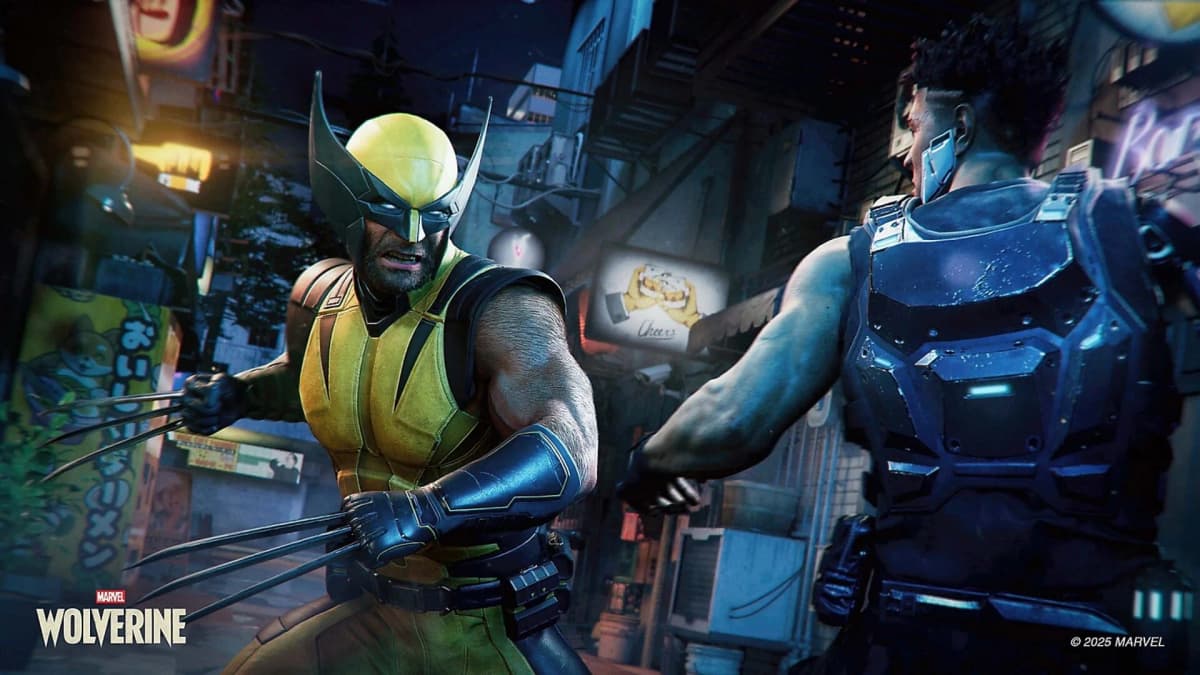
Marvel’s Wolverine has two very different arguments wrapped into one loud online backlash. One concerns Insomniac Games choosing a mostly linear, curated mission structure for Logan’s next adventure. The other concerns PlayStation’s bleak future for physical releases. I think Insomniac is right on the first issue and deserves credit on the second, but neither answer gives the studio a free pass.
Mike Daly has defended Wolverine’s structure as “much more curated and linear mission design,” built around a tighter and more grounded cinematic action game rather than a connected open world. Good. That is the correct call for Wolverine. The character works best when the player is under pressure, trapped in ugly situations, forced to survive through violence, and pushed from one bad decision into the next. Logan does not need a giant map full of icons begging for another three-minute diversion.
At the same time, a linear game has fewer places to hide. Once Insomniac removes the sprawl, every corridor, pursuit, arena, cutscene transition, and combat encounter has to carry real weight. Marvel’s Wolverine will live or die by whether that structure creates momentum or simply directs players down a prettier hallway.
Table of Contents (6)
A Curated Wolverine Is the Sensible Choice
There is a strange assumption behind some of the reaction that every major superhero game must be an open-world game. That expectation has become so automatic that a trailer shot of Logan chasing an enemy through explosions and gunfire gets treated as proof of creative failure. I see the opposite. A Wolverine game should have the confidence to put its hero on a path and make that path hurt.
Insomniac already knows how to build a superhero game around movement, spectacle, and a large connected city through Marvel’s Spider-Man. Daly has said Wolverine is not radically different in its overall mission philosophy, but the major change is the more curated and linear design. That distinction matters. Spider-Man’s fantasy is momentum, height, and fluid escape routes. Wolverine’s fantasy is closing distance, absorbing damage, and refusing to stay down after the fight has become ugly.
Trying to give both heroes the same kind of world would be lazy design disguised as player freedom. Logan should feel contained when the story demands it. He should be hunted through tight spaces, shoved into enemy compounds, dropped into hostile locations around the globe, and made to fight his way through consequences. A globe-trotting adventure can still feel expansive without turning every destination into a checklist district.
That is why I am on Insomniac’s side when it comes to the basic decision. The studio is making a combat-forward Wolverine game, and a focused mission structure gives it a better chance to control pacing, tension, and story escalation. The alternative would be a bloated map where Logan spends too much time collecting upgrades between moments that are supposed to feel dangerous.
Linearity Creates a Higher Standard, Not an Excuse
Here is where Insomniac’s defense starts to get demanding. Linear design works only when the game continually gives the player new reasons to engage with the route in front of them. If Wolverine becomes a repeated loop of walk forward, follow a traversal marker, clear an arena, trigger a set piece, and watch Logan growl through another scene, the complaints about scripted pacing will be completely justified.
The trailer footage has already put some nerves on display. Guided traversal cues, a straight-line chase through explosions, the tone of the Wolverine and Sabretooth interaction, and the Giant Sentinel encounter have all drawn scrutiny because players are looking for signs of a game built more around presentation than play. That concern is fair. Wolverine cannot coast on the fact that a giant robot is visually impressive. A boss fight has to make players use the systems in ways ordinary enemies do not.

Insomniac has promised roughly a comparable mission count to its Spider-Man titles, but it has not put a final campaign length or precise mission number on the table. That leaves the actual test exactly where it should be: mission quality. The game needs encounters with different rhythms, spaces that encourage aggression and improvisation, and enough enemy behavior to stop every fight from becoming a disposable pile of bodies.
A linear mission can be unforgettable when it turns the player’s limited options into pressure. It becomes exhausting when the player can see the invisible hand directing every movement. That difference will matter more than the size of Wolverine’s map because Wolverine is deliberately giving up the easy illusion of freedom.
Rage and Healing Give Logan the Right Combat Identity
The strongest reason to believe Insomniac understands this assignment is the Rage system. Wolverine has a traditional health meter, but his survival is tied to Rage. As long as Rage remains available, Logan can heal, recover, and keep fighting. When health hits zero with no Rage left, the game sends the player back to a checkpoint.
That is a smart foundation because it frames healing as part of aggression rather than a passive safety blanket. Rage builds during combat, changes when the meter reaches its maximum, and enables near-instant takedowns when players pull both triggers. Using Rage drains that resource, but continuing to kill extends the rampage. The system asks players to commit to Wolverine’s most important trait: he survives by moving toward danger, not by waiting for danger to pass.
I want that system to be the center of the game’s mission design. Give me fights where spending Rage early saves a desperate encounter, then create another where holding it for a brutal takedown chain makes more sense. Put Logan in environments where his healing factor keeps him alive long enough to turn a losing battle. Force players to make nasty decisions under pressure instead of handing them an invincible berserker button.
If Insomniac gets that balance right, the linear structure becomes an advantage. The studio can build encounters around exact emotional beats: panic, recovery, escalation, fury, aftermath. That is a far more interesting promise than an open-world Wolverine whose healing factor turns every optional street fight into meaningless background noise.
Logan’s Story Needs Focus More Than Comic-Book Tourism
Wolverine has almost 200 years of history to pull from, and Insomniac is handling that history through original storytelling rather than lifting a single comic storyline wholesale. That choice also fits the character. Logan’s past should feel like a wound the player keeps reopening, not a museum exhibit where familiar faces appear because somebody needed a trailer moment.
The setup already gives Insomniac plenty to work with. Team X brings Wolverine, Sabretooth, and Mystique together under Nathaniel Essex, with Bolivar Trask’s anti-mutant movement creating a larger threat around them. Jean Grey is also part of the game’s wider narrative orbit. Essex carries obvious weight for anyone who knows his connection to Mister Sinister, but the real challenge is making those pieces serve Logan instead of burying him under continuity.
A more directed campaign can help here too. Wolverine does not need to become a tour bus for Marvel references. He needs scenes that make his history feel immediate, personal, and damaging. The game’s story has every reason to be leaner and nastier than the usual superhero power fantasy. Insomniac should protect that tone even if it disappoints players who wanted a broader sandbox stuffed with familiar names.

The Physical Disc Answer Is a Real Win
Insomniac handled the physical-media argument far better than it handled the conversation around mission structure, largely because the answer was concrete. Marvel’s Wolverine will have a physical PS5 edition with an actual disc in the box. The full campaign will be playable offline from that disc at launch. A day-one patch exists for additional polish and bug fixes, but the patch is optional for access to the game itself.
That deserves praise. A disc in a plastic box that requires a massive download before the game can even function has become a depressing ritual for players who care about ownership, preservation, slow internet connections, and the basic ability to play what they bought years later. Insomniac has avoided that trap with Wolverine.
The broader anger is still understandable. Sony plans to cease production of physical games for PlayStation platforms in January 2028, and Wolverine is arriving under the shadow of that decision. Players were always going to use one of Sony’s biggest upcoming PS5 releases as a place to vent. They are worried about a future where first-party games become harder to preserve, resell, lend, collect, or access without depending on an online store.
Insomniac cannot reverse PlayStation’s larger policy by itself. It can make sure Marvel’s Wolverine is not sacrificed to it, and that is exactly what the studio has done. The studio also has at least 25 Wolverine suits planned, with 27 suit slots visible in the game’s pause-menu interface. That kind of extra content means more when the base game itself is complete on the disc instead of held hostage behind a mandatory connection.
There is still no Collector’s Edition, only standard and digital deluxe editions, which will frustrate the audience that wanted a premium physical package. I can live with that. A fully playable disc matters far more than an expensive statue gathering dust beside a code that may become useless down the road.
Insomniac Must Let the Game Do the Defending
Daly has described online criticism as a “good problem” because it means fans care deeply. That is true, up to a point. Passionate players can turn every frame of footage into a courtroom exhibit, and social media rewards the hottest possible interpretation of any trailer. Still, calling the backlash passion does not make every criticism empty.
Insomniac has made two clear promises. The first is a tighter, more curated Wolverine built around combat, Rage, healing, and immediate story momentum. The second is a physical PS5 game that works offline from the disc on day one. The studio has already delivered the stronger answer on physical media. Its linear design argument remains unfinished until players can feel the full rhythm of those missions for themselves.
My verdict is simple: Insomniac chose the right direction for Marvel’s Wolverine, and it should stop acting as if “open world” is the default reward for every famous hero. A focused Logan game has more potential than a bloated one. But focus is a contract. Every mission has to justify the lost freedom with violence, pace, character, and encounters players remember after the credits. If Insomniac delivers that, Wolverine’s linearity will become one of its best decisions rather than the complaint that swallowed the game whole.
FinalBoss // Gear
Level up your setup
01Top-rated gaming headsetson Amazon→02High-refresh gaming monitorson Amazon→03Gaming chairson Amazon→04Discounted game keyson Kinguin→
Affiliate links · As an Amazon Associate, FinalBoss earns from qualifying purchases.
Want to Level Up Your Gaming?
Get access to exclusive strategies, hidden tips, and pro-level insights that we don't share publicly.
Ultimate Gaming Strategy Guide + Weekly Pro Tips