
Table of Contents (7)
Marvel’s Wolverine has a clear replay plan
Marvel’s Wolverine is built around a linear campaign, then gives players three ways to stay with it after the credits: Mission Replay for specific chapters, New Game Plus for a full second run with progression preserved, and Nightmare Doors for optional challenge spaces. The structure is focused rather than open-ended. There is no open-world Manhattan-style map to endlessly clear, and the story does not split into alternate character paths.
That is a sensible fit for Logan. Insomniac is building a tightly authored, violent action game for PlayStation 5, launching September 15, 2026. Its long-tail value comes from reworking combat encounters, experimenting with unlocked tools, cleaning up progression items, and taking on harder optional fights — not wandering a sandbox between story missions.
Replay systems at a glance
| System | What it does | Best use | What it does not do |
|---|---|---|---|
| New Game Plus | Starts a complete new campaign while retaining unlocked loadout and progression. | Replaying the story with suits, abilities, and NG+-only adaptations available. | Change the campaign into a branching story mode. |
| Mission Replay | Returns players to individual missions. | Collectible cleanup, optional objectives, score-focused runs, and revisiting favourite combat sequences. | Create a free-roam world between missions. |
| Nightmare Doors | Optional challenge spaces separate from the main campaign path. | Testing combat mastery and adding variety after story progress. | Turn Wolverine into a fully open-ended endgame game. |
| Campaign structure | A linear, story-driven AAA action game. | A paced first playthrough with authored set pieces and character development. | Offer divergent narrative routes or multiple origin-story variations. |
New Game Plus is the real second-run mode
New Game Plus is available on day one, which matters more than it sounds. Too many large action games treat NG+ as an afterthought that arrives months later, once the launch audience has moved on. Wolverine’s version is part of the launch package, and it carries forward previously unlocked loadout options and progression.
That means the second campaign run has a different purpose from the first. Players can equip whichever unlocked suit they prefer, bring established progression into early encounters, and access some adaptations reserved for NG+. The important qualifier is “some”: the confirmed design points to a modified replay rather than a wholesale remix with alternate missions, new story branches, or a different version of Logan’s arc.
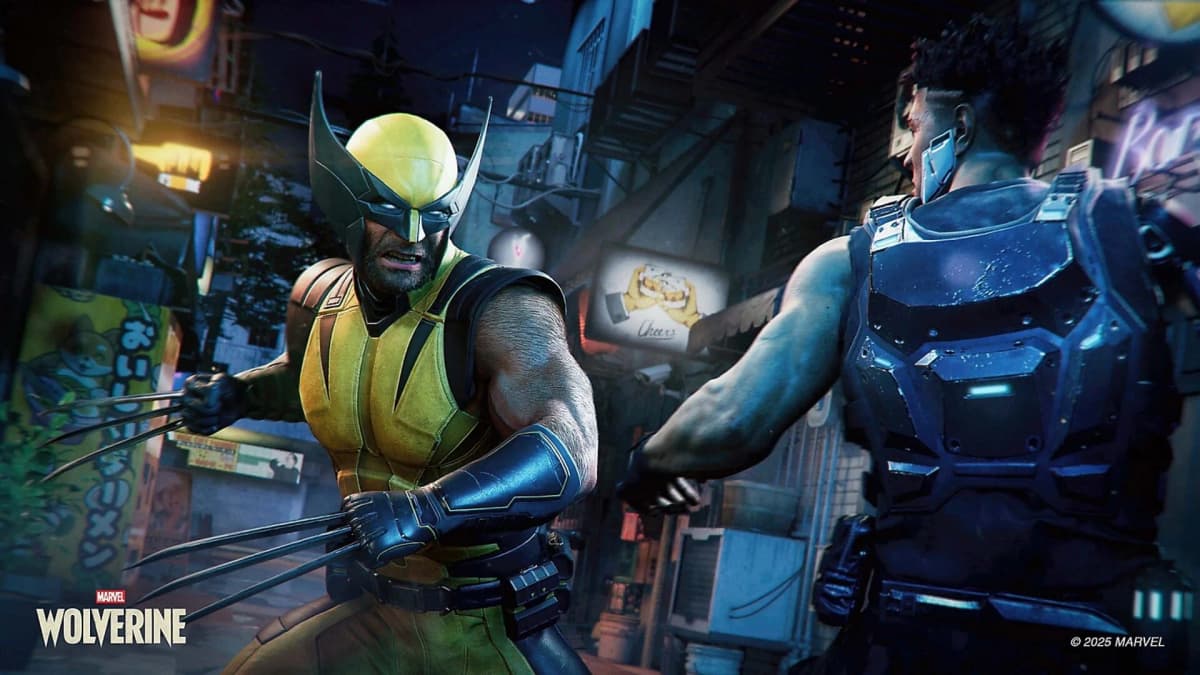
The appeal will live or die on how satisfying Wolverine feels once players understand his systems. Successful combos build rage, while dealing damage and defeating enemies keep it flowing. Rage diminishes when combat goes quiet, so this is not a meter designed for passive hoarding. It rewards forward momentum and clean aggression.
There are three Rage Tiers. At Rage Tier 2, Logan gains access to Last Stand, a recovery mechanic that can restore health while he is fully downed. Rage Tier 3 opens immediate executions against weaker enemies and enables critical strikes. Berserker moments lean into a simple, brutal instant-kill loop built around repeated trigger inputs. That combination gives a loaded NG+ character a meaningful reason to revisit early missions: the player has more options, but enemies and encounter layouts remain familiar enough to expose whether those options are being used well.

Mission Replay solves the completionist problem
Mission Replay is the most practical feature in the entire package. Marvel’s Wolverine scatters collectibles and upgrade materials through its levels. Material crates supply raw materials for suit unlocks, while whiskey bottles contribute to Wolverine’s progression. Without chapter replay, a missed item in a late-game level can turn into the kind of cleanup grind that makes a second playthrough feel mandatory for the wrong reason.
Instead, players can return to a specific mission, collect what was missed, complete optional goals, or replay a combat section without touching the rest of the campaign. That is the right division of labour. Mission Replay handles targeted work; NG+ handles the full narrative replay.
It also gives the game a more useful post-campaign rhythm. A player who wants every suit can revisit the chapters containing missing materials. Someone more interested in combat can isolate a favourite encounter and test a different Special Technique setup. These techniques can be unlocked and assigned to directional or face buttons while holding L2, giving the combat kit room to evolve beyond basic claws, counters, and rage management.
Nightmare Doors add challenge without stretching the game sideways
Nightmare Doors are optional trial spaces designed to add challenge and variety around the campaign. They are the feature most likely to matter to players who want more than collectible cleanup but do not need another full story run immediately.
The name also tells players what role these encounters are meant to fill. They are a combat test, not a promise of a second open-ended map. Wolverine’s combat has enough moving pieces to support that format: rage generation, tier-based buffs, Last Stand recovery, executions, critical strikes, parry-driven pressure, and mapped Special Techniques. A demanding optional arena or encounter can put all of those systems under stress far more efficiently than another sequence of scattered map icons.
For players who enjoy mastery runs, Nightmare Doors should sit naturally after the campaign and alongside Mission Replay. First, learn the basics during the story. Then replay selected missions to refine a loadout. Finally, take that understanding into optional challenges built to punish sloppy rage management and wasted recovery opportunities.

The story has firm boundaries, including Logan’s origin
Insomniac is not using this game to retell Wolverine receiving adamantium. Logan’s origin is a boundary rather than the campaign’s central mystery, leaving the narrative room to work with the man he has become and the conflicts in front of him.
The story involves Team X, assembled by Nathaniel Essex, attempting to rescue Essex from Bolivar Trask. Trask also fields the Sentinel Prototype, a machine built to identify and destroy mutants. Jean Grey enters the picture as well, with the game developing her relationship with Logan across their interactions.
That setup suits a linear structure. Story missions can control the pace of Logan’s connections, revelations, and confrontations without forcing the narrative to accommodate player-made detours or branching outcomes. Replay systems then let players return to the action around those fixed story beats without pretending the game has a different plot waiting behind a menu choice.
Who gets the most value from this structure
Marvel’s Wolverine is best suited to players who enjoy completing a strong action campaign, then improving their performance inside a defined set of missions. The day-one NG+ option supports a second story run with more tools. Mission Replay protects players from having to restart the game for one missed crate or whiskey bottle. Nightmare Doors give the combat system a separate challenge layer.
Players looking for free-roam exploration, a sprawling checklist of repeatable world activities, or multiple narrative outcomes should set expectations accordingly. Wolverine’s replayability is structured around mastery and completion, with the campaign remaining a fixed, story-driven journey.
FinalBoss // Gear
Level up your setup
01Top-rated gaming headsetson Amazon→02High-refresh gaming monitorson Amazon→03Gaming chairson Amazon→04Discounted game keyson Kinguin→Affiliate links · As an Amazon Associate, FinalBoss earns from qualifying purchases.