
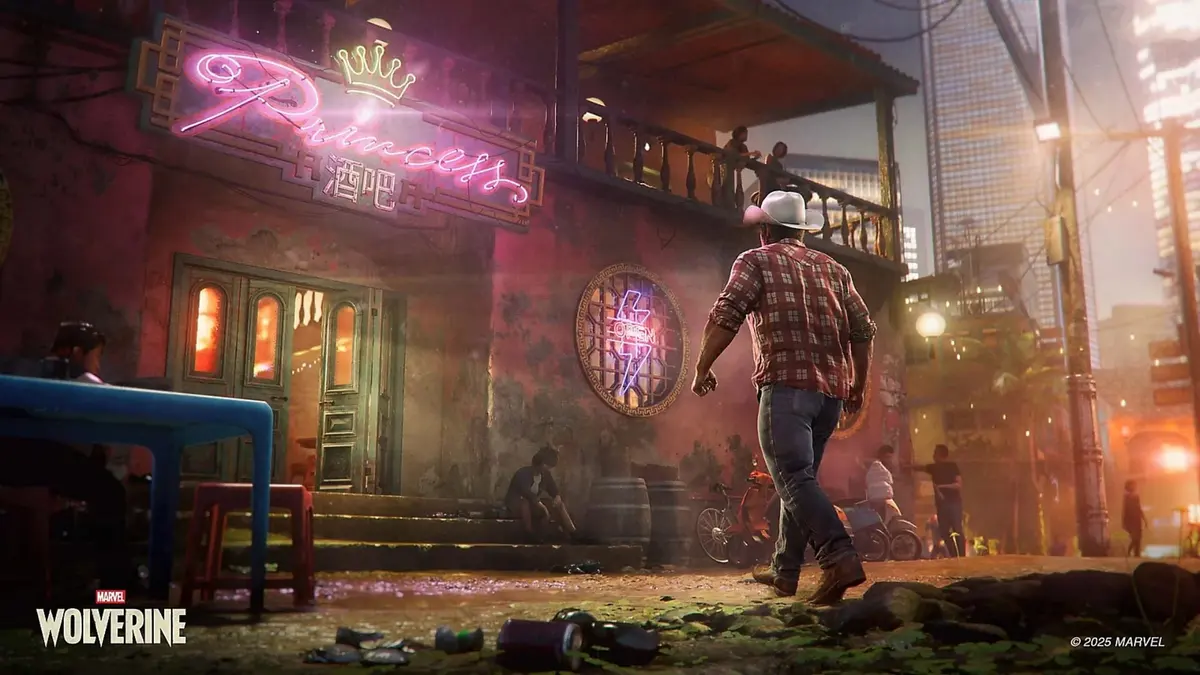
QSSR arrives through individual game patches rather than a PS5 system update. There is no console-wide switch that improves every title: standard PS5 owners need a supported game, and Marvel’s Wolverine version 1.002.000 is the first patch to check. It enables Quick Spectral Super Resolution by default on the base console.
The October 1, 2026 rollout matters because it brings Sony’s AI reconstruction work to the original PS5 without requiring PS5 Pro hardware. In Wolverine, the change targets the artifacts that are most visible while playing: unstable foliage, flickering ray-traced reflections, noisy fine geometry, thin lines breaking apart, and water ghosting during camera movement.
Table of Contents (4)
What QSSR changes in Marvel’s Wolverine
Quick Spectral Super Resolution reconstructs a cleaner image from a lower internal render resolution. The point is to retain a performance-oriented rendering mode while improving the final image’s detail and temporal stability. It does not create additional GPU performance or convert the base PS5 into a PS5 Pro.
Wolverine is a useful early implementation because its previous Insomniac reconstruction method exposes the normal limits of temporal upscaling in dense scenes. Detail can shimmer or dissolve when the camera moves, especially around vegetation, distant surfaces, cables, signage, water, and ray-traced reflections. With QSSR active, those elements hold together more consistently from frame to frame.
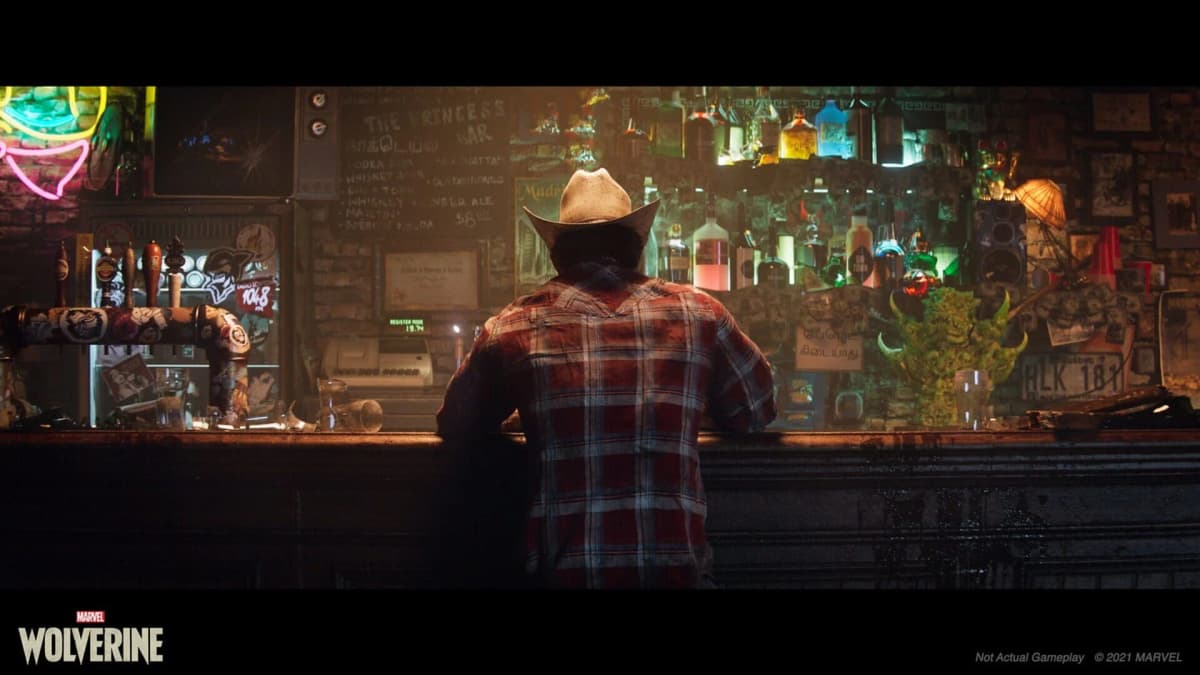
The most visible gains are reduced visual noise in vegetation, fewer subpixel break-up artifacts, cleaner distant detail, and steadier ray-traced reflections. Water also shows less ghosting than it does with Insomniac’s earlier upscaler. These are image-quality improvements, not benchmark claims: the relevant test is whether the image remains coherent while moving through a scene, rather than whether a paused screenshot looks marginally sharper.
QSSR, existing reconstruction, and PS5 Pro PSSR
Sony positions QSSR as a streamlined relative of PlayStation Spectral Super Resolution, the PSSR technology associated with PS5 Pro. The distinction is hardware. Standard PS5 has no dedicated machine-learning silicon, so QSSR has been refactored around FP16 processing that the original console can handle. PS5 Pro’s PSSR uses substantially more machine-learning capability, including int8 support and roughly 300 TOPS of dedicated processing capacity.
| Reconstruction method | Platform | Hardware approach | Practical result in Wolverine |
|---|---|---|---|
| Insomniac temporal upscaler | Standard PS5 reference method | Conventional temporal reconstruction | Produces the comparison baseline, with more shimmering, noise, and instability in difficult moving detail. |
| Quick Spectral Super Resolution | Standard PS5 | Streamlined neural reconstruction using FP16 support | Improves pixel-level stability, foliage detail, water handling, and reflection consistency without changing the console’s hardware class. |
| PlayStation Spectral Super Resolution | PS5 Pro | Higher-end neural reconstruction using the Pro’s dedicated ML resources | Offers a larger rendering and reconstruction budget, with more flexibility for Pro-enhanced graphics modes. |
The base-PS5 target is closer to an upscaled 1440p-class presentation than a native 4K image. That is a sensible constraint. QSSR is intended to operate at a computational cost similar to existing upscalers such as FSR, making it viable in modes where the original PS5 has limited internal-resolution headroom.
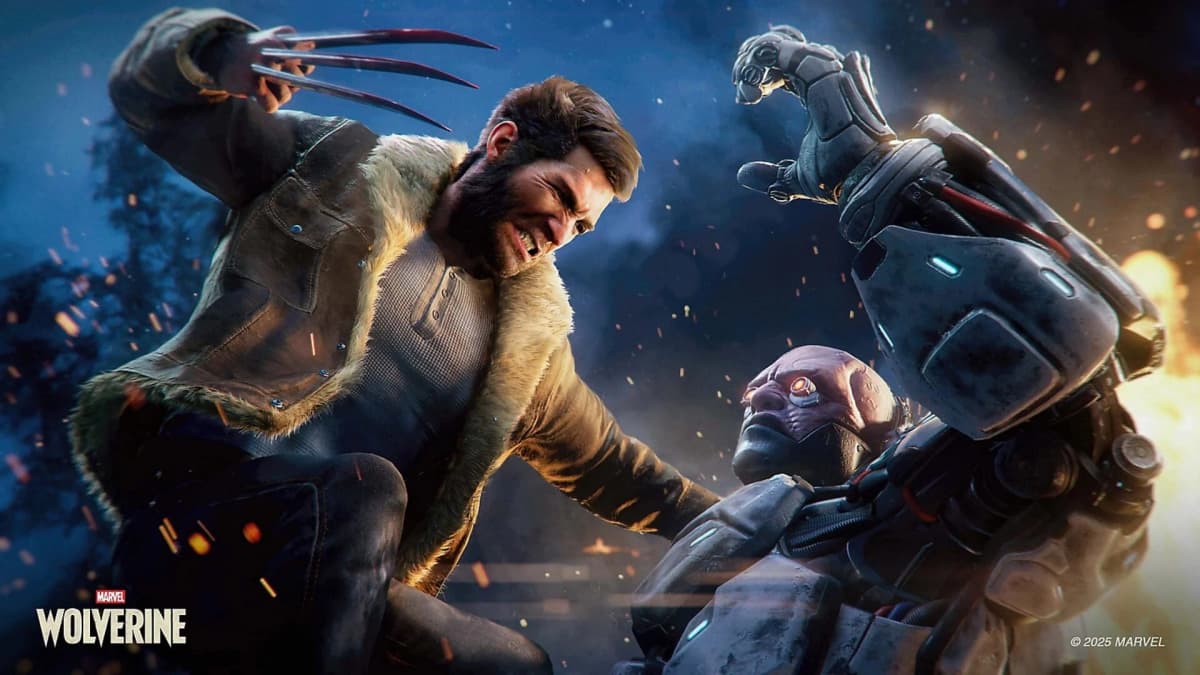
This also explains why QSSR should be judged title by title. Sony has made the technology available as a relatively direct integration path for games that already support PSSR, but each game still needs its own patch, tuning, graphics-menu implementation, and reconstruction profile. The same technology produces a larger improvement in Wolverine than it does in Ghost of Yōtei.
How to verify QSSR is active on a base PS5
- Confirm the installed game version. Open Wolverine’s information or update screen and verify version 1.002.000 or later. This is the update that adds QSSR to the standard PS5 build.
- Test on a standard PS5 if comparing the base implementation. PS5 Pro can expose different graphics behavior through PSSR and Pro-specific enhancements, so it is not the correct reference platform for QSSR testing.
- Check the graphics menu before changing modes. Wolverine enables QSSR by default after the patch. If the build exposes a QSSR toggle, note its state before comparing any image mode.
- Use a repeatable scene with difficult detail. Areas with dense foliage, distant signage, railings, cables, reflective surfaces, character hair, or busy streets provide better evidence than an empty indoor location. Madripoor and Shinjuku are especially useful environments for this purpose.
- Compare slow camera movement. Pan the camera at a steady speed or repeat the same traversal route. Watch whether foliage crawls, thin geometry breaks up, water trails behind objects, or reflections flicker between frames.
- Start with the performance-oriented mode. QSSR has the most room to improve the image where a 60 fps mode uses lower internal rendering resolution. Hold the same graphics mode, brightness, HDR setting, and scene position during each comparison.
- Do not treat a performance change as proof. Frame rate, brightness, and output resolution are separate settings. The meaningful evidence is the combination of patch 1.002.000, the game’s QSSR setting state, and repeatable improvements in moving fine detail.
What works and what remains limited
- QSSR improves the base PS5 image where reconstruction normally fails first. Wolverine benefits most in moving foliage, thin environmental detail, water, and ray-traced reflections, where temporal instability is more disruptive than a modest reduction in static sharpness.
- The default-on implementation avoids a buried feature problem. Players with patch 1.002.000 receive the intended QSSR presentation without having to identify an unfamiliar rendering acronym before starting the game.
- It fits performance modes better than a native-resolution push would. A cleaner reconstructed image is a more realistic use of the standard PS5’s fixed hardware budget than attempting to force a native 4K rendering target.
- Support remains patch-dependent. QSSR is not a PS5 firmware feature that upgrades older games automatically. A title needs an update and its developer must tune the technology for that game’s rendering pipeline.
- QSSR does not replace PS5 Pro PSSR. The base console lacks the Pro’s dedicated machine-learning resources and additional graphics capacity, so its reconstruction target and overall rendering flexibility remain lower.
- Gains are implementation-specific. Wolverine shows a pronounced improvement, while Ghost of Yōtei receives a less dramatic visual uplift. The QSSR name alone does not guarantee the same result in future patches.
FinalBoss // Gear
Level up your setup
01Best-selling PS5 gameson Amazon→02DualSense controllerson Amazon→03PS5 SSD upgrades (M.2 NVMe)on Amazon→04Discounted game keyson Kinguin→Affiliate links · As an Amazon Associate, FinalBoss earns from qualifying purchases.
Want to Level Up Your Gaming?
Get access to exclusive strategies, hidden tips, and pro-level insights that we don't share publicly.
Ultimate Tech Strategy Guide + Weekly Pro Tips