
Table of Contents (24)
Why This Guide Matters (And How I Finally Stopped Flailing)
After spending about 120 hours stumbling through my first few multiplayer games, I finally built a routine that turned chaos into confident play. I bounced between shooters, co-op dungeon crawlers, and team arena games-failing in loud, creative ways. The breakthrough came when I stopped trying to “wing it” and started following a simple plan: pick the right game, tune my setup, master basics in short sessions, communicate clearly, and specialize in one role at a time. This guide is that plan, distilled into practical steps you can follow in 30 days without burning out.
Step 1: Pick the Right First Game (Set Yourself Up to Learn)
I wasted two weeks jumping into sweaty ranked lobbies. Don’t do that. Start with cooperative, forgiving games where the stakes are low and the community is helpful. Look for these traits:
- Co-op first, competitive later: Campaign or horde modes let you learn safely.
- Clear objectives: Rescue, defend, capture, or puzzle-solving you can practice repeatedly.
- Short match length: 10-20 minutes keeps feedback loops tight.
- Active ping system: Lets you coordinate without a mic.
- Beginner queue or AI bots: Eases the transition to real players.
Examples that taught me the most early on: relaxed farming co-op with shared goals, puzzle co-op that forces communication, and simple dungeon crawlers with clear roles. Spend your first 5-10 hours in these before diving into ranked anything.
Step 2: Dial In Your Setup (Low Latency = Free Skill)
My single biggest power spike happened when I fixed my connection and framerate. Your inputs can’t matter if the game lags. Do this before your first real session:

Network basics
- Use wired Ethernet if possible. My ping dropped from ~70 ms to 25 ms instantly.
- If Wi‑Fi only: connect to 5 GHz, stay in the same room as the router, and minimize interference (no microwave, no streaming 4K during matches).
- On router, enable QoS for your device or prioritize gaming traffic if available.
- Restart modem/router weekly to clear stale connections.
Graphics and performance
- Set the game to Performance mode:
Settings → Video → Graphics Preset= Low/Medium until you hit a steady 60+ FPS. - Enable low-latency features if supported:
NVIDIA ReflexorAMD Anti-Lag. - Cap FPS slightly below your monitor’s max to reduce stutter: e.g., 118 on a 120 Hz display.
- Turn off motion blur, film grain, and heavy post-processing. Your eyes will thank you.
Audio and voice musts
- Use a headset. It improves directional audio and keeps comms clear.
- Set push-to-talk on PC:
Settings → Audio → Voice Chat → Push-to-Talk. Assign an easy key likeMouse 4orCaps. - On console, use party chat for friends and in-game chat for matchmaking. Adjust mic monitoring to avoid yelling.
- On mobile, enable
High Performanceand plug in earbuds; disable battery saver during matches.
Step 3: Master Core Mechanics in 60 Minutes
I used to skip tutorials and then wonder why I melted in live matches. Here’s the 60-minute warmup I now do whenever I start a new multiplayer game.
- 10 minutes: Complete the full tutorial, even the “boring” bits.
- 15 minutes: Practice movement and aim/abilities in a test range or a bot match. For aiming games, set sensitivity: start high, then lower until you can track a moving target smoothly.
- 15 minutes: UI orientation. Identify your health/energy, cooldowns, minimap, and scoreboard. Learn how to ping:
Middle MouseorRBon many games. - 20 minutes: Two short bot matches focusing on one mechanic (e.g., reloading discipline or ability timing). Don’t chase wins-chase consistency.
Breakthrough tip: lower your mouse/controller sensitivity more than you think. When I halved mine, my accuracy instantly jumped because I stopped over-aiming.
Step 4: Communication That Actually Helps
I used to talk too much or not at all. The sweet spot is short, useful callouts tied to actions. Use voice if you have it; pings if you don’t.
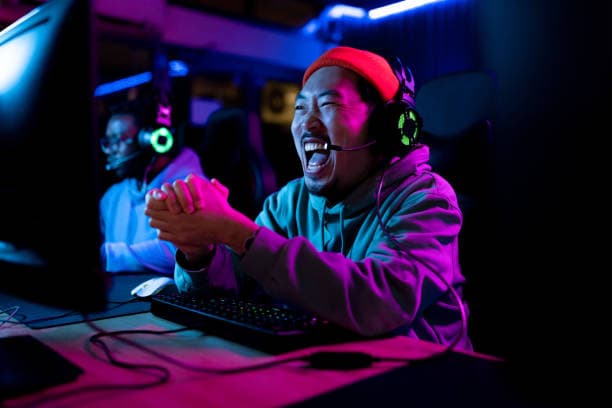
- Keep it structured: Location → Info → Intent. Example: “Left hall, two pushing, I’m rotating.”
- Use pings for fast facts: ping an enemy, objective, or loot.
- Mute when needed:
Tab → Mute Playeror console party mute. Protect your focus. - Agree on a simple plan at spawn: “Cap A, hold corners, rotate on ping.” Ten seconds saves ten minutes.
If you’re anxious about voice, start with pings and canned lines. I eased into voice by calling only high-value info (enemy numbers, ult timers, objective status).
Step 5: Roles and Simple Team Strategy
I burned out trying to play everything. Pick one role for a week and learn its job cold. Here’s how I frame roles across genres:
- Frontline/Tank: Take space, start fights, protect teammates. Your win condition is positioning, not kills.
- Support/Healer/Utility: Keep allies alive, enable plays, track cooldowns. Your scoreboard may lie-your team knows your value.
- Damage/Carry: Clean mechanics, target priority, resource discipline. Don’t overextend; stay near cover or your support.
- Objective Specialist: Captures, defuses, setups. Scoreboards rarely show your impact, but your team will feel it.
In any role, learn one “default” strategy per map or mode: standard push route, default defense positions, and a simple retake plan. I keep a one-line reminder in my notes for each map: “A-site hold = corner + crossfire; rotate on 2 pings.”

Step 6: Objectives and Resource Discipline
My biggest early mistake was chasing kills and ignoring objectives. Fix it with habits:
- Glance at the minimap every 5-7 seconds or after every fight.
- Reload behind cover only; call “reloading” if enemies nearby.
- Track expendables: health, ammo, cooldowns, economy items. If you’re below 30% resources, play safe until topped up.
- Set a micro-goal each match: “No dry peeks,” “Save one cooldown for escape,” or “No lone pushes.”
A 30-Day Plan That Actually Works
This is the plan I wish I had. Sessions are 30–60 minutes. Stretch to 90 if you’re vibing, but stop before tilt.
Week 1: Foundations
- Day 1–2: Tutorial, sensitivity dialing, UI tour. 2 bot matches per day.
- Day 3–4: Communication reps—use pings every minute; try three voice callouts per match.
- Day 5–7: Pick one role. Learn two basic setups/routes. Play unranked/co-op only.
Week 2: Consistency
- Pre-session routine: 10-minute warmup (movement + aim or ability timing).
- Focus goal: one mechanic (crosshair placement, rotation timing, or resource tracking).
- End each session with a 3-minute review: write one win, one mistake, one fix.
Week 3: Team Play
- Queue with one friend if possible; call a plan at spawn every match.
- Try a second role for perspective, but keep your main role in 70% of games.
- Record one match; rewatch the first five minutes and note two positioning errors.
Week 4: Refinement
- Introduce light ranked if you feel ready (1–2 matches per session max).
- Customize a “default playbook” per map/mode: entry route, hold spots, rotate triggers.
- Reset settings once: verify sensitivity, audio mix, and graphics after any patch.
Session Planner Template (Copy/Paste)
Goal (today’s focus): ______________________________
- Warmup (10 min): ______________________________
- Main Matches (30–45 min): _____________________
- Review (3 min): Win / Mistake / Fix = __________
- Setting to test next time: ______________________
Troubleshooting the Pain Points I Hit
Lag or rubber-banding
- Switch to Ethernet or 5 GHz Wi‑Fi; avoid powerline if your wiring is ancient.
- In-game: select closer servers:
Settings → Gameplay → Matchmaking Region. - Close downloads/streams. On PC, check Task Manager for bandwidth hogs.
Low FPS or stutter
- Lower shadows and effects first; textures can stay medium.
- Full-screen exclusive mode beats borderless for many games.
- Update GPU drivers; on console, use
Settings → Graphics → Performance Mode.
Voice echo or noisy mic
- Enable noise suppression:
Settings → Audio → Noise Gate/Reduction. - Turn down mic boost; position the mic slightly off to the side of your mouth.
- Use push-to-talk or console party push-to-talk to avoid background spill.
Controller drift or weird aim
- Increase deadzone slightly:
Settings → Controller → Deadzone+2–4%. - Lower aim acceleration and try a linear response curve.
- Clean the stick and recalibrate in system settings.
Advanced Settings That Gave Me Free Wins
- PC: Enable
Low Latency Mode (Ultra)in GPU control panel; turn off background overlays you don’t use. - Console: If your TV supports it, enable 120 Hz and Game Mode; set
Input Lag Reductionto On. - Mobile: Turn on
Performance Mode, lock brightness high, and enable 60/90/120 FPS if supported. Close all background apps. - Crosshair/camera: Lower FOV a touch for accuracy in some games; raise it for awareness if you can track comfortably.
- Audio mix: Use “Headphones” or “Competitive” mix; raise footstep volume, lower music to 0–20%.
Common Mistakes I Made (Skip These)
- Skipping tutorials: I missed basic mechanics and blamed teammates.
- Chasing kills: I lost winnable games by abandoning objectives.
- Changing sensitivity daily: Pick a value and stick to it for a week.
- Silence or spam: Communicate only what helps the team take action.
- Playing tilted: End the session after two bad games in a row; review and reset.
Final Encouragement
You don’t need godlike reflexes to enjoy and improve at multiplayer—just a steady routine. If you follow this plan, in 30 days you’ll know your role, speak your team’s language, and make smarter decisions under pressure. The game will slow down, and you’ll start predicting what happens next. That’s when multiplayer goes from intimidating to addictive. See you in the lobby—comms on, objectives first, and one focused improvement at a time.
FinalBoss // Gear
Level up your setup
01Top-rated gaming headsetson Amazon→02High-refresh gaming monitorson Amazon→03Gaming chairson Amazon→04Discounted game keyson Kinguin→Affiliate links · As an Amazon Associate, FinalBoss earns from qualifying purchases.
Want to Level Up Your Gaming?
Get access to exclusive strategies, hidden tips, and pro-level insights that we don't share publicly.
Ultimate Guide Strategy Guide + Weekly Pro Tips