
Days 21 through 26 in Masters of Albion trade village management for a tight sequence of arena combat, scripted story beats, and one possession puzzle. The stretch runs from the Black Hood tournament, through Prince Malmus and his barrier, into the Bandit King’s artifact request, the Hand trap on Day 25, and the Day 26 “Mercy” choice over Valmey. Two of these days are progression gates, not damage checks — and that is exactly where most players stall.
Table of Contents (10)
The short version
- Day 21 – Black Hood tournament: three-wave arena defense. Protect the egg, tap
Lightning Boltfor crowd control, and let the wave-three boulder do area damage for you. - Day 22: another tournament day. No Malmus, no story trap — just clear the waves.
- Day 23 – “The Visit”: Malmus appears. The Crypt Keeper tells you to hit him with Lightning Bolt, but a barrier blocks it and he escapes to the Spire. You cannot kill him here.
- Day 24: the Bandit King offers his support only if you bring an artifact “unlike any other.” This day is the offer, nothing more.
- Day 25 – “A Handy Issue”: grab the artifact by the drawbridge to Briar Lake, which traps the Hand. Possess a chicken, then a villager, and walk the villager onto the pressure plate to disable the trap.
- Day 26 – “Mercy”: a single decision about whether Valmey lives. The chapter ends on a choice, not a boss.
Day 21: Clear the tournament and protect the egg
Day 21 is the skill check of the chapter. The return to Black Hood is a pure arena-defense scenario with three waves, and your job is to keep the egg intact while clearing enemies. If you are failing here, it is almost always a targeting problem, not a damage problem.
- Protect the egg first, even when a larger enemy is still alive elsewhere.
- Tap
Lightning Boltrapidly on small enemies instead of holding the cast — repeated taps clear weak targets fast and stun the larger ones. - Use that stun window to reposition or finish big enemies with melee and hero attacks.
- Hold your upgraded charge attack for when enemies cluster near the egg or a spawn lane, where the area damage is worth most.
- On wave three, a gigantic boulder enters as an environmental damage event. Let it hit the stacked enemies instead of spending mana on targets it is about to kill.
The repeated-tap pattern wins this fight because it does two jobs at once: it thins weak attackers before they chip the egg, and it stuns tough ones without draining your mana in a single action. That buys you more decisions per wave, which beats one oversized cast when new enemies are already moving on the objective. If the egg keeps breaking late, you are chasing survivors at the arena edge — re-center on the egg and let the boulder and your stuns do the cleanup.
Day 22: Another tournament day
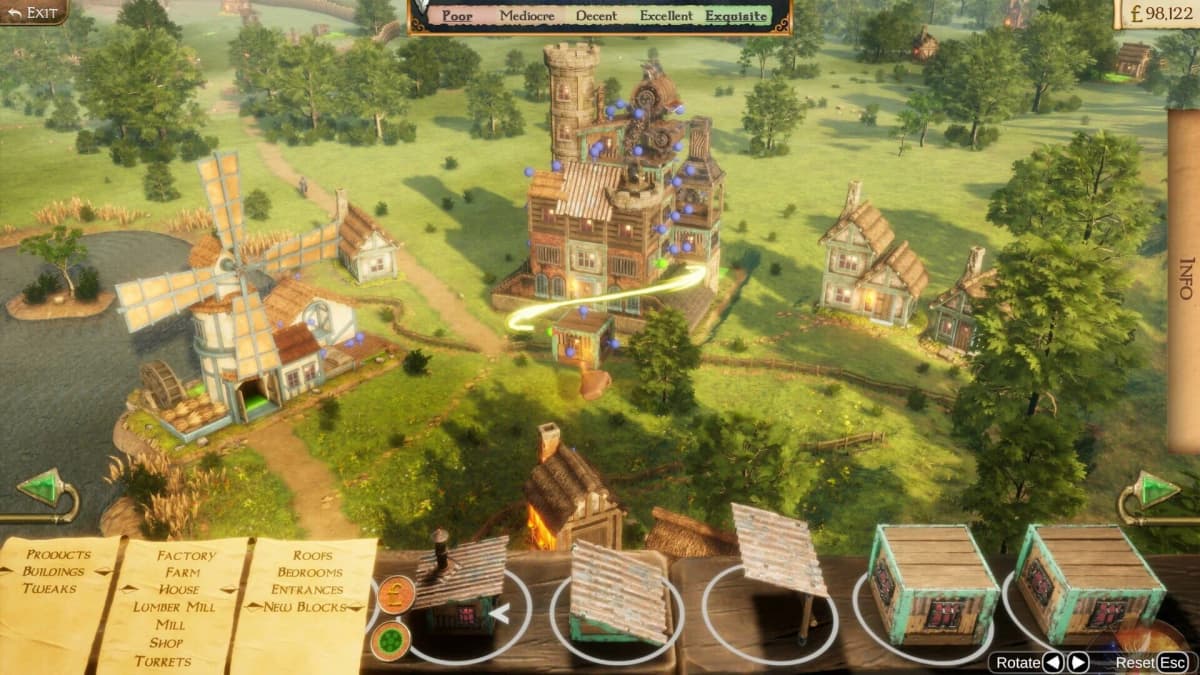
Day 22 keeps you in the tournament loop. There is no Malmus appearance and no scripted trap here — it is straight arena combat. Run the same plan as Day 21: tap Lightning Bolt for control, save the charge attack for clusters, and protect the objective. Players who expect a story beat on Day 22 often stall waiting for a trigger that does not come until the next day.

Day 23: “The Visit” — Malmus and the barrier
Day 23, “The Visit,” is the day people misremember as a quiet reset — it is not. It is an easier tournament day with the chapter’s key story beat: Prince Malmus visits the arena. The Crypt Keeper tells you to zap him with Lightning Bolt, so you do. A barrier protects him, the attack does nothing, and Malmus runs off to the Spire.
You cannot kill Malmus here, and that is the point. Do not treat the prompt as a hidden DPS test — forcing the attack only confirms the barrier is in place. Trigger the sequence, watch Malmus escape to the Spire, and move on. The game is preserving its antagonist for later, not opening a branch.
Day 24: The Bandit King’s offer
Day 24 is a negotiation gate, not a fight. The Bandit King offers his support on one condition: you bring him an artifact “unlike any other.” That is the whole day — the offer is made, and nothing about the Bandit King is solved by combat.
The mistake here is staying in combat mindset. Once the request lands, the artifact is the path forward, and it is collected on the next day, not this one. Do not look for a duel to win on Day 24.
Day 25: “A Handy Issue” — the artifact and the Hand trap
Day 25 is where the artifact and the possession mechanic come together. The artifact appears near the drawbridge to Briar Lake. Picking it up springs the trap — it pins the Hand to the ground — so the day becomes a puzzle about freeing yourself, not a combat encounter.
Here is the exact sequence to escape:
- Collect the artifact near the drawbridge to Briar Lake. This is what traps the Hand.
- Possess a chicken to move freely while the Hand is pinned.
- From the chicken, possess a villager nearby.
- Walk the villager onto the pressure plate. That disables the trap and releases the Hand.
This is a control-state puzzle, not a wave to grind. If normal interaction does nothing once the Hand is pinned, stop spending mana on combat actions — the answer is the possession chain above, not force.
Day 26: “Mercy” and the Valmey decision
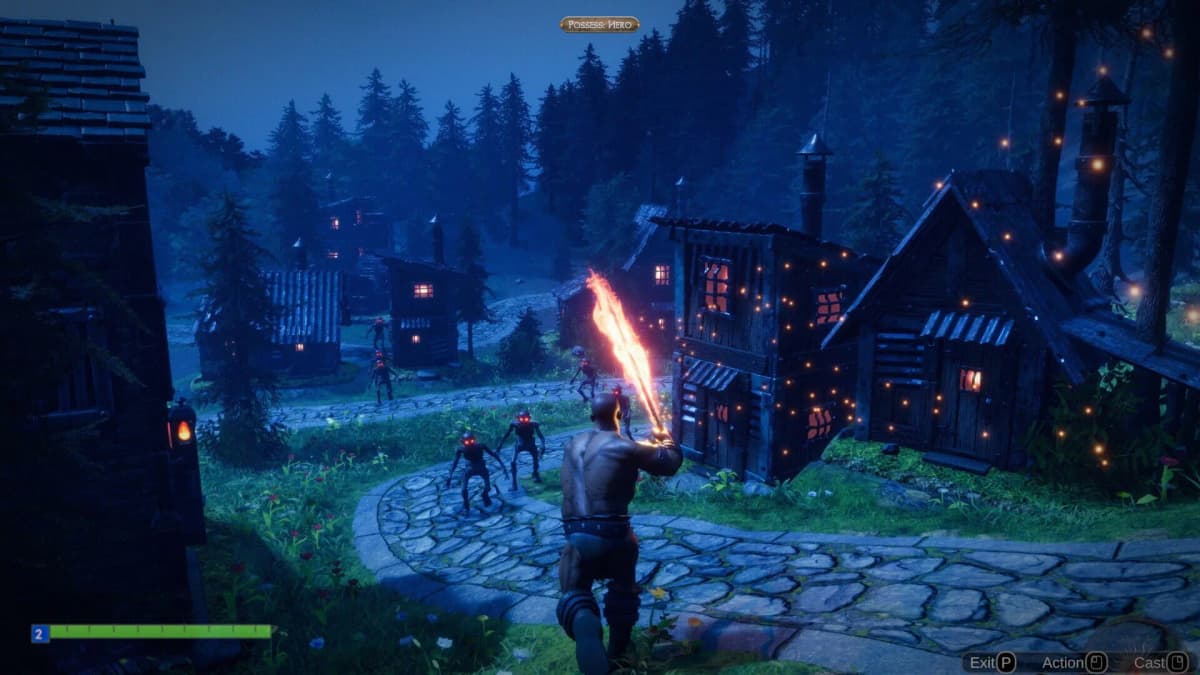
Day 26, “Mercy,” closes the chapter on a single decision: whether Valmey lives. There is no larger tournament waiting and no final mechanical exam — the day exists to cash out the story, not your combat preparation. Go in expecting a choice and weigh how the preceding scenes have framed Valmey before you commit.
Common mistakes that slow down Days 21-26
- Holding
Lightning Boltinstead of tapping it. Rapid taps give you crowd control and stuns; a held cast drains mana for one action. - Burning the upgraded charge attack on a single enemy when a clustered wave is about to reach the egg.
- Ignoring the wave-three boulder and single-targeting enemies it is about to kill anyway.
- Waiting for a Malmus story beat on Day 22 — it does not happen until Day 23.
- Trying to kill Malmus on Day 23. The barrier makes it impossible; let him escape to the Spire.
- Treating Day 24’s Bandit King as a fight instead of a gate that only asks for the artifact.
- Looking for the artifact or fighting on Day 24 — it is collected on Day 25, by the Briar Lake drawbridge.
- Fighting through Day 25 instead of running the possession chain: chicken, then villager, then onto the pressure plate.
Practical takeaway
Play Days 21 and 22 as arena defense: protect the egg, tap Lightning Bolt, let the boulder help. Treat Day 23 as the Malmus barrier beat — attack on cue, then let him flee. Take the Bandit King’s artifact request on Day 24, collect the artifact by the Briar Lake drawbridge on Day 25, and free the Hand with the chicken-to-villager-to-pressure-plate chain. Then make your call on Valmey. Read the chapter as defense, story, negotiation, puzzle, and choice in that order, and the run from Day 21 to Day 26 stops feeling uneven.
FinalBoss // Gear
Level up your setup
01Top-rated gaming headsetson Amazon→02High-refresh gaming monitorson Amazon→03Gaming chairson Amazon→04Discounted game keyson Kinguin→Affiliate links · As an Amazon Associate, FinalBoss earns from qualifying purchases.
Want to Level Up Your Gaming?
Get access to exclusive strategies, hidden tips, and pro-level insights that we don't share publicly.
Ultimate Guide Strategy Guide + Weekly Pro Tips