
Table of Contents (11)
The moment I realised “live service” was mostly marketing spin
The penny finally dropped for me halfway through a Baldur’s Gate 3 playthrough, somewhere between a broken romance flag and a bugged quest trigger. I booted the game, saw yet another massive patch downloading, and instinctively rolled my eyes. Then I read the notes.
New subclasses. Fixes for hyper-specific edge cases I’d seen people complain about in obscure forum threads. Performance tweaks for platforms I don’t even own. A studio that had already sold tens of millions of copies was still treating the game like a living, breathing project, not a disc they’d dumped on shelves and moved on from.
That’s when it hit me: this is what live service was supposed to be. Not battle passes. Not FOMO cosmetics. Not daily challenges designed to keep you logging in like you’re clocking into a soul-crushing part-time job. Just… a game that keeps getting better because the people who made it refuse to walk away.
Contrast that with the graveyard of “real” live-service titles I’ve wasted time on. Games that promised ten-year roadmaps and “ever-expanding worlds” and then quietly died after 18 months because the player base evaporated and the monetisation didn’t hit the numbers. You know the type: shiny launch, aggressive store, three seasons of content, then a shutdown notice.
I’ve been playing long enough to see this cycle repeat too many times. From MMOs that couldn’t survive their second expansion to hero shooters that never made it past the first year, the pattern is always the same: the “service” part is a financial model, not a promise to the player. And frankly, I’m tired of being the patsy in someone else’s quarterly earnings experiment.
So when I saw coverage of a GameStar analysis (in that familiar plus kolumne: übersehene “hey, look what everyone’s ignoring” tone) showing that most of the top-selling games since 2020 are actually singleplayer titles with strong post-launch support, something snapped into place. We’ve been sold a fake definition of “service game” for years.
The numbers don’t lie: singleplayer with care is beating “pure” online
Here’s the core stat that should make a lot of executives very uncomfortable: out of the 40 best-selling games since 2020, only eight are pure online multiplayer titles. The rest? Heavily singleplayer-focused, often with optional co-op, but built on campaigns, worlds, and stories you mostly experience alone.
Yet these same games are being maintained and updated like the most hardcore service titles out there. They just aren’t trying to drain your wallet every login.
Think about the heavy hitters on that list:
- Baldur’s Gate 3, a story-first CRPG with optional co-op, no microtransactions, no paid DLC, and a ridiculous cadence of chunky patches.
- Elden Ring, a spiritual successor to old-school, singleplayer experiences, that blasted back into top-seller lists when it dropped one killer expansion, Shadow of the Erdtree.
- Animal Crossing: New Horizons, the cozy game that took over 2020 and then lived on through a stream of free seasonal updates and events before one big paid expansion capped things off.
These games have nothing in common with the typical “live service” treadmill except one thing: they treat the player relationship as long-term. They don’t dump you at the end credits and move on. They don’t leave game-breaking bugs festering because “we’re all hands on deck for the sequel.” They keep working, iterating, refining.
Live service, in practice, has come to mean “multiplayer game with aggressive monetisation and a roadmap PowerPoint,” but the sales charts are telling a different story. The games people are actually buying, years after release, are singleplayer-first titles that behave like service games without the cynicism.
If that doesn’t force us to redefine what a “service game” even is, I don’t know what will.
Baldur’s Gate 3: the best live-service game that technically isn’t one
I don’t hand out praise to RPGs lightly. I’ve sunk stupid amounts of time into Shenmue, old-school BioWare, and more janky PS2 epics than I care to admit. I’m picky about narrative, systems, and the way a game respects my time.
Baldur’s Gate 3 doesn’t just clear the bar; it pole-vaults over it while wearing clown shoes. It launched in August 2023, climbed to a 97 on Metacritic for PS5, overtook Elden Ring on that platform, and hit platinum bestseller status on Steam in 2024. That alone would be impressive for a dense, text-heavy CRPG in an era where “conventional wisdom” says attention spans are dead.
But what really matters is what happened after launch.
Instead of announcing a season pass, Larian poured their energy into huge patches. Patch 7 brought cross-play. Patch 8 dropped with a stupid amount of stuff: around a dozen new subclasses, quality-of-life changes, performance improvements, and groundwork for official mod support. They ran betas. They stress-tested. They released hotfixes like #33 to deal with things as specific as radial menu responsiveness and Xbox performance.
No battle pass, no “premium currency,” no $20 horse armour masquerading as prestige cosmetics. No “we’ll fix it later, please wait for Baldur’s Gate 4.” Just a studio treating a singleplayer-focused RPG as a living project because – wild concept – they actually care about the damn thing.
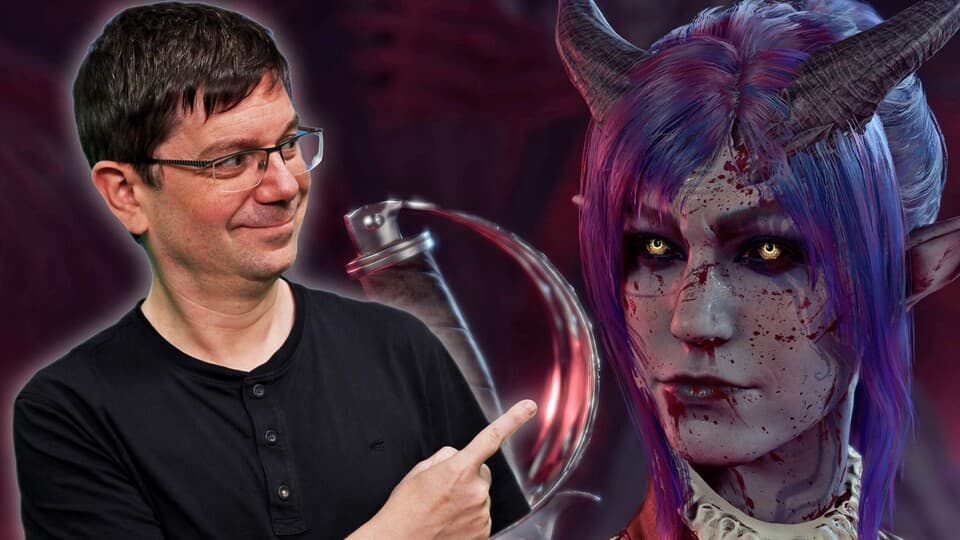
And it paid off. Baldur’s Gate 3 isn’t just a critical darling; it’s a long-tail commercial monster. It’s still charting, still being talked about, still pulling people in through word of mouth. This is what publishers allegedly wanted from service games: retention, engagement, ongoing revenue through new sales. Larian got all of that without turning the game into a casino.
When Swen Vincke came out and said there were no plans for a sequel or expansion, and that the focus would be on patches and modding support instead, you could almost hear the suits in other companies screaming from across the industry. “Where’s the franchise exploitation? Where’s the content treadmill? Where are the weapon skins?”
Here’s the uncomfortable truth: Baldur’s Gate 3 is the most successful live-service model we’ve seen in years. It just decided that the “service” would be aimed at players, not shareholders.
Elden Ring shows the power of one great expansion, not a thousand tiny grinds
Elden Ring doesn’t play the live-service game at all on the surface. You buy it, you suffer, you overcome, you scream at whatever nonsense the game throws at you (Malenia can still go to hell), and you’re done. There’s optional online, sure, but it’s flavour, not the backbone.
Then Shadow of the Erdtree dropped in June 2024, and suddenly Elden Ring was back on top-seller lists like it had just launched again. One big, meaty DLC – not a trickle of FOMO garbage – and the entire community roared back to life.
I went back too. Dusted off an old character, respecced, dove into the new content, and remembered exactly why that game owned the industry for months in 2022. FromSoftware didn’t need seasonal battle passes. They didn’t need login streak rewards. They just delivered an expansion worth coming back for.
And guess what? That’s live-service adjacent. You can call it “post-launch support,” “product care,” or whatever corporate-safe phrase you like, but functionally it keeps the game alive in the cultural bloodstream. People stream it again. Friends who skipped it at launch finally jump in. Sales spike.
One excellent expansion did more for Elden Ring’s longevity than five years of limp, joyless seasons did for a dozen dead service games. That should scare the hell out of anyone still clinging to the idea that more content always equals better retention.
Animal Crossing: New Horizons – cozy, but still a kind of service game
Then there’s Animal Crossing: New Horizons, the game that quietly ate the world in 2020. By 2023 it had sold over 30 million copies. On paper, it’s the exact opposite of a live-service shooter: a chill life sim where your biggest worry is whether your island aesthetic is on point.
Animal Crossing: New Horizons – cozy, but still a kind of service game
Then there’s Animal Crossing: New Horizons, the game that quietly ate the world in 2020. By 2023 it had sold over 30 million copies. On paper, it’s the exact opposite of a live-service shooter: a chill life sim where your biggest worry is whether your island aesthetic is on point.
🎮 Get This Game at the Best Price
Compare prices instantly and save up to 80% on Steam keys with Kinguin — trusted by 15+ million gamers worldwide.
*Affiliate link — supports our independent coverage at no extra cost to you
But Nintendo treated it like a service game – just not the ugly, monetised kind. Free seasonal updates. Time-limited events. New items, characters, and little surprises popping up for years. And, eventually, one big paid expansion that actually felt like a proper addition, not a ransom note for cut content.

New Horizons blurred the line between “singleplayer” and “service” in a different way. Your island is mostly your own little world, but the cadence of updates and events turned it into a long-term routine. You’d check in for seasonal items, collaborate with friends, return for new features. It was a habit-forming game, but without the usual manipulative baggage.
Again, the pattern is the same: strong singleplayer core, ongoing support, minimal monetisation bullshit, massive commercial success.
Meanwhile, the “real” live services are collapsing under their own weight
While these singleplayer-first games quietly dominate sales charts, the classic “service” space is in a full-blown identity crisis. Reports over the last couple of years have painted the same picture: the live-service market is oversaturated, user acquisition costs are insane, and only a tiny handful of mega-hits actually make sustainable money.
Everyone else? They die. Sometimes fast, sometimes slow, but the ending is always the same: updates thin out, concurrent players crater, and one day you wake up to a shutdown announcement and a heartfelt blog post about “difficult decisions.”
I’ve personally watched games I enjoyed – genuinely fun, creative games – vanish like this. You invest time, maybe money, build muscle memory and community, and a year later the servers are gone and you’re left holding a digital corpse. Meanwhile, the game’s monetisation probably recouped its dev costs, so from a spreadsheet perspective everything is “fine.”
This is the fundamental lie at the heart of most live-service design: it pretends to offer permanence while being built on the most fragile foundations in the industry. The more a game leans on “always online” and “constant content,” the more exposed it is to the brutal economics of keeping a live team running for years.
Singleplayer games with strong post-launch support flip that script. I can return to Baldur’s Gate 3 in five years, and as long as I have hardware that runs it, I’m good. Elden Ring will still work. My Animal Crossing island will still be there. Even if dev support stops tomorrow, the experience I paid for still exists.
That security matters. It makes me more willing to buy in, more willing to recommend, and way more likely to come back when an expansion or big patch lands. Ironically, the games that don’t call themselves live services are offering a more honest kind of long-term relationship.
We need to reclaim the word “service” from the accountants
Here’s where I plant my flag: if your game doesn’t respect my time, doesn’t honour my purchase, and might disappear with 90 days’ notice, I don’t care how many seasons it has – it’s a bad service game.
Service should mean:
- Ongoing care – bugfixes, performance work, accessibility improvements.
- Meaningful updates – expansions, new modes, or big free content drops that justify coming back.
- Stability – the confidence that the game will exist in a playable state years from now.
- Respectful monetisation – if you charge extra, it should feel like an honest trade, not psychological warfare.
By that definition, Baldur’s Gate 3, Elden Ring, and Animal Crossing are better “service games” than half the online catalogue that actually uses the label. And they’re selling better too.
This is where that odd little SEO phrase, plus kolumne: übersehene game, accidentally hits the nail on the head. The industry’s been so obsessed with the same handful of mega-service hits that it completely overlooked the fact that singleplayer plus strong support quietly became the dominant business model.

Meanwhile, we as players let “live service” get hijacked by monetisation teams. We started equating “ongoing support” with exploitative grind design, and that’s on us too. We rolled over for battle passes and rotating stores and artificial scarcity dressed up as “events.”
I’m done doing that. From now on, if a publisher wants to talk about “service,” I’m asking one question: how long are you actually committed to this game, and what are you promising me beyond vague roadmaps and premium skins?
How this has changed the way I buy games
This whole shift has genuinely changed how I spend money on games.
I used to dabble in every shiny new live-service thing that looked remotely interesting. “It’s free, what’s the harm?” The harm is time. The harm is building habits and expectations around games that can vanish overnight. The harm is slowly training yourself to accept lesser experiences because “maybe the next season will fix it.”
These days, I’d rather drop full price on a strong singleplayer title with a clear plan for post-launch support than sink even an hour into yet another monetised hamster wheel. I don’t need content forever. I need a complete, excellent game that might get even better over time.
If a studio comes out and says, “We’re going to support this with big patches for a year or two, maybe one expansion, then we’re moving on,” I’m happy. That’s honest. That’s finite. That’s something I can buy into without treating it like a second job.
On the flip side, if your pitch leans heavily on roadmaps, seasons, cosmetics, and an endgame designed purely around retention metrics, I’m out. I’ve seen that movie too many times, and the ending always sucks.
What I want devs and publishers to actually learn from this
The lesson from the last few years isn’t “kill all live-service games” – there are good ones, and some genres genuinely thrive as ongoing online experiences. The real takeaway is much simpler and much more uncomfortable for the people making budget spreadsheets:
Players will happily pay full price for great singleplayer games that are treated with long-term respect – and those games can outperform your monetised online experiments.
So if you’re a developer or publisher actually paying attention to this shift, here’s what I’d love to see:
- Build more games like Baldur’s Gate 3 – deep, complete experiences that you commit to polishing post-launch instead of rushing to sequel or season.
- Use expansions the way FromSoft used Shadow of the Erdtree – rare, substantial, and worth the wait, not chopped-up main game content resold piecemeal.
- Take a page from Animal Crossing – free updates and live events can build loyalty and word of mouth without turning everything into a storefront.
- Invest in modding support – give players tools and you extend your game’s life without needing to pump out endless official content.
- Be brutally honest about support timelines – if the game is only getting a year of updates, say so. If you’re in it for five, back that up with actions.
Most of all, stop pretending a game isn’t “worth it” unless it can be monetised indefinitely. Baldur’s Gate 3, Elden Ring, and Animal Crossing have already proven that’s nonsense. The most commercially successful “service” model right now is just: make something incredible, care for it properly, and then have the courage to move on when it’s done.
As a player, that’s all I’m asking for. Not an endless grind. Not a second life. Just a great game that doesn’t treat my time and trust like disposable resources. If that’s what the future of “service games” looks like – singleplayer at the core, genuine post-launch support on top – then for the first time in years, I’m actually optimistic.
FinalBoss // Gear
Level up your setup
01Top-rated gaming headsetson Amazon→02High-refresh gaming monitorson Amazon→03Gaming chairson Amazon→04Discounted game keyson Kinguin→Affiliate links · As an Amazon Associate, FinalBoss earns from qualifying purchases.
Want to Level Up Your Gaming?
Get access to exclusive strategies, hidden tips, and pro-level insights that we don't share publicly.
Ultimate Gaming Strategy Guide + Weekly Pro Tips