
Table of Contents (9)
The moment Medieval 3 made me sit up and pay attention
I was fully prepared to roll my eyes at Total War: Medieval 3.
After years of Creative Assembly stumbling through weird monetisation decisions, uneven historical spin-offs, and the kind of DLC drama that turns your Steam reviews into a warzone, I’d quietly downgraded my expectations. I’d still play every Total War, because this series is basically wired into my brain at this point, but “genuine excitement” had been replaced by “cautious, slightly resentful curiosity”.
Then they did something I honestly did not expect from a studio this size: they showed us Medieval 3 way too early… on purpose.
On March 5, they streamed an extremely early build of Total War: Medieval 3 to the whole world. Not a polished vertical slice. Not some scripted “gameplay” trailer stitched together in marketing hell. A messy, honest, prototype-level look at battles and sieges. Experimental UI, placeholder visuals, mechanics still being ripped apart and reassembled – the kind of stuff you usually only see leaked in a nightmare scenario, not volunteered by the devs themselves.
And here’s the thing: underneath the rough edges, I saw the first historical Total War in years that actually looks like it understands what made those older games hit so hard. Slower tempo. Real weight to units colliding. Sieges that aren’t just “big field battle, but with walls”. A campaign premise that treats armies like something you build out of society, not just a shopping list you fill in a recruitment screen.
For the first time in a long time, Creative Assembly isn’t asking me to just trust the marketing. They’re putting the ugly work-in-progress right in front of me and saying: “Tell us if this is the right direction.” And as someone who grew up on Rome and Medieval 2, I’m going to say it: this might be the course correction historical fans have been begging for.
CA finally stopped pretending they know better than their own community
I’ve been playing Total War long enough to remember when Creative Assembly felt like the scrappy “PC strategy weirdos” instead of a massive, risk-averse brand. Shogun, Rome, Medieval 2 – those games weren’t perfect, but you felt like they were made by people obsessed with history and systems, not metrics.
The last decade hasn’t exactly been a clean victory lap. Empire’s launch disasters, Rome 2’s infamous state at release, the pivot into Warhammer (which I actually like, to be clear), strange experimentation with things like Troy and Pharaoh, and then the Hyenas mess and paid content controversies – it all layered into this vibe that CA had gone from “passionate nerds” to “corporate strategy machine that occasionally remembers it likes history”.
So when they not only show an early build of Medieval 3 but build a whole conversation around it – test rounds, feedback surveys, devs openly talking about what’s still broken – that’s not just PR. That’s a studio admitting, “We can’t afford to get this one wrong, and we know what happens if we stay in the bunker.”
This kind of transparency is rare for a project this big. Most major studios would rather eat their own servers than show you a prototype. CA doing it with their most-requested historical setting? That’s them putting actual reputation on the line. And for me, that instantly buys more goodwill than any glossy trailer ever could.
The battles finally look like they hurt again
Let’s talk about the meat of it: the battles.
The thing I loved about earlier historical Total Wars – especially Rome and Medieval 2 – was the sense of physical, miserable, grinding contact. When a line of spearmen met charging cavalry, you felt that impact. Armies didn’t just evaporate on contact; they ground each other down. Units wavered, rallied, slowly collapsed. You had time to react, to push flanks, to manipulate morale.
Over time, especially as Warhammer took off, that weight started to evaporate. Speed went up. Damage went up. Infantry lines could just melt, especially once abilities and magic got involved. Historically grounded entries like Troy or Pharaoh still carried some of that faster, “flashier” DNA. Fights could turn into a blurry soup of stats ticking down instead of something that looked like actual humans locked in desperate combat.
In the Medieval 3 early-battle footage, you can see they’re explicitly pushing back in the other direction. The tempo is slower. Engagements are phased – you get this skirmish onset, then that heavy line-to-line clash, then the push, then the break. Ranged harassment matters, but it’s not erasing entire units in seconds. Charges feel like a commitment again, not just an ability on cooldown.
It’s rough right now – animations will need a lot of polish, feedback cues need clarity – but there’s a clear design intent: battles should be readable, heavy, and psychologically stressful, not just stat races. That’s exactly the philosophy historical fans have been yelling about for years.
Unit cohesion: the best Total War idea in a decade
The single mechanic that sold me that CA actually gets it this time is unit cohesion.
In the prototype, formations aren’t just visual lines; their tightness actually matters. A unit packed shoulder-to-shoulder has more pushing power, holds better against charges, presents a harder wall of shields and armour. But it’s also slower, less flexible, more vulnerable to being outmaneuvered. As cohesion breaks – from flanking, terrain, casualties, morale – the unit becomes looser, messier, easier to shove around or break apart.
This is the kind of system Total War has been pretending to have forever. We’ve always had formations, but half the time units would drift, blob, or behave like weird sticky particles attaching to enemy hitboxes. Cohesion tries to make the shape of your formation something you care about minute-to-minute, not just when you first draw your battle lines.
It also hits that sweet spot between “simulation” and “playable”. I don’t want a hardcore grognard sim where I’m micro-managing individual ranks. I want what Medieval 3 is hinting at: intuitive rules where good historical tactics – like maintaining a solid line, using terrain to protect your flanks, or deliberately overstretching the enemy’s – are rewarded without needing a PhD in military history.
And the fact that they’re open about tuning this with community input is massive. Players have been screaming about loose blobs, infantry skating, and meat-grinder piles since Rome 2. Seeing CA say “okay, here’s our attempt at fixing that, tell us if it works” is exactly the right move.
Sieges that don’t feel like glorified field battles
If there’s one area of Total War that’s consistently disappointed me in the last decade, it’s sieges. In theory, they should be the most dramatic battles in the campaign: your big capital under threat, last-stand defences, siege engines, attrition, morale collapse. In practice? They usually boil down to “ram the gate, climb some walls, get stuck in a horrible bottleneck while the AI forgets how ladders work”.
Medieval 3’s siege prototype is very clearly still early, but what they’re trying to do is exactly what I’ve been screaming into a void about since Attila.
They’re designing sieges as multi-phase operations that link directly to your campaign decisions. Want deeper moats, ditches, or water barriers around your cities? That’s a campaign investment, and on the battlefield it physically reshapes the approaches your enemy can use. Want better on-map siege engines and fortifications? Same deal.
Crucially, Medieval 3 seems to be leaning into 360-degree assaults with meaningful choices. It’s not just “these three entry points, pick one”. You’re looking at pressure from multiple angles, dynamic defender tools like barricades and fallback positions, and attackers needing to coordinate timing instead of just slamming everything forward at once. Sieges start to look less like static puzzles and more like real campaigns condensed into a single battle.
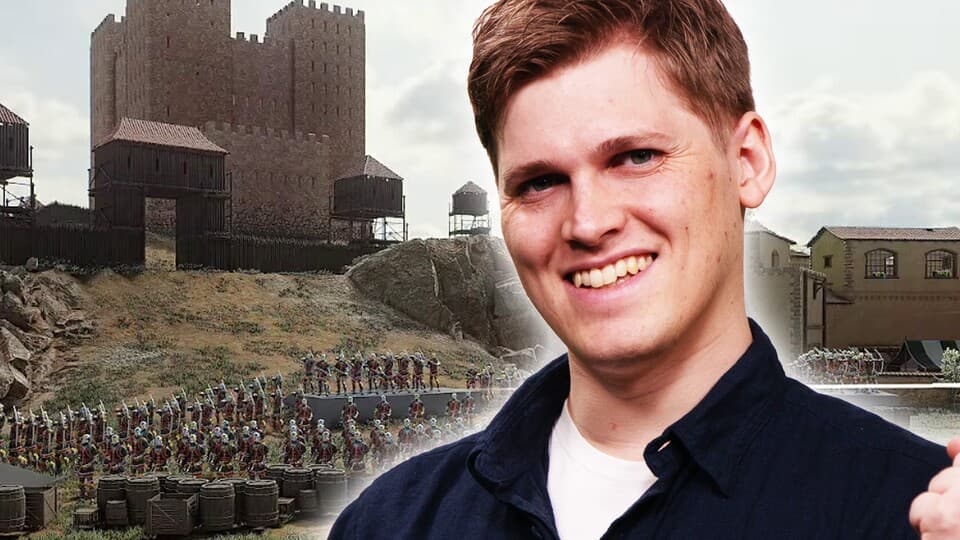
Is it all working yet? No. You can see the jank. Pathfinding, AI priorities, all the usual siege gremlins are absolutely going to rear their heads. But the design intent is finally pointing in the right direction: sieges as actual, evolving struggles, not one-and-done assault templates.
No more magic standing armies from turn one
One of the most interesting ideas CA has talked about for Medieval 3 – and one that fits this “weight and credibility” theme perfectly – is how armies are raised in the campaign.
In the early game, you don’t start with fully professional, permanent standing armies. Your forces are levies pulled from your regions – actual commoners dragged away from their fields and workshops. That means raising troops has an economic and social cost, not just an upkeep number. You’re weakening your region to defend it. Your legitimacy, laws, and infrastructure matter because they determine what kind of troops you can feasibly muster.
Only later, as you develop, do you transition into real professional retinues: more permanent, more specialised, more regionally flavoured. They’ve talked about these retinues having distinct identities based on where they come from and what you’ve built there, which reminds me a bit of what Three Kingdoms did with generals’ armies – but grounded in medieval society instead of heroic power fantasies.
This is exactly the sort of system that makes the whole game feel more believable. You’re not just some timeless god-king conjuring units from a build queue. You’re a ruler trying to drag real human beings into brutal conflicts, and your entire state bends under that pressure.
And battles feel heavier when you know that those troops represent real sacrifices from your regions, not just numbers going down in your treasury.
Why this transparency actually earns goodwill (for once)
I’ve seen some people argue that CA is only doing this “open development” song and dance because they’re desperate to repair their image. You know what? Good. They should be desperate. They burned through a lot of trust. They pushed too hard on monetisation. They shipped content that didn’t feel finished. They saw what happened when you assume the fanbase will just swallow anything with a Total War logo on it.
But there’s a right and a wrong way to respond to that kind of crisis. The wrong way is retreating into PR speak and pretending everything’s fine. The right way is what they’re doing with Medieval 3:
- Show prototypes early, even when they’re ugly.
- Explain your design goals in plain language.
- Explicitly tie new systems to long-standing community gripes (battle blobs, shallow sieges, shallow campaigns).
- Commit to iterating with the community instead of treating feedback as background noise.
Will they listen perfectly? Obviously not. This is still a big studio owned by a big publisher. There will be compromises. Some ideas we love will get cut. Some things nobody asked for will sneak in.
But the difference now is that I can see the work and I can see the direction. They’re not just telling me “we’re returning to our roots” while shipping the same floaty, hyper-fast battles. They’re literally putting their testbed for slower, heavier combat in front of us and asking: “Is this actually better?”

What I’m still wary of (because I’ve been burned before)
Let me be clear: early transparency doesn’t magically fix everything.
I still want to see how the AI copes with all this complexity. Cohesion systems and layered siege defences are great on paper, but if the AI spends half its time feeding units one by one into grinder gates or failing to coordinate multi-front attacks, that immersion collapses instantly.
I want to see what they do with difficulty. “Weighty” battles can easily turn into “frustrating slogs” if tuning is off. If elite armour becomes too dominant, or ranged units feel nerfed into irrelevance, or morale swings are either too wild or too toothless, that sweet spot disappears fast.
More than anything, I want to see how they handle post-launch support and pricing. Showing us prototypes is nice; it doesn’t excuse predatory DLC or half-baked expansions. Medieval 3 being great at launch won’t mean much if it’s wrapped in the same problems that made parts of the fanbase walk away in the first place.
So no, I’m not blindly forgiving everything because they streamed some grey-box sieges. I’ve been around this series too long for that.
But for the first time in years, I feel like Medieval Total War again means something
Despite all that caution, I can’t pretend Medieval 3 hasn’t flipped a switch in my brain.
I remember the first time a cavalry charge broke through my exhausted infantry in Rome, the whole line crumpling like a dam giving way. I remember the tense last stand on the walls in Medieval 2, when every exhausted spearman felt like a hero and I was sweating my way through every minute. I remember when Total War battles didn’t just look impressive; they felt believable, even when the numbers under the hood were doing all kinds of abstractions.
For years, I’ve watched that weight get chipped away. More spectacle, less substance. Faster kills, less time for decisions. Sieges that felt like a chore. Campaigns that churned out armies like factory lines instead of fragile, political creations.
Medieval 3, in its rough, proto-state, is the first time I’ve looked at a new historical Total War and thought: “Oh. They remember.” They remember that armour should matter more than hit points. That formation shape should matter more than click-speed. That bringing peasants to war should feel like an economic disaster, not just a quick way to fill out your front line. That a siege isn’t just a battle with walls – it’s a story about logistics, fear, erosion, and last stands.
And by dragging us into the process this early, they’re making it our responsibility too. If this game ships with floaty battles and throwaway sieges after all this, that’s on them. But if they actually pull it off – if Medieval 3 launches and those battles still feel this heavy, this considered – then we will have watched, in real time, a major studio actually listen to its historical fanbase and course-correct.
As someone who basically grew up on this series, who studied history partly because of those ridiculous Rome voiceovers and campaign intros, that matters a lot more to me than another flashy trailer ever could.
So yeah. I’m not all the way back on the hype train yet. But for the first time in years, I’m not standing on the platform with my arms crossed. I’m walking toward it, ticket in hand, hoping Medieval 3 really is the return to weighty, credible warfare that Total War – and its oldest fans – desperately needed.
FinalBoss // Gear
Level up your setup
01Graphics cardson Amazon→02Gaming laptopson Amazon→03High-refresh gaming monitorson Amazon→04Discounted game keyson Kinguin→Affiliate links · As an Amazon Associate, FinalBoss earns from qualifying purchases.
Want to Level Up Your Gaming?
Get access to exclusive strategies, hidden tips, and pro-level insights that we don't share publicly.
Ultimate Gaming Strategy Guide + Weekly Pro Tips