
Melty Blood: Twi-Lumina is real, due in early 2027, and the headline is bigger than “another anime fighter got announced.” What actually matters is that Type-Moon, French-Bread, and Aniplex are treating this like a careful expansion of a cult fighting game lane, not a flashy genre reset. The platform list alone tells the story: PS5, PS4, Switch 2, Switch, Xbox One, and PC via Steam. In other words, this is being built to meet the existing Melty Blood audience where it already lives, not to chase some imaginary next-gen-only prestige badge.
The reveal landed on May 2, 2026, with an early 2027 window and a teaser trailer that points to refined battle systems, new characters, and a new story tied to Type-Moon’s broader universe. French-Bread is back on development, Aniplex is publishing, and Kinoko Nasu is involved on the original-work side. If you know this series, that’s the reassuring part. If you’ve been around the fighting game scene long enough, the more interesting part is what the announcement doesn’t pretend to be.
Table of Contents (5)
This is a niche fighter getting smarter, not bigger
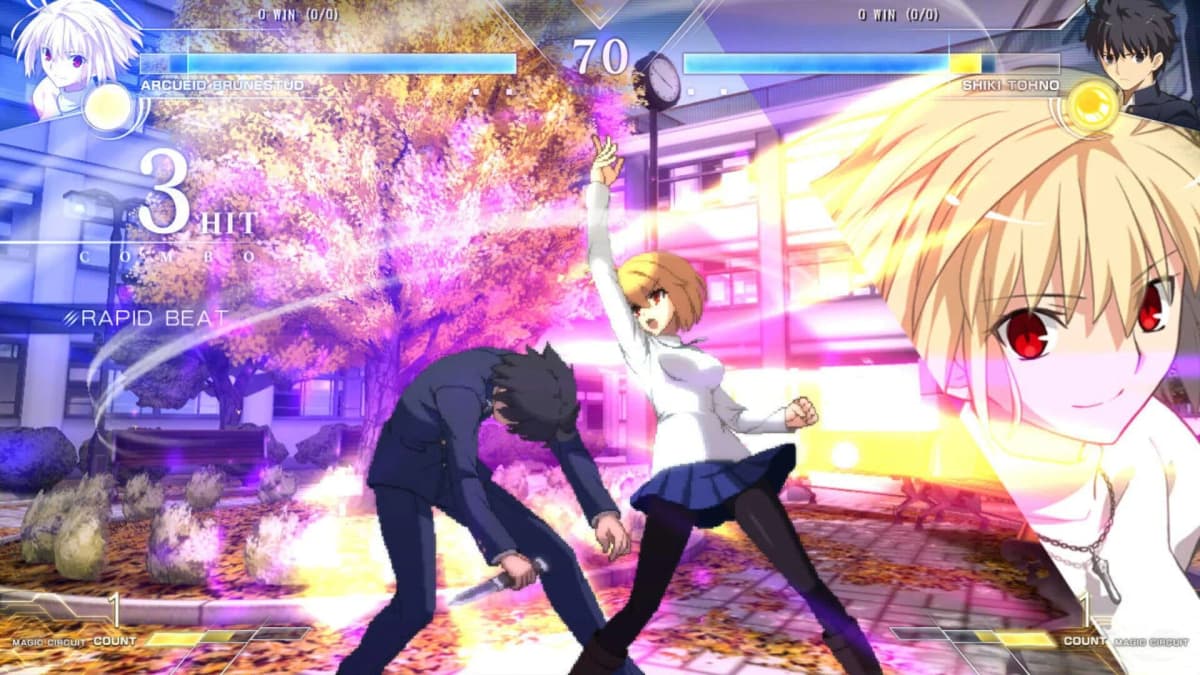
A lot of fighting game announcements come wrapped in the same tired promise: broader appeal, bigger spectacle, cleaner onboarding, maybe a whiff of esports ambition whether the game wants it or not. Twi-Lumina doesn’t seem to be doing that dance. The initial messaging is much narrower and, honestly, more believable. It’s selling a refined version of Melty Blood’s identity: sharper mechanics, new additions to the roster, and another Type-Moon-heavy story hook.
That matters because Melty Blood has survived for years precisely by not trying to become the next Street Fighter or Guilty Gear in the mainstream sense. Its draw has always been specific. Fast movement. Air-heavy pressure. Arcane system knowledge. A fanbase that overlaps with visual novel diehards and lab monsters in a way few other fighters can match. The smart play here is not sanding all of that down. It’s giving that audience a cleaner, more current package.
And yes, that also means the ceiling is lower. Melty Blood is unlikely to suddenly explode into a genre-defining giant in 2027. But not every fighter needs to. Some games do better business by being durable, respected, and very good at serving their lane. French-Bread has built a career on understanding that distinction.
The cross-gen rollout is the real tell
The announcement confirms support for Switch 2 and the original Switch, along with PS5 and PS4. That alone tells you Twi-Lumina is not being positioned as a technical showcase. It’s being positioned as an accessible competitive-and-fan-service release with a long tail. Fighting games live or die on player population, and population gets healthier when you stop pretending everyone upgraded their hardware on the same day.
There’s also a more practical truth here: anime fighters, especially ones with strong Japanese and dedicated international fanbases, benefit enormously from portable and lower-friction platforms. Switch support is not charity. It’s audience math. Keeping the original Switch in the mix heading into 2027 may look conservative, but conservative is often the sensible call for a game like this. A niche fighter does not get extra points for abandoning install base just to look modern in a press release.
The weird platform detail is Xbox. The announced version is Xbox One, with no explicit Xbox Series X|S version listed in the initial reporting. That doesn’t necessarily mean Series players are shut out; backward compatibility may do the work there. But it is still odd enough to flag. If I were asking the obvious PR question, it would be this: is there a native Series version coming, or is Xbox support effectively last-gen compatibility by another name? That distinction matters for performance expectations, store visibility, and how seriously Xbox is being treated in the launch plan.
The teaser promises “new systems,” which is where the risk lives
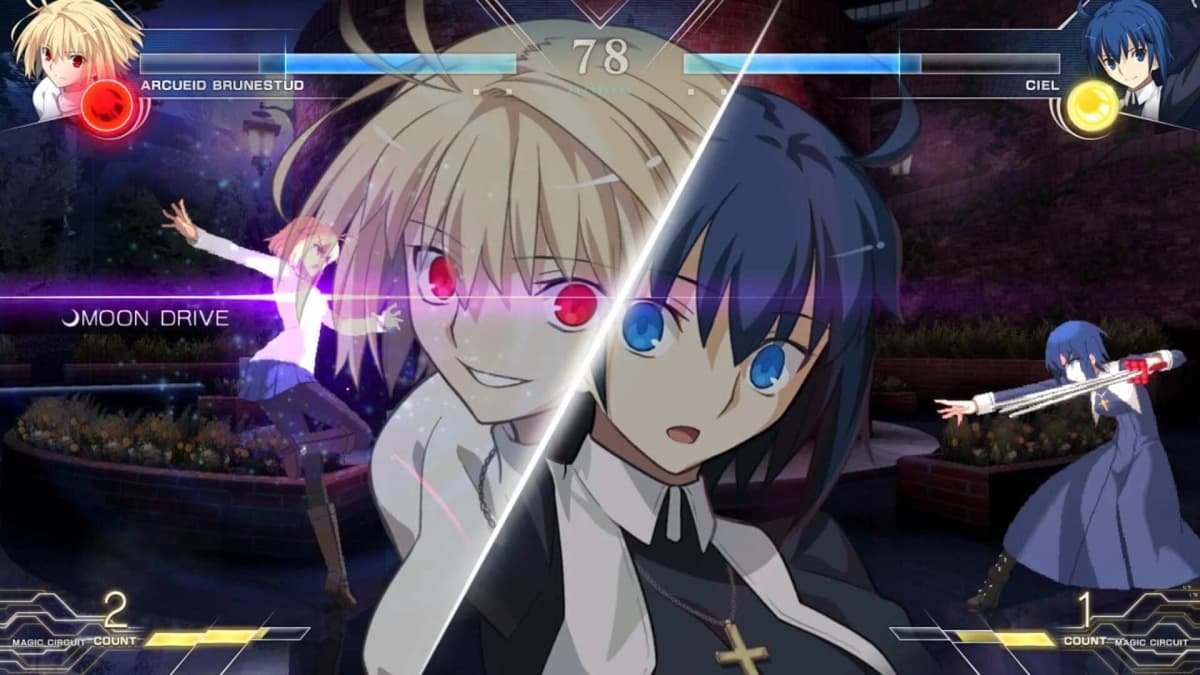
Early reports broadly agree on the basics: Twi-Lumina will introduce new characters and updated or upgraded battle systems. Some coverage also points to a character visible in the teaser, with outlets differing on whether to identify that reveal more cautiously as Len or more specifically as Black Len. Until the developers spell that out clearly, it is safer to say the teaser strongly hints at a familiar face rather than pretend the roster reveal is fully settled.
That uncertainty is minor. The bigger issue is system design. “Refined mechanics” can mean anything from genuinely smart iteration to a balance nightmare disguised as innovation. Fighting game history is full of sequels that added one mechanic too many, complicated match flow, or created a handful of dominant interactions that swallowed everything else. Melty Blood fans can handle depth. The danger is bloat, not complexity.
French-Bread has a better track record here than most. The studio usually understands what makes its games feel fast, expressive, and distinct. But the burden for Twi-Lumina is still pretty clear: new systems need to deepen player decision-making without turning neutral into nonsense or making legacy knowledge feel obsolete for the sake of patch-note theater. If the studio nails that, this gets interesting very quickly. If it doesn’t, the game risks becoming one of those fighters people respect more than they actually play.
What this says about Type-Moon’s strategy
There’s another layer here. Melty Blood has always been tangled up with Type-Moon’s wider ecosystem, and that’s not a weakness; it’s the business model. A new story, involvement from Kinoko Nasu, and renewed attention on Tsukihime-adjacent material all point to the same thing: this is not just a fighting game release. It is part of the ongoing Type-Moon content machine, where games, characters, and storylines keep feeding each other.
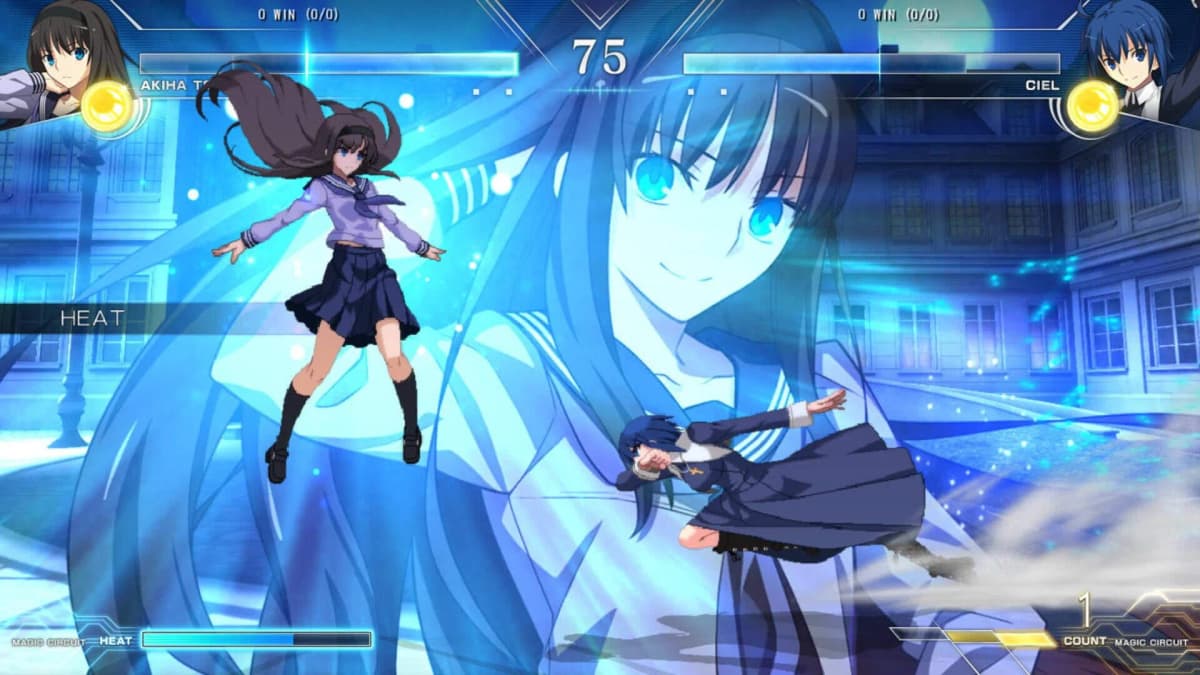
That can be great for fans, because Melty Blood works best when it leans into that weird identity instead of pretending to be genre-neutral. But it also means Twi-Lumina has to satisfy two crowds at once: players who care about frame data and players who care about lore density. That balancing act is why these games are beloved by some and completely impenetrable to others. The developers do not need to fix that. They just need to be honest about who this is for.
The multilingual support reported so far is a good sign on that front. English, French, Spanish, Portuguese, Japanese, Korean, Traditional Chinese, and Simplified Chinese suggest Aniplex wants a broader global footing even if the game itself remains unapologetically specific. That’s how niche franchises grow without losing their shape.
What to watch before early 2027
- Whether rollback, cross-play, and online lobby details show up early. In 2027, silence on netcode is not charming.
- Clarification on Xbox Series X|S support, because the current platform language leaves a noticeable gap.
- Actual system breakdowns, not teaser adjectives. “Refined” means nothing until players see movement, resource changes, and combo routing.
- The first serious roster reveal beyond teaser speculation. That will tell us whether this is a cautious follow-up or a more ambitious shake-up.
- How much Type-Moon story material is front-loaded into the pitch. If the marketing leans hard into narrative, expect this to court VN fans as aggressively as fighting game players.
The practical takeaway is simple: if you already care about Melty Blood, this announcement is promising for exactly the right reasons. It isn’t trying to cosplay as a mass-market event. It’s trying to be a smarter, broader-supported Melty Blood. That’s the better bet. What needs scrutiny now is not the existence of the sequel, but the execution details that always decide whether anime fighters become long-term staples or just another weekend of trailer hype.
FinalBoss // Gear
Level up your setup
01Top-rated gaming headsetson Amazon→02High-refresh gaming monitorson Amazon→03Gaming chairson Amazon→04Discounted game keyson Kinguin→Affiliate links · As an Amazon Associate, FinalBoss earns from qualifying purchases.
Want to Level Up Your Gaming?
Get access to exclusive strategies, hidden tips, and pro-level insights that we don't share publicly.
Ultimate Gaming Strategy Guide + Weekly Pro Tips