
Metro isn’t just going home; it’s picking a side. Metro 2039 is 4A Games slamming the series back into the Moscow tunnels, ditching open-world flirtations and multiplayer trends to make a tight, political, single-player horror shooter about authoritarianism, war, and what’s left when the surface – and the state – are irradiated beyond repair.
Table of Contents (9)
Key Takeaways
- Metro 2039 is a strictly single-player FPS, built as a handcrafted, story-first campaign in the classic claustrophobic Metro style.
- The game returns to Moscow’s underground in 2039, six years after Metro Exodus, with factions locked in a new authoritarian order called the Novoreich.
- 4A openly cites the COVID pandemic and Russia’s invasion of Ukraine as thematic influences, pushing the story toward harsher political and psychological territory.
- The studio has rebuilt its 4A Engine again, promising denser environmental storytelling, heavier survival horror pacing, and no open-world detours.
Metro is done chasing the open-world trend
The headline for players who bounced off Exodus is simple: the real Metro is back. Metro 2039 returns to tight tunnels, limited visibility, and level design that wants you nervous about every bullet, not checking your map for the next radiant quest marker.
4A Games describes Metro 2039 as a “handcrafted single-player campaign” that blends exploration, survival, stealth, and combat in a linear flow. No mention of hubs. No “sandbox” euphemisms. Every piece of messaging emphasizes corridors, choke points, and curated encounters over roam-where-you-want freedom.
Set in 2039, the game picks up six years after Metro Exodus. The surface is thawing but still lethal – irradiated, unstable, and crawling with new mutations – while the last scraps of humanity cling to the Metro lines under Moscow. That framing matters: Exodus was about escape and possibility; 2039 is about being dragged back into the hole and finding it worse than you left it.
There is still a surface, but it’s being positioned as a threat, not a playground. In the reveal stream, the only “open” shots are of ruined boulevards and blizzards of ash, clearly designed as controlled set pieces. This looks less like a soft reset and more like a conscious rejection of Exodus’ semi-open detour.
If 2033 and Last Light were horror-thrillers, and Exodus was Metro’s road movie, 2039 wants to be its pressure cooker: fewer vistas, more vents, and a camera permanently one bad decision away from blacking out.
The tunnels are political this time, not just spooky
Metro has always flirted with politics – fascist lines, communist lines, religious cults – but in 2039, 4A has stopped pretending it’s just aesthetics. The new power in the tunnels is the Novoreich, an explicitly authoritarian regime led by Hunter, now reimagined as a kind of post-apocalyptic Führer consolidating the Metro under one iron-fisted banner.
You play as “The Stranger”, a new, fully voiced protagonist with his own agenda rather than another mostly-silent moral sponge. He’s dumped back into the Moscow underground and forced to navigate a web of factions that all survived the nukes but haven’t learned anything from them.
4A and publisher Deep Silver are leaning hard on faction politics in their pitch. Expect rival stations, ideological enclaves, and an authoritarian state that doesn’t just sit in the background but actively shapes what missions you get and who you’re allowed to help. This is being framed less as “pick red or blue ending” and more as living under an occupied system where every choice has a cost.
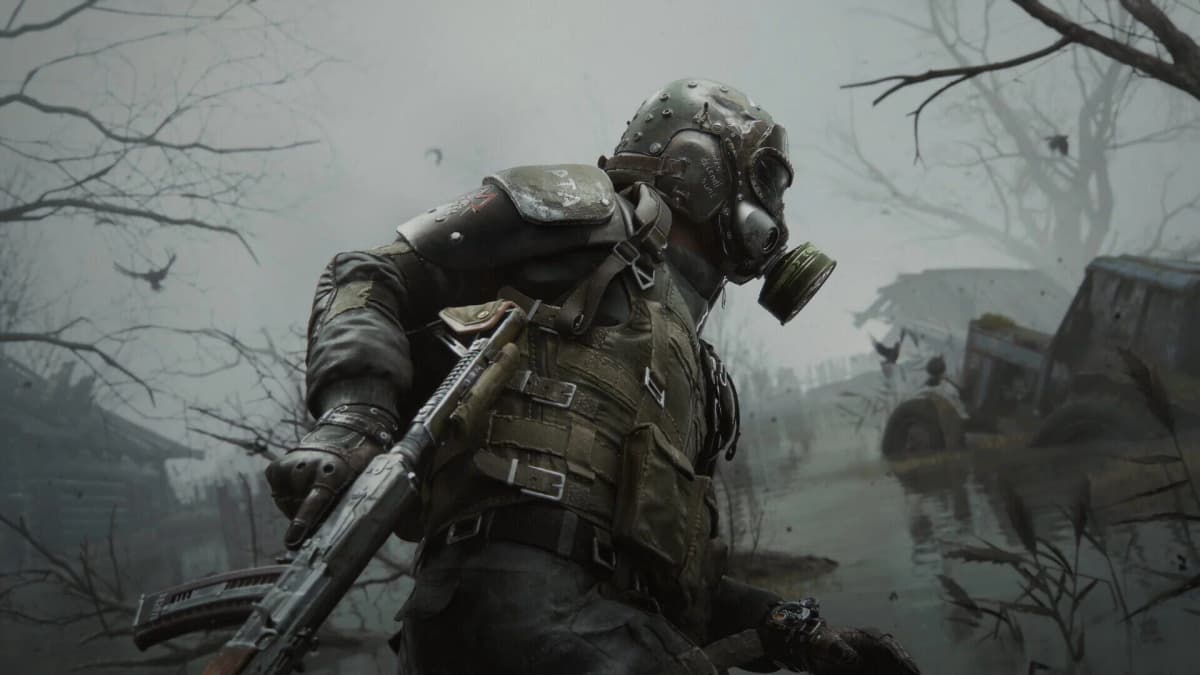
The uncomfortable part – the one the PR bullet points don’t spell out – is that this is a Ukrainian-rooted studio, working through an actual war, building a game about a Moscow dictatorship tightening its grip on a battered population. 4A has said outright that the “illegal invasion” of Ukraine and the broader political climate have shaped how they write this story.
Combine that with Dmitry Glukhovsky back on writing duties – an author who has been openly critical of the Kremlin and was sentenced in absentia in Russia – and you’re not looking at a neutral post-apocalypse. Metro 2039 is very intentionally about authoritarianism, propaganda, and the people stuck between factions they didn’t choose.
Psychological horror and survival pacing, not power fantasy
Metro has always been stingy with comfort, but 2039 sounds like it’s pushing further into outright horror. The reveal described “psychological horror” streaks, which, in Metro terms, means less gun fetish and more existential dread: hallucinations, unreliable narration, and a constant sense that your character is not okay even when the Geiger counter is quiet.
Mechanically, 4A is promising a classic Metro mix: scarce resources, mask filters as timers, stealth that actually matters, and weapons that feel like they were pulled out of a scrapyard and prayed over, not fresh from a loot box. The studio is talking up “signature equipment” instead of massive loot pools, which usually translates to fewer gadgets used in more interesting ways, rather than Diablo-style stat churn.
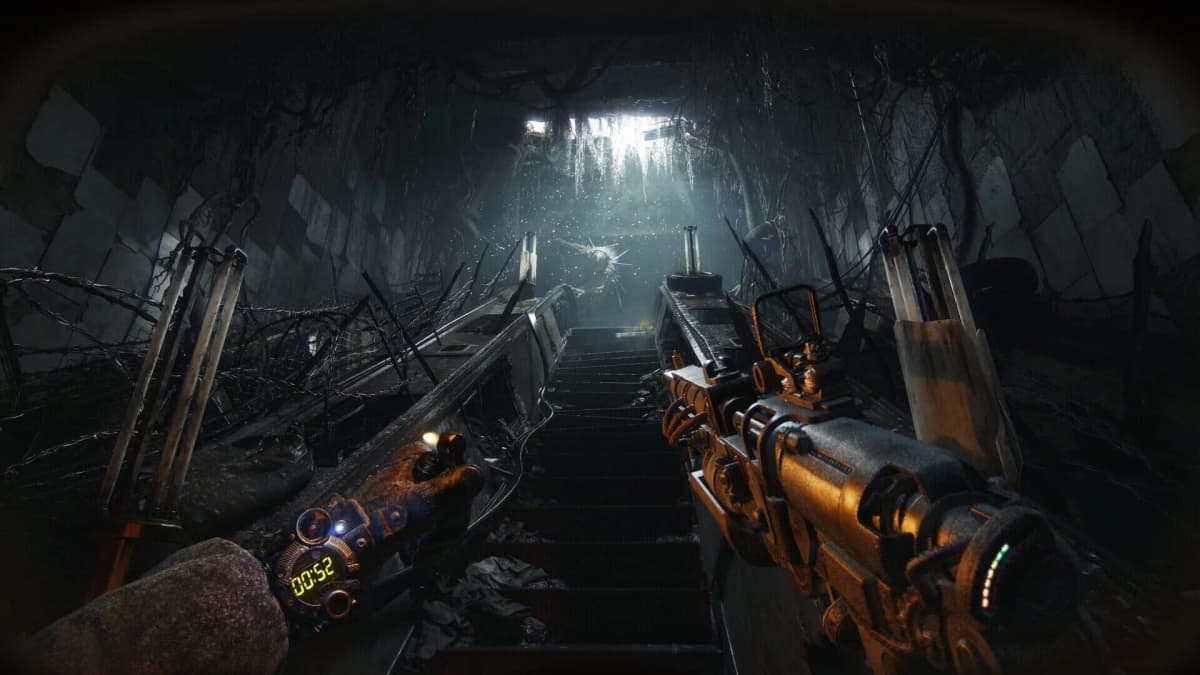
The 4A Engine has been overhauled again with a focus on ray-traced lighting and denser environmental details. That’s not just a tech flex; for Metro, lighting is gameplay. Darkness is cover and threat at the same time, and how faithfully they can bounce a flashlight beam around a flooded tunnel matters more than how many blades of grass they can render.
The concern is the one that always comes with “psychological” labels in shooters: is it genuine unease, or just jump cuts and screen shake between traditional combat arenas? The first-look footage was dense but light on raw, uninterrupted gameplay, and what we saw was extremely controlled – short combat bursts, scripted creepy moments, no UI. It looks good, but it also looks like exactly what you’d show if you wanted to avoid talking about systems that aren’t locked yet.
A single-player bullet in a live-service world
In 2026, a big-budget first-person shooter launching as a pure single-player campaign is borderline defiant. While everyone else bolts on extraction modes, battle passes, and seasonal roadmaps, 4A is making a 15-or-so-hour story you play once, maybe twice, and then uninstall.
Metro has resisted the multiplayer temptation before, but Metro 2039 is arriving in a very different landscape. The last few years have shown publishers that not every FPS can be a platform, and that the “premium, narrative shooter” slot isn’t as crowded as it used to be. Between DOOM Eternal winding down, Wolfenstein going quiet, and Battlefield still trying to remember what it is, there’s a gap here for a brutal, self-contained campaign with a clear voice.
The trade-off is risk: a single-player-only Metro has to sell itself on craft and identity, not on tail revenue. That’s why 4A keeps hammering “handcrafted” in their messaging. The promise is that every corridor, every encounter, every faction leader’s office exists for a reason, and not because the game needed another checkmark on a content roadmap.
If Metro 2039 lands, it strengthens the case that story-driven shooters still have a place at the AAA table without being chopped up into co-op modes and live events. If it whiffs, the next Metro pitch deck is going to have “online component” stamped all over it.
The war outside shaped the war underground
4A Games started in Kyiv and still has a large Ukrainian core, even after relocating part of the team to Malta years ago. Since 2022, that’s meant developing a game about war and ruin while their country experiences both in real life.
In interviews around the reveal, the studio pointed to the pandemic, disinformation, and Russia’s invasion as key influences on Metro 2039’s tone. This isn’t just set-dressing: the idea of a strongman regime exploiting fear, pushing a narrative of “order or chaos,” and reducing people to resources is ripped straight from real headlines, not a vague “what if nukes” thought experiment.
That context matters for how we read the Novoreich, Hunter’s transformation into a dictator, and the faction conflict in the Metro. It also makes 2039 a lightning rod. You can already imagine the discourse: is this “too political,” will it face pushback in certain markets, and how directly will it point fingers versus hiding behind allegory?
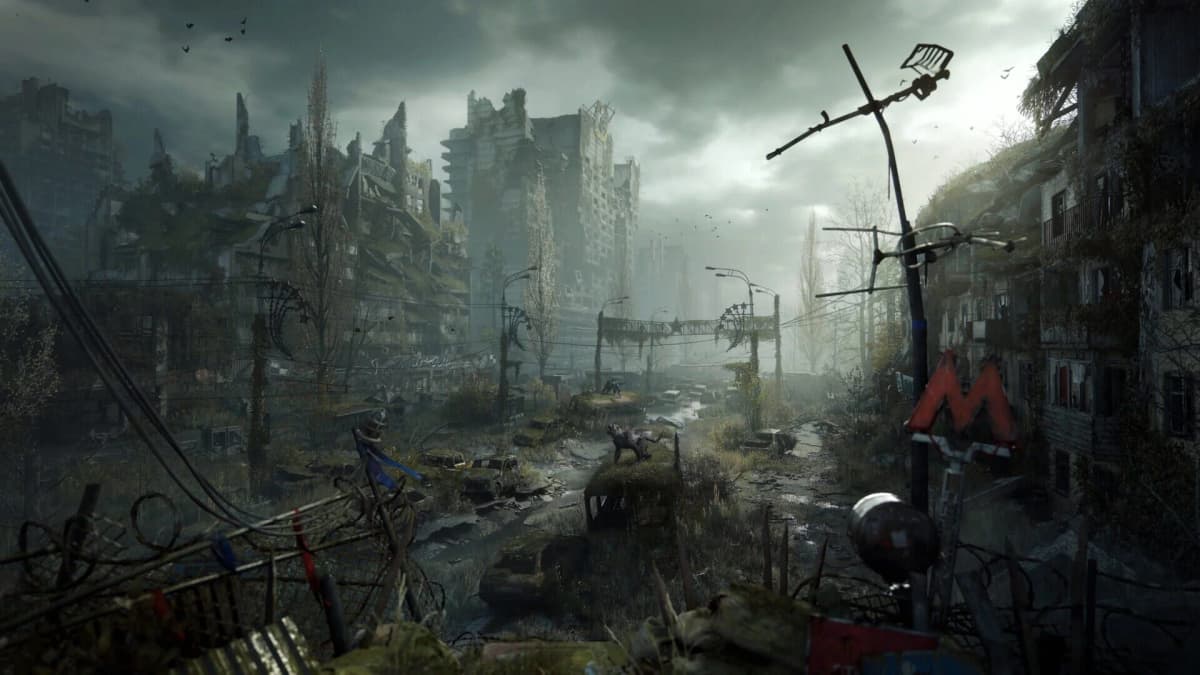
The moral calculus for players is likely to be nastier, too. Metro has always loved putting you in situations where both buttons feel wrong. With the writers now openly drawing from occupation, propaganda, and evacuation experiences, expect more choices that feel less like “good vs evil” and more like “which group of people are you okay with abandoning in the dark?”
The big question: will factions be systems, or wallpaper?
The one thing the reveal didn’t meaningfully answer is how interactive the Metro’s new political map really is. We saw uniforms, insignias, and speeches. We heard about factions and an authoritarian order. What we didn’t see was UI or mechanics that show how deeply you can get your hands dirty in that machine.
Are we talking dynamic reputation and shifting control of stations, or is this mostly a narrative skin on a traditional level sequence? Will siding with one group cut off missions from another, or just change which NPC barks the same objective at you? Can you actually undermine the Novoreich in systemic ways, or are you on rails toward a pre-written confrontation with Hunter no matter what?
Given 4A’s history, the safe bet is on strong authored moments with limited systemic branching: Metro stories have always been more about atmosphere and moral tone than about wildly divergent playthroughs. That’s fine – as long as expectations are set correctly. You’re probably getting a narrative gauntlet with some meaningful decisions, not a political sim in a gas mask.
What to watch next
- Real, HUD-on gameplay: A proper segment with UI, inventory, and unscripted combat will tell us how survival-heavy 2039 really is and whether stealth and resource management are back in full force.
- Faction and choice breakdown: A developer deep dive on how Novoreich, resistance groups, and neutral stations actually work in-game will reveal whether the politics are systems or just cutscenes.
- Performance and platforms: Winter 2026 on PS5, Xbox Series X|S, Steam, and Epic means current-gen only; watching how the game runs on consoles versus high-end PC will matter for anyone burned by Exodus’ launch.
- Ratings and regional reactions: Given the clear anti-authoritarian slant and Ukrainian perspective, pay attention to how (or if) the game is distributed and discussed in Russia and neighboring regions.
For now, the practical read is this: if you wanted Metro to stop pretending it was an open-world game and instead double down on cramped tunnels, moral rot, and ammo you can count on one hand, Metro 2039 is absolutely aimed at you.
TL;DR
Metro 2039 is a return to the Moscow underground: a linear, single-player FPS set in 2039 with a new protagonist, an authoritarian Novoreich regime, and survival-horror pacing. It matters because 4A Games is building one of the last big-budget, story-first shooters that’s openly shaped by real-world war and politics instead of sanding them down. The one thing to watch is how deep the faction and choice systems actually go when we finally see raw, uninterrupted gameplay later this year.
FinalBoss // Gear
Level up your setup
01Top-rated gaming headsetson Amazon→02High-refresh gaming monitorson Amazon→03Gaming chairson Amazon→04Discounted game keyson Kinguin→Affiliate links · As an Amazon Associate, FinalBoss earns from qualifying purchases.
Want to Level Up Your Gaming?
Get access to exclusive strategies, hidden tips, and pro-level insights that we don't share publicly.
Ultimate Gaming Strategy Guide + Weekly Pro Tips