
Metro 2039 isn’t just another trip through ruined tunnels; it’s a Ukrainian studio finally dropping the metaphor and making a game directly about fascism, complicity, and what it costs to keep your head down.
That’s what sits under the headline “Metro 2039 announced: Winter 2026 on PS5, Xbox Series, and PC (new trailer + reveal details).” The marketing talks about ray tracing and “psychological horror.” The subtext is a lot louder than that.
Table of Contents (7)
Key takeaways
- Metro 2039 is a fully single-player, story-driven FPS launching winter 2026 on PS5, Xbox Series X|S, Steam, and Epic Games Store.
- You play as a new, fully voiced protagonist called The Stranger, in what 4A Games says is the darkest Metro story yet.
- The game returns to Moscow’s Metro, now under a fascist regime called the Novoreich – a not-remotely-subtle reflection of real-world authoritarianism and war.
- 4A is doubling down on handcrafted, claustrophobic horror and a linear campaign at a time when most big shooters are chasing live-service and co-op.
A Ukrainian studio making a game about tyranny is not subtle
4A Games and publisher Deep Silver revealed Metro 2039 during an Xbox First Look showcase on April 16, with a six-minute trailer and a 15-minute dev breakdown. On paper, it’s the fourth mainline Metro: single-player FPS, winter 2026 release window, current-gen only.
In practice, it’s a Ukrainian team, some of whom have literally had to evacuate their homes since Russia’s full-scale invasion, making a story about a totalitarian regime ruling the Moscow underground through fear, propaganda, and violence. The devs are openly talking about exploring “the cost of silence, the horrors of tyranny, and the price of freedom.” That is not marketing fluff; it’s a thesis statement.
The new faction, the Novoreich, is Metro at its least coy: neo-fascist iconography, mass rallies, a charismatic chancellor figure, and a secret police apparatus that looks a lot like every 20th-century nightmare state rolled into one. Hunter, the legendary Spartan Ranger from earlier games, now appears as a key power player in that system. If Exodus flirted with political commentary, 2039 is taking it home to meet the parents.
Also back in the writing chair is Dmitry Glukhovsky, author of the original Metro novels and a very public critic of the Kremlin, who’s already been convicted in absentia by Russian courts for “spreading fake news about the army.” Put that together with a Ukrainian studio and a fascist Russian underground, and suddenly Metro 2039 looks less like dystopian fiction and more like catharsis with a budget.
If I had one question for the PR team, it would be this: how far are you actually allowed to go with this? Because this game either leans into its real-world parallels or ends up feeling weirdly sanitized, and there isn’t much middle ground.
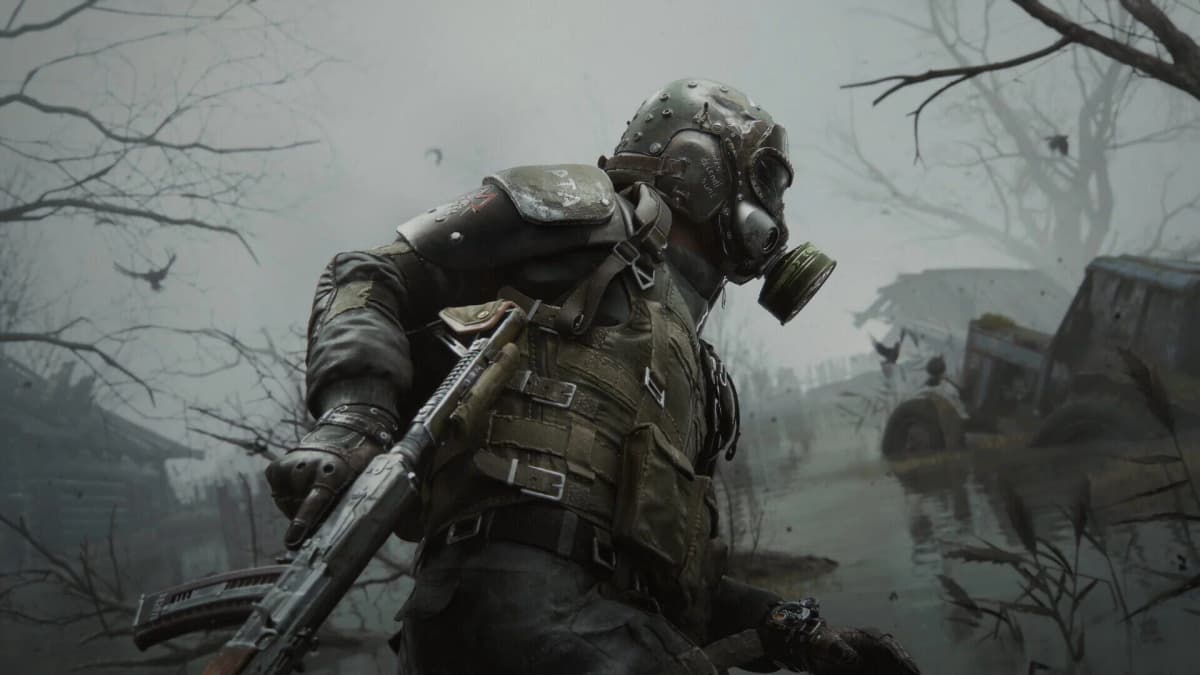
Back to the tunnels, back to what Metro does best
After Metro Exodus pushed the series into semi-open sandboxes and wide outdoor zones, 2039 slams the door shut and drags you back underground. The devs are blunt about it: this is a return to the “claustrophobic horror” of the first two games, built around handcrafted levels instead of open-world checklists.
The trailer and commentary show exactly what that means:
- Cramped, pitch-black corridors where the flashlight is a liability as much as a lifeline.
- Gas masks, filters, and that familiar, suffocating resource anxiety.
- Anomalies and mutants still very much around, with a heavier emphasis on psychological horror and hallucination.
- Encounters that look staged and specific rather than systemic – ambushes, interrogations, public executions, not “here’s a camp, clear it.”
From a design standpoint, that’s Metro playing to its strengths. The series never worked because it was big; it worked because it was dense. Every bullet mattered, every filter mattered, every shadow mattered. Exodus was interesting, but its best moments were still the tight ones – the Volga church, the Caspian bunker, the Taiga ambushes. 4A clearly took that note.
And they’re bringing a new version of the 4A Engine to pull it off, built strictly for PS5, Xbox Series, and modern PCs. Expect ray-traced lighting and global illumination everywhere, tunnels lit by single flickering bulbs, and surface ruins that feel genuinely hostile. This is one of the few shooters where “better lighting” actually changes how you play — seeing too much can get you killed just as easily as seeing too little.
The Stranger: Metro finally gives its protagonist a voice
For the first time in the main series, the player character isn’t a mostly silent Artyom with diary voice-overs. Metro 2039 puts you in the boots of “The Stranger,” a fully voiced lead who actually speaks during gameplay and cutscenes.
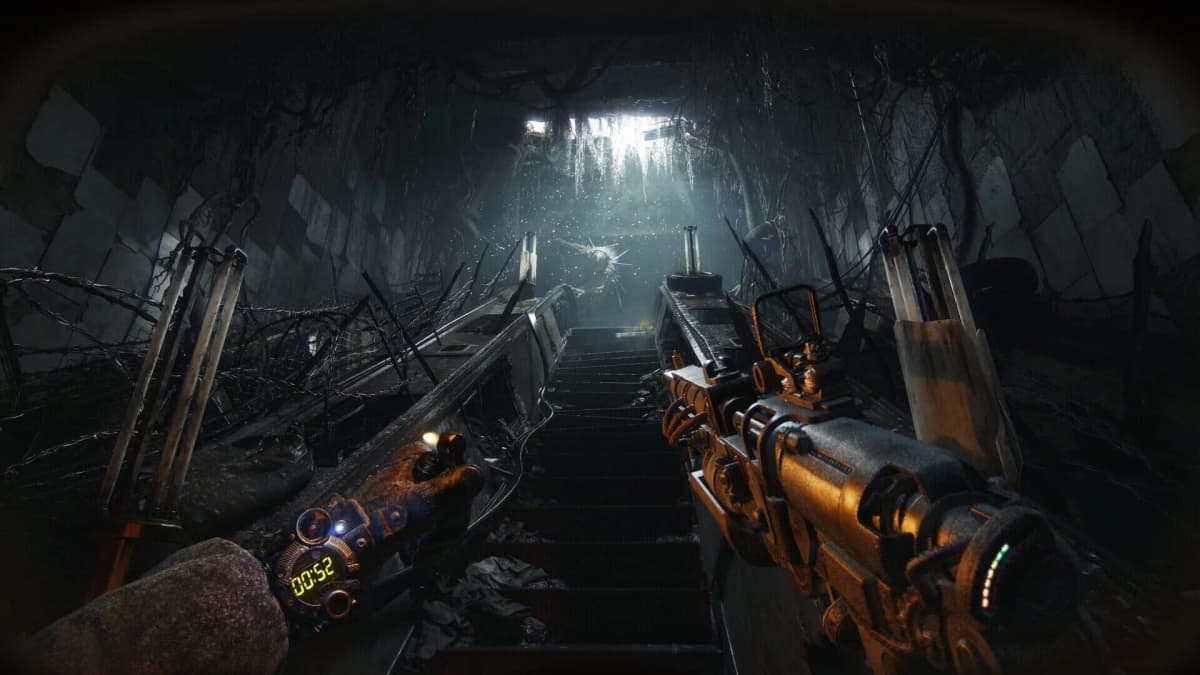
The Stranger is positioned as an outsider drifting into the Metro’s latest nightmare. That’s smart writing scaffolding: it lets the game reintroduce the tunnels to new players while giving veterans a fresh angle on familiar factions. It also gives 4A room to talk through the protagonist about complicity and resistance instead of trying to silently imply everything while the player character just… breathes heavily.
But this is also the biggest risk Metro 2039 is taking. The earlier games leaned hard on immersion-by-silence. You projected your own reactions onto Artyom; NPCs talked at you, not with you. Turning Metro into a more traditional cinematic FPS with back-and-forth dialogue, performance capture, and real-time cinematics could either elevate the storytelling or sand down the rough, haunted vibe that made the series different in the first place.
From what’s shown so far, 4A is going for a Half-Life-style middle ground: lots of in-engine scenes, minimal HUD, very few hard cuts to pre-rendered CG. The Stranger speaks, but you’re still in first person, still physically present in the room. If they pull it off, the heavy political themes land harder. If they don’t, we’re in “talky shooter with very serious monologues” territory.
Cinematic ambition vs. what made Metro special
The six-minute reveal reel is flashy — dense effects, big setpieces, a lot of slow camera crawls over beautifully lit misery. There’s real gameplay in there, but it’s edited within an inch of its life, sliced between cutscenes and scripted moments.
That’s the uncomfortable bit the PR doesn’t dwell on. Metro has always flirted with the “interactive movie” line, but the best sections were the ones that let the systems breathe: improvised fights in darkness, stealth runs that went wrong, desperate sprints to the next air filter. The reveal leans heavily on spectacle, not on that emergent tension.
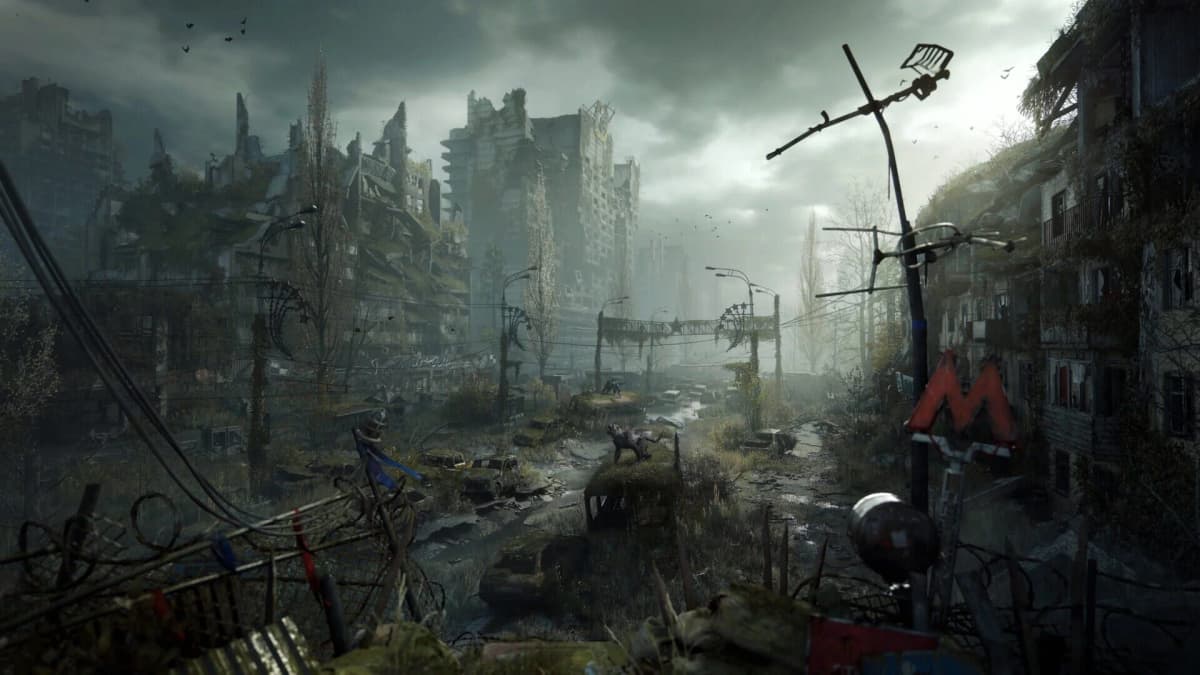
At the same time, 4A is stubbornly out of step with the industry in the ways that actually matter. No co-op. No PvP. No live-service pitch. No battle pass. Just: one campaign, one protagonist, one very specific nightmare. In 2026, for a big-budget FPS, that’s practically punk.
The real question is how much player agency survives under all this cinematic weight. Do we still get multiple approaches to encounters, meaningful stealth vs. aggression choices, different paths through the Metro’s politics like in Last Light and Exodus? Or is Metro 2039 putting all its chips on authored story and hoping the themes carry the load?
If 4A can hold the line on player-driven tension while finally embracing the political story they’ve been circling for a decade, Metro 2039 could end up being the rare AAA shooter that actually has something to say — and enough craft to make you feel it.
What to watch next
- A firm date inside “winter 2026” – If that window quietly slides to “2027,” you’ll know the scope and wartime dev realities have caught up with 4A.
- Uncut gameplay demos – A 10-15 minute raw segment without trailer editing will tell us how much freedom you actually have inside those tunnels.
- How hard the marketing leans on the politics – If later trailers scrub the “tyranny and silence” angle, that’s a sign someone in the chain got nervous.
- PC specs and tech breakdowns – Metro has a history of melting GPUs. With full ray tracing and current-gen-only ambitions, 2039 might be the next benchmark game.
TL;DR
Metro 2039 is a new single-player, story-driven FPS from 4A Games, revealed during Xbox’s First Look event and targeting a winter 2026 launch on PS5, Xbox Series X|S, and PC. It returns to a fascist-controlled Moscow Metro with a fully voiced new protagonist, The Stranger, and openly tackles themes shaped by Russia’s invasion of Ukraine. The big thing to watch is whether its cinematic ambitions enhance or smother the brutal, player-driven tension that made Metro worth caring about in the first place.
FinalBoss // Gear
Level up your setup
01Top-rated gaming headsetson Amazon→02High-refresh gaming monitorson Amazon→03Gaming chairson Amazon→04Discounted game keyson Kinguin→Affiliate links · As an Amazon Associate, FinalBoss earns from qualifying purchases.
Want to Level Up Your Gaming?
Get access to exclusive strategies, hidden tips, and pro-level insights that we don't share publicly.
Ultimate Gaming Strategy Guide + Weekly Pro Tips