
MicroProse’s new naval sim lets you walk the Scharnhorst — but can it really pull this off?
Game intel
Battleship Command
A WWII naval sim that actually lets you walk a battleship
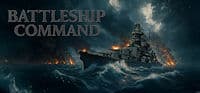
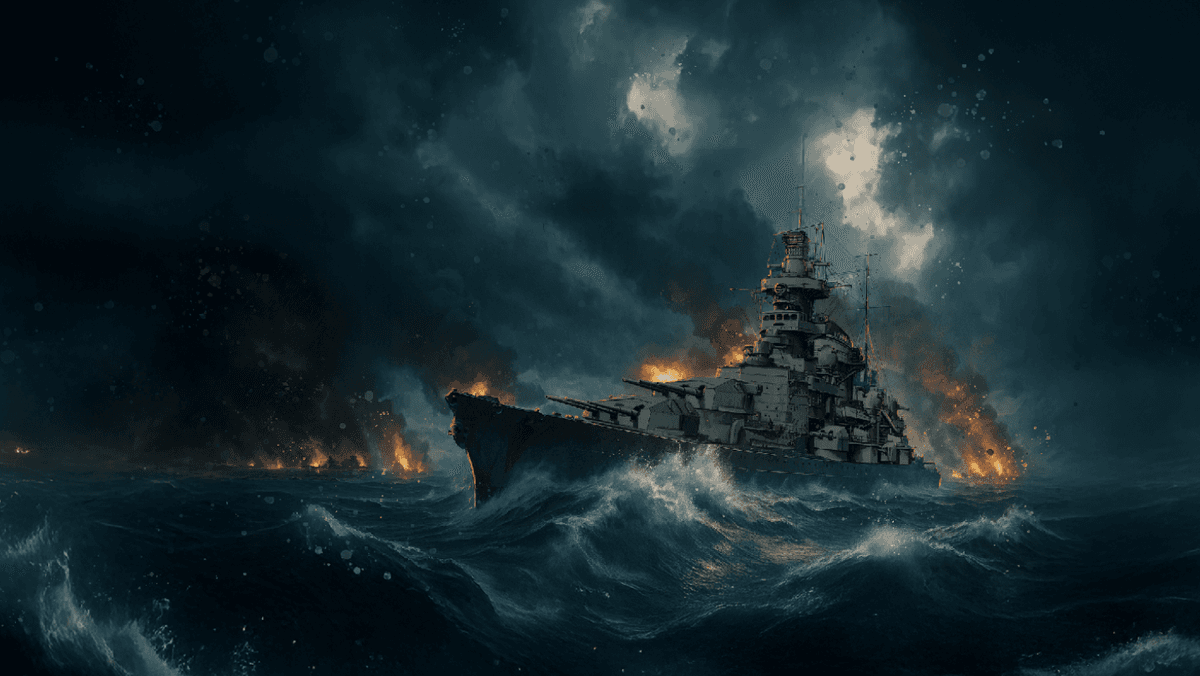
MicroProse just announced Battleship Command, a World War II naval simulation that puts you aboard the German battleship Scharnhorst. The hook isn’t just big guns and bigger seas-it’s that you can physically explore the ship in first person while managing authentic radar, gunnery, and navigation. If that sounds like UBOAT but scaled up from a cramped sub to a capital ship, that’s exactly why this caught my attention. We almost never get to roam a battleship interior and then fight a full-scale naval engagement from inside it.
- Full-ship first-person exploration plus hands-on radar, gunnery, and navigation.
- Dynamic campaigns across the Atlantic, Arctic, and Mediterranean-yes, North Cape vibes.
- Fleet command layer suggests you’ll coordinate escorts, not just your flagship.
- Scenario editor at launch means community-made battles could carry this long-term.
Key takeaways for players
- Ambition is huge: station-level simulation inside a fully explorable capital ship is rare.
- Success hinges on UI clarity, crew automation, and AI pathfinding at scale.
- If weather, radar, and fire-control are modeled meaningfully, this could be catnip for sim fans.
- No date or price yet; wishlist now and watch for longer gameplay showcases.
Breaking down the announcement (and what’s actually new)
Developed by Bracer and published by MicroProse, Battleship Command pitches a “live aboard” fantasy. You’ll walk the Scharnhorst’s decks, issue orders, and directly run historically grounded systems-rangefinders, radar, and fire-control included. On paper, that’s a big leap from the station-hopping interfaces of classics like Silent Hunter or more recent Destroyer: The U-Boat Hunter. The closest analogue is UBOAT’s interior immersion, but scaling that concept to a battleship—with multiple turrets, layered armor, and complicated fire-control chains—could be transformative if it’s more than set dressing.
The feature list is a sim fan’s checklist: dynamic ocean and weather, day-night cycles that genuinely affect detection, a “living world” of convoys and patrols, and a campaign that spans the Atlantic, Arctic, and Mediterranean. There’s also a fleet command element—coordinating supporting destroyers and cruisers—which hints at something beyond a single-ship experience. If that’s implemented with proper comms delays, formation logic, and believable AI, it could push this beyond a gorgeous gunnery range.
MicroProse’s modern catalog is full of passion projects that take big swings—HighFleet, Regiments, Second Front, Sea Power’s Early Access run—so Battleship Command fits the pattern. Bracer’s background as a sim/modding enthusiast-turned-developer also tracks with the MicroProse stable: small teams obsessed with authenticity, using publisher muscle to realize niche dreams.
Why this matters now
Naval sims have been quietly resurging, but they’re split between two camps: high-fidelity station sims without much physical presence, and flashier experiences that flatten the complexity. A proper “you are on the ship” simulation of a WWII capital ship sits in a weirdly empty space. If Battleship Command nails tangible cause-and-effect—weather knocking out radar, crew scrambling, splashes bracketing targets, shells walking onto range—that’s the kind of emergent storytelling naval sim fans live for.
Picking Scharnhorst is spicy, too. Historically, the ship’s Arctic sorties and the disaster at North Cape turned on radar, weather, and doctrine as much as raw firepower. If the game models early-war German radar limitations, sea state swamping forward mounts, and how British radar-directed gunnery flipped night actions, we’re not just playing pew-pew battleship—we’re learning the ugly trade-offs of 1940s naval warfare.
Want to Level Up Your Gaming?
Get access to exclusive strategies, hidden tips, and pro-level insights that we don't share publicly.
Ultimate Gaming Strategy Guide + Weekly Pro Tips
The skeptic checks: where this could sink
First-person battleship interiors are performance and design minefields. Interiors need to feel alive without tanking framerate, and they can’t be aimless corridors. The UI also has to make complex systems legible: a good sim makes you feel smart, a bad one makes you fight the interface. If the team doesn’t nail clear workflows—spotting, ranging, plotting, firing, damage control—you’ll be pausing every 20 seconds to find the one dial that matters.
Fleet command is another risk. Ordering escorts is great, but pathfinding in rough seas, formation keeping, and not ramming friendlies is harder than it sounds. If “coordinate” ends up meaning “press F to blob,” that bullet point won’t carry the campaign. Equally, a “living world” needs sensible convoy routing, believable Allied air cover in certain zones, and consequences for getting greedy. Without robust AI and campaign logic, dynamic can become random.
Then there’s the authenticity balance. Many sims promise “historically accurate systems,” but the devil is in the details: radar refresh rates, blind arcs, shell dispersion, ladder corrections, salvo timing, and how smoke, snow, and sea spray wreck your solutions. If those variables actually matter, amazing. If not, you may just be dragging sliders on a pretty bridge while invisible dice do the work.
Finally, a couple of unknowns: there’s no mention of release window, pricing, VR, or multiplayer. Co-op bridge stations would be incredible here, but that’s wishlist territory until we hear otherwise. The scenario editor is a smart inclusion, though—this community thrives when it can recreate battles, tweak orders of battle, and share “what if?” encounters.
What gamers should watch for next
- Deep-dive gameplay footage: show a full intercept—from search to first salvo to damage control.
- How radar and optics interact with weather and time of day: do you feel the difference?
- AI behavior for escorts and enemies: formation discipline, torpedo tactics, disengagement logic.
- Scenario editor scope: can creators set custom weather, objectives, and task forces easily?
Bottom line: Battleship Command has the right ambitions and the right publisher pedigree. If Bracer can fuse tactile interior immersion with rigorous naval systems and a campaign that respects history without being shackled by it, this could be the first battleship sim in years to truly make you feel like a captain, not a camera. The Steam page is live for wishlisting and there’s an announcement trailer—but the real test will be extended, uncut gameplay.
TL;DR
MicroProse’s Battleship Command puts you inside the Scharnhorst with first-person exploration and authentic systems across a dynamic campaign. It looks ambitious and genuinely fresh for naval sims—but UI clarity, AI smarts, and meaningful radar/gunnery modeling will decide whether it’s a classic-in-the-making or another pretty proof of concept.