
Table of Contents (12)
Silvermoon Sold Me a Dream Midnight Couldn’t Deliver
Walking into the revamped Silvermoon in Midnight hit me harder than any cinematic Blizzard has put out in years. I’ve been playing World of Warcraft since The Burning Crusade; my first serious main was a Blood Elf, and Silvermoon was my home base through some frankly embarrassing /played numbers. So when Midnight promised a Blood Elf-centric expansion and a reimagined Quel’Thalas, I was fully primed for, “OK, this is it, this is the one. This is the factor Midnight revives from WoW’s glory days: a proper return to meaningful racial fantasy.”
And, for a couple of hours, it actually felt like that. Silvermoon is stupidly good. It’s not just a graphical touch-up; it’s a full-on love letter. Pet cafés tucked away in back alleys, a grimy demonic nightclub, guards that actually react differently to your race and class, little vignettes of everyday life that make the city feel lived-in instead of a backdrop for auctioneers and portals. I lost an entire evening just wandering around, finding new corners and Easter eggs, not even touching the main quest.
If Midnight was just “We rebuilt Silvermoon and gave you housing” I’d probably be writing a much more glowing piece right now. But once you step out of that incredible hub and into the leveling campaign proper, the old WoW pattern comes roaring back: highs that remind you why you love this game, and lows that make you wonder how the same studio can be this clueless about its own strengths.
Midnight’s Story: Big Promises, Tiny Payoff
I went in expecting a Blood Elf expansion and got… a generic void invasion story with some Blood Elves loosely stapled on. That’s the core problem. Blizzard marketed Midnight like it was finally going to lean into one of its richest cultures, and then the main narrative treats that culture like set dressing.
Most of the major beats in the leveling campaign could be played out with literally any other race swapped in. You could trade the Blood Elves for Night Elves, Orcs, or Kul Tiran fishermen and the story would barely notice. There’s almost nothing that feels specifically, intimately Blood Elf about the central plotline, and that’s wild when you’re questing through Quel’Thalas itself.
Instead, Midnight leans way too hard on tropes WoW has already beaten into the ground. “Mysterious new NPC with sinister vibes turns traitor in a painfully predictable twist”? Check. Actually, double check, because they run that trick more than once. “The noble, pure-hearted Light user struggling against a harsher, more militaristic parent figure”? Yeah, that again, this time through Arator.
Let’s talk about Arator for a second. He’s fine, in the way a bowl of plain pasta is fine when you’re starving. He’s not offensively bad, he’s just aggressively derivative. This entire “gentle soul of the Light in conflict with his rigid father figure” arc is basically Anduin 2.0, with a dash of Talanji’s frustration at her elders thrown in for flavor. It’s not fresh, it’s not surprising, and it doesn’t say anything about the Blood Elves themselves. For an expansion that was sold as their big moment, that’s a massive miss.
Even Xal’atath suffers from this flattening. In The War Within, she had genuine mystique: a cunning manipulator, always three moves ahead, more dangerous for what she whispered than what she actually did on screen. In Midnight, she already feels like she’s devolving into another blunt hammer of a villain. Less chessmaster, more Saturday morning cartoon boss who shows up, blasts some stuff, monologues, and vanishes. For a being of void intrigue, that’s such a boring use of her.
Blizzard’s New Addiction: Saccharine Reconciliation Porn
The part that really grates, though, is the tone. Dragonflight already tested my patience with its constant hugs-and-healing energy, but Midnight doubles down on the idea that every single character interaction has to be an emotional breakthrough or a heartwarming reconciliation moment.
Look, I’m not asking for endless misery and nihilism. I don’t want every story beat to be Sylvanas committing another war crime. But Midnight swings so hard in the other direction that nothing feels earned anymore. Centuries of racism, blood feuds, and existential cosmic terror are brushed aside in the space of a single quest hub because we’ve decided today is about “understanding” and “moving forward together.”
You get factions that have spent millennia trying to annihilate each other suddenly cracking sitcom-tier banter after a few shared objectives: corny jokes, forced laughter, “guess we’re not so different after all, huh?” vibes. It’s tonal whiplash. This is supposed to be an apocalyptic void invasion, not a cross-faction group therapy retreat.
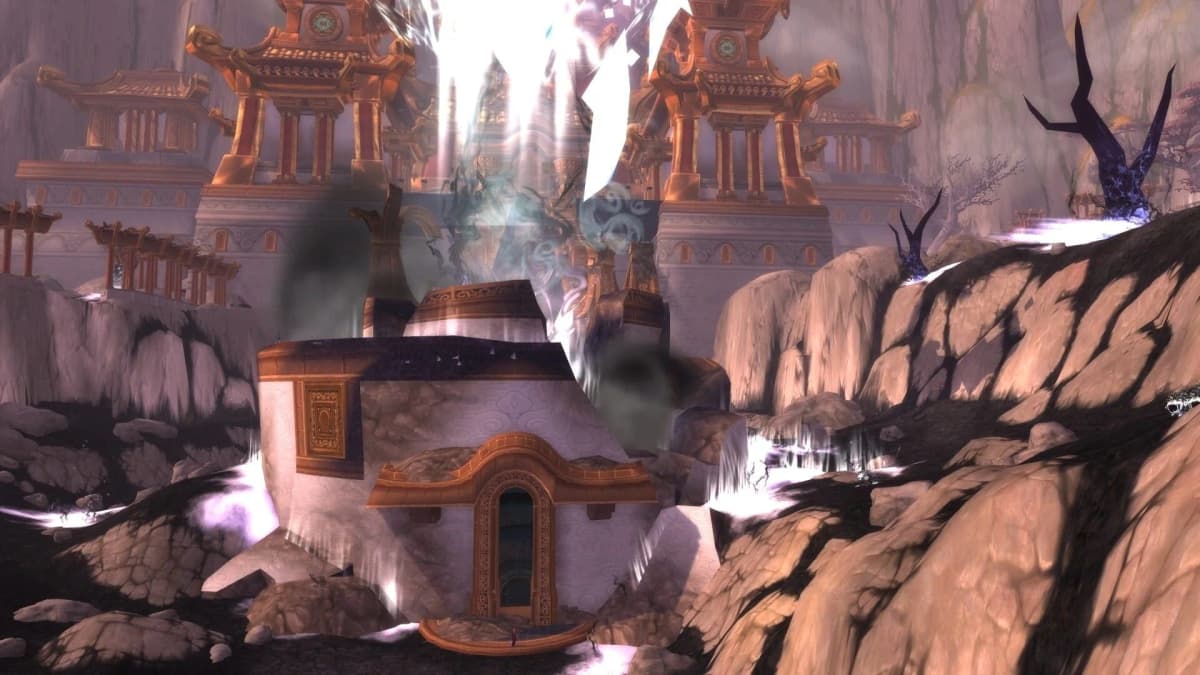
The worst offender for me is the Den of Nalorakk dungeon. The setup should be metal as hell: you’re facing visions conjured by the Amani Loa of War, a god of a culture defined by its brutal history, its rage, its endless fights against invaders and old gods and everyone in between. And what trial does this Loa of War send you into?
Picking berries.
I’m not even exaggerating. We went from “ancient blood-soaked god of war” to “please collect some forest snacks” in one hop. And yeah, I get that it’s meant to be subversive and light-hearted, but tone matters. A silly objective can work in a goofy, low-stakes storyline-like the Pandaren heritage questline, which was warm and fuzzy and genuinely lovely because it fit that culture’s vibe.
Here, in the middle of a void apocalypse and a story about racial trauma and cosmic darkness, it feels like Blizzard is terrified of letting anything stay sharp or uncomfortable for more than a few minutes. You can actually see the writers yanking the wheel away from genuine conflict every time it threatens to become interesting.
Where’s the Messy Middle Ground?
The irony is I’m on record as hating the old Alliance vs Horde war fetish. I’m glad Blizzard finally buried that fossil. But the lesson they seem to have taken is “OK, so now everyone has to get along, all the time, as fast as possible.” There’s a massive middle ground they keep skipping: uneasy alliances, unresolved grudges, people working together despite the weight of what’s happened before.
Midnight flirts with this in tiny doses. The tension between the Army of the Light and the Blood Elves? That stuff slaps. You absolutely should have friction between fanatical cosmic crusaders and a people who were nearly eradicated by a corrupted version of the same radiant power. Those scenes felt grounded and specific, like characters with history were reacting to each other instead of mumbling scripted “we must unite” platitudes.
But those bits are rare. Most of the campaign is allergic to discomfort. Cultures with centuries of trauma look at each other across the battlefield, shrug, and say, “Ah well, bygones,” then fast-forward to being besties. And because it all happens so fast, the “emotional” moments of healing land like wet cardboard. You can’t spam catharsis every zone and expect it to still mean something.
Uneven Pacing and Underwhelming Payoffs
Even mechanically, the leveling campaign feels off. In The War Within, I dinged cap almost purely off the main story. It felt tight and intentional: do the campaign, hit max, keep side content for alts. Midnight, though? I was two levels short after finishing the full story. Not the end of the world-there’s plenty to do-but it adds to that sense of “rough draft” design.
Uneven Pacing and Underwhelming Payoffs
Even mechanically, the leveling campaign feels off. In The War Within, I dinged cap almost purely off the main story. It felt tight and intentional: do the campaign, hit max, keep side content for alts. Midnight, though? I was two levels short after finishing the full story. Not the end of the world-there’s plenty to do-but it adds to that sense of “rough draft” design.
🎮 Get This Game at the Best Price
Compare prices instantly and save up to 80% on Steam keys with Kinguin — trusted by 15+ million gamers worldwide.
*Affiliate link — supports our independent coverage at no extra cost to you
And then there’s the abandoned threads. Remember Anduin’s excellent arc in early War Within? Midnight basically shrugs and moves on. We’ve got a brand new Light boy to psychoanalyze now, don’t worry about the old one. It’s emblematic of Blizzard’s recurring memory loss with their own storylines. Big emotional beats just evaporate between expansions, replaced by new ones they swear you should care about just as much.
Where Midnight Actually Works (And Gives Me Hope)
It’s not all doom and gloom. The final leveling zone, Voidstorm, hits closer to the tone I wanted from the start: darker, more grounded, less obsessed with everyone hugging it out. There’s a new NPC introduced there who’s exactly the kind of weird, morally grey presence this story desperately needed earlier. If the rest of Midnight follows that energy in patches, the expansion could still grow into something special.
Some of the side quests have also quietly outclassed the main campaign. I haven’t cleared them all yet, but the Murder Row questline leading into its dungeon is a standout: tightly written, dripping with Blood Elf flavor, and willing to use existing lore instead of pretending the last twenty years of worldbuilding never happened. It’s almost surreal how much more confident and specific that writing feels compared to the broad, focus-grouped tone of the main story.
I’ll also give Blizzard credit for one structural choice: Arator’s story playing out across multiple old zones is a good idea on paper. I like anything that gets us back into the broader world instead of quarantining every narrative beat inside the new expansion islands. The execution may be shaky, but the instinct is solid.
Prey: The One System That Actually Feels New
Let’s talk systems, because this is where Midnight quietly shines. Delves in The War Within were the big design swing; Prey feels like the smaller but still meaningful follow-up. It’s an opt-in hunting system that layers extra challenge and rewards onto your open-world play. Pick a zone to hunt in, do world content there, and eventually you trigger a mini-boss showdown with loot that, at higher tiers, can hit hero-track levels.
While you’re flagged for a hunt, your target can ambush you unexpectedly during normal activities, which is the closest WoW has felt to being legitimately dangerous in the overworld in a long time. You’ll also see extra world quests and minor activities pop up—though, annoyingly, those don’t count toward zone assignment objectives, which feels like a very Blizzard oversight.
Prey isn’t as transformative as delves were, but I like it a lot more than I expected to. Because it’s fully optional, it doesn’t turn daily play into a chore, but when I’m in the mood for that little edge of danger and progression, it’s there. If there’s one factor Midnight revives from old-school WoW for me, it’s that sensation of “the world might punch back when I’m not ready.” As a “come back” pitch, the core factor Midnight revives game-wide is that feeling of ambient threat in the open world, and I’m here for it.
The Weird Cost of Early Feature Releases
Here’s the other reason Midnight’s launch feels strangely muted: so many of its headline features showed up before the expansion actually dropped. Player housing, the Devourer Demon Hunter spec, big UI changes, allied race groundwork—most of that rolled out in pre-patches or soft launches. So even though they’re technically “Midnight systems,” they already feel like old news.
Don’t get me wrong, I’m thrilled housing exists at all in retail WoW. I’ve already sunk an unhealthy amount of time into building out a Blood Elf-themed estate, cursing at the clunky UI while also grinning like an idiot because the creative potential is that good. But when Midnight’s official launch day arrived, the “newness” of that system had already bled out.
Same with Devourer. I’ve dabbled with it; it’s stylish, it’s fun, it’s also clearly still getting tuning passes. But because it showed up ahead of full Midnight content, it didn’t feel like part of the expansion’s opening salvo. What we were left with on day one was mainly the leveling campaign, the revamped Quel’Thalas zones, the new allied race, and Prey. That’s not nothing, but it does amplify how much the story’s weaknesses drag the whole package down.
Midnight vs. The War Within: The Return of the Old WoW Curse
Coming off The War Within, Midnight’s unevenness stings more. War Within wasn’t perfect, but it was consistent. The leveling campaign felt focused and coherent, the tone knew what it was, delves were an instant win, and the whole thing landed like Blizzard finally understood how to ship an expansion that didn’t saw off its own legs in the first patch.
Midnight feels like regression to the mean. Gorgeous zones, killer city revamp, some excellent side content, a promising new world system… all glued together by a story that can’t decide if it wants to be apocalyptic cosmic horror, heartfelt generational trauma drama, or Saturday morning cartoon about the power of friendship. This is the “two steps forward, one step back” rhythm that’s haunted WoW since forever: Legion to BfA, Shadowlands to Dragonflight, War Within to Midnight.
And the thing is, this isn’t about “oh, you just hate positivity.” I want hopeful WoW stories. I liked the Pandaren heritage quest. I liked seeing characters grow beyond endless faction war chest-beating. But hope only hits if it has to fight through something real to get there. Midnight keeps sanding down every edge until there’s nothing left to push against.
So Where Does That Leave Me With Midnight?
Here’s the honest answer after a week: I’m going to keep playing Midnight, but for very specific reasons. I’m here for Silvermoon. I’m here for housing. I’m here for Prey hunts and the hope that Voidstorm’s stronger tone is a preview of where the patch content will go. I’m not here because the main campaign rocked my world. It didn’t. It coasted.
As a lifelong Blood Elf main, that annoys me more than any buggy launch or balance pass ever could. This was supposed to be our expansion, the one that digs into our history, our compromises, our arrogance, our survival. Instead, it mostly uses us as pretty set dressing for another round of “void bad, Light complicated, everyone hug it out by the final cutscene.”
The good news is that Midnight hasn’t done anything irreparably stupid to the lore yet. This isn’t Shadowlands levels of “what have you done to my universe?” It’s more “wow, you really played that safe and shallow.” And safe and shallow is fixable. Patches can deepen existing characters, lean harder into the cultures they claimed to spotlight, and let some of that messy, uncomfortable tension actually breathe.
But if you’re someone who bounced back into WoW because all the hype said this was the triumphant “Midnight revives WoW” moment? Temper your expectations. Midnight revives pieces of the game brilliantly—city design, social systems, open-world danger—but it also resurrects the worst habit Blizzard has: mistaking constant emotional fireworks and fast-forward friendships for actual storytelling.
I’ll be in Silvermoon either way, building a ridiculous arcane-themed rooftop garden and queueing for hunts between herb nodes. I just wish the story Blizzard wrapped around all this good design felt like it deserved the city—and the people—it’s supposedly about.
FinalBoss // Gear
Level up your setup
01Top-rated gaming headsetson Amazon→02High-refresh gaming monitorson Amazon→03Gaming chairson Amazon→04Discounted game keyson Kinguin→
Affiliate links · As an Amazon Associate, FinalBoss earns from qualifying purchases.
Want to Level Up Your Gaming?
Get access to exclusive strategies, hidden tips, and pro-level insights that we don't share publicly.
Ultimate Gaming Strategy Guide + Weekly Pro Tips