
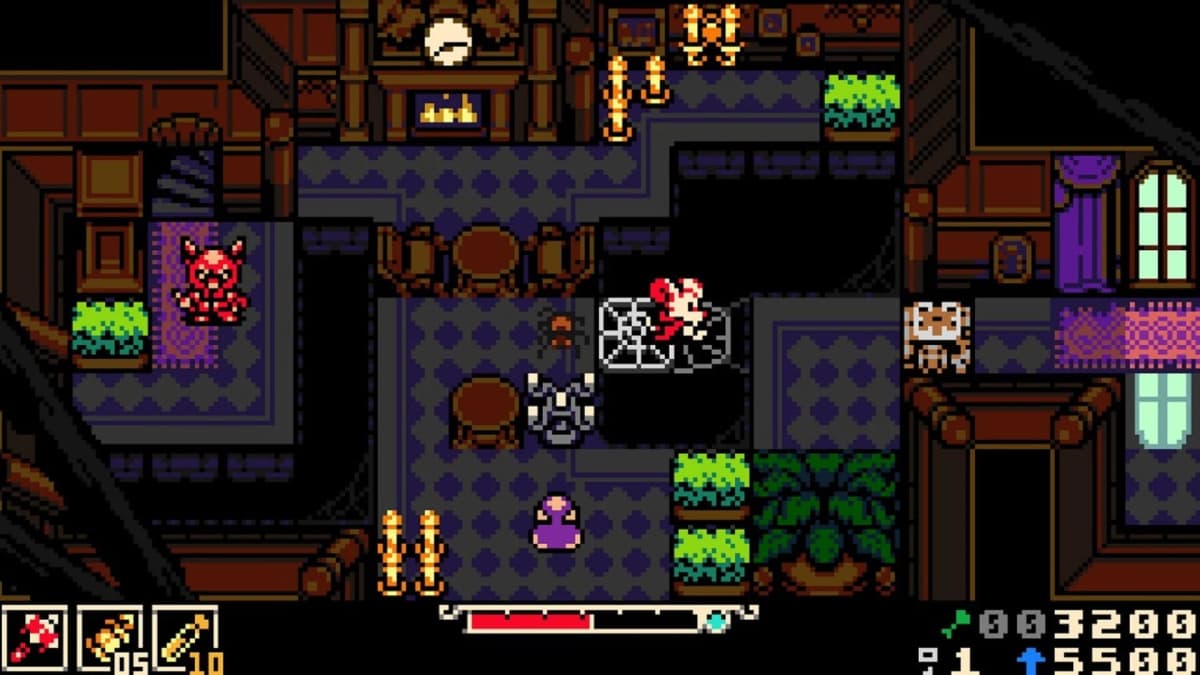
There is a particular kind of trust Yacht Club Games earned over the last decade that very few indie studios can claim. After Shovel Knight became a modern benchmark for crowdfunded passion projects-marrying NES-era visuals with design sensibilities that actually respected the player’s time-the studio’s name became shorthand for a specific promise. You knew you were getting meticulous sprite work. You knew you were getting tight controls. You knew you were getting a game that loved its inspirations without being suffocated by them. So when Mina the Hollower emerged with trailers emphasizing a Game Boy Color aesthetic and top-down dungeon crawling, I made an assumption. I assumed this would be the studio’s palette cleanser. A comparatively gentle Zelda-like. A nostalgic hammock where I could relax after years of demanding open-world sprawls. I was wrong, and the game never misses an opportunity to punish that assumption.
The history of top-down action-adventures is largely a history of player comfort. From A Link to the Past to Link’s Awakening, entries in The Legend of Zelda series trained us to expect a reliable vocabulary. You enter a room, you assess enemies, you block or strike, you collect the key, you move to the next room. Yacht Club knows this vocabulary better than most. They counted on players like me walking in fluent in that language, and then they systematically rewrote the dictionary. Mina the Hollower looks like a lost cartridge from 1999. It plays like a top-down Bloodborne mod that somebody smuggled onto a Nintendo handheld. The dissonance between expectation and reality is not an accident. It is the foundation on which the entire experience is built.
Table of Contents (8)
My First Hours Were a Masterclass in False Security
I started my journey on PC, though I eventually bounced between Steam Deck, Nintendo Switch, and PlayStation 5 just to see how the game felt across ecosystems. The opening title screen is all warm chiptune melody and a restricted color palette-sickly greens, bruised purples, and deep ocean blues that immediately evoke late-era Game Boy Color production values. The music is haunting in a way that suggests atmosphere rather than danger. I guided Mina onto the shores of Tenebrous Isle, traded dialogue with a few NPCs whose writing carried that signature Yacht Club wit—darkly funny, slightly melancholic, never wasting a word—and I settled in. The first few screens ask you to swing a basic weapon at sluggish enemies. The burrow mechanic gets introduced in a safe cave with no threats. Everything whispers that you are in for a six-to-eight hour cruise through a lovingly crafted retro diorama.
The lesson arrives swiftly and without mercy. I stumbled into an early encampment of skeletal warriors, tried to trade blows like I was Link with a Hylian Shield, and died in roughly four seconds. The screen cut to black. I respawned at the last lantern—a checkpoint system that functions identically to a Dark Souls bonfire—and realized my accumulated bones were gone, dropped at the site of my death. If I died again before retrieving them, they would vanish permanently. In an instant, the temperature of the game changed. My shoulders tensed. I stopped treating every new room like a museum exhibit and started treating it like a crime scene I needed to investigate before it investigated me. That shift never reversed. I spent the next twenty-five hours in a state of focused, delicious anxiety.
The Burrow Is the Entire Game
Every action-adventure needs a mechanical identity, and Mina the Hollower builds its entire framework around a single input: burrowing underground. Holding the trigger phases Mina beneath the floor, allowing her to slip past enemies, bypass obstacles, and launch devastating surfacing attacks from below. In a lesser game, this would be a gimmick. A situational tool for crossing gaps or avoiding traps. Here, it is the spine of combat, traversal, and puzzle design. The stamina bar governing your time underground prevents infinite invincibility, forcing you to manage submersion in rhythmic bursts. You cannot camp below the dirt. You have to plan your entries and exits with the same precision you would apply to a parry in a fighting game.
I learned this the hard way during a mid-game gauntlet in a flooded laboratory where projectile turrets lined the walls and armored knights patrolled the center. My instinct was to backpedal, to create space and pick off enemies individually. That instinct killed me three times. The solution—the only solution—was to stay aggressive, burrowing directly toward threats, phasing through their attacks, and surfacing behind them for critical damage before the next volley arrived. It felt like learning to drive a manual transmission while racing. The game was not asking me to play defensively. It was demanding that I treat the burrow as an offensive lunge rather than a defensive panic button. Once my brain rewired around that truth, rooms that seemed impossible became puzzles with clean, violent solutions.
The mechanic also fundamentally alters exploration. Secrets are not merely hidden behind false walls; they are buried beneath floors that require you to burrow under barriers and pop up on the other side. I remember finding a health upgrade in a crypt I had passed a dozen times, simply because I finally noticed a one-pixel gap in the tile pattern that suggested I could slip underneath. If Mina stays underground too long, her stamina breaks and she surfaces vulnerable—a detail that cost me my life more than once. The level designers at Yacht Club place these moments with surgical care. They are never obvious, but they are always fair. If you are paying attention to the architecture, the game rewards you with weapons, trinkets, and shortcuts that can trivialize entire dungeons—provided you have the skill to exploit them.
Tenebrous Isle Is a Knot, Not a Highway
The world design rejects the modern fetish for vast, empty landscapes in favor of something far more sinister: density. Tenebrous Isle is a tangled mesh of shorelines, catacombs, ruined laboratories, and fog-choked forests that loop back on themselves with Metroid-esque cruelty. For the first three hours, I thought I was moving through a linear sequence of themed levels. Then I activated a lift in a flooded cavern and emerged behind a locked door I had encountered in the opening forest. I found a key in a late-game graveyard that opened an optional vault near the starting beach. The map is not a straight line. It is a spiral, and it expects you to remember its layout without relying on quest markers or glowing breadcrumbs.
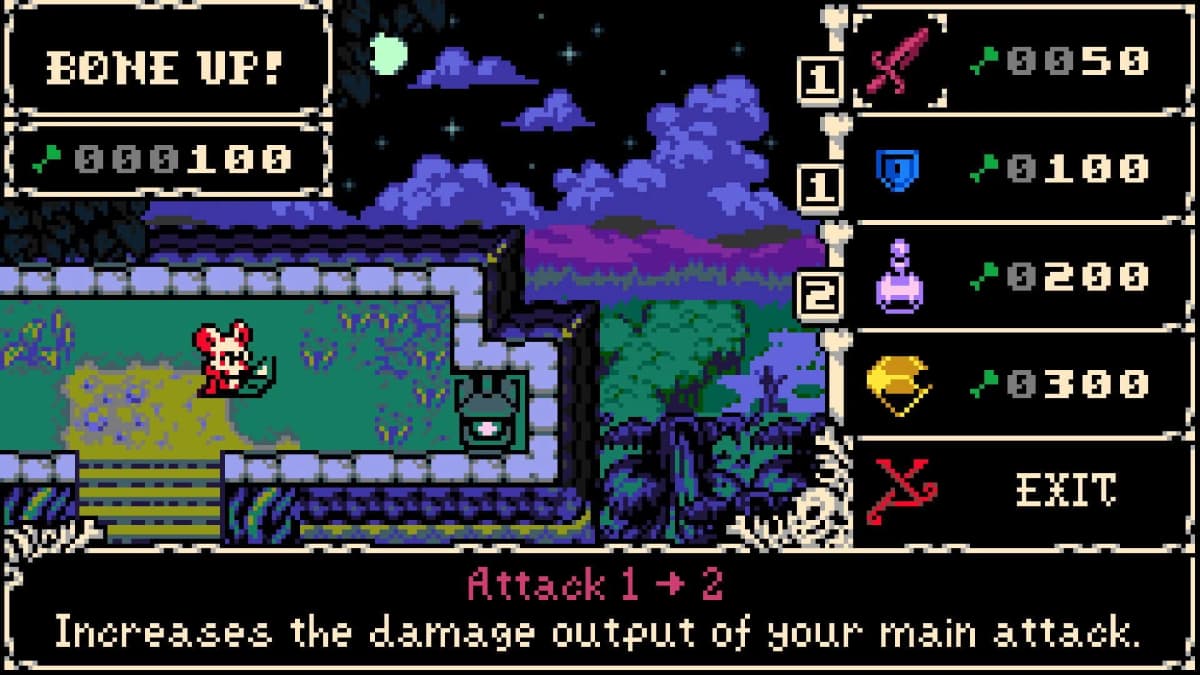
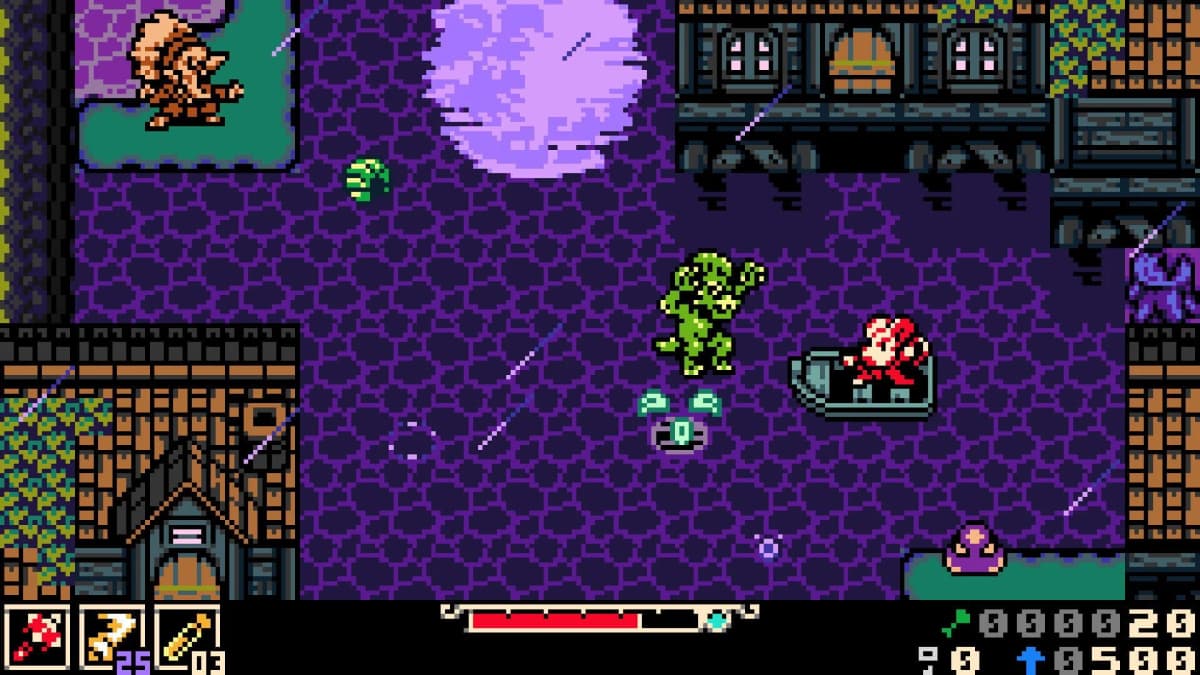
This density creates a claustrophobic intimacy that I found intoxicating. Every screen has a purpose. Every dead end conceals a secret if you are willing to scrutinize the tileset. Yet that same attention to visual detail occasionally tips into excess. During rain-soaked exterior sequences or in rooms packed with destructible furniture and overlapping enemy sprites, the screen can become a soup of competing pixels. I died several times because an enemy’s attack wind-up blended into the background, or because a projectile crossed a similarly colored tile and became functionally invisible. These clarity issues never broke the game, but they were a persistent thorn, particularly on the Nintendo Switch’s smaller screen in handheld mode. I learned to pause before entering unfamiliar rooms and mentally map every moving object, which slowed the pace but kept me alive.
Dying Rich and Respawning Broke
The progression system in Mina the Hollower wears its influences openly. Defeating enemies and uncovering secrets yields bones, which serve as both experience points and currency. You spend them at lanterns—glowing checkpoints that function as your only safe harbor—to increase Mina’s stats or purchase new gear. The catch is pure Soulslike design: die, and your unspent bones remain at your corpse. Die again before reclaiming them, and they are gone forever. I have played enough Dark Souls to recognize this rhythm, but the top-down perspective and compact room sizes make the stakes feel more immediate. There is no long run back to your bloodstain. There is only the next room, which might be harder than the one that killed you.
The risk-reward tension peaks in the underlabs, optional challenge zones that strip away your comfort and force you to survive enemy gauntlets for massive bone multipliers. I entered one roughly halfway through my campaign, flush with confidence after clearing a brutal boss, and I lost everything. Not just the bones I had entered with, but the accumulated haul of an hour of careful play. The game did not trap me with random chance. I simply got greedy. I tried to burrow through an attack that was specifically telegraphed to punish underground movement, and I paid the price. When I finally cleared that same underlab three hours later—after adjusting my trinket loadout to favor speed and bone retention—the victory felt earned in a way that few modern games manage. The economy does not cheat. It simply watches you cheat yourself, then collects the debt with interest.
Buildcraft in Eight Bits
For a game that looks like it could run on a Game Boy Color, the depth of build customization is staggering. Mina’s primary weapon determines your basic attack range, speed, and damage arc, but the real complexity lives in the trinket system. These equippable modifiers alter your burrow speed, your surfacing damage, your elemental resistances, and even the behavior of your healing items. Early in my playthrough, I favored a defensive setup: a trinket that extended my underground invincibility paired with another that reduced the cooldown on my healing flask. It kept me alive, but it also made combat sluggish. I hit a wall against a mid-game boss that demanded faster repositioning, and I realized my “safe” build was actually a prison.
I respecced—another kindness the game allows, though not without cost—and pivoted to an aggressive loadout. I equipped a trinket that amplified critical damage on surfacing strikes, paired with another that magnetically pulled bones toward me so I could farm resources faster. The difference was transformative. Rooms I had previously cleared methodically became speedrun gauntlets. I was no longer surviving Tenebrous Isle; I was devouring it. By the final third of the campaign, I had settled into a hybrid build that converted excess bones into temporary shielding, allowing me to gamble my economy directly for survivability. None of these options feel like flat stat increases. They change how you move, how you prioritize targets, and how you manage your most precious resource: time spent underground. The game never forces a prescribed optimal path. The only constraint is your willingness to experiment with your own suffering.
Bosses That Demand Fluency
The boss encounters in Mina the Hollower are not inflated damage sponges. They are pattern-based executions tests that force you to demonstrate total fluency with the burrow mechanic under duress. An early fight against a graveyard warden taught me that standing still was a capital offense. The warden chained ground pounds that sent shockwaves across the entire arena, meaning I had to stay underground during impact frames and surface only in the brief, twitchy windows between tremors. A later encounter in a corrupted laboratory pitted me against a shapeshifting mass that filled half the screen with acidic projectiles while summoning minions to chase me into corners. I died to that boss eleven times. Each death, however, taught me something concrete: the exact timing of the acid spread, the frame where the minions committed to an attack animation, the pixel-width of safe space where I could surface without taking collision damage.
By the twelfth attempt, I had internalized the rhythm so thoroughly that I finished the fight without healing. That arc—from confusion to mastery—is the core emotional loop of the game. The bosses are fair, but they are relentless. They do not randomize their patterns to create artificial difficulty. They simply demand that you execute at a speed the rest of the game has been quietly training you to reach. The only time I felt genuinely cheated was during one encounter where the visual clutter of the boss’s death animation briefly obscured a final environmental trap, but that was an exception in a roster otherwise defined by crystalline design. Every other victory felt like a conversation between my inputs and the developers’ intent. They established a language, and I slowly learned to speak it.
Atmosphere Thick Enough to Choke On
The narrative in Mina the Hollower is deliberately thin. Mina has a clear visual identity—impeccable sprite work, a readable silhouette, animations that convey personality without a single line of spoken dialogue—but her motivations are sketched in broad, impressionistic strokes. The story is there if you want it, tucked into item descriptions, environmental details, and the mournful asides of NPCs huddled near lanterns, but it never drives the action forward. For some players, that emotional distance will be a dealbreaker. I found it liberating. The game is not trying to be an epic. It is trying to be a place, and Tenebrous Isle has more atmosphere than most games with cinematic budgets and full voice casts.
The Castlevania influence seeps into every corner. The gothic architecture, the flickering torches, the way the music shifts from mournful exploration themes to frantic, heartbeat-driven boss tracks—it all evokes that specific Konami horror flavor without ever feeling like a copy. The chiptune soundtrack is a technical marvel, squeezing genuine emotional range out of limitations that would hobble lesser composers. I found myself humming the lantern theme hours after setting the controller down. The sound design deserves special mention: the crunch of Mina breaking earth, the wet slap of surfacing beneath an enemy, the low mechanical hum of a trap priming its attack. These details sell the physicality of the world. They matter more than any cutscene could.
New Game Plus and the Infinite Gauntlet
I finished the main campaign in just over twenty-five hours, which already felt substantial for a game of this visual scope. Then I started New Game Plus, and I realized the first run had been an extended tutorial. The modifier system in NG+ is the game’s secret weapon, a granular suite of difficulty toggles that let you custom-build your own nightmare. I activated enemy damage scaling, halved my own health pool, and disabled bone recovery on death. The result was a fundamentally different game. Rooms that I had once cleared with swagger became lethal puzzles where a single mistake meant a humiliating march back from the lantern. I added a modifier that increased enemy attack speed, and suddenly the burrow timing I had muscle-memorized was fractions of a second too slow. I had to relearn my own reflexes from the ground up.
This is where Mina the Hollower cements itself as a modern classic rather than a charming retro throwaway. The base game is already airtight, but the NG+ modifiers expose the mathematical precision underneath the pixel art. The engine does not break when you push it to extremes. It sings. I spent nearly as much time in my second loop as I did in my first, chasing the perfect run with increasingly sadistic settings. It is a feature designed for players who want to test the absolute limits of their skill, and it transforms the game from a finite adventure into an endless, self-directed challenge. If the main campaign is the meal, NG+ is the whiskey you did not know you needed.
FinalBoss // Gear
Level up your setup
01Top-rated gaming headsetson Amazon→02High-refresh gaming monitorson Amazon→03Gaming chairson Amazon→04Discounted game keyson Kinguin→
Affiliate links · As an Amazon Associate, FinalBoss earns from qualifying purchases.
Want to Level Up Your Gaming?
Get access to exclusive strategies, hidden tips, and pro-level insights that we don't share publicly.
Ultimate Reviews Strategy Guide + Weekly Pro Tips