
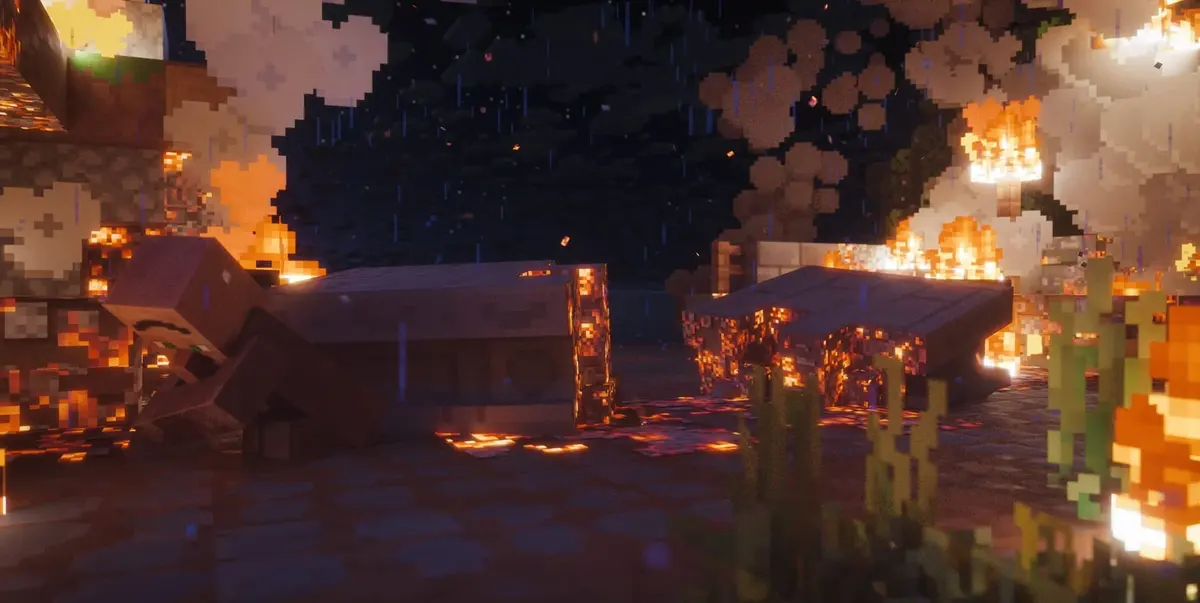
Minecraft Dungeons built its first adventure around a simple loop: choose a mission from camp, clear a compact combat route, collect loot, then return to prepare for the next run. Minecraft Dungeons II, released on September 29, 2026, keeps that approachable action-RPG combat but moves the structure outward. Brave Haven now leads into an exploratory world of settlements, events, side quests, and rifts that reach the soul-powered dimension called the Sift.
The change matters immediately. You still define your character through gear rather than a permanent class, but there are now twice as many equipment slots, more reasons to inspect the world between objectives, and new movement tools that affect both traversal and combat. The clean early-game approach is to learn your combat lanes, fill useful slots as they appear, and treat every first visit to the Sift as a check on its altered rules.
Table of Contents (8)
The Sift story setup: why rifts are the main problem
Rifts have started opening across the Overworld, leading into the Sift: a separate dimension with unfamiliar terrain, creatures, hazards, and soul-based energy. The Illager High Council uses the Sift to unleash soul-corrupted forces into other worlds, making each rift part of the central conflict rather than a detached challenge area.
The Sift establishes early that familiar Minecraft instincts need adjusting. Water can cause fire damage there instead of putting flames out. Some creatures communicate through song; the Singer can call echo golems into a fight. Its modifiers also change the conditions of an expedition. Thrive affects artifact cooldowns and soul regeneration, while other modifiers can increase enemy spawn rates or raise enemy health and damage.
That is why the first rift should be approached as an environmental read rather than a sprint toward the next fight. Watch what the terrain does, check active modifiers, and give new enemies room to show their attack behavior before committing to a crowded engagement.
What to focus on in the first 15 minutes
The opening route can branch based on exploration, difficulty, and whether a group is present, but the priorities stay consistent. Establish how your chosen melee weapon feels, use ranged attacks to control the start of fights, and fill your growing loadout with effects you can use reliably. Early gear is meant to be replaced often, so a practical effect is more valuable than holding an empty slot for a theoretical upgrade.
| Combat tool | Use it for early | Why it matters |
|---|---|---|
| Melee weapon | Close-range damage and finishing enemies that reach the group. | Weapon attack patterns still shape the core rhythm of every encounter. |
| Ranged weapon | Pulling enemies, picking out dangerous targets, and opening fights from a safe distance. | Controlled pulls stop a scattered pack from becoming one large melee pile-up. |
| Artifacts and talismans | Adding abilities and supporting effects around your weapon damage. | They begin defining a build before a full set of high-level gear exists. |
From Brave Haven, follow the first major objective long enough to understand the nearby world, then investigate close settlements, structures, and events instead of racing across a region. Settlements can provide quests, and the world divides activity between main quests and side quests. Nearby side content is the efficient detour; distant map-clearing can wait until the available fast-travel hubs and regional layout are clearer.
- Equip upgrades immediately when they improve a combat role you are actively using. The first hours are for learning item effects, not preserving a perfect inventory.
- Test jumping in ordinary encounters before relying on it around hazards. Jumping can clear obstacles, reposition over enemies, and set up attacks from above.
- Use a bow deliberately rather than treating it as an unlimited panic button. Each bow carries a set number of arrows that deplete when fired and replenish automatically over time.
- Use talismans regularly if their effect fits the current loadout. Talismans gain levels through use and can be upgraded three times.
- Read the Sift’s modifier panel before committing to a difficult rift encounter, especially when enemy durability, damage, or spawn density is increased.
1. Open regional exploration replaces the old mission map
The original game used a camp as a mission-selection board. Minecraft Dungeons II replaces that base-of-operations flow with travel from Brave Haven directly into broader connected regions. Those regions contain settlements, narrative events, structures, fast-travel hubs, main quests, side quests, and rifts into the Sift.
This creates a more exploratory version of the dungeon-crawler loop. The important early habit is to look for purpose-built points of interest instead of treating every open stretch as empty travel. A settlement can lead to a quest, a structure can lead to combat and loot, and a rift can introduce a different ruleset. The world still guides players through objectives and combat spaces, but it provides more places to investigate between them.
For returning players, the practical adjustment is simple: use the main objective as an anchor, then clear meaningful nearby discoveries. That keeps the campaign moving while exposing gear, quests, and merchant opportunities without turning the opening into aimless wandering.

2. The equipment system grows from six slots to 12
The biggest numerical change is the expansion from six equipment slots to 12. Minecraft Dungeons previously centered a build on one melee weapon, one ranged weapon, one armor item, and three artifacts. The sequel splits armor into a helmet, chestplate, leggings or greaves, and boots, while adding talismans alongside the existing melee, ranged, and artifact categories.
Gear also has randomized effects, so a full loadout is made from several smaller decisions rather than one defining armor drop. One armor piece can cover defense, another can support mobility, and a talisman can reinforce the way a weapon or artifact setup already works.
The trap is assuming the highest item level is always the immediate answer. In the early game, use a coherent set of effects that helps your actual combat habits. A comfortable melee pattern, a reliable ranged option, and armor pieces that provide useful defensive or movement value will carry more weight than a mismatched set of individually stronger items.
3. Bows and talismans give builds clearer ranged and utility roles
Bows no longer depend on ammunition pickups scattered through a level. Each bow has its own arrow capacity. Shots reduce that supply, and the arrows regenerate automatically over time. The result is a ranged weapon that rewards measured use: pull a dangerous enemy, thin out an approaching group, or create a safe opening before committing to melee.
Talismans add another layer to that choice. They level up as they are used and can be upgraded three times, giving players a reason to keep using effects that suit the current build rather than swapping only for short-term item-level gains. A close-range setup can use talismans to support sustained engagement, while a ranged or mobility-focused setup can build around spacing and safer repositioning.
The useful distinction is that bows manage an active resource over a fight, while talismans deepen the broader behavior of a loadout. Treat the bow as an engagement tool and the talisman as a build-defining layer that should complement the rest of the equipment.
4. Enchantment Books and echo shards reshape item progression
Enchantments return with a more flexible structure. Enchantment Books found while exploring contain unique enchantments, giving the world itself a role in expanding build options rather than leaving every decision tied solely to the properties of a newly dropped item.
Merchants also develop over time. Emeralds remain the currency for purchasing gear and applying enchantments, while echo shards are used to upgrade merchants. Empowered enemies encountered while exploring can return and drop echo shards; investing those shards lets merchants offer more items and eventually rare items.
This makes empowered return encounters worth paying attention to, even when the immediate path is pointing elsewhere. They feed directly into the merchant system. Keep the two currencies mentally separate: emeralds handle direct gear and enchantment spending, while echo shards improve the range of goods available later.

5. Co-op can combine couch play, online players, matchmaking, and cross-play
Minecraft Dungeons II supports solo play and groups of up to four players. It includes local co-op, online multiplayer, cross-platform play, online matchmaking, and mixed co-op. Mixed co-op allows players sharing one console or PC to bring in remote players, including a local pair joined by two friends online.
The change removes a common limitation of the first game’s split between local and online sessions. A household group does not need every player to be physically present, and an online group does not need to be fully arranged in advance because matchmaking can place players into other games.
There are still no fixed character classes. Group roles come from equipment: one player can stay in close range, another can pull and damage from distance, while others can lean into artifacts, talismans, control effects, or mobility. With 12 slots per player, coordinated groups have more room to differentiate their loadouts without turning party composition into a rigid class system.
6. Jumping and aerial attacks add a second movement layer
The original game’s movement was built around walking, positioning, and the dodge roll. Minecraft Dungeons II adds jumping as an active exploration and combat option. Players can jump over hazards and enemies, launch attacks while airborne, and strike after dropping from a ledge.
That sounds like a small addition until a fight becomes crowded. The dodge roll remains the dependable ground-level escape, while jumping provides a way to cross an obstacle, enter from elevation, or avoid being locked into the same horizontal path as a pursuing pack. The best early use is situational: jump when terrain or enemy placement gives it a purpose, then return to dodging when a quick sideways reposition is safer.
The movement change also gives armor and talisman choices more context. Effects that help an aggressive approach, support mobility, or reward repeated engagement now sit alongside a genuine vertical combat tool rather than a purely cosmetic jump animation.
FinalBoss // Gear
Level up your setup
01Top-rated gaming headsetson Amazon→02High-refresh gaming monitorson Amazon→03Gaming chairson Amazon→04Discounted game keyson Kinguin→Affiliate links · As an Amazon Associate, FinalBoss earns from qualifying purchases.
Want to Level Up Your Gaming?
Get access to exclusive strategies, hidden tips, and pro-level insights that we don't share publicly.
Ultimate Guide Strategy Guide + Weekly Pro Tips