
This is not another routine “don’t download shady mods” warning. McAfee’s findings on WeedHack point to something more industrial: a Minecraft-themed malware pipeline that has allegedly infected 116,464 systems since January 2026, spread across more than 3,820 malicious JAR files and over 240 distribution URLs. That scale matters because it turns what sounds like a niche scam into a real supply-chain problem for one of the biggest modding communities in games.
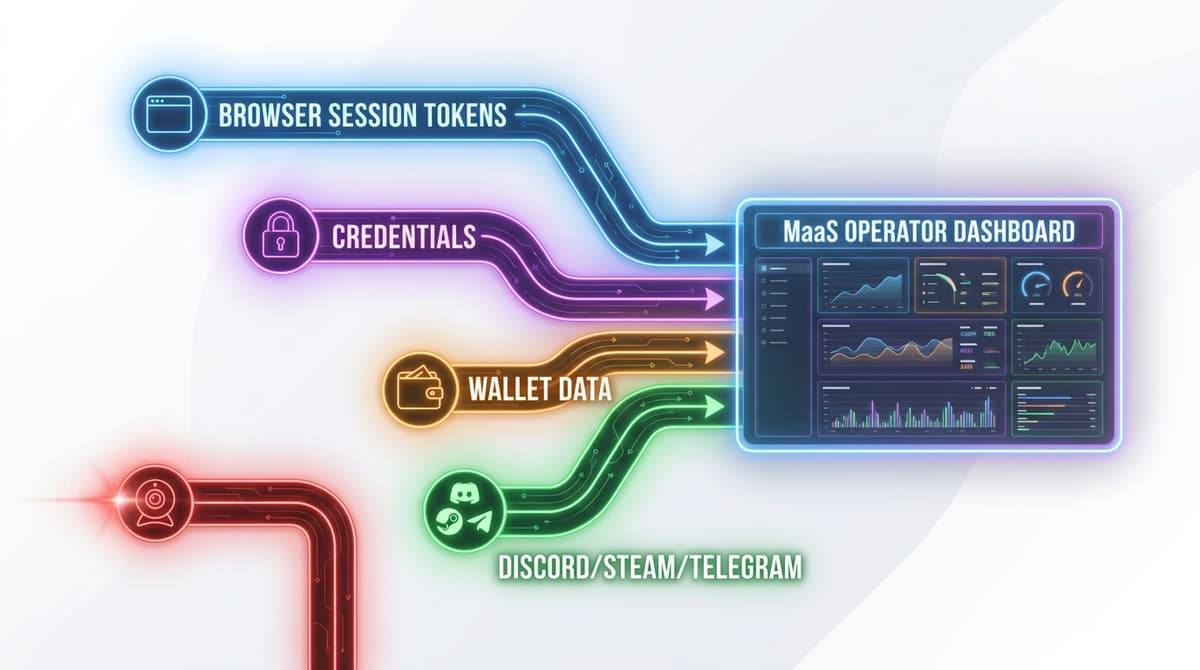
The ugly part is not just credential theft, although that alone would be bad enough. WeedHack is being sold as malware-as-a-service, with lower tiers focused on stealing passwords, cookies, wallet data, and session tokens, and higher tiers reportedly offering webcam capture, screen monitoring, keylogging, and file access. In plain English: the same fake Minecraft utility can move from “your account got stolen” to “someone is watching your room” for the price of a cheap battle pass.
Table of Contents (5)
This works because Minecraft mod culture runs on trust shortcuts
Minecraft is an easy target for this kind of campaign for a reason, and it is not because players are uniquely careless. The ecosystem trains people to install third-party Java tools, custom launchers, shader packs, optimization mods, hacked clients, and utility loaders from outside official storefronts. That behavior is normal here. It is baked into how the game has been played on PC for years.
That is what makes WeedHack more serious than the average fake installer. According to McAfee’s research and subsequent reporting, the operators are not relying only on random phishing links. They are gaming discovery itself through SEO poisoning and YouTube distribution, stuffing download links into video descriptions and comments for fake clients, cheats, and utilities. In other words, they are meeting players where players already look for mods.
This is the uncomfortable observation the PR-safe version of the story tends to glide past: unofficial PC modding scenes are built on reputation, speed, and convenience, not on rigorous software verification. That is usually fine until somebody professionalizes the scam. WeedHack appears to have done exactly that.

The malware business model is the real story
The headline-grabbing detail is webcam access. The more important detail is the business model underneath it. WeedHack is described as a malware-as-a-service operation, which means the people packaging the fake Minecraft files do not necessarily need to be elite malware developers themselves. The toolkit can be sold in tiers, with reports indicating entry pricing around $5 and premium features layered on top.
That matters because cheap, modular crime scales better than one-off hacking. If McAfee’s numbers hold up, this was not a single clever campaign that got lucky. It was a repeatable product aimed at a massive, young, digitally active audience that already trades in downloadable community content. Minecraft is the lure, but the haul goes far beyond Minecraft accounts. Researchers and follow-up coverage say the malware can target Discord and Steam credentials, cookies, wallet data, and session IDs. Session theft is especially nasty because it can bypass the false sense of security players get from thinking “I have a password and 2FA, so I’m covered.” If the session token is stolen, the attacker may not need to brute-force anything.
Some reports also note the malware attempts to disable Windows Defender and maintain persistence across restarts. That is the line between amateur nuisance malware and something designed for long-term access. Once persistence enters the picture, a victim is not dealing with a bad download anymore. They are dealing with a compromised machine.
The question nobody should ignore is how long victims stay compromised
The obvious question is how many people got hit. McAfee’s answer is already high enough to be alarming. The better question is how many victims realize what happened and fully clean the system afterward. That number is almost certainly lower.
Credential theft creates immediate damage: hijacked Minecraft, Discord, Steam, or email accounts; scams sent from trusted contacts; marketplace fraud; potentially extorted personal footage if webcam access was active. But persistent remote access creates delayed damage. A player might reset a Minecraft password and think the crisis is over while the malware remains on the device collecting fresh credentials or system data. That is what makes these campaigns sticky. They exploit the gap between “my login stopped working” and “my PC is infected.”
If there is one thing I would want asked directly of security researchers and platform operators, it is this: how much of this campaign depended on cloned branding versus compromised trust channels? A fake website is one thing. A convincing YouTube creator impersonation, Discord repost chain, or search-result hijack is another. That distinction matters because takedown strategy changes depending on whether the attackers are building throwaway fronts or poisoning existing community habits.

What players should do now is boring, but it works
There is no glamorous fix here. The practical response is discipline.
- Stop downloading Minecraft clients, mods, or utilities from random search results, YouTube descriptions, comment sections, or Telegram and Discord reposts.
- Use established mod repositories and project pages with visible version history, known maintainers, and community scrutiny.
- Be skeptical of “all-in-one” launcher tools, cheat clients, optimization packs, and cracked utilities that promise everything at once. Those are prime bait.
- If you installed something suspicious, do more than change your password. Disconnect the machine from the network, run reputable security scans, check startup items and persistence mechanisms, and rotate passwords and sessions from a clean device.
- Invalidate sessions where possible for Microsoft, Discord, Steam, and email accounts. Session theft means password changes alone may not be enough.
- Assume any saved browser credentials, cookies, and wallet information on the infected PC may be exposed.
- If webcam access may have been granted, physically cover or disconnect the camera until the system is verified clean. Paranoid? Sure. Also effective.
What to watch next
The next meaningful signal is not another scary headline. It is enforcement and cleanup. Watch for three things: whether major search platforms and video platforms start removing poisoned discovery paths at scale; whether major Minecraft community hubs tighten moderation around download links and launcher promotion; and whether Microsoft or Mojang issue more direct user-facing guidance about session security and suspicious client tools.
If those responses stay vague, expect this pattern to mutate rather than disappear. Minecraft will not be the last community used this way. It is just the cleanest proof that a giant modding ecosystem, weak discovery hygiene, and low-cost malware subscriptions are a bad combination.
The practical takeaway is simple: treat every unofficial Minecraft download like executable code from a stranger, because that is exactly what it is. WeedHack matters less because it is novel than because it is efficient. And efficient scams do not stay small for long.
FinalBoss // Gear
Level up your setup
01Top-rated gaming headsetson Amazon→02High-refresh gaming monitorson Amazon→03Gaming chairson Amazon→04Discounted game keyson Kinguin→
Affiliate links · As an Amazon Associate, FinalBoss earns from qualifying purchases.
Want to Level Up Your Gaming?
Get access to exclusive strategies, hidden tips, and pro-level insights that we don't share publicly.
Ultimate Gaming Strategy Guide + Weekly Pro Tips