
Table of Contents (9)
A snoring minotaur, a guilty architect, and my first hour in Minos
The first thing I did in the Minos Steam Next Fest demo was… nothing. I just sat there watching a minotaur sleep.
Asterion, the big horned lad at the center of the labyrinth, is curled up in his lair, softly snoring while a line of armed Greek youths queues patiently at the maze’s entrance. I’m essentially Daedalus here, the architect of this whole mess, and the game makes a very quiet, very funny promise: if I’m clever enough with my traps and walls, this poor bored minotaur never has to wake up.
That setup sold me almost immediately. I went in expecting a Greek-flavored Orcs Must Die – something action-heavy where I’d spam traps and then watch chaos unfold. Instead, Minos plays far closer to a ruthless puzzle game wrapped in roguelite progression and tower defense bones. Every wave feels like one of those brainteasers where you stare at the page for five minutes and suddenly everything clicks… or you send yet another teenager straight to the bull.
Across a weekend with the demo on PC (mouse and keyboard, 1440p, completely smooth performance), I kept coming back “for one more run” just to see if I could keep Asterion asleep a little longer. That became my unofficial win condition: no swinging axes, no heroic minotaur charge, just pure architecture and cruelty.
A roguelite tower defense that really wants to be a puzzle game
Each level in Minos gives you a small slice of the legendary labyrinth. In the center: Asterion’s lair. On the edges: one or more gates where fresh-faced would-be heroes file in. Between them is a grid of corridors and walls, punctuated by special tiles where traps can be placed.
Before a wave starts, a golden thread snakes from each entrance to your minotaur, showing the route those particular invaders will take through your current layout. That string is your lifeline and your torment. You can freely raise and delete many of the walls before hitting the “go” button, which instantly changes the path the string takes. The whole game, moment to moment, is about mutating that route until it intersects the exact sequence of trap spots you need.
The twist: traps are single use. This is the big mental shift. Most tower defense games worth their salt train you to think in terms of DPS over time, kill zones, and semi-permanent build orders. In Minos, it’s more like planning a Rube Goldberg machine where every component explodes the first time it’s touched. You drop a spike floor or a fire pit; the first victim who walks across it dies (or at least takes a huge hit) and the trap is gone for good.
The result is that each wave feels less like a horde to withstand and more like a discrete logic puzzle. Six enemies are coming in. You have exactly six viable trap charges on their paths, spread across a maze you can reshape. Can you guarantee that every single attacker will touch exactly one of those traps before reaching Asterion? If the answer is “no”, you can send the minotaur out to finish them, but then you miss out on juicy trap-only bonuses and the spiritual satisfaction of perfect play.
That “perfect solution” mindset permeates the whole demo. More than once I replayed the same encounter just because I’d let one survivor limp into the center, even though Asterion pulped them in a heartbeat. The game had quietly turned me into the world’s most obsessive, morally dubious civil engineer.
Single-use traps turn timing and order into a nasty little obsession
Minos really clicked for me the first time the game sent different enemy types from different entrances in the same wave. One side spat out beefy swordsmen who hate fire. The other side introduced frailer archers who could shrug off a blaze but hated impalement. My inventory: a limited set of fire pits and spike traps, plus the ability to sculpt the maze.
On my first attempt, I laid a fire pit just past the swordsmen’s entrance and a spike trap on the archer path. The golden threads looked fine. I hit start, watched them march, and immediately realized I’d messed up. The archer reached my fire pit first via a shared corridor, got singed but survived, then waddled forward and cleared the spike trap too, leaving a smug swordsman strolling untouched toward Asterion.
I restarted and stared at the map longer this time. The solution wasn’t “more traps”; it was shepherding the order in which they hit those traps. I reshaped a few corridors so the heavier swordsman entered a junction first and took the fire pit, then funneled the archer through a slightly longer loop so they’d arrive second and catch the spikes.
That kind of adjustment feels tiny on the screen – you’re just deleting one wall, raising another, sliding a trap two tiles over – but it changes the outcome completely. You’re effectively doing pathfinding algebra on the fly. Later waves layer extra wrinkles on top of that familiar problem: delayed-action traps that only trigger once a certain number of enemies have crossed, resistances that turn a “kill” trap into a “wound and slow” trap, and variations in enemy speed that mess with your carefully orchestrated timing.
The nastiest moment for me involved a pressure-plate spike floor that only armed itself after three bodies had stepped across it. I needed that spike to spring exactly when a trailing archer reached the tile, which meant one of the earlier enemies had to survive past a fire pit but still make it to the pressure plate before keeling over. For two attempts I mistimed it and watched an unharmed archer stroll right past; on the third, my burning swordsman staggered just far enough before dying to prime the spikes at the perfect second. It felt less like tower defense and more like I’d just solved an especially vindictive Sudoku.
Editing the labyrinth is the true power fantasy
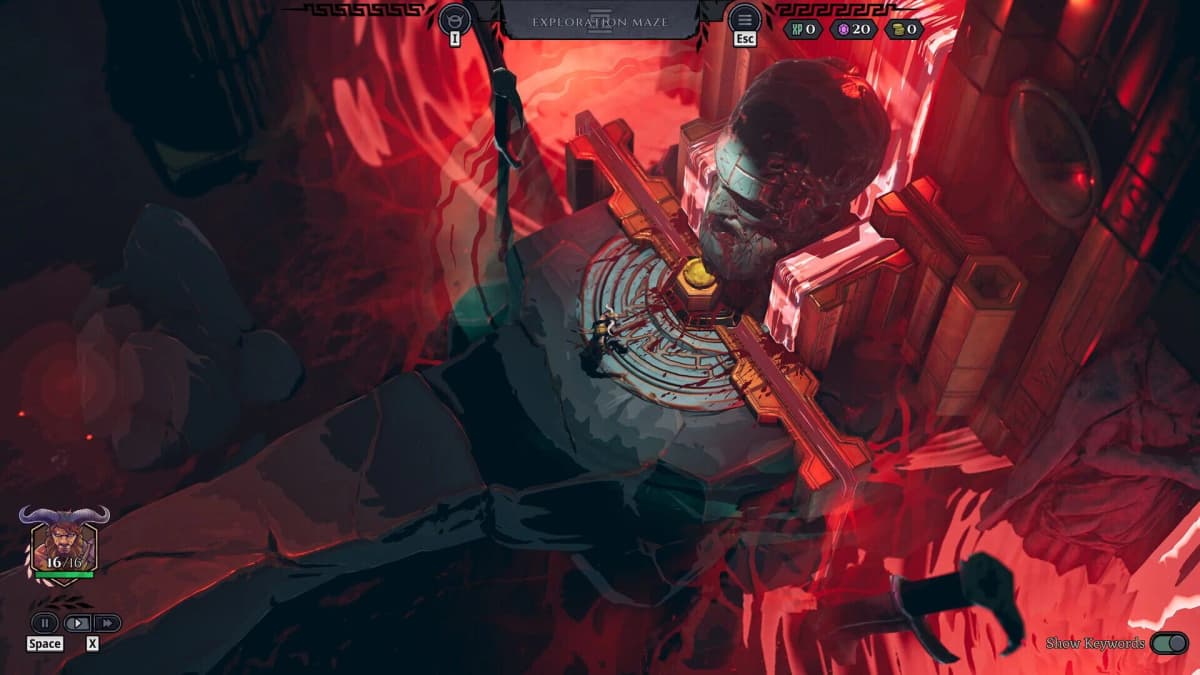
The real star of Minos isn’t any particular trap; it’s the way walls melt and rebuild at your command. You’re not dropping turrets on fixed lanes, you’re constantly rewriting the lanes themselves.
Each map starts with a half-formed maze – some fixed structures, some flexible walls you can add or destroy, and a handful of trap nodes. You spend almost as much time bulldozing corridors as you do placing devices. Pick up a wall segment, plop it down somewhere else, check the shiny thread, and watch how the path reknits around your changes.
Levels very rarely stay solved. The really fun design choice in the demo is that several waves run on the same layout, but the game keeps changing what comes out of each entrance. A wave that you solved using a long, looping route for swordsmen might suddenly throw fast archers through that same door, forcing you to rethink the entire traffic pattern. Another entrance that was dormant might wake up and introduce a new angle of attack. Every new wave nudges you back into the editor, ripping up paths that just worked beautifully one round earlier.
There was one multi-entrance map where, by the third wave, my once-clean design had turned into strange labyrinthine over-engineering. I’d built a long side corridor that existed purely to delay a single archer so they’d hit a trap in the right sequence, while another branch forced three melee enemies to share a murder gauntlet of spike floors spaced just far enough apart that they’d each trigger a different one. The final layout looked insane – dead ends, intentional choke points, weird little pacing loops – and that was exactly when the game felt best.
Compared to more straightforward tower defenses like Defense Grid or even the more action-heavy Orcs Must Die, Minos sits firmly on the “maze engineering” side. If you like the part of these games where you nudge paths around to create longer routes, Minos feels like someone turned that dial up to eleven and made it the entire experience.
Roguelite structure, unlocks, and the temptation to wake the bull
Outside individual levels, Minos leans into roguelite structure. Runs are short chains of labyrinth slices, and doing well feeds you two main currencies: experience for Daedalus’ overall progress, and resources from the fallen that you pour into new toys between attempts.
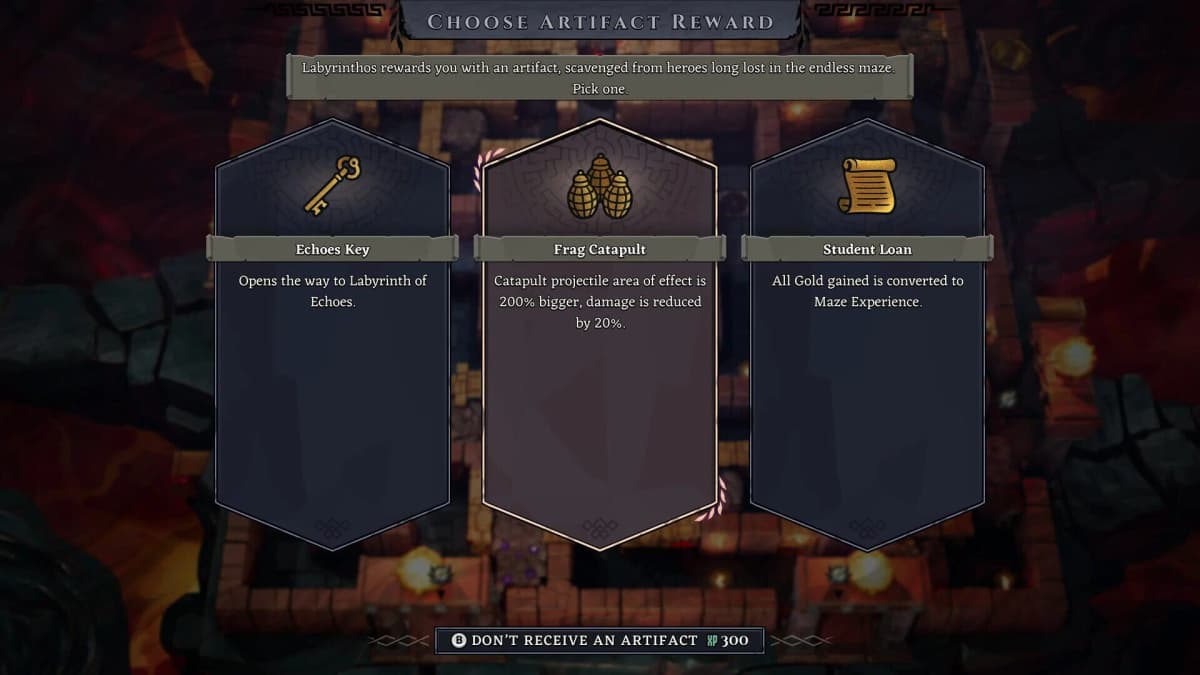
The demo gives a taste of this meta layer. After a few successful clears, I unlocked new traps and abilities that immediately changed how I approached builds. Hidden doors let Asterion slip through walls that enemies see as solid, effectively giving you a private service corridor along the path. Another upgrade taught the minotaur to reactivate a spent trap, letting a once-and-done spike floor become an ambush for an extra unlucky soul.
On paper, those two upgrades combine into something deliciously dirty: carve a tiny hidden alcove into the path, connect it to Asterion’s lair with secret passages, drop a powerful single-use trap on the main route, and have the minotaur sneak out mid-wave to reset it before the next victim arrives. The game nudges you toward this more active, hybrid style of play where you’re both architect and clean-up crew.
In practice, I ended up roleplaying as an overprotective dad who refuses to wake the kid. I set myself the challenge of clearing as many waves as possible without ever ordering Asterion to move, even after unlocking the rearm ability. It’s a testament to how strong the pure puzzle side already feels that I saw those powers mostly as optional spice rather than mandatory crutches.
Still, the potential is obvious. For players who enjoy more hands-on, hero-unit style defense, Asterion can absolutely step in as an active piece on the board, darting through hidden doors, resetting traps, and finishing off survivors who slip through the cracks. The full release hints at more of these synergies and permanent unlock trees; the demo already feels like it has a healthy spread of options, and I never hit the point where I felt “done” experimenting with loadouts.
Difficulty curve and the joy of failing intelligently
The first couple of maps in the demo are gentle. They exist mainly to teach the basics of path manipulation and single-use traps. Once multiple entrances and resistant enemy types start stacking up, the game becomes legitimately brain-burning.
I appreciated that failure never felt cheap. When a wave went sideways, it was always because I’d misread timing or gotten greedy about stretching too few traps across too many enemies. Sometimes I underestimated how much damage a “resistant” unit would actually take from a particular trap and watched them hobble through on one HP. Other times I’d forget that routes from different gates merged early and accidentally sent the wrong unit to the wrong death.
Runs reset your immediate toolkit, but the long-term unlocks reassure you that not all progress has vanished. Even in this limited slice, the structure had that classic roguelite pull: every failure fed back into the meta layer as a new trap type, a new ability, or simply a better mental model of how the game thinks.
Presentation, tone, and Greek-myth slapstick
On the surface level, Minos has a clean, stylized look that serves the mechanics well. The labyrinth’s grid is easy to read at a glance, enemies are visually distinct, and trap tiles pop clearly against the background. The golden route thread is a simple touch, but it does a ton of heavy lifting for clarity; I never felt like I was guessing how the AI would path.
The tone dances between dark and playful. You’re essentially orchestrating elaborate horrors for terrified conscripts, but the art and writing push it toward mischievous rather than grim. Asterion isn’t a raging beast; he’s an exhausted roommate who wants everyone to stop bothering him. Daedalus’ whole situation – having built the labyrinth, now desperately using it to hide the living proof of a divine scandal – adds a layer of guilty comedy to every new contraption you whip up.
Audio-wise, the demo keeps things punchy without being busy. Traps thump and crunch with satisfying weight, and there’s a nice rhythm to the way impacts land as a wave walks across your devices in sequence. The soundtrack leans into a kind of moody, percussive tension that sits comfortably in the background while you puzzle things out.
Demo limits and what I still want to see
For all my enthusiasm, this is still only a demo, and there are a few question marks I’m holding for the full release, currently planned for PC on Steam around spring 2026 according to the public info.
Enemy variety is the big one. The sample here shows a handful of unit types and resistances, enough to prove the concept, but the long-term health of a roguelite like this lives or dies on how often it can remix its core pieces. New traps, new quirks, new wave modifiers – all of that will matter a lot after 20 or 30 runs.
I’m also curious how far the game will lean into narrative framing. The demo sprinkles just enough character into Daedalus and Asterion to make them memorable, but it mostly leaves story on the back burner in favor of pure mechanics. That’s not a complaint – the labyrinth puzzles are strong enough to carry things – but there’s room to really dig into the dysfunctional Cretan family drama if the developers feel like it.
Technically, though, the foundations feel solid. No crashes, good performance, snappy restarts, and a UI that made sense from the first wave. For a Next Fest slice, that’s exactly where it should be.
Who Minos is for
Minos sits in a very particular sweet spot. Players who come in expecting a screen full of orcs and a dozen rearming traps clacking away in real time might bounce off the slower, more deliberate pace. This is not a click-heavy action defense game; it’s almost turn-based in spirit, with long planning phases and short bursts of resolution.
If you’re the type who enjoys pausing a strategy game to squeeze one more drop of efficiency out of a path, or if you’ve ever replayed a tower defense wave purely to get a perfect no-leak clear, Minos feels tailor-made. It rewards slow thinking, experimentation, and a willingness to tear down your beautiful maze and rebuild it three times in a row because the archer keeps getting through on one HP.
Roguelite fans who love discovering broken combos will likely find a lot to chew on too, especially once more of the meta progression opens up. Even in the demo, I could see the outlines of run-defining builds built around specific trap types or an especially hands-on, hyper-mobile Asterion.
FinalBoss // Gear
Level up your setup
01Graphics cardson Amazon→02Gaming laptopson Amazon→03High-refresh gaming monitorson Amazon→04Discounted game keyson Kinguin→Affiliate links · As an Amazon Associate, FinalBoss earns from qualifying purchases.
Want to Level Up Your Gaming?
Get access to exclusive strategies, hidden tips, and pro-level insights that we don't share publicly.
Ultimate Reviews Strategy Guide + Weekly Pro Tips