
Table of Contents (10)
Stepping Up to the Plate With MLB The Show 26
I loaded up MLB The Show 26 on PS5 the same way I have for pretty much every entry since the PS3 era: late at night, a drink on the desk, and the Mariners schedule pulled up on my phone for fake-GM plotting. Within 30 minutes I’d struck out looking with Julio, overthrown a routine throw to first, and muttered, “Yep, this still feels fantastic.” The problem is that an hour later, and then ten hours later, I was also thinking, “I’ve basically been playing this same game since 2020.”
MLB The Show 26 is that friend who always gets on base but never swings for the fences. The fundamentals are rock solid. Pitching, fielding, and timing your swing still make this the best simulation of baseball you can buy. But once you get past that first rush of crack-of-the-bat nostalgia, you start noticing how familiar the stadiums look, how lifeless the career storytelling still is, and how Diamond Dynasty quietly tilts a little harder toward your wallet this year.
I split my time between Franchise, Road to the Show, Diamond Dynasty, and a bunch of cross-play online games with a friend on Xbox Series X. There are meaningful upgrades here, especially in how you run a team in Franchise and how Road to the Show handles your early amateur years. The new Bear Down Pitching system genuinely sharpens the feel on the mound. But when you put it all together, this still lands closer to “expansion pack” than “fresh season.”
On the Mound: Bear Down Pitching Actually Changes the Rhythm
The first thing that jumped out at me this year wasn’t a fancy cutscene or a new menu. It was a 3-2 count with Bryan Woo on the hill in my Mariners Franchise. I’d worked the batter carefully, dotted a few corners, and suddenly a little Bear Down meter popped, letting me unleash a “focused” pitch. I went high heat up and in and painted the edge in a way I hadn’t been able to with my normal fastball all game. Batter frozen. Strikeout. I actually said “okay, that’s new” out loud.
Bear Down Pitching is the headliner for a reason. As you consistently attack the zone, pile up strikeouts, and pitch well in tense spots, you bank these higher-accuracy pitches. It’s tied into your pitcher’s Clutch rating, so the better the moment (and pitcher), the more it matters. In practice, it feels like a reward for good, disciplined pitching instead of random “super pitches.” It also makes late-inning duels way more engaging, because you’re thinking ahead: do I burn my Bear Down pitch on this batter, or save it for the opposing cleanup hitter?
Under the hood, the devs also tweaked pitch usage modeling so that offerings your pitcher rarely throws are legitimately harder to command. That meant when I tried to get cute and spam Woo’s rarely used changeup, I lived on the edge of the strike zone and occasionally paid for it. It’s subtle, but it nudges you toward mixing pitches like a real player instead of spamming your favorite slider 40% of the time.
Hitting saw fewer exciting changes. Big Zone Hitting is touted as a friendlier alternative to the usual precise PCI aiming. Instead of dragging a tiny PCI around, you’re picking broader quadrants of the strike zone. When I flipped this on, I definitely put more balls in play and struck out less, but I also had fewer “hell yes, I earned that” rockets into the gap. It’s good for newcomers or people who hate PCI micromanagement, but veterans will likely bounce off it after a few games.
There are a couple of presentation tricks layered on top. There’s a depth-of-field toggle that blurs out the crowd and scoreboard while you’re batting. I liked the added focus, but it doesn’t fundamentally change how anything plays. On PS5, PitchComm audio coming through the DualSense speaker is cute the first few times you hear your catcher call for a backdoor slider out of the controller, but again, it’s flavor, not substance.
Moment to moment, though, the baseball is still excellent. Animations blend nicely, infielders react believably on tricky hops, and balls tail and dive in ways that still impress me after years with the series. From a pure “does this simulate baseball well?” standpoint, MLB The Show 26 nails it. The frustration comes from how little that excellence has moved forward visually or structurally.
Road to the Show: Better Flow, Still No Story
Road to the Show has always been my comfort mode. I love creating a scrappy middle infielder and grinding my way from bus rides in Double-A to late-October drama. This year, the mode has been reframed around a “Road to Cooperstown” idea, with expanded amateur years and a more official NCAA skin on your early days. On paper, that sounds great. In reality, it’s half a step forward and half the same old issues.
The good part: the college phase finally feels like more than a glorified tryout. There are 11 real schools to pick from, and having the College World Series branding and stadiums gives those opening games some actual identity. I liked hearing the commentary acknowledge the stage instead of the generic “amateur showcase” blur from previous years.
Even better is Smart Sim. Instead of feeling like you have to play every single minor league game or risk your stats tanking, Smart Sim uses your overall rating to generate reasonable results in the games you skip. The mode pulls you back in automatically for clutch moments – bottom of the ninth, tying run on third – and that felt fantastic. One night I simmed a week, got yanked into a key at-bat, slapped a walk-off single, and was immediately ready for “just one more series.” This is exactly the kind of quality-of-life stuff RTTS has needed.
But the storytelling still hasn’t evolved. You get stiff conversations with your coach, mostly in text boxes. There are dialogue choices that feel purely cosmetic. There’s no real narrative spine: no rival who follows you up the ladder, no meaningful off-field decisions, no sense that my player is anything other than a statline with legs. I was saying this back in The Show 20 and it’s wild that six years later, we’re basically in the same place.
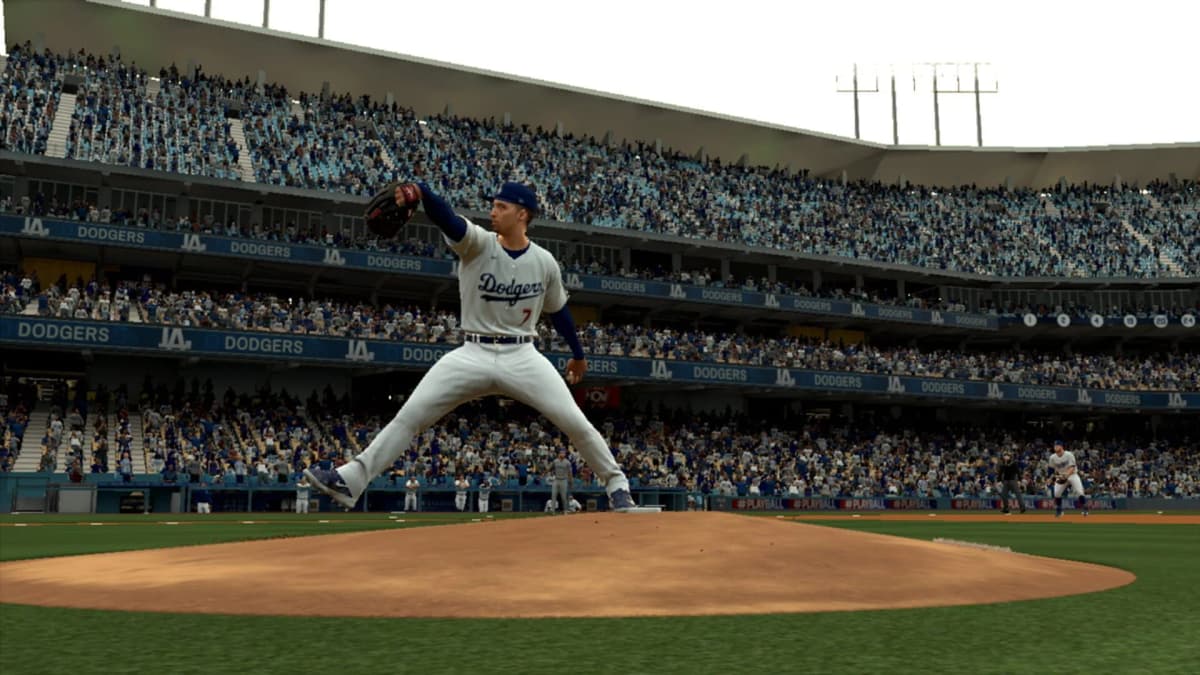
The face scan feature doesn’t help. I tried to import my face using the companion app, and the result looked like a blurry PS3-era wax figure wearing my jersey number. I ended up just mashing random presets until I had something “close enough” and tried not to look too closely during cutscenes.
So, Road to the Show plays smoother and wastes less of your time, but it still doesn’t give you much to emotionally latch onto. If your dream is a full-on baseball RPG with real character arcs and branching choices, this isn’t it – it’s still more of a glorified career sandbox with a slicker front end.
Franchise and the Trade Hub: Finally, Some Front Office Drama
Franchise mode is where MLB The Show 26 actually feels like it earned the new number on the box. The new Trade Hub is, without exaggeration, the most impactful non-gameplay addition this year.
Everything trade-related now lives in one central place. Rumors, offers, who’s being shopped, how other GMs value your players – it all filters through the Hub. You can declare certain guys untouchable, dangle others, and track bidding wars in something closer to an RPG trading system than the dry, menu-heavy process it used to be.
Running the Mariners, I locked down Woo and a couple of young bats as my “core” and started sniffing around for one big splash. The Hub let me see which teams were actively shopping their stars and what kind of packages they preferred. When a rival AL team entered the mix for the same power-hitting outfielder I was eyeing, I could actually see their interest spike in real time and had to decide whether to overpay or pivot. It’s the first time trade season has felt tense instead of clinical.
Outside of the Trade Hub, though, Franchise is closer to status quo. You still don’t get a pure “GM-only” experience where you just sim games and handle contracts and scouting. There’s no spectate or “one-pitch” mode for people who want to manage outcomes without playing full games. And if you were a fan of March to October as a breezier, streamlined way to get through seasons, it’s gone, replaced by something that doesn’t hit the same sweet spot of quick-fire highlight moments.
Some lingering annoyances haven’t been addressed either. You still can’t bring your Franchise or Road to the Show saves forward from previous entries, so every March you’re starting totally from scratch. Custom stadiums you painstakingly built a few years ago? Stuck in old games. The Stadium Creator itself basically feels frozen in time since The Show 21 – same clunky object placement, same limitations, just marooned on a nicer console.
If you live for building dynasties and working the phones at the trade deadline, the new Hub really is worth your time. It just would’ve been nice if Franchise as a whole had evolved as much as that one menu.
Diamond Dynasty, WBC Hype, and the Quiet 20-Card Cap
Diamond Dynasty launches absolutely stuffed with content again. Between World Baseball Classic cards, themed programs, a WBC Conquest map, and the usual Team Affinity grind, you’ll never run out of checklists to chase. I loved building a weirdly stacked international squad and running through the WBC bracket; seeing those uniforms and lineups in the same engine as my regular MLB games was genuinely cool.
Diamond Dynasty, WBC Hype, and the Quiet 20-Card Cap
Diamond Dynasty launches absolutely stuffed with content again. Between World Baseball Classic cards, themed programs, a WBC Conquest map, and the usual Team Affinity grind, you’ll never run out of checklists to chase. I loved building a weirdly stacked international squad and running through the WBC bracket; seeing those uniforms and lineups in the same engine as my regular MLB games was genuinely cool.
🎮 Get This Game at the Best Price
Compare prices instantly and save up to 80% on Steam keys with Kinguin — trusted by 15+ million gamers worldwide.
*Affiliate link — supports our independent coverage at no extra cost to you
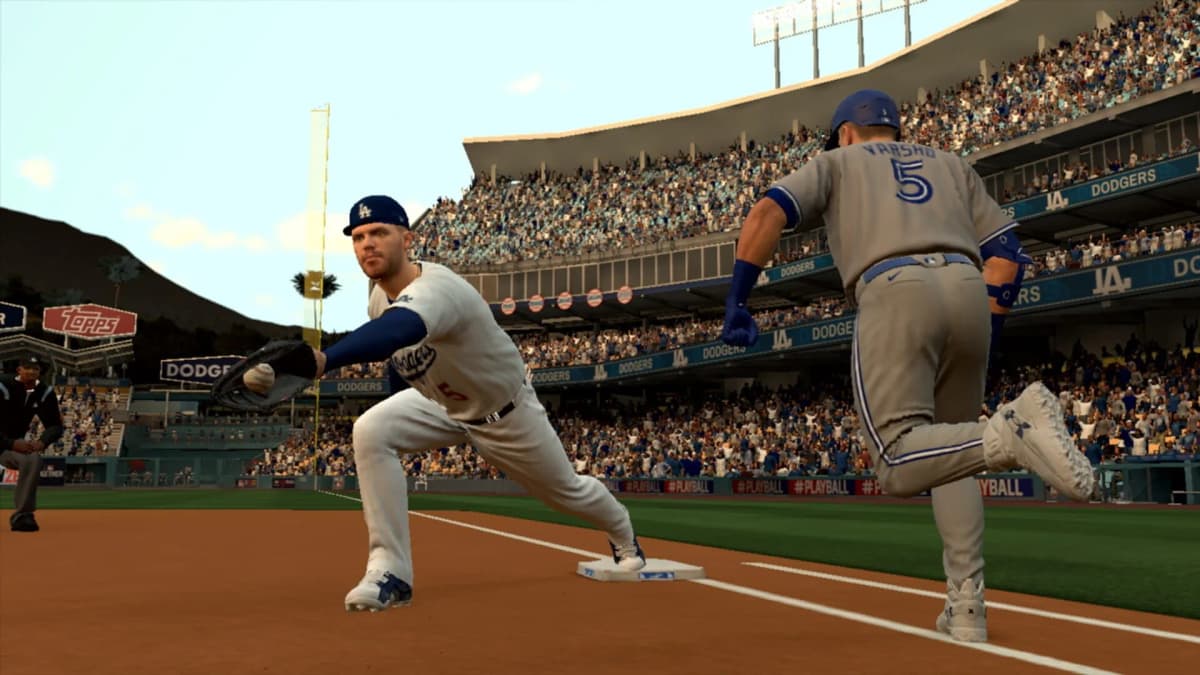
Structurally, there are a couple of smart changes. Team Affinity is split into two programs per team for the full year, so every club gets a hitter captain and pitcher captain from the start. The Parallel system – where you level up cards – now pushes you toward making specific attribute choices instead of just watching overall numbers go up, so you’re actually thinking about whether you want your ace to pick up a bit more K power or sharpen control.
The problem is everything around that still leans hard into “live service economy brain.” Because I reviewed the Digital Deluxe edition, I started day one with guys like Aaron Judge and Shohei Ohtani in my lineup. When I jumped into a cross-play game with my friend who bought the standard version on Series X, she immediately had to bench players because the game doesn’t allow duplicates on both sides in certain challenge formats. Her roster was the one taking the hit, not mine. The message was clear: pay more up front, start ahead.
And then there’s the 20-card ownership cap. This new limit on how many copies of a given card you can hold wasn’t clearly disclosed before launch, and it quietly guts one of the main ways free-to-play grinders have kept up: investing and flipping in-demand cards on the market. If your whole strategy was buying low on live series players before roster updates and cashing in later, this change hits you directly.
You can still earn everything through gameplay, technically. There are plenty of Programs to work through, daily moments, ranked rewards, the whole deal. But when the in-game store still sells Stubs at $1 for 1,000 (up to $100 for the giant pack) and quietly closes off a popular low-spend strategy, it’s really hard not to see the design pushing you toward opening your wallet. Not being up-front about that 20-card cap is what bothers me most – if you’re going to reshape the in-game economy, at least tell people clearly.
If you already love Diamond Dynasty and don’t mind the grind, there’s a ton to do and the actual on-field competition remains fun. If you were hoping The Show 26 would feel less like a card game shop front, this isn’t that year.
Presentation, Visuals, and Cross-Play Growing Pains
On PS5, MLB The Show 26 looks… fine. And that’s the issue. Player models, animations, and stadiums are basically in the same ballpark (sorry) as what I remember from the PS4 Pro days. There are some minor lighting improvements, jerseys ripple a bit more naturally, but this doesn’t remotely feel like a late-generation showcase for a first-party studio in 2026.
Crowds are especially rough. After playing other current sports games, going back to The Show’s cardboard-cutout fans is jarring. They still move in obvious loops, and there’s very little of the dynamic, reactive atmosphere that you’d expect by now. There’s also no special PS5 Pro visual mode or extra bells and whistles for higher-end setups, which feels like a missed opportunity.
Commentary is another weak spot. A good chunk of the lines feel recycled from the past few years, to the point where I could practically finish sentences for the booth. It’s serviceable, but it rarely adds drama or fresh insight. After a while I just turned the volume down and put on a podcast, which is never a great sign for a licensed sports game.
Cross-play itself works, but it’s not exactly smooth sailing. Setting up casual games with my Series X friend was more awkward than it needed to be – too many submenus, not enough clear “play with friend” signposting. Once we were actually on the field, I saw some noticeable hiccups on my end: a few “teleporting” fastballs that jumped the last few feet, making pitch recognition weird; an instance where my outfielder caught a routine fly ball and then refused to throw home until the runner scored; general input latency on hitting in a couple of matches.
None of this made the game unplayable, but when the single-player visuals already feel dated, you really notice every little online wobble. The whole package feels a generation behind where it should be.
Negro Leagues Storylines: Essential History, Lightweight Gameplay
The Negro Leagues Storylines mode returns with a fourth season, and I’m genuinely glad it does. The video segments that walk through the lives and careers of legends like Roy Campanella, Mamie “Peanut” Johnson, John Henry “Pop” Lloyd, and George “Mule” Suttles are some of the best, most important content in any sports game right now. They’re thoughtful, well-produced, and they give real context to the cards you eventually unlock in Diamond Dynasty.
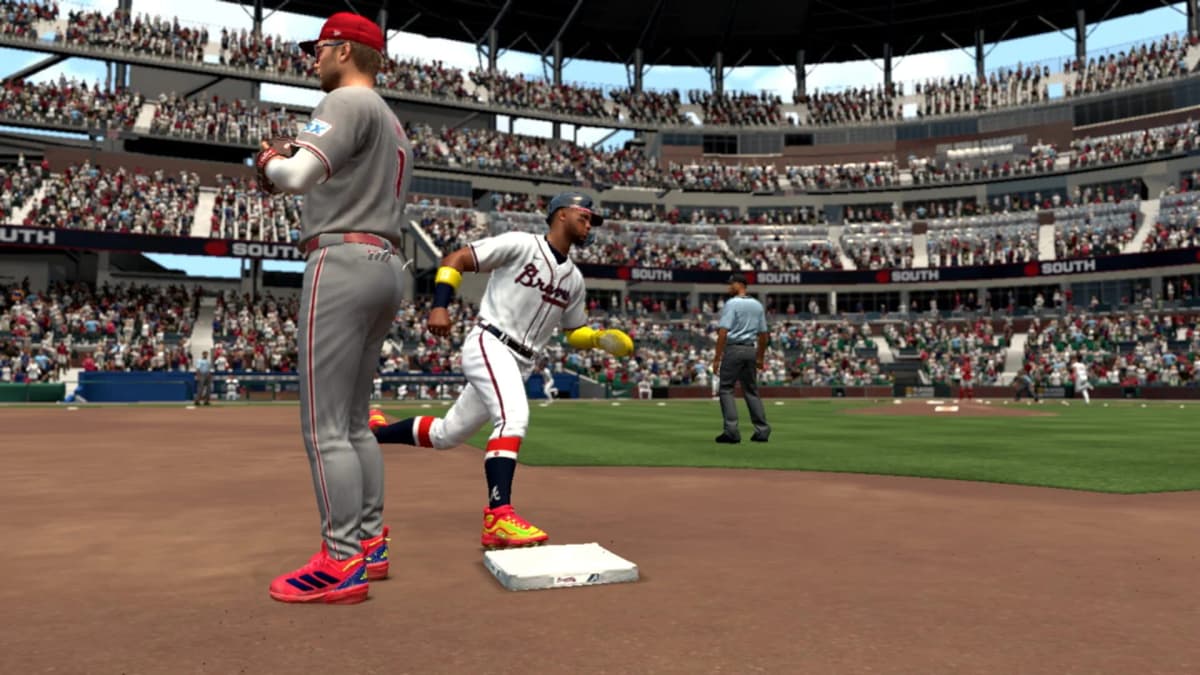
The actual gameplay tied to those stories is still pretty barebones, though. Most challenges boil down to “get a hit,” “record a strikeout,” “don’t allow a run.” I knocked out a batch in one sitting and barely remembered the in-game moments themselves – all the emotional weight came from the videos, not the objectives. I’d love to see this mode expand into more bespoke scenarios that mirror actual historic games, or at least ask you to do more interesting, era-specific things on the field.
Even with that caveat, it’s absolutely worth your time to play through these Storylines. Just go in expecting a brilliant mini-documentary series with some light gameplay attached, not a fully fledged mode that’ll occupy you for weeks.
Who Should Actually Pick Up MLB The Show 26?
This is where the annual sports game grind really kicks in: who should buy this now, and who can safely sit out a year?
If you skipped 25 or haven’t touched the series since the PS4 days, MLB The Show 26 is an easy recommendation. The core gameplay is still unmatched, the onboarding for new players is friendlier than ever, and you’re getting the best version of Road to the Show and Franchise to date, even if they’re not revolutionary.
If you played a lot of MLB The Show 25, the math gets trickier. The new Trade Hub in Franchise, Bear Down Pitching, and the improved amateur years/Smart Sim flow in Road to the Show are the real selling points. If those sound like game-changers for how you personally play, you’ll probably find enough here to justify the jump – especially if Franchise is your main time sink.
On the flip side, if your primary mode is Diamond Dynasty and you were already grinding hard last year, you’re basically signing up for another season in the same ecosystem with heavier pressure on your time and Stubs supply. The World Baseball Classic content is great flavor, but the 20-card ownership cap and Deluxe Edition advantages make the whole thing feel a bit more predatory than I’m comfortable with.
FinalBoss // Gear
Level up your setup
01Top-rated gaming headsetson Amazon→02High-refresh gaming monitorson Amazon→03Gaming chairson Amazon→04Discounted game keyson Kinguin→Affiliate links · As an Amazon Associate, FinalBoss earns from qualifying purchases.
Want to Level Up Your Gaming?
Get access to exclusive strategies, hidden tips, and pro-level insights that we don't share publicly.
Ultimate Reviews Strategy Guide + Weekly Pro Tips