
Table of Contents (12)
MMO sequels almost never work the way everyone thinks they will
I’ve hit the point where, when someone announces a big new “sequel” MMO, my first reaction isn’t hype. It’s dread.
Not because I hate new games. I live for that “new world smell” – the broken economies, the scuffed launch events, the janky metas that last two weeks before the first balance patch. But I’ve watched this movie enough times to know how it usually ends: the sequel arrives, the publisher assumes the community will obediently migrate, and then… it doesn’t. Populations fragment, servers quietly merge, and that big “next chapter” becomes a weird footnote.
This isn’t a “perfect ten: MMOs that got unfair hate” list. It’s the opposite: a look at why so many perfect ten: MMOs game moments never actually happen for sequels, even when the original was a phenomenon. Because when MapleStory 2 can’t survive, Path of Exile 2 struggles to outdraw its predecessor, and a promised Star Wars Galaxies “new home” never materializes, maybe the problem isn’t just bad luck.
MMOs are relationships, not products – sequels forget that
The core mistake studios make with MMO sequels is treating them like normal game follow-ups. “People loved Part 1, so Part 2 will be bigger and shinier, and they’ll all come over.” That works for single-player games where you finish the story, roll credits, and move on.
MMOs don’t work like that. An MMO isn’t just content; it’s identity. It’s friendships, guild history, accumulated cosmetics, a character you’ve lived in for years. You don’t just uninstall that because the marketing beat says it’s time to migrate.
Every time a studio fires up the sequel machine, I can practically hear the spreadsheet pitch: “We’ll leverage our existing IP and community, convert X% of them to the new client, and double revenue.” And then reality hits: turns out people aren’t eager to abandon a decade of progress for a reset that may or may not respect what they loved in the first place.
MapleStory 2: when “modernizing” means amputating the soul
MapleStory 2 still pisses me off, and I wasn’t even a hardcore MapleStory player.
The original MapleStory was an absurdly successful 2D side-scrolling grindfest with that specific crunchy, chibi-pixel energy only early-2000s Korean MMOs really nailed. It had a tone, a feel, a rhythm. It knew exactly what it was.
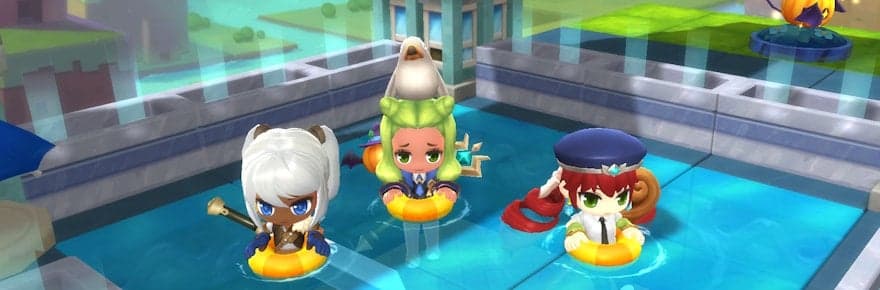
MapleStory 2 rolled up in 2018 and basically said, “Cool story, but what if we were a cute, isometric 3D sandbox instead?” Same IP, totally different game. You can read the postmortems: player retention wasn’t there, servers never hit the kind of critical mass Nexon hoped for, and by 2020 it was dead. Off the market. Gone.
And sure, there were other issues – content cadence, monetization, late global release – but fundamentally, the game looked at its predecessor’s side-scrolling identity and decided the sequel should be something else entirely. It tried to drag people into a different genre under the same name. MapleStory fans didn’t want a “related” experience; they wanted a next MapleStory. Nexon gave them a parallel universe.
That’s MMO sequel sin number one: mistaking a radical pivot for “innovation,” and then acting shocked when the people who loved the original don’t follow you off the cliff.
Path of Exile 2: when your sequel cannibalizes your live game
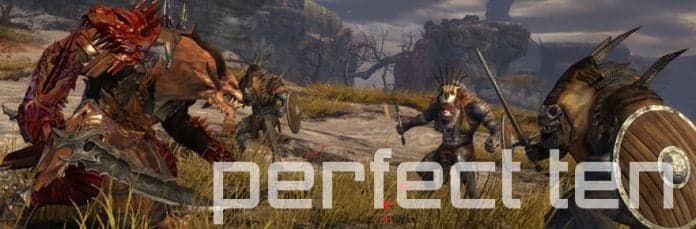
On paper, Grinding Gear Games did everything “right” with Path of Exile 2. Same dark ARPG energy, same silhouette, same brutal builds – but with new campaigns, refined systems, and all the bells and whistles you’d expect from a generational upgrade.
In reality? PoE2 hits early access in December 2024 as buy-to-play, while Path of Exile 1 is still sitting there, free-to-play, with years of muscle memory and sunk time behind it. Steam concurrency for PoE2 sputters under 200k when PoE1 has seen peaks above 300k. Meanwhile, PoE1’s development slows to a crawl because everyone’s been funnelled into building the sequel for years.
I don’t care how hardcore your player base is, that’s a brutal ask: “Pay upfront to start from scratch in a game that’s still changing weekly, while we ease your current main into maintenance mode.” It’s the MMO equivalent of asking people to move into a half-renovated house because you promise the new kitchen will be sick eventually.
And it stings a little extra because PoE1 didn’t need a “2” in the title. It already proved you can radically evolve an online ARPG via expansions and systems reworks. Instead, the sequel branding created this weird, limbo moment: the original stopped feeling like the future, and the sequel didn’t feel stable enough to be home.
If your new game makes your old game feel obsolete before it’s earned trust and critical mass, you’ve basically kneecapped yourself twice.
Torchlight’s cursed MMO dreams
Torchlight is one of those series that lives in the shadow of Diablo, but for a while it was the scrappy darling of ARPG fans who were sick of Blizzard dragging their feet. Torchlight and Torchlight II had that upbeat, colorful loot-goblin charm that Diablo III didn’t initially nail.
Then came the MMO dream: Torchlight Frontiers. Shared hubs! Persistent worlds! A proper online ARPG alternative! And then… development hell. Pivots. Scrapped systems. That promised MMO edge got sanded down until they basically slapped a “III” on it and shipped a more traditional, undercooked ARPG.
Players who wanted the proper MMORPG elements felt betrayed. Players who wanted a clean single-player ARPG were like, “Why does this feel weirdly stitched together and half-committed to something else?” Community splintered, word of mouth cratered, and the whole thing limped along.
And then, as if that wasn’t enough, you’ve got Torchlight Infinite leaning into the free-to-play/mobile hybrid space, far away from what Torchlight II’s co-op crowd originally adored. It’s like watching a band lose itself in label-mandated genre shifts. Every pivot further from the original’s co-op identity made it harder for anyone to feel like, “Yes, this is where the Torchlight community truly lives now.”
Ragnarok Online 2: how do you whiff the sequel twice?
Ragnarok Online is one of those games that’s permanently burned into my brain: vibrant sprite art, deceptively deep builds, that early-2000s Korean MMO soundtrack lodged in your skull for weeks. It was janky, but it had an undeniable vibe.
Gravity tried to make Ragnarok Online 2 twice. The first attempt simplified mechanics, leaned into 3D, and stacked on cash shop pressure. Fans hated it so much the devs basically threw the whole thing in the trash and started again.
Gravity tried to make Ragnarok Online 2 twice. The first attempt simplified mechanics, leaned into 3D, and stacked on cash shop pressure. Fans hated it so much the devs basically threw the whole thing in the trash and started again.
🎮 Get This Game at the Best Price
Compare prices instantly and save up to 80% on Steam keys with Kinguin — trusted by 15+ million gamers worldwide.
*Affiliate link — supports our independent coverage at no extra cost to you
Second attempt? Closer to the original feel, upgraded graphics, more familiar systems… and it still never really landed. Fast forward and it’s in maintenance-mode purgatory, quietly shuffled aside while the original sprite-based RO refuses to die.
Imagine burning years building a sequel, deleting it, starting over, and your reward is: “Eh, we’ll just go back to the 2002 game.” That should be nailed to every boardroom wall the next time someone says, “Our aging MMO needs a replacement.”
Lineage, Asheron’s Call 2, EverQuest II: the legacy trap
The older the MMO, the more dangerous the sequel.
Lineage is the most brutal example from a business standpoint. NCsoft’s own financial reports have repeatedly shown the original Lineage-launched in 1998-still pulling in ridiculous revenue long after Lineage II was supposed to be the future. Then you get Lineage Eternal, which gets canned and re-emerges as a totally different mobile project. Power creep, pay-to-win, constant pivots… each new incarnation chipped away at trust instead of building a clear “this is the true successor” path.
Asheron’s Call 2 did the classic “simplify and instance it” move. Where the original had a seamless, strange open world that felt like a fever dream in the best way, AC2 launched with chunked-up zones and streamlined combat that alienated the diehards without drawing in a huge new crowd. It lost population so fast it shut down in 2005, years before the original.
And then there’s EverQuest II, which might be the most controversial example because it’s not a straight-up failure. It’s still alive, still has a dedicated player base. But stack it against EQ1’s cultural footprint and it’s not remotely the same phenomenon.
EQ2 launched in 2004 demanding pretty aggressive hardware for the time, while also smoothing some of the hardcore rough edges that defined EverQuest’s identity. Raiding, death penalties, that masochistic-but-magical social fabric – a lot of it got softened. Meanwhile, World of Warcraft arrived and vacuumed up the mainstream.
So you end up with this awkward reality: EQ2 survives, but it never supplants EQ1 as the EverQuest in the collective memory. Longevity isn’t the same as successfully migrating the soul of a franchise.
Throne & Liberty and the “we can always fix it later” fantasy
Throne & Liberty is technically not a sequel to a shipped game, but it absolutely lived its life as one behind the scenes. It started as Lineage Eternal, morphed through a decade of development hell, and finally launched globally in 2023 as this weird PvP-heavy MMO chimera.
KR servers were merging within months because 80% of players bailed after the initial hype. Complaints about repetitive combat, lopsided PvP focus, and monetization shoved people out the door almost as fast as they came in. When your game has been pitched as “the future of Lineage” for a decade and you face-plant that hard, it’s not just a bad launch. It’s brand vandalism.
It’s the same delusion that killed stuff like Highguard in the live-service space: this fantasy that you can launch weak, patch your way to redemption, and your core IP will keep everyone hanging on. But sequels and “spiritual successors” don’t get that much runway anymore. The patience that existed in 2004 is dead. Players have options now.
The sequel we never got: Star Wars Galaxies’ ghost
Nothing sums up the MMO sequel curse for me like the hole Star Wars Galaxies left.
When SOE pulled the plug in 2011, we didn’t get a proper successor. We got fan-run emulators, private servers, and a whole lot of people pretending Disney might one day greenlight a real spiritual follow-up. John Smedley even tossed out the idea of a “new home” for SWG refugees at one point, and for a second it felt like we might actually see that lineage reborn.
We never did. Licensing, corporate caution, shifting priorities – pick your poison. Meanwhile, those emu servers quietly did something most official sequels fail at: they preserved the original game’s texture. Same busted systems, same eccentric professions, same weird economy. That’s what people wanted. Not a safer, more on-brand Star Wars MMO. Not a Destiny-like. Not a F2P gacha reskin. They wanted that world back.
And if fans bootlegging an ancient MMO are doing a better job at “sequel energy” than most AAA publishers, maybe the entire sequel model is broken for this genre.
The deeper pattern: business models and broken promises
When you zoom out across all these case studies, the same patterns keep showing up:
- Business model whiplash – Sub to F2P to P2W, or buy-to-play sequels following F2P originals. Path of Exile 2 charging upfront right out of the gate while PoE1 is free is a perfect example. Ragnarok Online 2 leaning hard on cash shops versus the grind-based original is another.
- Feature abandonment – Torchlight Frontiers promising a full MMO experience, then gutting those elements by the time it shipped as Torchlight III. Asheron’s Call 2 ditching the open world. MapleStory 2 completely changing perspective and feel.
- Community fragmentation – Running old and new clients side by side, never committing to a true handover. Path of Exile, Lineage, EverQuest… all stuck in this awkward “both exist, neither fully wins” limbo.
- Investor delusion – Treating these games as guaranteed hits because the name is familiar. Highguard is a recent live-service corpse on that altar; MMO sequels have been bleeding out there for years.
None of this is mystery science. Players are telling studios exactly what they want by where they actually log in… and yet we keep getting sequels that ignore that signal in favour of some imagined new audience that rarely materializes.
So what does a “good” MMO sequel even look like?
We do have success stories, but notice how few of them call themselves “2.” World of Warcraft evolved through expansions. Final Fantasy XIV pulled the wildest magic trick of all time by rebooting itself in-place with A Realm Reborn instead of trying to shove everyone into a totally separate client.
The best “sequels” in the MMO space tend to be radical updates to the same living world, not parallel worlds competing for the same community. When you keep the identity, the characters, the social fabric, players will tolerate huge changes. Hell, they’ll cheer for them if you get it right.
When you slap a “2” on the box and ask people to start over while you re-learn what made the original special? That’s when the graveyard starts getting new residents.
And that’s the tension I can’t shake. On one hand, MMOs absolutely need room to reinvent themselves. Technology moves on, design philosophies evolve, and no one should be condemned to maintain a 2004 codebase forever. On the other hand, every time a studio bets on a clean-slate sequel instead of a bold in-place evolution, it feels like we’re spinning the chamber on a genre that’s already lost too many worlds.
Maybe one day someone will finally thread that needle-a true MMO sequel that lets a community migrate without amputating its history or betraying its identity. Until then, every time I see that “2” slapped onto an online world, I don’t see promise. I see a warning sign.
FinalBoss // Gear
Level up your setup
01Graphics cardson Amazon→02Gaming laptopson Amazon→03High-refresh gaming monitorson Amazon→04Discounted game keyson Kinguin→Affiliate links · As an Amazon Associate, FinalBoss earns from qualifying purchases.
Want to Level Up Your Gaming?
Get access to exclusive strategies, hidden tips, and pro-level insights that we don't share publicly.
Ultimate Gaming Strategy Guide + Weekly Pro Tips