
Table of Contents (10)
A genetically engineered murder-hamster, some scritches, and a surprisingly clever mobile roguelite
The pitch for Mochi-O sounds like something from a jam game fever dream: side-scrolling tower defense where your main weapon is a government-grade anti-personnel hamster that you level up by feeding it seeds and giving it scritches. On paper, it feels like one joke stretched to app-store length. In practice, it’s one of the more oddly satisfying little mobile roguelites I’ve played in a while.
What grabbed me early wasn’t just the absurdity; it was how seriously the game commits to making the “pet your murder-hamster” stuff actually matter. The bonding, the feeding, even the tiny pre-mission scritch ritual – they aren’t just cosmetic fluff. They’re woven into the upgrade loop in a way that constantly nudged me to care about Mochi-O as more than a DPS number, even while I was gleefully turning infantry into pink mist.
Underneath the cute art and darkly comedic premise, Mochi-O is essentially a bite-sized side-scrolling tower-defense shooter with roguelite runs. You protect a city barrier on the right of the screen from incoming waves on the left, shuffle your handler back and forth, and let your hamster unload hell as you hoover up seeds and piece together a build. But the pet sim glue is what makes it feel different from the flood of “idle-but-not-really” shooters on mobile.
First contact with a compact anti-personnel annihilation weapon
My introduction to Mochi-O was very unceremonious. The opening cutscene sets up a world ravaged by high-tech war and hush-hush government experimentation, then dumps a very round, very sleepy hamster into your arms with a grim résumé: compact anti-personnel annihilation weapon. The contrast between the dead-serious military jargon and this tiny, waddling ball of fur hits immediately.
Mechanically, the first mission is a short tutorial. You’re the handler, literally holding Mochi-O like a living gun. A virtual joystick on the left moves your character along a 2D lane; you don’t jump or platform, you simply reposition to screen-manage the chaos. Firing is mostly automated – Mochi-O auto-targets closest threats – so your brain is freed up to dodge, collect seeds, and think about builds rather than wrestling with dual-stick controls on glass.
What I liked right away is that the game isn’t precious about failure. Enemies stream towards your barrier; some will slip by. The city’s HP bar is fairly forgiving as long as you aren’t asleep, and stages are on a timer. Survive to zero with at least a sliver of HP and you pass. That slight leniency makes experimenting with goofy builds actually fun instead of punishing.
My first “oh okay, this has some teeth” moment came when I unlocked the sunflower rifle in that initial run. It starts as a humble seed-spitter, but each level of the upgrade noticeably bumps its fire rate and damage. Combine that with a slow-field ability and suddenly Mochi-O is shredding a whole line of soldiers while my handler sprints around grabbing the seeds spraying across the ground. It was the first hint that this wasn’t just a gimmick shooter – the layering of upgrades matters.
Side-scrolling tower defense with a hamster-shaped twist
Structurally, Mochi-O sits somewhere between a traditional lane-based tower defense and those horde survival mobile shooters that have flooded stores recently. Each mission gives you a horizontal slice of city, a barrier on the far right, and waves of enemies pouring in from the left. You can only move along that lane, so “positioning” mostly means deciding how far forward you dare push to thin the herd and scoop up seeds before they decay.
Enemies have enough variety to keep short sessions interesting: basic grunts, shielded types that soak early damage, faster units that bee-line for your barrier, and chunkier elites whose death sprays a shower of seeds. Later on, mixed waves where a fast vanguard sprints under covering fire from bulkier units had me juggling priorities, especially when I was still under-upgraded.
Because Mochi-O auto-fires, the core moment-to-moment play is surprisingly tactile for a mobile game that looks simple on the surface. You’re weaving just in front of the advancing line, juking to collect seeds at the last possible second, nudging yourself into position so your current weapon’s arc actually lines up with the scariest threat. The tension ramps nicely as the screen clogs with projectiles and units while the timer ticks down.
The game loves tossing in tiny, risk-vs-reward decisions too. Green crates appear periodically; if you break off from the main firefight to reach one, a timing mini-game pops up – a meter sweeps back and forth, and you tap when it hits the blue or green segment. Nail it and you get a bonus upgrade or resource. Whiff it and you’ve just wasted time and possibly let a clump of enemies hit your barrier. I lost one early mission because I got greedy for a crate, whiffed the timing, and watched a whole wave sprint past while I was stuck in the animation. I immediately went back in with a personal rule: no crates unless the front line is under control.
Seeds, builds, and that “one more run” hamster wheel
The roguelite layer is where Mochi-O quietly sinks its claws in. Every enemy you vaporize drops seeds. Regular seeds feed into your temporary level-ups for that run; pink seeds are a separate currency you’ll use between missions to actually feed and bond with Mochi-O and any sub-hamsters you unlock.
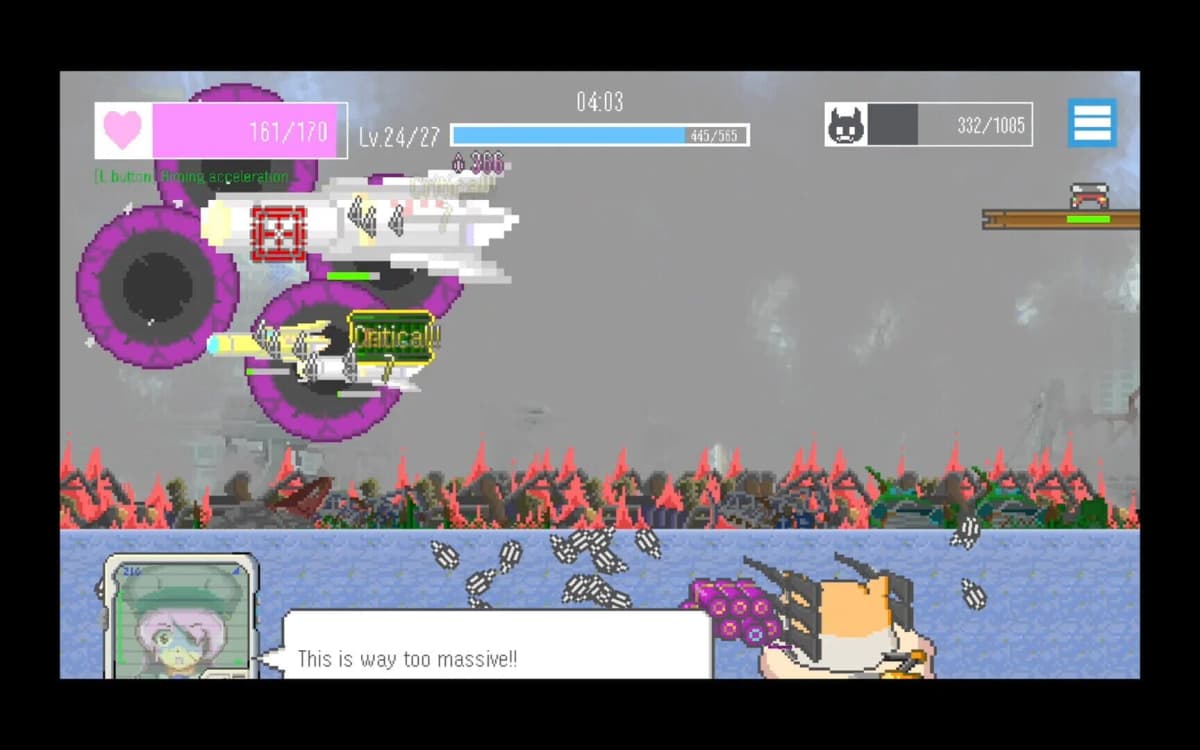
During a mission, filling your seed XP meter presents three randomly rolled upgrades. Early on these are simple damage and rate-of-fire bumps, or new weapons like the sunflower rifle or a spread shot. Keep leveling and weirder options appear: the Daylight Death Ray, which calls down a beam from the sky; Emotional Abyss, which creates a black hole that sucks in and shreds clustered enemies; helpers like Mr Nibbles, a tiny assistant who auto-collects seeds so you can focus on positioning.
The randomness isn’t as wild as some roguelikes, but there’s enough variety that runs feel distinct. One particularly memorable round, I leaned hard into beam and area control: Daylight Death Ray for big single-target deletes, Emotional Abyss for crowd clumps, and a series of upgrades that slowed enemies and extended status durations. The end result looked like some kind of divine hamster wrath – enemies waddling in slow motion through overlapping black holes while laser pillars casually erased anything that survived. Another time, my rolls pushed me towards raw bullet output and seed vacuum enhancements; that run turned into a frantic, greed-driven sprinting match as I tried to stay just ahead of a wall of shredded enemies, scooping up the storm of seeds before they vanished.
Coins, earned from clearing missions and achievements, power a separate meta-progression tree. You spend them to add new upgrades to the pool and strengthen existing ones. This is where the game nudges you into long-term planning: buying Mr Nibbles so he can even appear in runs, improving the base damage of certain weapons, or unlocking higher-tier abilities that only roll once you’ve progressed far enough. Because the individual runs are fairly short, that steady drip of persistent unlocks gives the “just one more mission” itch real teeth.
Feeding, bonding, and why scritches actually matter
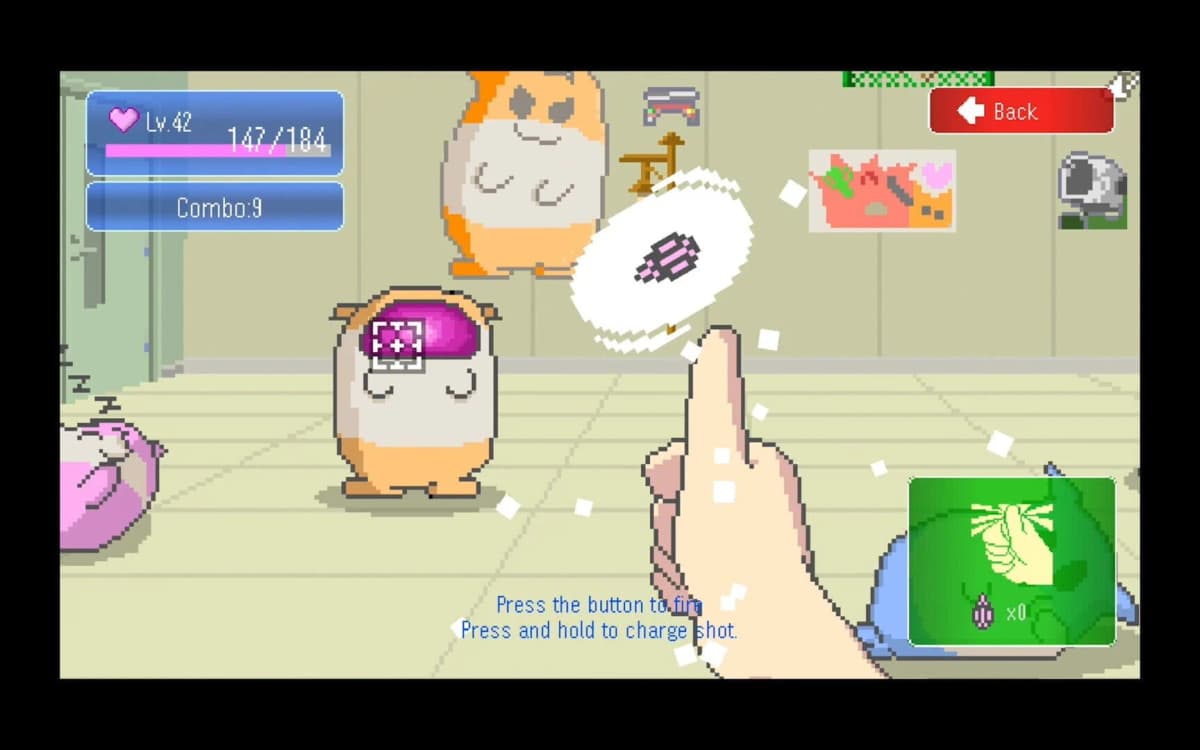
The thing that sets Mochi-O apart from most disposable mobile shooters is how much of the power curve is tied to your relationship with your hamster. The pink seeds you earn in missions don’t affect your current run at all. Instead, you take them back to base and literally toss them into Mochi-O’s mouth between missions in a simple little feeding mini-game.
Mechanically, this increases your bond level. Each bond level raises how many upgrades Mochi-O can accumulate per round, and unlocking certain thresholds lets you equip sub-hamsters in your other hand. Emotionally, it does this sneaky thing where you start to feel like you’re actually showing up for this tiny overworked furball, making sure he’s fed and happy before hauling him back to the front lines.
The first time I hit a new bond tier and the game told me Mochi-O could now handle more upgrades per run, it clicked how central this system is. Neglect it and your builds simply cap out earlier; your hamster peaks too soon and runs turn into survival slogs instead of power fantasies. Invest in it, and the late stages of a mission transform into this stupidly satisfying fireworks display as stacked upgrades begin compounding.
On top of that, you get optional scritches before each sortie. This is presented as a short mini-interaction where you give Mochi-O affection, and in return you roll for bonuses: extra coins, more pink seeds, sometimes even an early upgrade boon. It’s technically skippable, but I found myself doing it religiously. A couple of times I rushed back into the next mission without scritches and immediately felt underpowered compared to previous runs where I’d banked an early buff. That behavioral nudge – “hey, taking care of your hamster makes you stronger” – is elegant and a bit insidious.
On top of that, you get optional scritches before each sortie. This is presented as a short mini-interaction where you give Mochi-O affection, and in return you roll for bonuses: extra coins, more pink seeds, sometimes even an early upgrade boon. It’s technically skippable, but I found myself doing it religiously. A couple of times I rushed back into the next mission without scritches and immediately felt underpowered compared to previous runs where I’d banked an early buff. That behavioral nudge – “hey, taking care of your hamster makes you stronger” – is elegant and a bit insidious.
🎮 Get This Game at the Best Price
Compare prices instantly and save up to 80% on Steam keys with Kinguin — trusted by 15+ million gamers worldwide.
*Affiliate link — supports our independent coverage at no extra cost to you
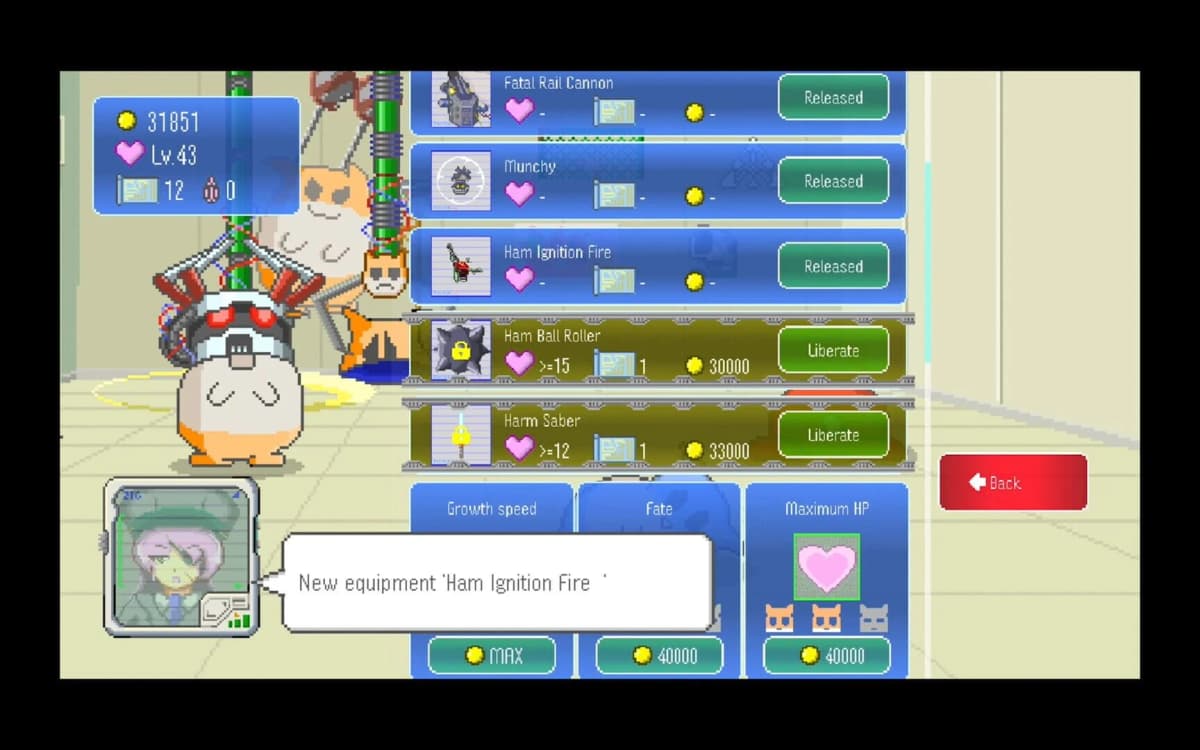
Sub-hamsters deepen this, turning the whole team into a little squad you gradually kit out. Once your bond is high enough, you unlock the ability to equip a second hamster in your left hand. Sub-hamsters aren’t as destructive as Mochi-O, but they add an extra firing pattern or support effect, and they, too, can be fed pink seeds to increase how many upgrades they contribute to a run. One of my favorite setups was pairing Mochi-O with a more support-oriented sub-hamster that enhanced seed drop rates; it meant slightly slower early clear, but by mid-mission I was drowning in seeds and turning into an unstoppable seed-powered doom machine.
Controls, feel, and the small tactile touches
I played Mochi-O on a phone, and it’s clearly tuned for that format. The single movement stick and mostly-automated aiming are simple, but that’s a good thing here. The last thing I wanted in the middle of a dense bullet curtain was to fumble with precise aiming on a touchscreen; letting Mochi-O handle targeting while I maneuvred and managed resources kept the flow snappy.
There’s a surprising amount of physicality in small details. Breaking crates pops with a chunky little sound and screen shake. The timing mini-game has just enough snappiness that nailing the green segment is satisfying rather than rote. Feeding seeds at base has a gentle arc and “plop” that made me weirdly invested in landing perfect mouth shots. Scritching animations sell that Mochi-O genuinely enjoys the attention; the combination of audio cues and tiny movements matters more than I expected in a game that’s otherwise about mass destruction.
Performance-wise, the game held steady even when the screen was crammed with enemies, projectiles, and overlapping effects. On my device there were no noticeable stutters or input lag spikes, which is critical in a game where a bad dodge because of sluggish input can mean your barrier evaporates in seconds. Battery drain felt in line with other colorful arcade titles – you won’t marathon for hours without a charger, but for short bursts it’s fine.
Presentation, story beats, and tonal whiplash that kind of works
Visually, Mochi-O leans into soft, rounded designs and bold colors. Enemies look like generic soldiers and war machines, which lets Mochi-O and the other experimental hamsters steal the show. The contrast between those cutesy proportions and the sheer volume of violence they output is very intentional. Watching a chubby hamster calmly birth a black hole that erases a platoon never stopped being funny in that “I shouldn’t be laughing at this” way.
There are light narrative beats sprinkled between missions, touching on the ethics of turning animals into weapons and the trauma around Mochi-O’s previous handler’s death. It never gets heavy enough to clash with the arcade core, but it adds a little melancholy edge. The idea that your long-term goal is to free these experimental hamsters and create a future where they aren’t fighting our wars gives you something to latch onto beyond high scores.
Audio backs it up with peppy but slightly off-kilter music, and SFX that walk the line between cute and brutal. Hamster squeaks, seed pickups, and gunfire all sit in a mix that never felt grating, even when I had sound on for longer sessions. There isn’t a ton of variety in tracks, but for a pick-up-and-play mobile title, it does the job.
Where the fur gets a bit matted
For all the charm, Mochi-O isn’t without rough edges. The biggest one is repetition. The core loop – queue mission, defend barrier, grab seeds, feed and scritch, buy unlocks – is tight, but mission variety is more about different wave compositions than truly distinct scenarios. After a few extended sessions, runs started to blur together unless I consciously pushed myself into weird builds just to see what would happen.
The random upgrade system can also produce some limp-feeling runs. If you’re chasing a particular synergy – say, stacking beam upgrades with crowd control – and the rolls just aren’t going your way, you can end up with a half-hearted mishmash that never quite sings. The runs are short enough that this isn’t fatal, but there were a couple missions where I knew five minutes in that the build was doomed to mediocrity and I was just grinding it out for coins and seeds.
Difficulty scaling can feel a little spiky, especially if you’ve been cheeky about upgrading bond levels. I had one moment where I’d been hoarding pink seeds to unlock a sub-hamster, ignored bond progression for a while, and hit a wall where enemies suddenly outpaced my capped-out upgrade slots. The solution was simple – go back, feed the poor hamster, raise the bond – but the jump from “comfortable” to “brutal” between two missions felt abrupt.
Lastly, while the pet mechanics are genuinely integrated, they lean heavily on the same interactions over time: feed, scritch, repeat. If you’re the kind of player who doesn’t care about virtual pets, you might bounce off that rhythm, even if the rewards are strong. For me, the little ritual of topping up Mochi-O’s affection between runs became part of the comfort, but I can see some players wishing for a faster, less fussy meta layer.
Who Mochi-O is really for
Mochi-O feels tuned for a specific overlap of tastes: players who enjoy arcade shooters and tower defense, but also get a kick out of caring for a digital critter. If you like buildcrafting in roguelites – piecing together synergies, seeing how far you can push a single gimmick – there’s more depth here than the cutesy art suggests.
It’s especially well-suited for short mobile sessions. Missions are compact, progression is steady, and the controls are simple enough that you can play one-handed on a commute. The hamster-bonding layer even makes it oddly suited as a chill-before-bed game; I found myself doing a couple of runs and then just feeding and scritching Mochi-O, poking through unlocks, treating it more like a cozy pet-sim interlude than an action game.
If you’re hunting for a deep, endlessly complex roguelike with sprawling talent trees and granular stats, this won’t scratch that itch. Mochi-O is about accessible builds, satisfying feedback, and that gentle grind of upgrading a small squad of weaponized rodents until they feel unstoppable.
FinalBoss // Gear
Level up your setup
01Top-rated gaming headsetson Amazon→02High-refresh gaming monitorson Amazon→03Gaming chairson Amazon→04Discounted game keyson Kinguin→Affiliate links · As an Amazon Associate, FinalBoss earns from qualifying purchases.
Want to Level Up Your Gaming?
Get access to exclusive strategies, hidden tips, and pro-level insights that we don't share publicly.
Ultimate Reviews Strategy Guide + Weekly Pro Tips