
Monarch: Legacy of Monsters season 1 surprised me. I went in for Godzilla and Kong and ended up way more invested in cranky scientists arguing in bunkers and a traumatized teacher trying to figure out what G-Day did to her life. It was messy at times – especially the time-hopping between the 1950s and 2015 – but it felt like the first time the Monsterverse genuinely cared about the people stuck under those skyscraper-sized feet.
Season 2, premiering February 27 on Apple TV with weekly Friday drops, is where that experiment really clicks. The show tightens its past/present structure, cranks up the monsters and the visual effects to almost feature-film level, and pushes Keiko Miura to the center in a way that reorients the entire Monsterverse around one very stubborn scientist and her family.
Table of Contents (9)
Coming Back to Monarch After Season 1
If you haven’t thought about Monarch since season 1 wrapped, you might want a quick recap before jumping in. The show’s basic trick is still the same: it runs on two tracks. In the 1950s, we follow Keiko Miura (Mari Yamamoto), Bill Randa (Anders Holm), and hotheaded soldier Lee Shaw (Wyatt Russell) as they essentially invent the idea of “let’s study these monsters instead of just dying in front of them.” In the “present,” we were in 2015 last time, a year after Godzilla’s San Francisco smackdown, following Cate (Anna Sawai), Kentaro (Ren Watabe), and May/Corah (Kiersey Clemons) as they peel back Monarch’s secrets.
Season 2 inches that modern timeline forward to 2017, closer to Godzilla: King of the Monsters. The new wrinkle is Keiko’s rescue from Axis Mundi – that eerie, in-between realm teased in season 1. She comes back decades after she should’ve died, roughly the same age she was in the ‘50s, and walks into a world where Monarch is a global behemoth, her son is middle-aged, and her grandkids are grown. That’s the emotional bomb the season builds around.
If season 1 occasionally felt like two separate shows fighting for dominance, season 2 feels like those halves finally snapping together. Almost every problem in one timeline is echoed or explained by the other. When something big happens in 2017, you can feel the ghost of a decision made in 1957 hovering over it. It’s more satisfying and way easier to track week to week.
Season 2’s Time-Hopping Finally Makes Sense
My biggest complaint about season 1 was always that the show asked a lot of attention from you without always earning it. You’d bounce from Cate’s PTSD to young Shaw bickering with Keiko in some jungle, and the threads between those scenes were more thematic than concrete. Interesting, sure, but sometimes you just want to know why you’re being shown this now.
Co-creator and showrunner Chris Black and his writers clearly heard that feedback, because the structural game in season 2 is much sharper. The ‘50s and 2017 storylines aren’t just parallels; they’re cause and effect. Discoveries Keiko, Bill, and Shaw make on a 1957 research trip to a South American island called Santo Soledad directly shape the Titan mess unraveling in 2017. Their emotional screwups echo too: loyalties, betrayals, and half-confessed feelings in the past reappear as family rifts and institutional rot in the present.
The result is a season where the time jumps actually build momentum instead of cutting across it. An episode might end in the ‘50s with a haunting choice on that island, then pick up in 2017 with the logical, horrible consequence. It’s the kind of storytelling Season 1 kept reaching for but didn’t always land.
And crucially, the show never forgets the Titans. Every scientific mystery or personal crisis ultimately comes back to “how do you share a planet with gods that barely notice you?” That through-line keeps all the hopping around from feeling like a structural gimmick.
Keiko’s Rescue Turns the Monsterverse into a Family Drama
Season 2 quietly pulls off something I didn’t expect: it makes Keiko, not Godzilla or Kong, the character I care about most in this entire franchise.
Pulling her out of Axis Mundi and dropping her into 2017 is a brilliant move. She’s suddenly a “woman out of time,” but instead of leaning on cliché fish-out-of-water jokes, the show plays it like a slow-motion car crash of grief and second chances. She has to process decades of lost time while confronting the literal consequences of her life’s work. Monarch, which she started as a scrappy little operation fueled by idealism, is now a monolith with secrets piled on secrets. Her son Hiroshi (Takehiro Hira) grew up without her, made a ton of questionable choices, and has two estranged kids who barely know how to talk to each other, let alone to this impossibly young grandmother.
The scenes that hit hardest this season aren’t the buildings coming down; they’re Keiko staring at a grown Hiroshi, trying to reconcile the boy she left behind with the man standing in front of her. That axis – Keiko, Hiroshi, Cate, Kentaro – gives the show a clean emotional spine that season 1 didn’t quite have. Cate’s frantic determination not to abandon Col. Lee Shaw (Kurt Russell) in Axis Mundi feels like an extension of Keiko’s core belief: you don’t leave people behind, even when the universe clearly doesn’t care.
Across the ten episodes, that family focus bleeds into almost every major decision. Titan sightings, Monarch cover-ups, APEX Cybernetics’ scheming – it all comes back to what this particular group of people will or won’t sacrifice for each other. It’s still a show about secret organizations and ancient monsters, but the engine driving it now is heartbreak, regret, and stubborn hope.
More Titans, Bigger Scale, Nearly Movie-Level VFX
Let’s be blunt: if you’re here mainly for the monsters, season 2 treats you a lot better.
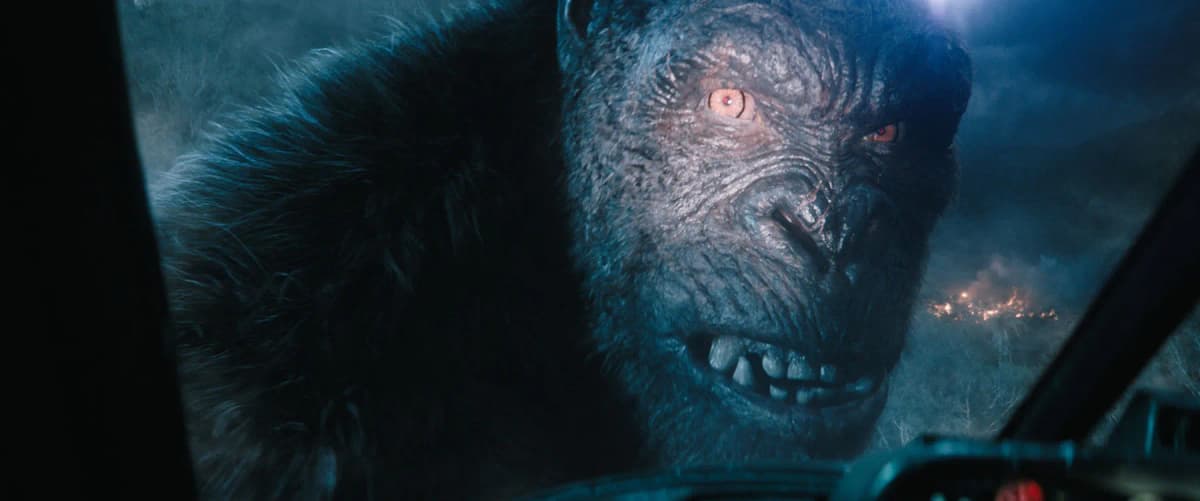
Godzilla and Kong are both more present this time, and they’re sharing the stage with an original Titan that spins out of that 1957 Santo Soledad expedition. The new creature isn’t just cannon fodder either; its origin story fits right into the Monsterverse’s usual ecological metaphor. These aren’t just oversized animals; they’re living, stomping commentary on how humanity treats the planet.
The wild part is how good it all looks. The visual effects are so close to feature-film quality that there were multiple moments where I genuinely wished I was seeing this on a theater screen. You get a real sense of weight and scale when these things move. Dust, debris, light hitting Titan skin – it’s all rendered with the kind of care you expect from a two-hour movie, not a ten-episode streaming season.
Season 1 sometimes felt like it was rationing its monsters; long stretches would go by where you’d maybe get a footprint or a distant roar. Season 2 is still careful – this isn’t just non-stop Titan wrestling – but it’s noticeably more generous. Big set pieces are spread throughout the run rather than saved up for a finale blowout, and they’re almost always tied to meaningful character moments instead of feeling like mandated spectacle.
It helps that the directors seem to understand the Monsterverse sweet spot: you want the camera close enough to the ground to feel like a speck under a boot, but pulled back just enough to admire the choreography of these impossible creatures. Monarch lands that balance far more consistently this year.
Axis Mundi, Santo Soledad, and the Joy of Filling in the Blanks
One thing I love about transmedia universes – whether it’s Fallout bouncing between games and TV or the MCU sprawling across formats – is watching side stories quietly fix things the movies left half-baked. Monarch season 2 is absolutely that for the Monsterverse.
The show spends a lot of time in the cracks between films, especially in that 2015–2017 window the movies largely skip. Axis Mundi, which used to be a vague “monster limbo” concept, becomes a real narrative tool. The season introduces a clever device related to that realm in its back half – I won’t spoil specifics – that the writers use for some surprisingly heavy emotional beats. It turns a sci-fi concept into a metaphor for unresolved trauma and unfinished conversations.
On the lore side, Monarch and APEX Cybernetics finally feel like fully defined entities rather than hand-wavy logos slapped on labs. Plans that sounded nebulous in the films – weird tech, secret programs – are given clearer goals and consequences here. Even Netflix’s animated Skull Island sneaks into the conversation via connective tissue that makes the whole Monsterverse timeline feel more intentionally built.
I came away with the sense that rewatching the movies after this season will just make more sense. Plot points in King of the Monsters that used to feel like “don’t worry about it, just go with it” now read as the chaotic surface ripples of stuff Monarch’s been wrestling with off-screen.
Pacing: A Rocket First Half, a Slower but Sharper Back Half
The season’s rhythm is interesting. The first five episodes move like they’ve had three espressos: major Titan encounters, big reveals, and whiplash plot turns in both eras. It’s the kind of run where you finish an episode and immediately want to let the next one auto-play, which is mildly cruel given Apple’s weekly schedule.
The back half eases off the throttle. On paper, that sounds like a problem, and there are definitely moments where you feel the show catching its breath a little too long. But that slower stretch is where the character work really lands. The Axis Mundi device I mentioned earlier turns what could’ve been a standard “set up the finale” lull into something more like group therapy for multiple timelines. It’s weird, a little trippy, and far more emotional than I expected a Monsterverse project to be.
If you came purely for the mayhem, the mid-season change of gears might test your patience. For me, it made the big swings in the finale hit harder because I actually cared where everyone ended up. The Titans bring the noise; the quieter episodes give that noise meaning.

The One Arc That Really Stumbles
For all the praise I’ve got, there is one thread that never quite stops nagging: Kentaro.
Ren Watabe did some interesting work in season 1 as the prickly, artsy sibling whose anger masked real vulnerability. Season 2, though, sidelines him into an extended sulk. For a big chunk of the season he’s stuck in this cryptic, withdrawn mode that feels less like natural development and more like the writers needing him to hold onto certain information until the right reveal.
He does eventually get pulled back into the larger picture, and the late-season material gives him more to chew on. But compared to what Cate, Keiko, Hiroshi, and even supporting players like Tim (Joe Tippett) get to do, Kentaro’s journey feels undercooked. In a show that’s usually so good about tying emotional growth to plot, his arc stands out as the one place where the gears are a bit too visible.
Ensemble Strength: Russell Squared, May’s Glow-Up, and Tim the MVP
Pretty much everyone else in the ensemble levels up this year.
The dual Lees – Wyatt Russell in the ‘50s, Kurt Russell in 2017 – remain one of the coolest casting tricks on TV. Season 2 gives both versions of Shaw meatier dilemmas. Young Shaw’s swagger is increasingly haunted by the fallout of Santo Soledad, while older Shaw feels like a man held together by stubbornness and duct tape, refusing to stop fighting even as Axis Mundi quite literally eats away at him. Whenever the two time periods echo each other through Shaw, the show sings.
May/Corah’s hacker skills stop being a convenient plot button and become central to one of the better arcs this season, especially once she and Tim get tangled in a much bigger Monarch operation. Joe Tippett’s Tim was a solid comic-relief/tragic-everyman type in season 1; here he steps into something closer to co-lead territory in parts of the story, and he absolutely holds it. Watching this anxious desk guy get dragged deeper into the Titan world and find a steel spine is one of the more quietly satisfying through-lines.
And Mari Yamamoto’s Keiko is just on another level. She has to play awe, terror, scientific fascination, and raw grief often in the same scene, and she grounds every bizarre sci-fi concept the show throws at her. In a franchise where human performances are usually just bridges between action scenes, that’s not nothing.
Who Monarch: Legacy of Monsters Season 2 Is For
If you bounced off the Monsterverse films because you didn’t care about the actors running beneath the kaiju, this show continues to be the antidote. Season 2 doubles down on character drama without skimping on the Titans, in a way that honestly makes the movies feel a bit shallow in comparison.
If you loved season 1, season 2 is pretty much a no-brainer. It takes what worked – multigenerational storytelling, messy family dynamics, “what if bureaucracy but with kaiju?” – and tightens the screws. The one caveat is that the slower, more introspective back half might catch some folks off-guard after the rollicking start. Personally, I’d rather have a Monsterverse story that occasionally lingers on a conversation too long than one that rushes through everything just to get to the next explosion.
For Apple TV+ subscribers who are just here for prestige genre TV, Monarch now sits comfortably alongside the likes of For All Mankind: visually ambitious, character-driven, and quietly doing worldbuilding work the films around it will benefit from for years. It’s less “monster-of-the-week” and more “slow-burn family epic that happens to feature skyscraper-sized gods.”
FinalBoss // Gear
Level up your setup
01Top-rated gaming headsetson Amazon→02High-refresh gaming monitorson Amazon→03Gaming chairson Amazon→04Discounted game keyson Kinguin→Affiliate links · As an Amazon Associate, FinalBoss earns from qualifying purchases.
Want to Level Up Your Gaming?
Get access to exclusive strategies, hidden tips, and pro-level insights that we don't share publicly.
Ultimate TV Shows Strategy Guide + Weekly Pro Tips