
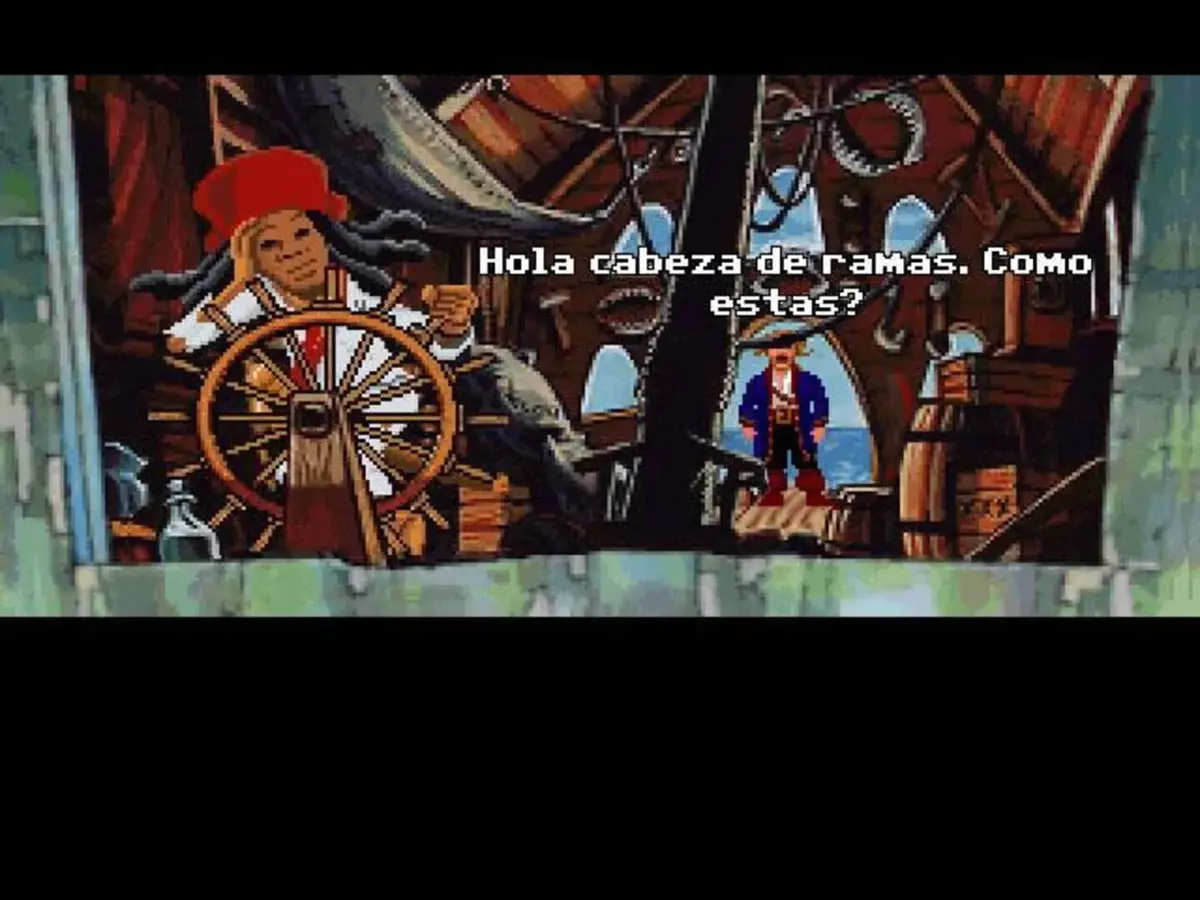
There is no officially announced Monkey Island 2.5: El Parque de las Pesadillas. No release date, no platform list, no price, no product page, and no confirmed development team exist for it. That needs saying plainly because fans are already treating a name like a promise when it is currently little more than a very effective reminder of how badly people want another Monkey Island.
The frustrating part is that the desire is not fantasy. Ron Gilbert has made it clear that another game is not impossible in the abstract. He has also made it clear that getting one made is “really complicated.” In Gilbert’s framing, Disney’s ownership of Lucasfilm turns a creative conversation into a multi-company negotiation, and that structure helps explain why a beloved series can sit dormant even when its creator is interested and the audience is visibly eager for more.
I have mixed feelings about that reality. Disney and Lucasfilm gave Gilbert room to return once already, and I am not interested in pretending that Return to Monkey Island happened by accident. But a system where the person most associated with a series needs a major corporate middleman before he can even seriously pursue the next installment is still a bad system for games. It protects ownership. It does much less to protect momentum, creative appetite, or the players waiting for the next voyage.
Table of Contents (4)
The Rumor Is Fake, but the Roadblock Is Real
Fans should stop presenting Monkey Island 2.5: El Parque de las Pesadillas as a released, announced, or secretly imminent project. It has no official release form. At this point, the title works better as an unconfirmed fan label than as the name of a real product. That does not make the larger discussion pointless. If anything, it makes the conversation more useful, because the real story is no longer “when will the next game launch?” The real story is why getting a new Monkey Island proposal from a creator to a greenlight remains such a slog.
That distinction matters because dormant series create a vacuum, and fans fill vacuums with hope, rumors, shorthand names, fake certainty, and the occasional self-inflicted disappointment spiral. Adventure games are especially vulnerable to that pattern. They inspire loyalty that lasts for decades, and Monkey Island is not some obscure curiosity sitting in a vault. It is one of the defining names in point-and-click adventure games, the old-school format built around dialogue, puzzles, inventory use, and exploration rather than combat-first design. When a series with that kind of history goes quiet, people start turning possibility into assumption.
Gilbert has been talking about the rights problem for more than a decade. Disney bought Lucasfilm in 2012, and Gilbert quickly found himself outside the ownership chain for the world he helped build. He pushed publicly for access that same year, said he wanted to contact Disney about making a game that December, and asked Disney to sell him the creative rights to Monkey Island in 2016. The desire was never subtle. The bottleneck was consistently about corporate control and access.
His latest explanation is blunt: Disney would not work with him directly. Disney may be a “good partner, creatively,” as Gilbert has said, but it prefers dealing with larger companies. That means a small creator-led studio faces a three-part alignment problem. Disney has to be comfortable. Lucasfilm has to be comfortable. An established publisher or intermediary has to be willing to fund, negotiate, and absorb the business risk. Any one of those parties can slow the process down, and none of them answer to fan impatience.
That is the part people keep flattening into a yes-or-no narrative. Gilbert has not said Disney personally vetoed a specific new Monkey Island pitch. He has said the ownership arrangement makes a new game harder to set up. There is a difference between a locked door and a hallway with three separate security checkpoints. Players still end up waiting outside either way, but the diagnosis matters if we want to talk honestly about what should change.
Return to Monkey Island Proved the Route Exists — Once
Return to Monkey Island remains the crucial piece of evidence here. The sixth mainline game launched first on Nintendo Switch and Windows on September 19, 2022, developed by Terrible Toybox with Lucasfilm Games and published by Devolver Digital. It arrived when the pieces finally fit: Gilbert had a project, Lucasfilm had an IP arrangement, Disney had a partner it could work with, and Devolver could operate as the business bridge between creator and rights-holder.
That is the encouraging half of this story. Disney ownership did not erase Monkey Island. Lucasfilm did not bury it permanently. Devolver did not turn the game into a generic corporate nostalgia product. The finished release existed because a creator-led pitch found a publisher with enough credibility to navigate a giant rights-holder’s process. That matters, and it deserves to be acknowledged without sarcasm.
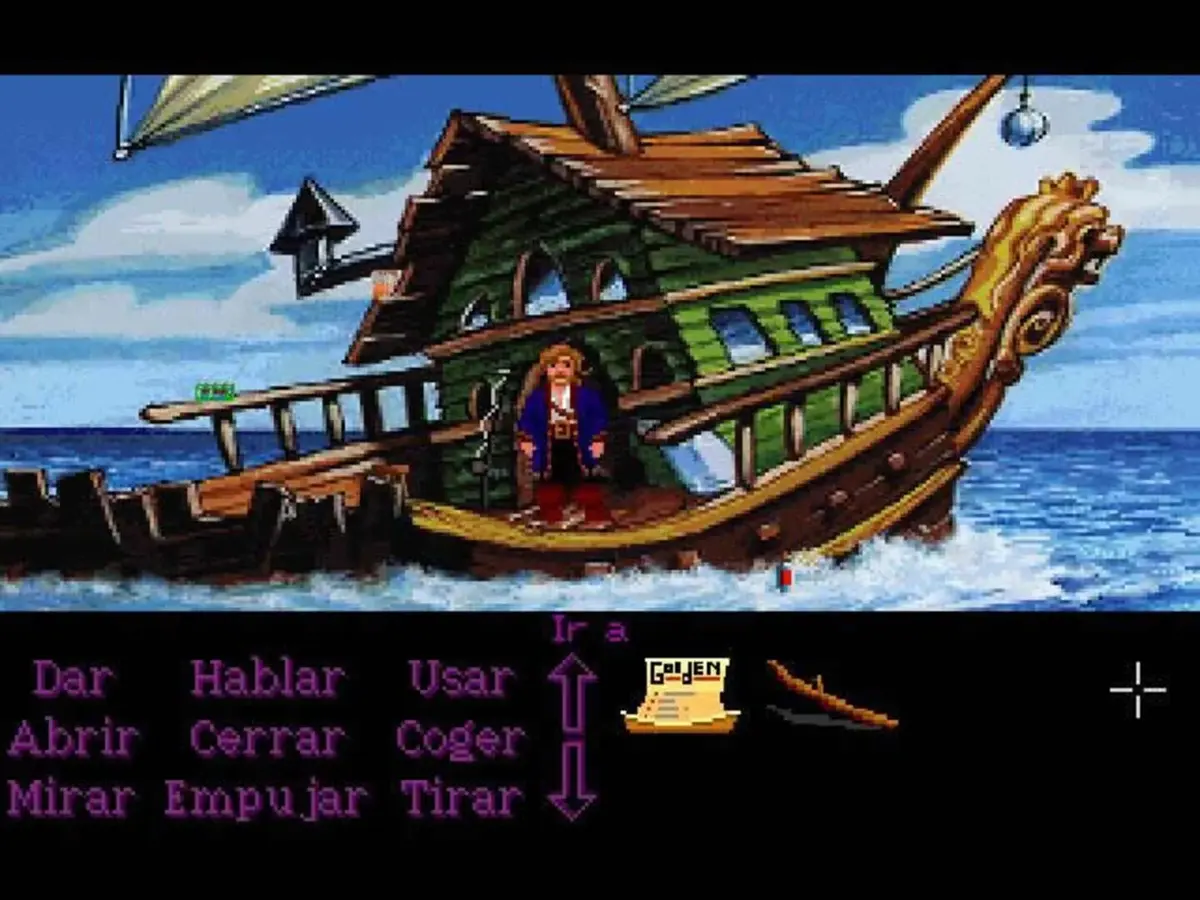
It also matters that Gilbert has tied Devolver’s involvement to why that arrangement worked. Devolver was not just a logo on the box. It was the kind of established company Disney was prepared to deal with. That is useful proof for anyone arguing that legacy IP can still be revived. But it is also a warning label. If the workable route depends on finding the right intermediary with the right relationships at the right moment, then the route is real without being reliably accessible.
Still, I refuse to call that a healthy long-term model. A single successful revival should not become proof that the gatekeeping arrangement works perfectly. It proves the arrangement can work under the right conditions, with the right publisher, at the right time, and with the right people willing to make the calls. That is a much shakier proposition than fans want to admit, especially when they start speaking about hypothetical sequels as if paperwork has already been signed.
Legacy game series need more than a one-off success story every time the stars line up. They need a clear path for the people who understand why those games mattered in the first place. If a creator must first locate an intermediary big enough to satisfy Disney, then persuade that intermediary to take on the rights negotiation, then agree to a financing structure that does not hollow out the project’s upside, the process is built to favor caution. Caution keeps brands safe on paper. It is also how treasured series become museum pieces in practice.
A Publisher Can Be the Bridge and the Toll Booth
This is where Gilbert’s complaints about publishing deals make the whole situation more uncomfortable. Devolver helped make Return to Monkey Island possible. That deserves credit. At the same time, Gilbert has spoken openly about rejecting conventional publisher terms for a different later project, Thimbleweed Park 2, because they would have taken a significant share of future revenue. He instead secured funding of just over $1 million for about two years of development from a private backer. That figure belongs to that separate project, not to any unconfirmed new Monkey Island.
The appeal of that alternative is obvious. Gilbert’s description of the deal was that the investor gets repaid quickly, and then the revenue split becomes more reasonable. That gets at the part of games publishing that players often hear about only in fragments. “Recoupment” means the financer gets its money back before the developer starts seeing a healthier share of the income. The problem Gilbert is pointing at is not that publishers want their costs covered. The problem is that some deals can still leave too much upside with the publisher even after that recovery point has passed.
A traditional publisher can absolutely bring real value. It can pay for development, provide marketing muscle, help with platform relationships, and challenge a studio’s budget assumptions. Gilbert has acknowledged versions of that reality himself. But useful is not the same thing as fair. If the post-recoup split still leaves the developer with a thin reward for taking the creative risk, then the publisher is not just a partner. It is also a toll booth collecting on the road to release.
Gilbert has explained the uglier side of the pitch process before: publishers push budgets down, developers feel pressure to present the numbers a deal requires, and studios can end up building their plan around survival rather than honesty. That is the kind of industry math players rarely see when they ask why a smaller game costs more, launches later, or never receives a sequel despite staying visible long after release. The public usually sees the box art and the store page. It does not see the contract terms shaping what kind of sequel is even possible.
For a creator trying to revive a Disney-linked property, the squeeze gets worse. The publisher is not merely a funding partner; under Gilbert’s description of the situation, it may also be the only credible route into the rights conversation. That gives the publisher enormous leverage. A studio cannot casually walk away from a bad split if walking away also means losing the company capable of getting Disney and Lucasfilm into the same room and moving a proposal from “interesting” to “commercially acceptable.”
That is the nonsense hiding behind the clean language of “partnership.” A publisher can be genuinely useful and still hold too much power. A rights-holder can be creatively cooperative and still create a process that favors companies over the people doing the creative work. Those truths can sit together without contradiction, and they produce the same player-facing result: fewer games, longer gaps, and a fanbase left to inflate rumors into announcements because the official pipeline is too opaque to trust.
Players Should Demand Better Than a Corporate Relay Race
Players cannot negotiate Gilbert’s contracts or force Disney to license an IP on creator-friendly terms. We can stop rewarding the worst habits around these situations. Treating unconfirmed titles as news only creates pressure around a project that does not exist in public form. It turns every vague hint into a countdown, then turns disappointment into another excuse for companies to treat fan enthusiasm like volatility instead of interest.
The healthier pressure point is transparency and incentives. If a publisher is going to present itself as a champion of creator-driven games, its deals should leave creators with meaningful upside after recoupment. If a giant rights-holder wants goodwill for reviving legacy game brands, it should maintain a clear route for original creative talent to pitch new work without needing a maze of corporate babysitters. That does not require handing every old IP away for pennies. It requires acknowledging that creative access has value, and that value does not disappear just because legal ownership changed hands in 2012.
Players should also get better at distinguishing between love for a franchise and support for the structure behind it. Wanting another Monkey Island is reasonable. Treating any eventual sequel as a win no matter how it gets financed, approved, or carved up is not. If the only available route produces a game where the creator has less control, less upside, and less room to take the design risks that made the series special, then the brand survives while the point of it quietly dies.
Gilbert already demonstrated that community-backed financing can support adventure games. One of his earlier crowdfunding campaigns raised $626,250 before platform fees. That figure does not magically solve the problem of licensing a Disney-owned property, and it does not verify anything about a new Monkey Island. What it does show is that creators and audiences can meet each other halfway when the usual publishing deal demands too much of the future.
For a new Monkey Island, crowdfunding by itself would not remove the Disney/Lucasfilm hurdle. Rights approval is still rights approval. But alternative financing can matter because it changes who has leverage when the business conversation starts. A creator who arrives with a credible budget, a proven audience, and options beyond a single publisher is in a better position to protect the work. That is the kind of leverage smaller studios need, especially when the rights-holder prefers speaking to the biggest company in the room.
And if none of that leverage exists, fans should at least stop doing free marketing for phantom projects. The unconfirmed Monkey Island 2.5 label is useful only as a symptom. It shows how badly people want this series back. It is not evidence that the system around the series is functioning.
FinalBoss // Gear
Level up your setup
01Top-rated gaming headsetson Amazon→02High-refresh gaming monitorson Amazon→03Gaming chairson Amazon→04Discounted game keyson Kinguin→Affiliate links · As an Amazon Associate, FinalBoss earns from qualifying purchases.
Want to Level Up Your Gaming?
Get access to exclusive strategies, hidden tips, and pro-level insights that we don't share publicly.
Ultimate Gaming Strategy Guide + Weekly Pro Tips