
Table of Contents (9)
A spin-off that finally steps out of Monster Hunter’s shadow
I bounced hard off the original Monster Hunter Stories on 3DS. I liked the idea of a gentler, monster-taming take on the series, but the Saturday-morning tone and simple combat never quite grabbed me. Stories 2 on Switch and PC fixed some of that with better visuals and more depth, but it still felt like a side dish to the “real” hunts.
Monster Hunter Stories 3: Twisted Reflection on PS5 is the first time this spin-off has felt like its own main event. Within the first 30 minutes, watching the queen of Azuria cradle a crystallized Rathalos egg in a war-torn throne room, I realized this wasn’t the playful road trip of the last game. It’s a straight-up fantasy drama wrapped around a surprisingly sharp turn-based system.
I played on PlayStation 5, finishing the main story and a chunk of post-game cleanup in about 45 hours, mostly in Performance mode. Across that time, my feelings went from “this is a neat evolution” to “oh, this might actually be the best entry this sub-series has ever had.” It’s not flawless, but the stuff it gets right-the story, the Wyvern Soul combat changes, the cinematic presentation-made the rough edges easier to forgive.
A darker fairy tale: twin Rathalos, war, and crystal encroachment
The opening hours establish the tone fast. Two kingdoms, Vermeil and Azuria, are slowly being swallowed by a phenomenon called the crystal encroachment. Wildlife is literally turning to crystal, habitats are collapsing, and everyone is looking for something-or someone—to blame.
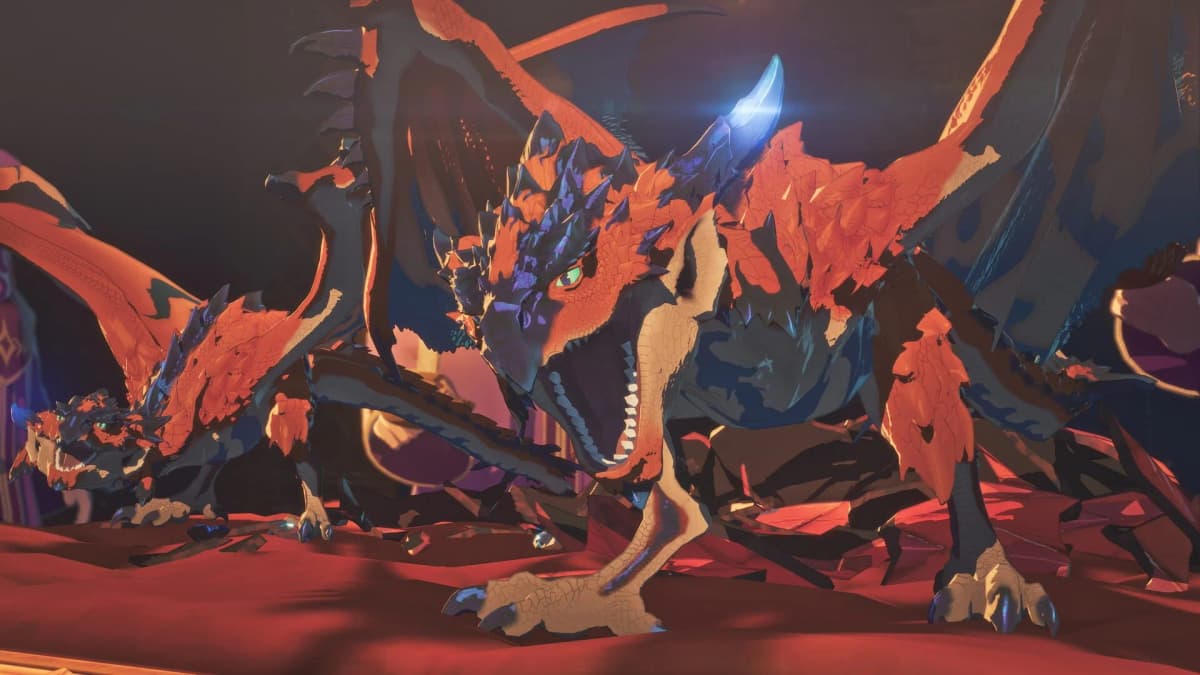
In the middle of this, the queen of Azuria discovers a crystallized Rathalos egg. During a ceremonial hatching, it’s revealed that the egg contains twins—a terrible omen in local superstition. The ruling council decides one of the hatchlings has to die for the kingdom’s safety. On the night of the execution, the queen betrays that decision, flees the capital with one Rathalos, and instantly becomes a traitor in the eyes of her own people.
When the game jumps forward, you’re playing as her child: the heir to Azuria’s throne and captain of the Rangers. You’re bonded to the surviving twin Rathalos, acting as a kind of eco-warden trying to protect endangered monsters and restore balance to shattered habitats—all while your own country whispers that you’re the child of a traitor, and Vermeil edges closer to open war.
By the time I wrapped the second chapter, it was clear this story isn’t just “excuse plot so you can ride cool Monsties.” The writers lean into themes of inherited guilt, the cost of peace, and what it actually means to protect nature when whole nations are in survival mode. It’s not grimdark, but it’s way more mature than the earlier games. When Vermeil’s young heir confronts you about using your Rathalos as a weapon, it genuinely stings because you’ve seen how much they’re both being pushed around by their own governments.
The cutscene direction helps sell all this. There’s a confidence to the camera work you don’t usually see in spin-offs: wide, painterly shots of crystal-choked valleys, tight reaction shots as your Ranger squad bickers about whether to intervene in a border skirmish, and some honestly brutal “we lost this one” sequences when things go sideways. It feels closer to a mid-budget JRPG epic than a companion piece to the mainline Monster Hunter games.
Characters carry a lot of the weight. Your fellow Rangers, the Vermeil officers you meet, and even sidequest NPCs feel more grounded than the “walking trope” vibe that crept into Stories 2. They’re still colourful and expressive—it’s Capcom, after all—but they’re also allowed to be petty, scared, or wrong in interesting ways. I especially liked how the game repeatedly forces your heir to choose between their duty to Azuria and their responsibility to protect the fragile bond with their Rathalos.
Both English and Japanese voice tracks are excellent. I swapped to Japanese for a few chapters out of curiosity, but I ended up sticking with English because the performances really sell the quieter, conflicted moments. Either way, it’s a seriously strong cast.
Turn-based combat that finally feels like real hunting
Moment to moment, you’re still playing a turn-based RPG built around the familiar rock-paper-scissors triangle of Power, Speed, and Technical attacks. Enemies pick one of those three approaches, and if you counter correctly, you win the Head-to-Head and build up resources. Get it wrong, and you eat damage and lose tempo.
On paper that sounds almost too simple. What makes Twisted Reflection sing is how much Capcom piles around that core, especially with the new Wyvern Soul Gauge and Synchro Rush system.
Under each enemy’s HP bar is the Wyvern Soul Gauge. Every time you land effective hits, break a monster part, or win a Head-to-Head, you shave chunks off that bar. When it empties, the monster staggers and you can pull the trigger on a Synchro Rush: a massive, coordinated team attack where your Rider, your Monstie, and your allies all pile in.
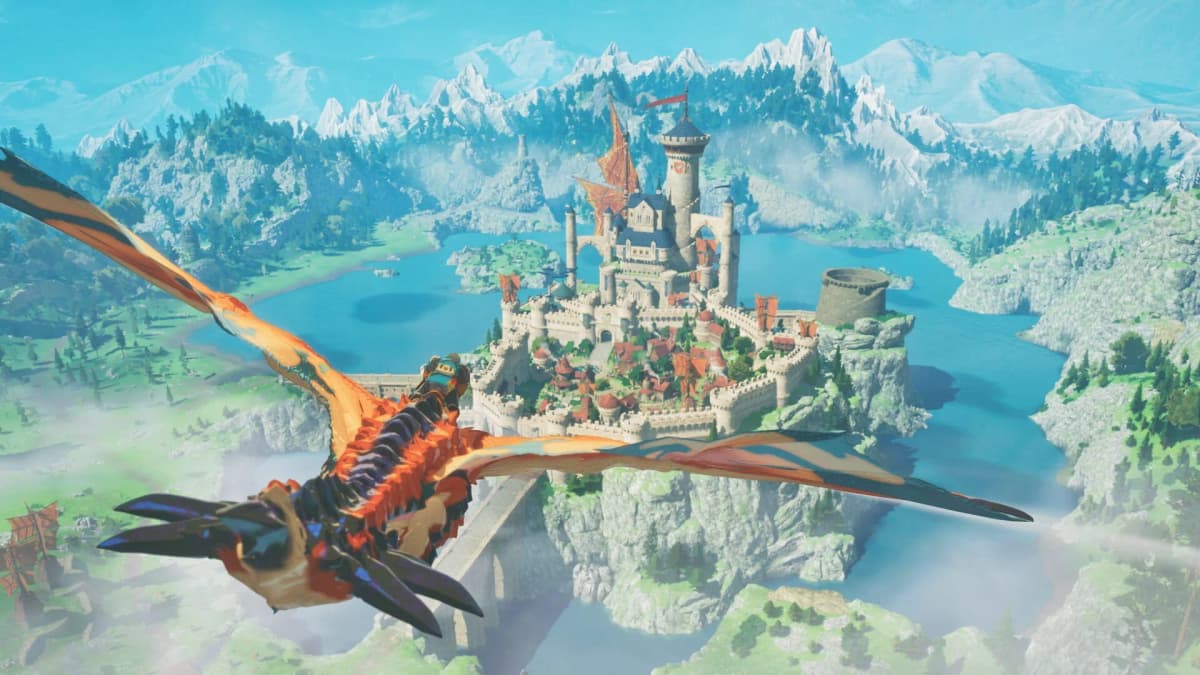
The first time I triggered one, against a crystal-maddened Anjanath, I actually set the controller down for a second just to watch. My Rathalos swooped in, my ally’s Long Sword user followed up with a clean iai slash, and the camera spun around in this almost anime-opening flourish before dumping a mountain of damage. It’s pure spectacle, but there’s actual decision-making behind it: do you push hard to empty the Wyvern Soul Gauge now, or play it safer to avoid a cart if your predictions are off?
The other big shake-up is how the game handles the crystal-affected “feral” monsters. These aren’t just recolours; they come with crystalline growths attached to specific limbs that change their move sets. Targeting those crystals becomes a mini-hunt within the fight—break the crystal on a Rathian’s tail to stop her from spamming a new tail laser attack, or risk your whole party getting shredded.
In practice, that means you’re constantly juggling three mental tasks: reading the usual Power/Speed/Technical patterns, managing the Wyvern Soul Gauge, and deciding which body part to focus for long-term control. On tougher fights, it scratches the same planning itch as a good Persona or Trails boss where one bad sequence can spiral if you get greedy.
Not everything about the combat lands perfectly, though. The series has always relied on “tells” to clue you in when a monster is about to change its behaviour. Here, some of those cues are just too vague. There were hunts where my party suddenly started eating technical attacks from a monster I’d been countering with Power for the last five turns, with only the slightest animation change to warn me. Against standard enemies it’s just a minor annoyance; against the nastier crystal fights, it can feel like the game moved the goalposts without telling you.
That said, when it all clicks, it feels fantastic. Reading a Tigrex correctly three turns in a row, staggering it with a well-timed Wyvern Soul break, then calling in a Synchro Rush while your Monstie is still mid-ride—that’s when Stories 3 finally feels like a turn-based answer to the “dance” of mainline Monster Hunter.
Riding with your Monsties: Long Sword love and sharper controls
Your Monstie fights alongside you automatically, but you’re not just watching from the back row. You can issue direct instructions, tell them to focus on skills, or swap them out entirely when their fixed attack type clashes with an enemy’s pattern. That extra layer of control turns your party into a puzzle: bring a diverse lineup of Monsties so you can cover every rock-paper-scissors angle, or specialize and play riskier for faster kills.
Weapon choice matters more than in previous Stories games, too. I gravitated to the new Long Sword almost immediately. It lands in that sweet spot between the big, chunky Great Sword and the more technical options, letting you build up power through precise counters and flowing combos. It doesn’t have the same frame-tight demands as the Long Sword in mainline Monster Hunter, but there’s still a nice rhythm in deciding when to spend your built-up power on a heavy finisher versus holding it to be ready for the next Head-to-Head.
Combat menus are snappier than ever. Swapping Monsties, changing weapons, or digging into items feels almost instantaneous on PS5. I got in the habit of planning my next turn while the current attack animations played out, then flicking through commands in a couple of quick inputs once the menu popped again. It sounds small, but when you’re grinding for parts or eggs, that responsiveness keeps the pace up.
Habitat Restoration, monster collecting, and the RPG grind
Outside of combat, the biggest new system is Habitat Restoration. Every region has endangered monsters thanks to the crystal encroachment, and your job as a Ranger is to help repopulate them. Practically, that means hatching Monsties, then choosing to release some of them back into the wild, which raises that area’s Ecosystem Rank.
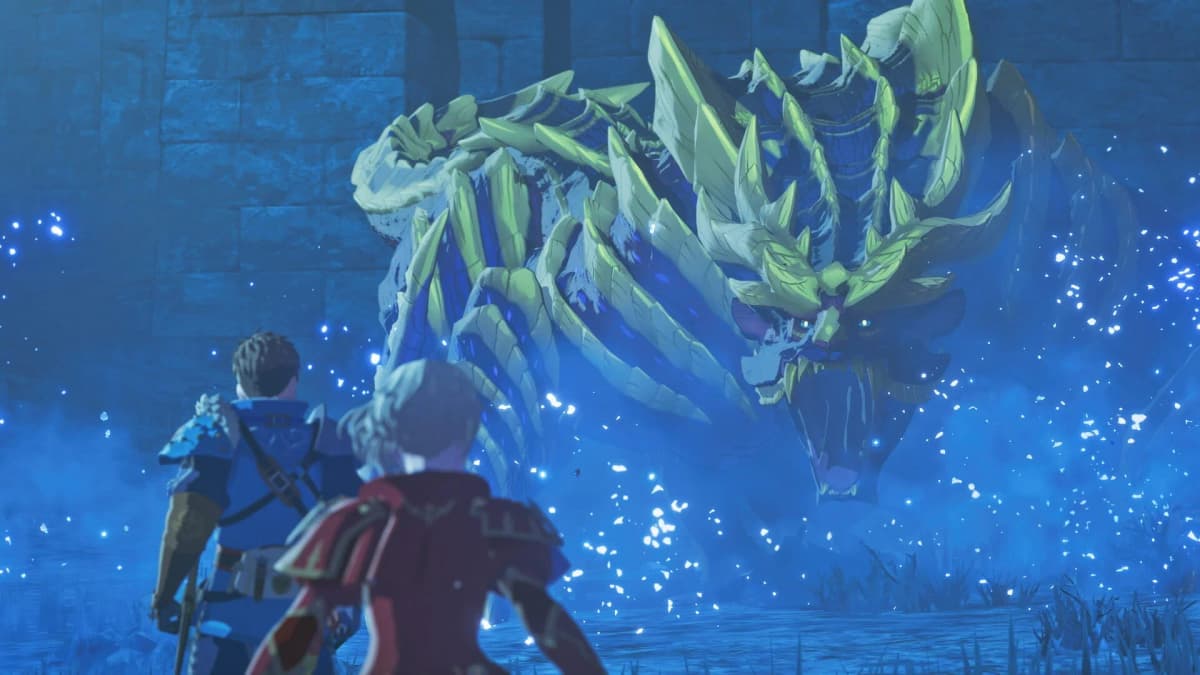
As your Ecosystem Rank goes up, rarer den types start spawning, egg quality improves, and you unlock special Dual-Element monsters that combine traits from two elements. My turning point with this system came when I realized I could effectively “tune” an area to favour the kind of monsters I wanted. I spent a good evening just looping a forest zone, releasing surplus Monsties, and then raiding the new high-rank dens that started to appear for a specific Nargacuga variant.
It’s a clever way to tie monster collecting to the world’s ecology rather than just making it a pure gacha grind. The trade-off is that it can feel detached compared to the rush of combat. Most of the work is done through menus back at camp: pick which Monsties to release, check the Ecosystem Rank, head back out. It’s satisfying in a low-key, “numbers going up” sort of way, but it never quite hooked me emotionally the way the story did.
What did keep me invested was customising Monsties once I’d caught them. Like prior Stories games, you can shuffle skills around and shape each Monstie into a specialist. I built a crystal Zinogre that focused on disrupting Wyvern Soul Gauges, stacking moves that specifically chipped away at that bar. When that plan worked and I chained multiple staggers in a boss fight, it felt like my whole team comp had paid off, not just my Rider’s weapon choice.
Exploration, flying, and the slightly clunky bits
The world is split into large, multi-biome regions rather than a true open world. Each area is packed with gathering nodes, monster dens, side quests, and visual landmarks—crystal forests, ruined fortresses, ash-choked valleys. Trotting through them on the right Monstie is genuinely fun. Some can sprint up sheer rock walls, others can smash through cracked boulders, and of course your Rathalos can take to the skies.
Flying is where I hit one of my biggest disappointments. In Stories 2, taking off on a flying Monstie felt liberating in a very simple way: you finally got to ignore all those little chokepoints and just soar across zones. Here, it’s been toned down. Your Rathalos feels more like it’s gliding along a fixed layer of air rather than truly flying. There’s less sense of vertical freedom, and the game clearly wants you to stay closer to the ground so you don’t trivialize level design.
It’s not a dealbreaker, but every time I took off and realized I couldn’t quite clear a ridge the way I expected, it chipped a little bit at that fantasy of “I’m the Rider of a legendary Rathalos, let me soar.”
Side content is a mixed bag. Some side quests are essentially mini character stories—a Ranger trying to rehabilitate a single feral Barioth, or a Vermeil officer struggling with orders that conflict with their conscience. Those are absolutely worth doing and often come with bespoke cutscenes.
Then you have the old reliable RPG standby: “bring me ten herbs” or “kill three of this slightly different Kulu-Ya-Ku.” A handful of fetch quests is fine, but late in the game the quest board starts to look like a shopping list. If you’re a completionist, be prepared for some padding.
Visuals, audio, and PS5 performance
This is the first time a Stories game has felt properly “next-gen.” The art direction is gorgeous: thick, painterly shadows, saturated colours, and a kind of storybook look that still clearly fits the Monster Hunter world. Crystal encroachment is more than just a purple filter; it warps landscapes into these jagged, reflective nightmares that stand in stark contrast to the lush, restored habitats you build later.
Monsters animate beautifully. Watching a Legiana unfurl its wings in a blizzard of crystals is a whole moment, and your Monsties emote in ways that made me genuinely attached to my favourites. Cutscenes in particular feel expensive in the best way, with smooth animation, thoughtful framing, and no obvious corners cut.
On PS5, I stuck to the higher frame rate option and had a mostly rock-solid experience. Battles felt silky, exploration was smooth, and I didn’t hit any crashes. Loading into regions or dens takes just a few seconds. It’s the kind of “no drama” performance you want from an RPG you’ll be booting up dozens of times over a month.
The soundtrack leans into the game’s more serious tone. You still get the triumphant horns and strings you’d expect from Monster Hunter, but there’s a heavier use of choirs and melancholy themes around the crystal zones and political flashpoints. A late-game track that plays during one particularly rough story battle hit me hard enough that I went back to listen to it in the gallery afterwards.
What didn’t quite work for me
For all my praise, Twisted Reflection stumbles in a few places.
The biggest frustration in everyday play is those vague combat cues. The whole system leans on reading monsters, and when the game doesn’t give you clear indicators that an enemy has shifted from, say, Power to Technical, it can feel like blind guessing rather than pattern recognition. I got used to watching for specific animations on some monsters, but others feel inconsistent enough that you just have to learn them by getting punished a few times.
Flying, as mentioned, is functional but oddly restrained, undercutting what should be a “wow” moment of traversal. And while a lot of the side quests are quietly strong, there’s a noticeable chunk of pure filler that exists mainly to feed you materials and XP.
The other thing missing—depending on how you played Stories 2—is multiplayer. There’s no co-op egg runs or PvP duels here; this is a purely single-player experience. Personally, I didn’t mind too much, because the story and systems here feel tuned for a solo, narrative-focused ride. But if your favourite memories from the last game involve battling your friends’ Monsties, that’s worth knowing.
Who this is actually for
If you’re a hardcore mainline Monster Hunter player wondering whether this turn-based spin-off is “for you,” this is the one I’d point to. The Wyvern Soul Gauge, part-targeting on crystal monsters, and more demanding boss fights finally echo the feeling of learning a tough hunt rather than just rolling over chibi versions of your favourite creatures.
If you’re more of a JRPG or creature-collector fan, this sits in a really comfortable middle ground. It’s deeper and more demanding than something like Pokémon, but nowhere near as overwhelming as a 100-hour systems-dense epic. The darker, war-focused story also means it doesn’t feel like it’s primarily written for kids, even though it’s absolutely teen-friendly.
For returning Stories players, the question is whether the new mechanics and tone justify another trip. From my time with it: yes. The Wyvern Soul Gauge and Synchro Rush make combat more engaging, Habitat Restoration gives you a long-term monster-collecting goal, and the narrative is easily the best the spin-off has ever had.
FinalBoss // Gear
Level up your setup
01Top-rated gaming headsetson Amazon→02High-refresh gaming monitorson Amazon→03Gaming chairson Amazon→04Discounted game keyson Kinguin→Affiliate links · As an Amazon Associate, FinalBoss earns from qualifying purchases.
Want to Level Up Your Gaming?
Get access to exclusive strategies, hidden tips, and pro-level insights that we don't share publicly.
Ultimate Reviews Strategy Guide + Weekly Pro Tips