
Table of Contents (8)
A royal heir, a stolen Rathalos, and the moment Monster Hunter grew up
I’ve been playing Monster Hunter since the Freedom Unite days on PSP, where “story” mostly meant “why you’re carving this dragon for the 30th time.” I’ve dabbled in the Stories spin-offs, but they always felt like pleasant side dishes to the main course: cute, lighter, fine to snack on between real hunts.
Monster Hunter Stories 3: Twisted Reflection is the first time I felt the spin-off wrestle the spotlight away from the main series and say, “No, this is its own thing.” And the turning point came within the first half hour.
You start as the heir to Azuria, child of a king and the infamous “Turncoat Queen” from the rival kingdom of Vermeil. Court ceremony, ornate armor, that whole “you are the future of the realm” speech-pretty standard JRPG royalty energy. Then a rare Rathalos egg is presented, sealed inside this weird crystalline stuff called Egg Quartz that’s freezing beasts and even plants in stasis across the world.
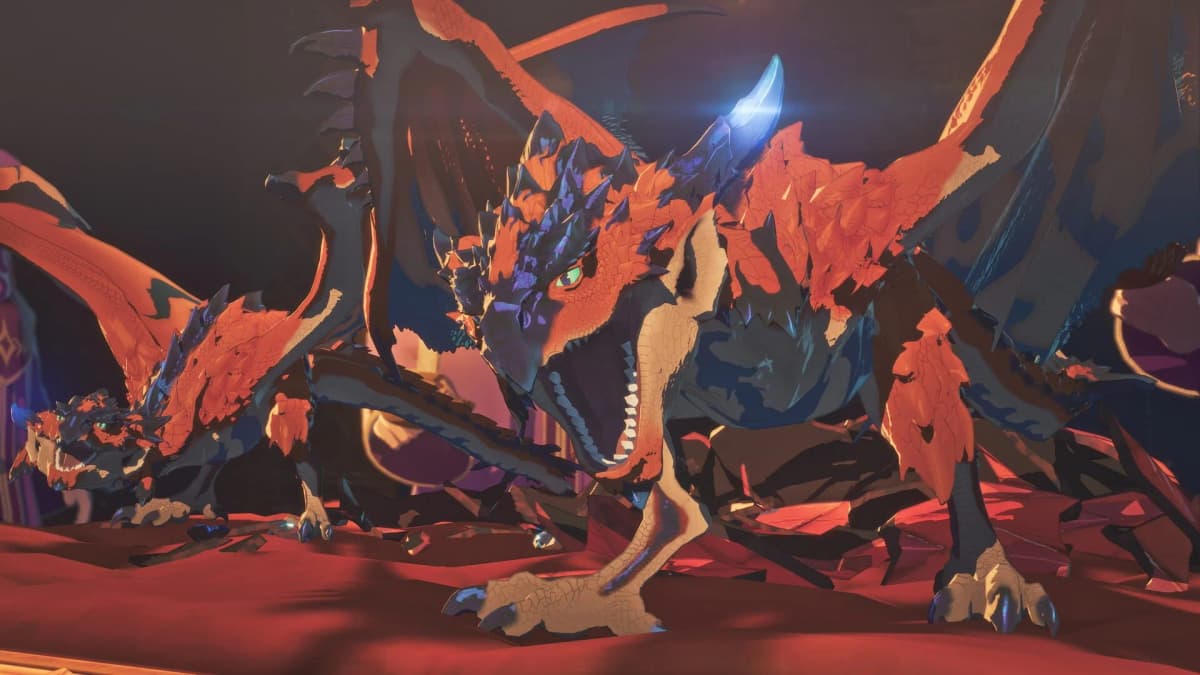
The egg hatches. Not one, but two Rathalos. Twins. In any normal Monster Hunter game, that’s pure hype. Here? It’s a curse. Tradition says only one can live. The other is sentenced on the spot. The scene doesn’t linger on gore or anything, but the cruelty of it is so matter-of-fact that it actually made me flinch a bit.
Then, in the middle of the night, a masked Rider crashes through the sky, rescues the condemned hatchling, and rides off into the dark. The mask drops: it’s your mother. She saves the Rathalos and abandons her throne, her kingdom, and you. Branded the Turncoat Queen, she disappears.
That’s the emotional anchor of Twisted Reflection, and it works. It’s not just, “Monsters are your friends, actually.” It’s: What are you willing to sacrifice for a life everyone else has written off as expendable? I didn’t expect a Monster Hunter game-let alone a spin-off-to hit me with that kind of question before the tutorial was even done.
Over roughly 45 hours on Switch 2 (mainly docked, about 10 hours handheld), the story kept that momentum. It’s still pulpy and anime at times—your Felyne partner Rudy is plenty loud, and party members like Simon and trainee ranger Thea fill the usual “earnest knight” and “awkward prodigy” slots—but the core arc about your mother, the fractured kingdoms, and the Rathalos twins actually lands. I didn’t just want new gear; I wanted answers.
Turn-based rock-paper-scissors that’s more brainy than it sounds
On paper, Monster Hunter Stories combat still sounds basic: Power beats Technical, Technical beats Speed, Speed beats Power. Rock-paper-scissors, plus monsters. If you’ve never played the spin-offs, it honestly sounds like a mobile gacha system.
In practice, Twisted Reflection is the sharpest version of this formula so far. Part of it is just encounter design. Normal monsters telegraph their patterns in ways that feel like learning tells in mainline hunts. An Aptonoth that’s been docile suddenly rearing up and using Power attacks after you hit it too many times, or a Kulu-Ya-Ku shifting to Technical when it grabs a rock—stuff you can anticipate if you’re paying attention.
But the real fun starts when the game throws Feral Monsters at you. These are souped-up versions twisted by Egg Quartz, and they’re basically turn-based equivalents of tempered or apex monsters. They don’t just hit harder; they shift attack types mid-pattern, chain status effects, and punish lazy targeting. The first Feral Anjanath I fought chewed through me twice before I realized it was deliberately baiting me with predictable Speed moves, then slamming me with Power as soon as I switched to Technical. It felt less like “guess the shape” and more like a puzzle boss.
On top of the triangle, there’s the new stamina meter layered into your Rider’s move set. Skills and weapon techniques draw from stamina, and blowing it early to spam big attacks will leave you gasping when you actually need to react. In one early boss, I went all-in with my longsword’s multi-hit Technical art, drained my stamina, and then ate a full-force Power combo because I couldn’t afford the guard skill that would’ve kept me alive. After that, I started playing much more like mainline Monster Hunter: burst, back off, build resources, wait for the window.
Weapons themselves feel punchier than in Stories 2. You’re still choosing between weapon types with their own skill sets and synergies, but having distinct abilities that plug cleanly into the triangle system makes them feel like actual tools rather than just stat sticks. The longsword became my main because its stance-switching skills let me control tempo—either betting on big crits when I’d read a monster correctly, or playing safe and building meter to set up a Kinship attack later.
Your Monsties and human party members add another layer. You’re not just telling everyone what to do individually; often you’re coordinating Rider + Monstie choices to win Head-to-Heads and trigger double attacks, or timing Riding states so you can soak a big telegraphed hit. There’s this great rhythm when it all clicks: you predict the element and attack type, you and your Monstie both counter correctly, you trigger a team-up cinematic, build Kinship, and then cash it all out in a huge finisher that cancels the boss’s enraged phase. It scratches the same part of my brain that landing a perfect wake-up greatsword charge does in mainline.
The game isn’t perfect here. Some trash encounters drag on longer than they need to, especially once you’ve “solved” how a monster behaves. Thankfully, Stories 3 has a “Quick Finish” option for battles where you massively out-level the enemy, and overworld ambush attacks let you obliterate lesser mobs instantly. Once I learned to aggressively use those, the pacing felt much better.
Campfires, cooking, and finally feeling like a roaming Rider
One of my biggest gripes with earlier Stories games was how much they felt like a hub-and-spoke structure: town, quest board, den, repeat. Twisted Reflection still has that foundation, but the new camping and cooking systems pull you into the field in a way that actually feels like living in this world instead of just visiting it.
Out in the wilds, you can set up camp in designated spots. This isn’t just a glorified save point; it’s where you rest, tinker with your party, and cook. The cooking system is simple on paper—combine ingredients you’ve gathered for temporary buffs—but it changes how I approached long treks.
Before heading into a stretch of Egg Quartz-riddled swamp, I cooked a meal that boosted my party’s resistance to debuffs and increased material drops. That decision ended up saving a long grind later, because all the extra parts I pulled from those fights let me forge a full armor set the moment I got back to town. On another run, I messed up and brought an XP-focused dish into a region with high elemental damage and no healer Monstie; that “oops” turned into one of the tensest dungeon crawls I’ve done in a JRPG in years.
It sounds small, but it ties beautifully into Monster Hunter’s whole prep-hunt-craft loop. You’re not just running from objective marker to objective marker; you’re thinking about what kind of day in the field you’re planning for, and packing your menu accordingly.
Ecology as endgame: releasing Monsties and warping the food chain
The most surprising system—and easily my favorite—is what happens after you’re done with a Monstie.
Instead of just dumping low-tier partners into a box forever, you can release them back into the wild. That sounds like a Pokémon-style “let them live on a happy farm” mechanic, but Stories 3 actually tracks this in each region’s ecology. Every area has elemental tendencies, and every monster you release feeds into that invisible ledger.
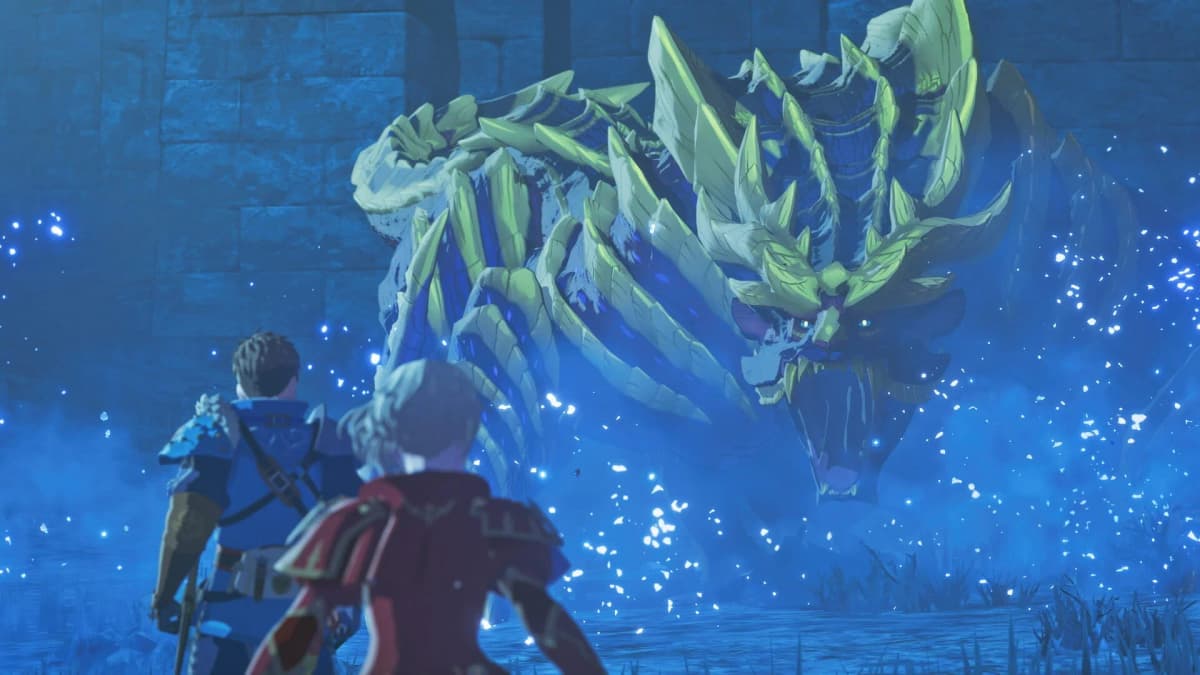
Drop a bunch of thunder-element Tobi Kadachi into a predominantly fire-aligned zone, and as their presence rank climbs, the ecosystem responds. Over time, you start seeing variant monsters—same base species, different elemental flavor. The first time a fire-variant Tobi Kadachi pounced on me in what used to be a quiet volcano route, I realized I’d basically min-maxed myself into a new problem.
This system does three important things:
- It gives you a concrete reason to keep hatching and raising Monsties, even “duplicates.”
- It makes regions feel like living spaces you’re actively shaping, not static biomes.
- It turns variant hunting into this organic, slower-burn metagame instead of just a checkbox.
By hour 30, I wasn’t just following the main quest line; I was basically running my own chaotic conservation project. In one electric-heavy canyon, I tried to push a more balanced ecosystem by releasing water and ice Monsties alongside thunder ones, just to see what kind of variants would pop. It’s subtle enough not to overwhelm casual players, but if you like tinkering and experimenting, this is going to eat your time in the best way.
Crafting, progression, and the familiar grind
Underneath all the new systems, this is still very much a Monster Hunter game when it comes to gear and progression. You bash monsters, you grab parts, you craft weapons and armor. Armor sets aren’t just stat sticks; elemental resistances and skills matter, and I frequently swapped back to older sets that had the right resistances for a particular Feral encounter.
The good news: upgrading old favorites feels smoother than in Stories 2. You don’t have to fully abandon that early-game set you love; you can invest materials over time to keep it relevant. That meshes well with the story’s theme of bonds and continuity—your kit evolves with you instead of being thrown away.
The less good news: yes, there’s grind. Some armor lines ask for that one specific rare drop that just never seems to appear. Monster dens and egg hunting are still fun in short bursts but can get repetitive if you try to brute-force perfect Monsties in a single sitting. Side quests are mostly utilitarian—“hunt X,” “collect Y”—with only occasional story beats attached.
Personally, I didn’t mind the grind much because I treated it like I do mainline Monster Hunter: a podcast game while I fine-tune builds and hunt for variants. But if you’re coming to this purely as a narrative JRPG and you don’t get a kick out of repetition in service of optimization, there will be stretches where progress feels a little sticky.
Switch 2 performance: mostly smooth skies, occasional turbulence
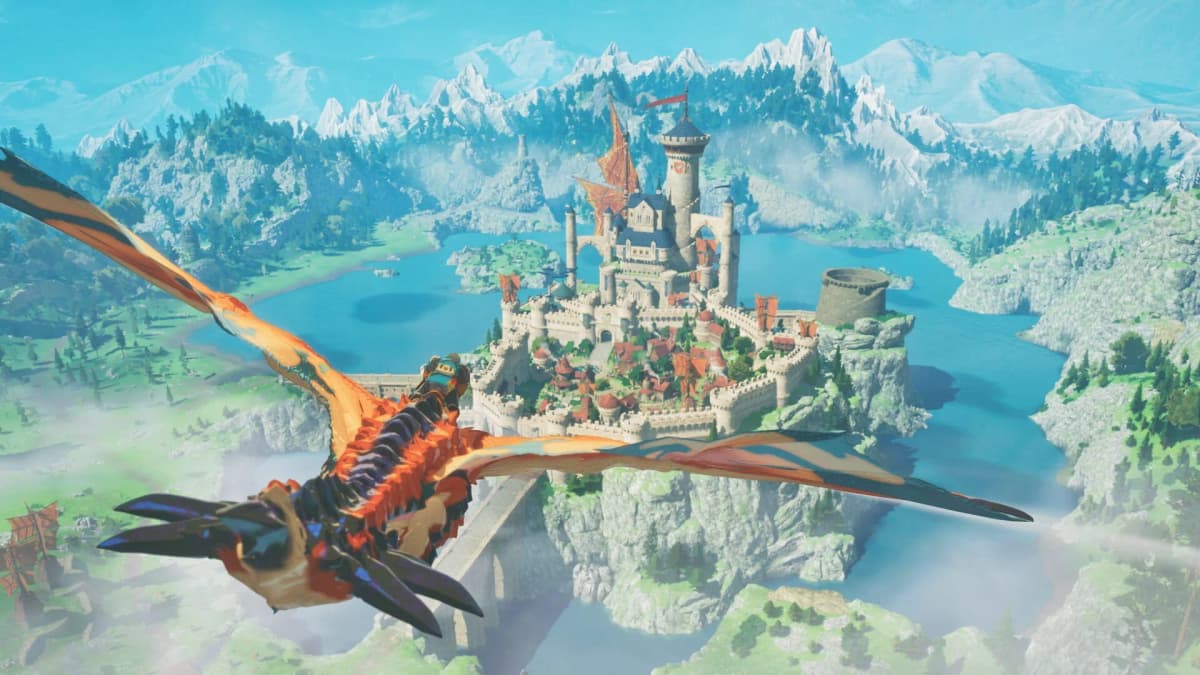
I played on a Nintendo Switch 2, both docked on a 4K TV and handheld. Visually, Stories 3 lands in that sweet spot where the series’ stylized look finally gets the fidelity it’s always deserved. Environments are lush without smearing into mush, and there’s a subtle cinematic flair in important cutscenes—the opening sequence with the Rathalos twins could have shipped as a Monster Hunter CGI short.
Performance, for the most part, holds up. In towns and story dungeons, the framerate felt stable enough that I stopped thinking about it. Combat is clean, and the UI is snappy. The problems crop up in large open areas—wide plains with several monsters wandering, tall grass, and lots of environmental clutter. That’s where I started noticing frame dips and occasional pop-in as distant geometry and foliage snapped into existence a little late.
On Switch 2 handheld, the dips were mildly more noticeable to my eyes than docked, but never game-breaking. It’s the kind of thing where you’ll catch it, frown for half a second, and then forget about it once a Feral Diablos is trying to turn you into heir-flavored jam. If you’re sensitive to performance hitches, temper your expectations: this isn’t flawless, but it’s absolutely playable and generally attractive.
I didn’t get to test this on the original Switch, but given how Stories 2 ran there, I wouldn’t expect parity with the Switch 2 version. If you have the choice, this definitely feels tuned with the newer hardware in mind.
Single-player only—and why that actually works
One thing that might throw returning players: Twisted Reflection is a noticeably more single-player-focused experience. There’s no co-op hunt grind to fall back on. At first that bummed me out—I spent a fair bit of time in Stories 2 multiplayer—but after a dozen hours, I understood why they did it.
The narrative weight of your decisions—especially around ecology and the fate of specific Monsties—lands harder in a game that isn’t also trying to be a social lobby. The pacing is tuned around you and your party, not matchmaking queues. It feels more like a traditional JRPG in structure, and while I do miss goofing off online with absurdly overbred Nargacuga, the trade-off here mostly works in favor of the story.
Who this is really for
If you live for iconic, sweat-inducing, action-heavy hunts and you bounce off turn-based combat on principle, Stories 3 won’t magically change your genre preferences. This is still a slower, more deliberate game where the big rush comes from predicting patterns and building the perfect team, not threading iframe dodges.
But if any of this sounds appealing—
- You like party-based JRPGs with actual tactical depth.
- You’ve always cared more about monsters as living creatures than as loot piñatas.
- You want more lore and worldbuilding out of Monster Hunter’s universe.
- You’re the type who will happily lose an evening tinkering with builds and ecosystems.
—then Monster Hunter Stories 3: Twisted Reflection is absolutely worth your time. It feels like the series finally figured out what it wants to be: not “Monster Hunter, but Pokémon,” but a true companion piece that examines the same world from the opposite moral angle.
FinalBoss // Gear
Level up your setup
01Best-selling Switch 2 gameson Amazon→02Switch 2 accessorieson Amazon→038BitDo controllerson Amazon→04Discounted game keyson Kinguin→Affiliate links · As an Amazon Associate, FinalBoss earns from qualifying purchases.
Want to Level Up Your Gaming?
Get access to exclusive strategies, hidden tips, and pro-level insights that we don't share publicly.
Ultimate Reviews Strategy Guide + Weekly Pro Tips