
Table of Contents (8)
Most of you are playing the wrong competitive strategy game
Most people I talk to about competitive strategy games can recite StarCraft build orders from memory, argue about League of Legends patch notes, or tell me why Teamfight Tactics “isn’t what it used to be.” But when I bring up Mechabellum, I get blank stares. And that drives me absolutely up the wall, because Mechabellum might be the best 1v1 strategy conversation happening on PC right now – and barely anyone is at the table.
Yes, conversation. Not “meta.” Not “build order.” Conversation. That’s the whole point of this game, and it’s why I keep coming back to it while other competitive titles slowly turn into homework.
With the latest season update shaking up the low-cost meta and sparking yet another round of “this unit is broken” arguments (including a now-mythologised robot crab some players swear is the new end of days), I’m more convinced than ever that Mechabellum gets something most strategy games have forgotten: the joy of reacting to another human being in real time.
What Mechabellum actually is (beyond ‘auto chess with mechs’)
Quick primer if you’ve somehow missed it: Mechabellum is a 1v1 (with 2v2 and free-for-all as chaos modes) autobattler on PC. You don’t micro units in real time. Instead, each round you buy and place giant mechs, drones, and artillery on a big sci-fi battlefield. When the round starts, they automatically fight it out. No frantic APM checks, no “did you miss the stutter-step?” ego flexing.
The units are basically a greatest hits album of mech fantasies. Crawlers – cheap little suicide bots that flood the map. Chunky tanks that hold the line. Phoenix-style aircraft that strafe everything below. Big artillery platforms that delete clumps from half the screen away. It looks like a toybox exploded and someone gave all the toys missile racks.
On the surface, it’s just really good mech porn. Huge explosions, clean silhouettes, clear lasers and missiles, no muddy visual clutter. If that’s all it was, I’d still say it’s worth a download. But the longer I’ve played (through its Early Access days into full release and now multiple seasonal resets), the more it’s become clear that its secret weapon isn’t the spectacle.
The secret weapon is that Mechabellum is designed around you and the other player reading each other.
Strategy as a live conversation, not a memorised script
Most competitive games slowly drift toward optimisation hell. StarCraft II turned into “learn these ten builds and pray no one cheeses you harder.” MOBAs devolve into tier lists and patch-cycle hysteria. Even other autobattlers like TFT eventually become about following whatever comp a YouTuber thumbnail called “S+ GOD TIER (FREE LP)” this week.
Mechabellum fights that drift harder than anything I’ve touched in years. Not perfectly – no competitive game is immune — but enough that it still feels like you’re playing a person, not a spreadsheet.
Here’s how a typical match feels for me:
I open with a sensible line of frontline mechs and some basic anti-air, nothing fancy. My opponent slams down a suspicious number of Crawlers. Immediately, there’s a question hanging in the air: Are they going all-in on low-cost swarm, or is this just an early pressure wave?
Next round, I answer that question. I add some area-of-effect units that shred light armor. They respond by pivoting into air units that ignore my crawler counters. I notice their air is clumped on the left flank, so in the following round I rotate my anti-air to meet them… and slip some artillery on the opposite side where their line is suddenly soft.
This keeps going: question, answer, re-phrased question, better answer. At no point am I “doing my standard build.” I’m reacting to who’s in front of me. When I lose, it’s usually because I misread the conversation — I overcommitted to beating their Crawlers and didn’t see the air transition coming, or I chased a flank that turned out to be a feint. It feels less like failing a test and more like getting outplayed in poker.
That’s the difference. Mastery here isn’t “memorise the right thing.” It’s “ask better questions, earlier, and understand what their answer really means.”
Clear cause and effect: you can actually see why you lost
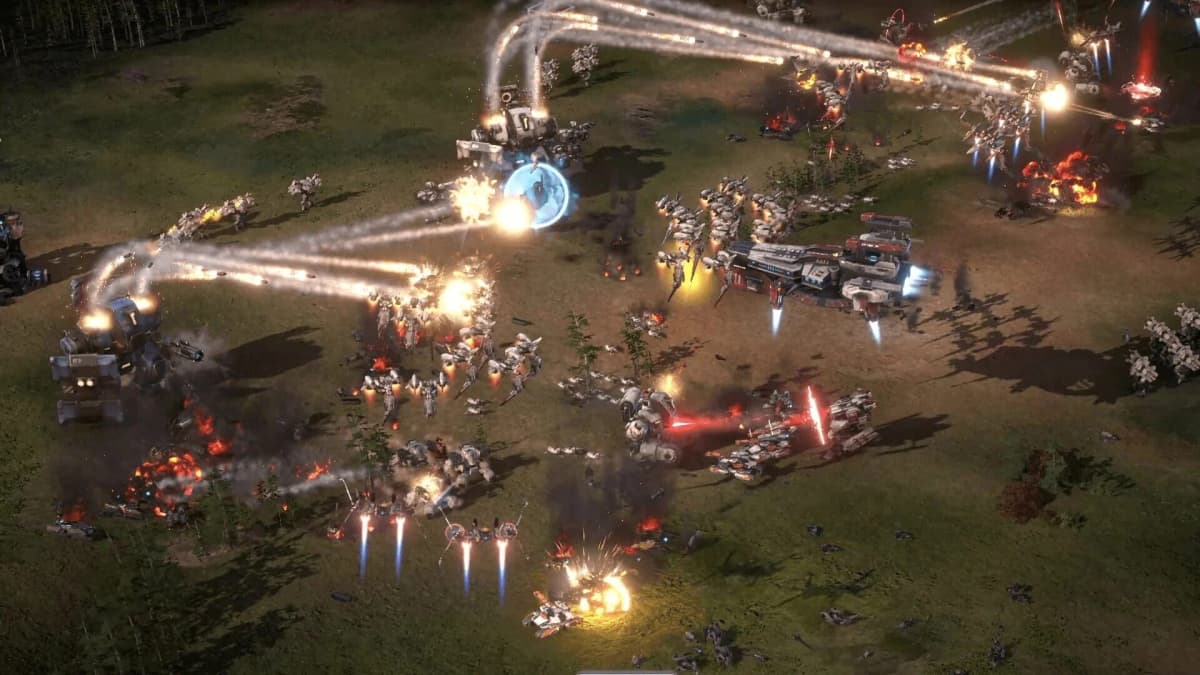
The reason this conversational style works is because Mechabellum is brutally clear about cause and effect. When a round plays out, it’s obvious what happened and why.
Your frontline melts in three seconds? You under-invested in armor or put the wrong units in the wrong place. Your expensive Phoenix squadron never fires a shot? They flew directly over enemy anti-air you could see sitting there the whole time. Your artillery did nothing? You clumped them behind a wall of friendlies and their line of sight got blocked.
This isn’t some opaque, RNG-drowned mess where you’re digging through combat logs to understand why your army collapsed. You watch giant robots beat the hell out of each other in 3D, and your brain instantly starts grabbing at patterns: “those missiles shredded me, that flank was empty, their Crawlers actually never reached my backline because that one Vulcan chewed them up.”
Because the game makes outcomes so readable, it invites you to respond intelligently. The next round is never just “roll again, maybe the items will be better.” It’s the next sentence in the same argument. You’re correcting, doubling down, or intentionally baiting a specific response. And Mechabellum’s design — the pacing, the money you get each round, the incremental upgrades — is tuned so that one clever pivot can actually flip a game.
The new season, the low-cost meta, and the ‘robot crab’ panic
If you’ve followed Mechabellum at all, you know low-cost swarm builds have been a constant pressure valve on the meta. When in doubt? Just flood the board with Crawlers and other cheap bodies and bank on overwhelming damage. It wasn’t unbeatable, but it was always lurking there as the “simple” answer a lot of players fell back on.
The latest season update took a swing at that. Balance tweaks hit some of the most abusable cheap options, new specialists and tech options arrived, and overnight the subreddit and Discord lit up with the usual patch-cycle meltdown: “Swarm is dead,” “game ruined,” “this new specialist is busted,” and of course, breathless posts about a crab-shaped robot some players swear is the new unstoppable menace.
I’m not going to pretend every anecdote is gospel — communities love a good panic, and half the time the “overpowered” unit just hasn’t been properly countered yet. What matters to me isn’t whether the alleged murder-crab is actually broken. What matters is that the season shakeup did exactly what it needed to: it reopened the conversation.
The old “spam cheap units until it works” script doesn’t fly the same way anymore. You can’t autopilot low-cost lines and expect success across the board. Players are being forced to rethink their openings, reconsider higher-cost tech paths, and actually engage with more of the unit roster instead of living in the bargain bin forever.
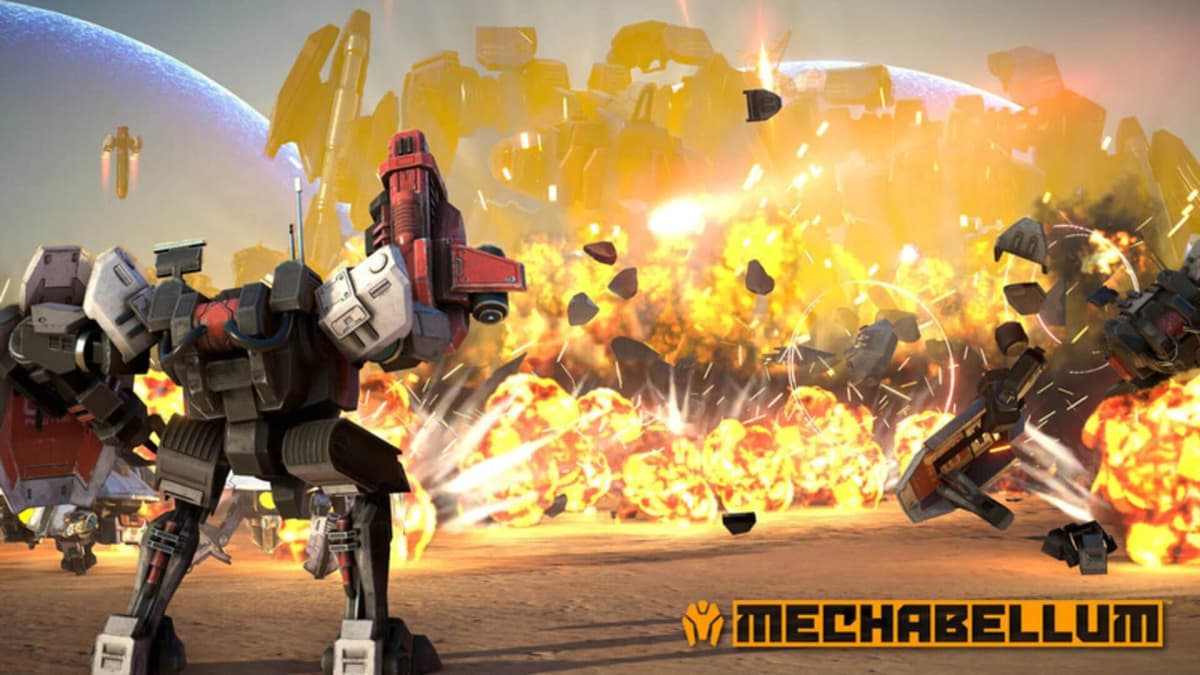
Is that uncomfortable? Yes — especially if you were coasting on the previous meta. But that discomfort is the point. If a 1v1 strategy game’s ladder feels like an exam with a single correct answer, you don’t have strategy anymore, you have choreography. Seasonal balance passes that destabilise entrenched habits are not “ruining” Mechabellum; they’re keeping it honest.
And crucially, because matches are short and the systems are legible, adapting to the new season feels exciting instead of exhausting. I’m actually eager to queue up and test whether this supposed terror of a crab can really bully a well-prepared composition, or if it’s just the new boogeyman people blame instead of their own misplays.
Short, meaningful matches that respect your life
One selfish reason Mechabellum has hooked me: it fits into a normal adult life without feeling like a watered-down mobile game.
A full match is long enough to have a proper arc — early probing, midgame power spikes, late-game deathballs — but short enough that I can slam one out over lunch and not feel like I’ve half-committed to a raid. I’ll play a game while something simmers on the hob, another when my brain turns to mush mid-afternoon and I need a quick mental knife-fight to wake me up.
Because each round inside a match is its own little decision point, you always feel like you did something that mattered. You’re never just “waiting for level 6” or “fast teching and praying you don’t die.” From the first deployment, there are real questions: Do I spike now and try to snowball, or play lean and invest for a later tech pivot? Do I contest air early or dare them to over-invest into a counter I’m not planning to field?
That density of decision-making per minute is intoxicating. It’s the same thing that makes a tight fighting game set feel incredible — constant micro-adjustments, reads, and re-reads — except here it’s giant robots and explosions instead of footsies in a corner.
The spectacle actually helps the strategy
Plenty of strategy games look good. Mechabellum goes further: it uses its spectacle to teach you.
Unit silhouettes are clean. Projectiles are distinct. When a Phoenix strafes your line, you see the arc of its attack and watch exactly which units evaporate. When artillery lands, the impact zone is obvious. When Crawlers detonate, it’s a fireworks display you can read at a glance.
Over time, that visual feedback becomes your quickest coaching tool. You’re not theorycrafting in a vacuum; you’re watching your past decision literally blow up in your face and adjusting. The game doesn’t bury you in inscrutable stats mid-match. It lets you learn with your eyes. It’s almost rude how many other competitive titles get this wrong on purpose in the name of “visual flair.”
And when your plan works? Oh, it’s glorious. Seeing your perfectly timed anti-air screen shred a desperate late-game air gambit, or watching your artillery pre-fire the exact point their Crawlers will hit your line, is so much more satisfying than some abstract “+3% winrate with this build” nonsense. It’s feedback you feel.
So why is almost nobody playing this?
On paper, Mechabellum should be a bigger deal. It left Early Access with a strong Steam rating, has regular seasonal updates, and is accessible enough that you don’t need an RTS degree to get started. Yet it still feels niche, hovering in that “if you know, you know” space while the mainstream chases the next flavor-of-the-month extraction shooter.
Part of that is autobattler baggage. A lot of people tried early auto chess or TFT, bounced off the random item soup and opaque synergies, and decided the whole subgenre was a gimmick. Part of it is marketing — Mechabellum doesn’t have a giant publisher screaming about it every time a new season drops.
But I think there’s another, uglier truth: a lot of players say they want “deep strategy” and “less meta-chasing,” then run screaming the second a game actually demands they think on their feet instead of worshipping a tier list. Mechabellum won’t hand you a permanent comfort pick to autopilot up the ladder. It asks you to constantly re-engage, to re-evaluate, to keep talking to the person on the other side of the screen.
If you’re used to copy-pasting builds from a wiki and blaming balance for every loss, that can feel hostile. To me, it feels like a relief.
FinalBoss // Gear
Level up your setup
01Graphics cardson Amazon→02Gaming laptopson Amazon→03High-refresh gaming monitorson Amazon→04Discounted game keyson Kinguin→Affiliate links · As an Amazon Associate, FinalBoss earns from qualifying purchases.
Want to Level Up Your Gaming?
Get access to exclusive strategies, hidden tips, and pro-level insights that we don't share publicly.
Ultimate Gaming Strategy Guide + Weekly Pro Tips