
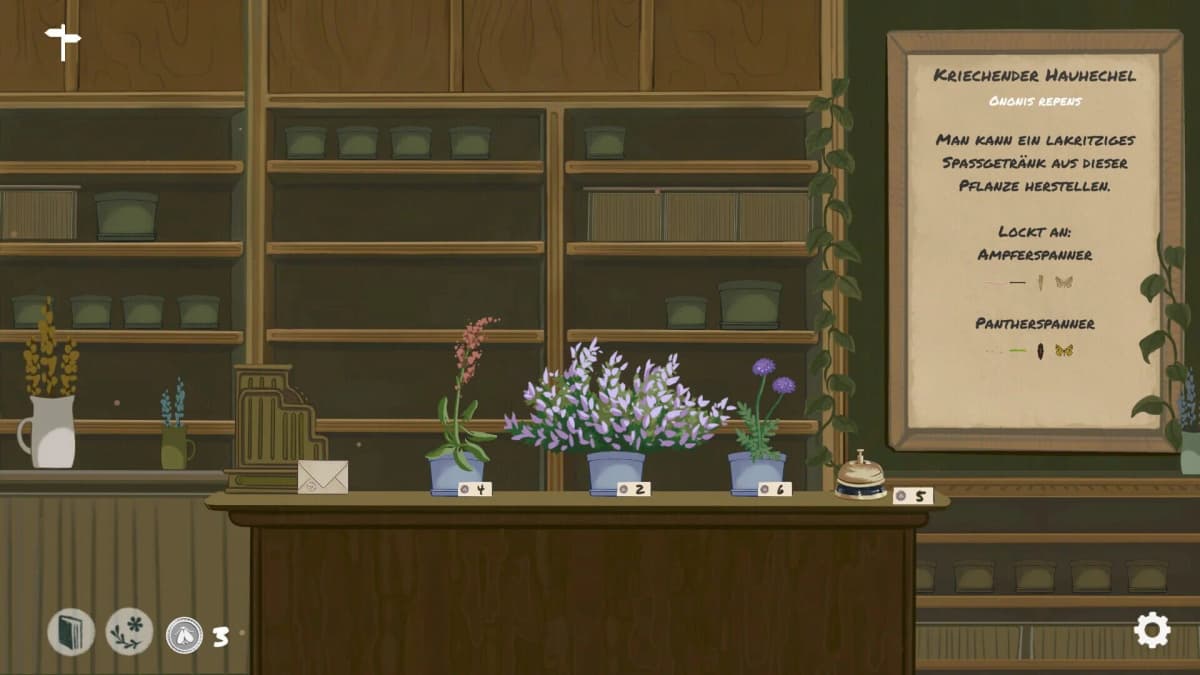
Mothkeep completion requires four records for each of the game’s 23 moths: egg, larva, pupa, and adult. A moth is only fully documented after you have captured or observed every life stage at least once, for a total of 92 stage records. The journal is the control panel for this process; open it from the book icon in the bottom-left corner of the screen before beginning any serious collection sweep.
Table of Contents (7)
What Counts as a Fully Documented Moth
Each moth has four required observations. Finding an adult does not complete its entry, even if it is the most visible form in an area. The missing stages are usually the reason a journal appears close to complete while the overall collection remains unfinished.
- Egg: Record the moth’s egg stage.
- Larva: Record the caterpillar or larval stage.
- Pupa: Record the pupa stage. Walkthrough directions may refer to a cocoon when directing you toward this part of the lifecycle.
- Adult: Record the winged moth.
Use the journal entry itself as the completion test. A complete collection has 23 moth entries with all four life-stage records filled. Keep a separate written tracker while collecting; it prevents repeated searches for an adult you already logged while an earlier stage remains missing.
Start With the Journal, Then Build a Missing-Stage List
Open the journal before travelling between locations. Review every moth entry and record the specific stage that is absent. The useful unit of progress is not “moths seen”; it is “one missing lifecycle record found.”
- Open the journal with the book icon in the bottom-left.
- Check each moth entry for egg, larva, pupa, and adult records.
- Write down only incomplete entries.
- Mark the exact missing stage beside each incomplete moth.
- Visit areas with a fixed search order, then update the journal immediately after each new capture.
Common trap: Do not rely on memory after a long route. Mothkeep’s collection loop involves several areas and four lifecycle forms per species, so duplicate observations accumulate quickly if you do not check the journal between sweeps.
Area Sweep Route for the 23-Moth Collection
The collection is described as covering seven areas, while the working location list contains eight separate labels: Cliff, Path, Mixed Forest, Forest Path, Garden, Apartment, Picnic Area, and Field. Treat these as practical survey stops rather than assuming each label is a separate completion category. The journal remains the reliable record of whether a moth and its stages have been captured.
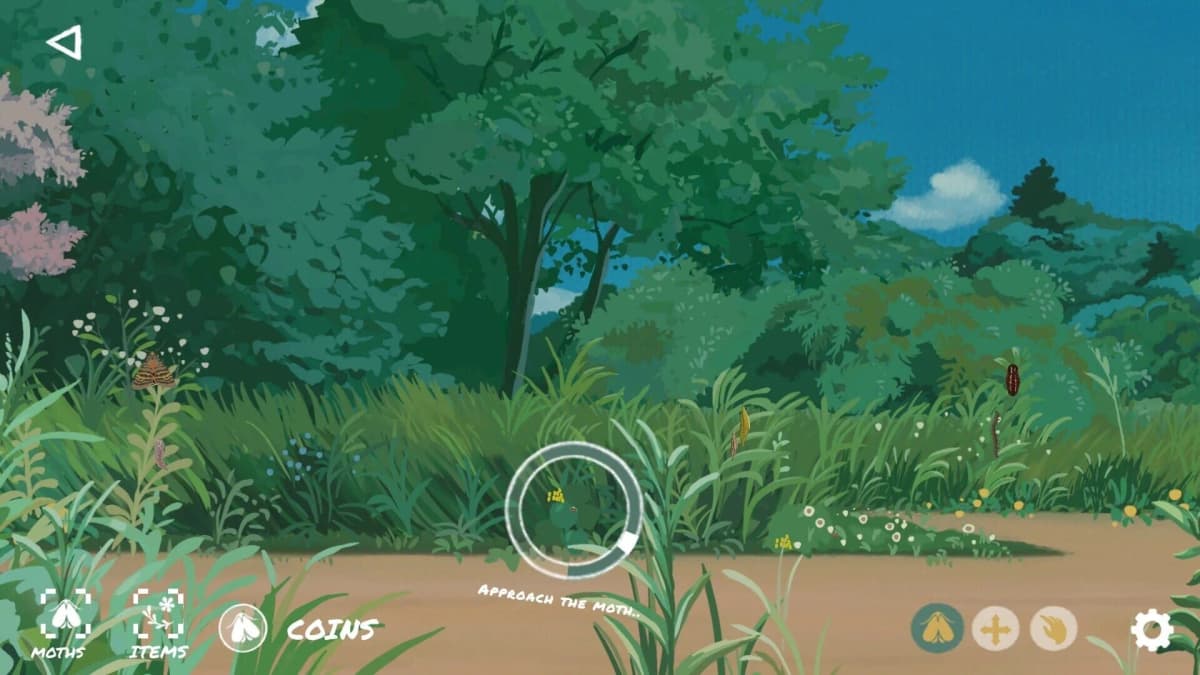
Use the following route as a repeatable search circuit. It keeps the collection process controlled and makes it easier to identify the point at which a missing moth or rare stage finally appears.
- Cliff: Perform a full lifecycle scan and record every stage found before moving on.
- Path: Check for new eggs, larvae, pupae, and adults rather than only looking for obvious flying moths.
- Mixed Forest: Repeat the same four-stage scan. This is a separate location label from Forest Path, so log it separately in your notes.
- Forest Path: Recheck any target moths still missing a stage after the Mixed Forest pass.
- Garden: Search methodically, then compare new captures against the journal before leaving.
- Apartment: Include the home setting in every full collection circuit. It is easy to prioritize outdoor zones and overlook this stop.
- Picnic Area: Treat this as a standard survey location, with the same egg-to-adult checking order.
- Field: Finish the route here, then open the journal and determine whether another circuit is needed.
The route order itself is less important than repeating the same order every time. A fixed circuit creates useful notes: you can see which area you visited, which attraction item you used, whether you slept before the visit, and which lifecycle stage remains absent.
Use the Same Four-Stage Search Order in Every Area
At each location, search in lifecycle order rather than scanning only for adults. This reduces the chance of overlooking the stationary or less immediately noticeable stages while chasing active sightings.
- Check for eggs first. Log the observation before continuing.
- Search for larvae second. Confirm the journal updates for that moth.
- Look for pupae or cocoons third. Treat this as its own required record.
- Capture adults last. An adult sighting is useful, but it is only one quarter of a full entry.
This order matters most late in the collection. When only a few records remain, the temptation is to wander until a rare adult appears. That can waste cycles if the journal shows that the missing record is actually an egg, larva, or pupa.
RNG Routine: Attraction Items, Sleeping, and Rechecks
Rare spawns can slow the last few journal entries. Mothkeep provides two tools for dealing with that delay: shop items that attract moths and timed sleeping. Use both as part of a documented routine instead of repeatedly roaming the same area without changing anything.
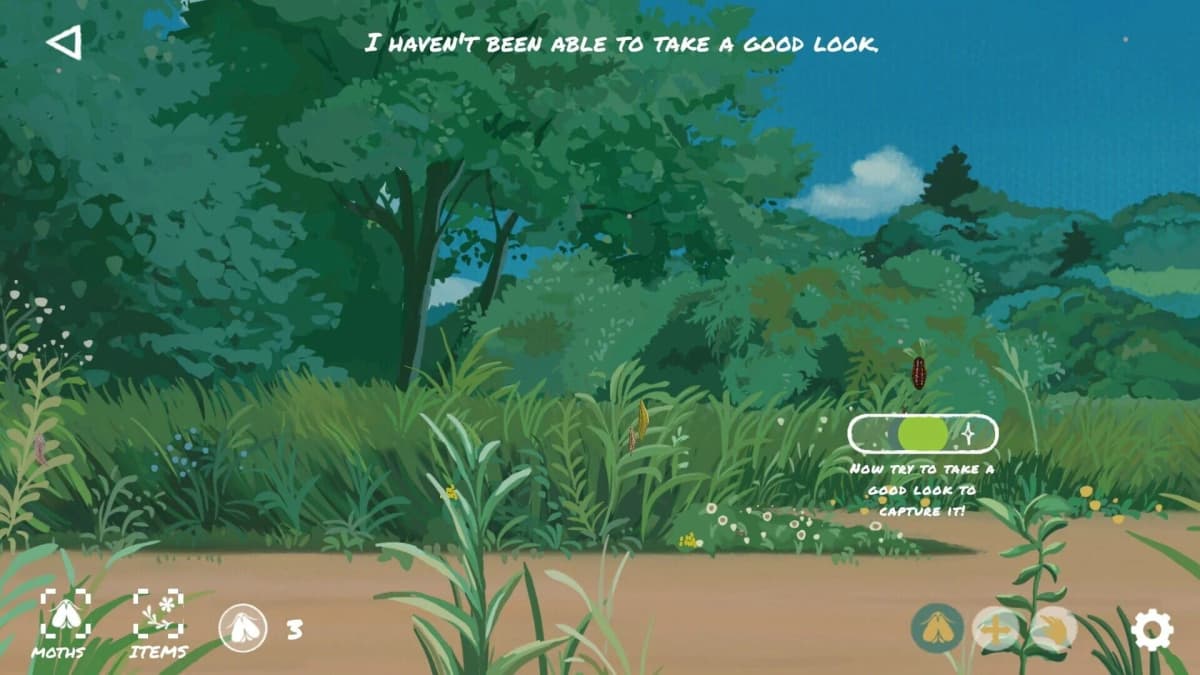
- Check the journal and identify one missing moth stage.
- Return to the relevant area in your established route.
- Use the appropriate moth-attracting shop item available to you.
- Sleep to advance the game’s timed waiting cycle.
- Return to the target area and perform the full egg, larva, pupa, adult scan.
- Open the journal immediately after a capture and confirm whether the missing stage was filled.
- Repeat the cycle only if the entry remains incomplete.
Do not stack several untracked visits together. If a rare spawn appears after an attraction item and a sleep cycle, that information is useful for your next missing entry. If you change areas, use an item, sleep, and make several captures without checking the journal, the process becomes difficult to audit.
RNG stall procedure: When a target refuses to appear, stop searching broadly. Reopen the journal, confirm the exact missing lifecycle stage, return to its relevant survey stop, use an attraction item, sleep, and run one complete four-stage check. This prevents the most common late-game error: farming a stage that was already documented.
23-Moth Completion Tracker
Copy the journal’s moth names into this tracker in the same order they appear in-game. Mark a stage only after the journal shows that observation. Each completed line should contain four marks.
- 01. ____________________ – Egg [ ] Larva [ ] Pupa [ ] Adult [ ]
- 02. ____________________ – Egg [ ] Larva [ ] Pupa [ ] Adult [ ]
- 03. ____________________ – Egg [ ] Larva [ ] Pupa [ ] Adult [ ]
- 04. ____________________ — Egg [ ] Larva [ ] Pupa [ ] Adult [ ]
- 05. ____________________ — Egg [ ] Larva [ ] Pupa [ ] Adult [ ]
- 06. ____________________ — Egg [ ] Larva [ ] Pupa [ ] Adult [ ]
- 07. ____________________ — Egg [ ] Larva [ ] Pupa [ ] Adult [ ]
- 08. ____________________ — Egg [ ] Larva [ ] Pupa [ ] Adult [ ]
- 09. ____________________ — Egg [ ] Larva [ ] Pupa [ ] Adult [ ]
- 10. ____________________ — Egg [ ] Larva [ ] Pupa [ ] Adult [ ]
- 11. ____________________ — Egg [ ] Larva [ ] Pupa [ ] Adult [ ]
- 12. ____________________ — Egg [ ] Larva [ ] Pupa [ ] Adult [ ]
- 13. ____________________ — Egg [ ] Larva [ ] Pupa [ ] Adult [ ]
- 14. ____________________ — Egg [ ] Larva [ ] Pupa [ ] Adult [ ]
- 15. ____________________ — Egg [ ] Larva [ ] Pupa [ ] Adult [ ]
- 16. ____________________ — Egg [ ] Larva [ ] Pupa [ ] Adult [ ]
- 17. ____________________ — Egg [ ] Larva [ ] Pupa [ ] Adult [ ]
- 18. ____________________ — Egg [ ] Larva [ ] Pupa [ ] Adult [ ]
- 19. ____________________ — Egg [ ] Larva [ ] Pupa [ ] Adult [ ]
- 20. ____________________ — Egg [ ] Larva [ ] Pupa [ ] Adult [ ]
- 21. ____________________ — Egg [ ] Larva [ ] Pupa [ ] Adult [ ]
- 22. ____________________ — Egg [ ] Larva [ ] Pupa [ ] Adult [ ]
- 23. ____________________ — Egg [ ] Larva [ ] Pupa [ ] Adult [ ]
Final Journal Audit
Before treating the collection as complete, run one final journal audit instead of revisiting areas at random.
- Confirm that the journal contains 23 moth entries.
- Confirm that every entry has egg, larva, pupa, and adult observations.
- Confirm that no entry is missing a pupa record because its cocoon was overlooked.
- Use attraction items and timed sleeping only for the specific entries still incomplete.
- Stop collecting once all 92 lifecycle records are present.
A complete Mothkeep journal consists of all 23 moths documented across all four lifecycle stages.
FinalBoss // Gear
Level up your setup
01Top-rated gaming headsetson Amazon→02High-refresh gaming monitorson Amazon→03Gaming chairson Amazon→04Discounted game keyson Kinguin→Affiliate links · As an Amazon Associate, FinalBoss earns from qualifying purchases.
Want to Level Up Your Gaming?
Get access to exclusive strategies, hidden tips, and pro-level insights that we don't share publicly.
Ultimate Guide Strategy Guide + Weekly Pro Tips