
Table of Contents (7)
A mouse with a trench coat, a .38, and way more style than it has any right to
On paper, Mouse PI For Hire sounds like one of those ideas you toss out at 2am in a Discord call: a hard-boiled noir about a tiny mouse detective, rendered like a 1930s cartoon, but played as a boomer-shooter. It’s the kind of pitch that usually gets turned into a 30-second joke trailer and nothing more.
What’s striking, watching extended preview footage and reading through the early hands-on reports, is how quickly the joke drops away and something more substantial peeks through. Yes, everyone has names like Jack Pepper and Cornelius Stilton, and yes, the cheese puns practically write themselves. But underneath the rubber-hose limbs and silly reloads is a surprisingly tight FPS with a proper sense of pace and an honest attempt at detective storytelling.
This isn’t a full review of the final game yet – the April 16 release is still around the corner, and everything here is based on a sizeable vertical slice and press/demo builds. But that slice is generous enough to show how the different pieces fit: a 2.5D, sprite-based first-person shooter stitched together with a top-down overworld, a noir narration track from Troy Baker, and little investigative interludes that give your trigger finger a rest.
The short version? Mouse PI For Hire looks like a throwaway gag, but it behaves like a game that really wants to earn your time.
Visuals: Cuphead goes boomer-shooter, with a noir filter and a cigarette
The first thing that hits you is the art style. Fumi Games is going all-in on that classic black-and-white rubber-hose animation vibe, but with a modern shooter’s clarity. Characters are 2D, hand-drawn sprites floating in 3D spaces, and they wiggle and stretch in that loose-limbed, slightly unhinged 1930s way. Limbs noodle, eyes bug out, mouths smear across half a face when someone screams.
It’s not just a filter slapped on top. The developers have talked about animating this frame-by-frame, then projecting it into 3D, and you can see the work in every reload animation and idle pose. Guns don’t just appear in your hands; they bounce, twist, and bend reality a bit as Jack Pepper pulls them out, like they’re props in some underfunded cartoon short.
Everything is monochrome, but it never looks muddy. Important objects stand out with bold outlines and clean shapes, so even in busy labs or cluttered backstreets, you can instantly spot a switch, a weak point, or the next doorway. The whole thing reminds me of Cuphead filtered through Doom 1993’s readability – dense with character, but never so busy you’re squinting at the screen wondering what’s interactive.
The noir trappings lean hard into cliché, on purpose. Jack’s office is exactly what you think a rodent gumshoe’s office should be: blinds casting stripes across the room, overflowing ashtrays, a tired desk lamp, and a corkboard covered in string and black-and-white photos. The difference is that everyone’s about three inches tall and might gnaw the furniture if they get bored.
Layered on top of all this is a crackling jazz score and Troy Baker doing his best world-weary rodent monologue. The narration skews tongue-in-cheek, but it’s played straight enough that it doesn’t feel like a parody YouTube short. He talks about the city like it’s a living thing, about old cases and bruised knuckles, and occasionally about cheese, because of course. It sells the fantasy more than I expected; what could’ve been a meme voiceover actually grounds the absurdity.
Gunplay and movement: boomer-shooter bones in a cartoon body
Underneath the art style is a shooter that clearly grew up worshipping the 90s. Think quick strafing, chunky weapons with fast swap times, and a strong emphasis on staying in motion instead of cowering behind chest-high walls. Jack Pepper might be three inches tall, but he moves like he’s been mainlining classic PC shareware.
The preview build centres on a descent into a secret laboratory under the city – the classic noir thing where a lead on a missing person spirals into something far stranger. Structurally, it’s a linear gauntlet of arenas, corridors, and a few puzzle rooms, but what stands out from the footage is the rhythm: short bursts of tight combat, then a breather to hit a switch, break some scenery, or listen to Jack grumble about the mess he’s in.
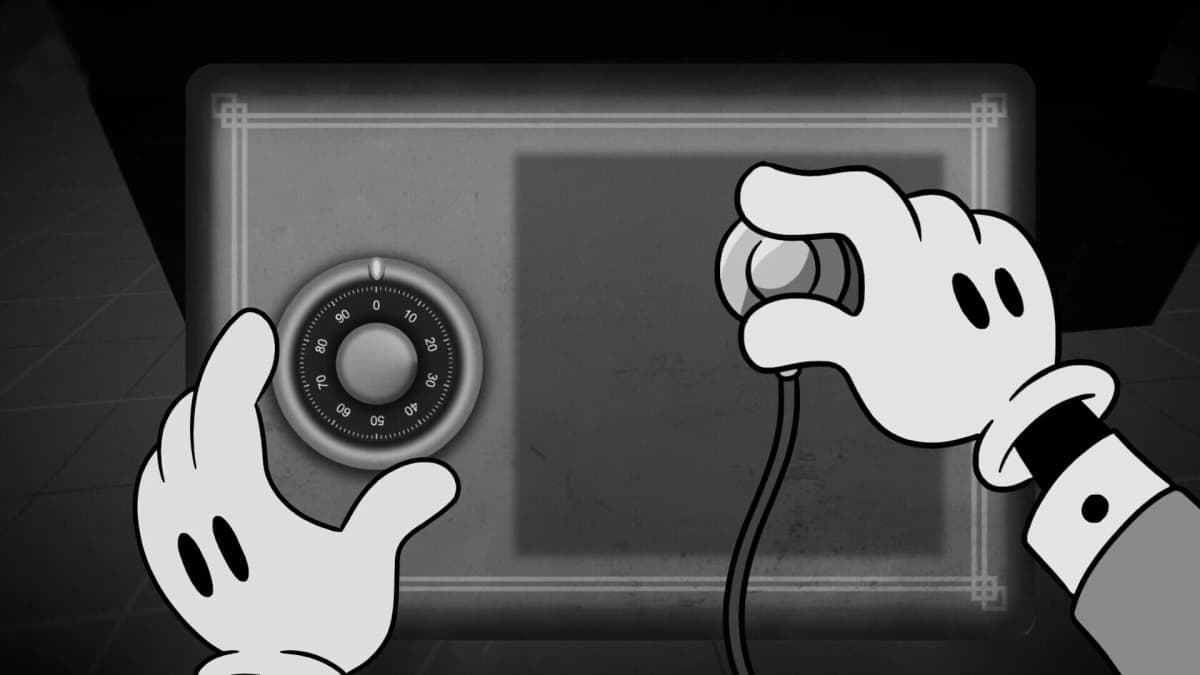
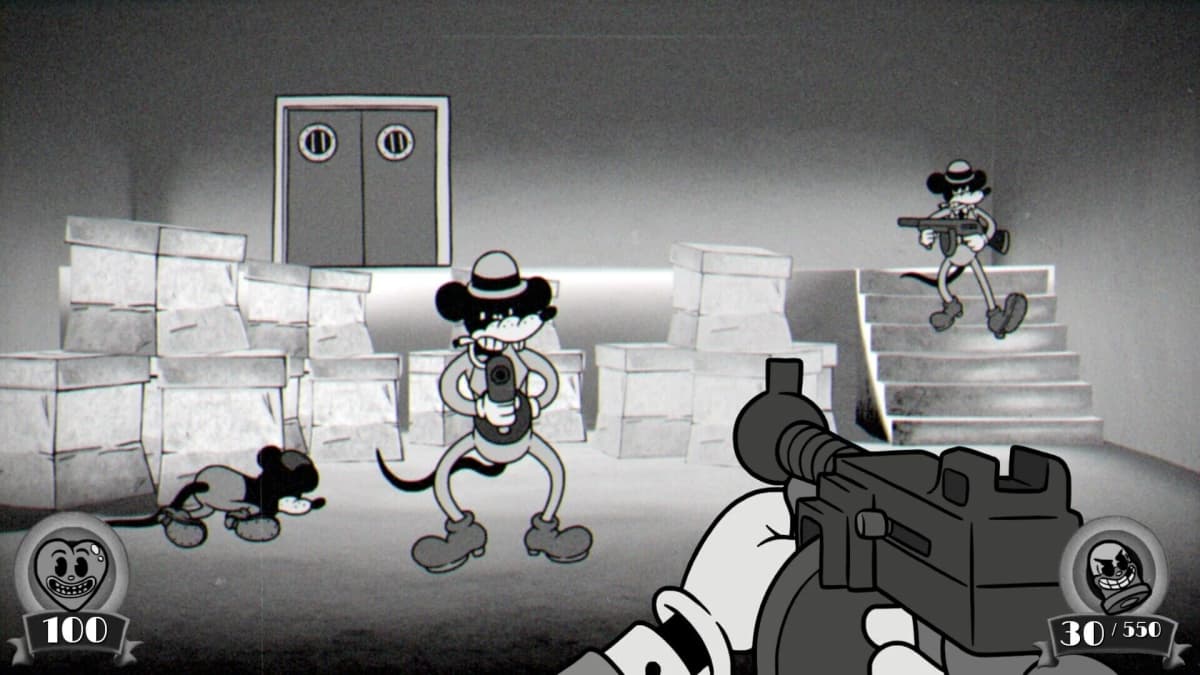
The weapons set leans into physical comedy without sacrificing feel. Fists come out as exaggerated boxing gloves that still seem to stagger enemies nicely up close. A standard sidearm snaps into view with a ridiculous flourish, but the recoil and sound design give it real punch. Then there’s the “de-varnisher”, a caustic gun that sprays acid-like goop, eating through enemies and scenery in sizzling arcs. Every reload is a little animated gag, yet enemies go down in satisfyingly crunchy ways.
Movement is equally expressive. Jack can double jump, slide through gaps, and dive out of danger, sometimes chaining moves in ways that give the game a slight arena-shooter feel. Watching extended combat segments, it looks like you’re rewarded for treating fights as little dances: sprint in, smack someone, slide away from incoming fire, then hop onto a platform to get a better angle with a long-range weapon. The rubber-hose animation accentuates all of it, but the inputs underneath appear snappy and responsive, not floaty slapstick.
Boss fights are where Mouse PI For Hire tries to flex. One of the early standouts is a mechanical recreation of a mad scientist’s lost love: a robotic starlet who glides around a stage firing sweeping laser beams and bullet curtains. Later encounters remix her basic patterns with extra hazards: more erratic fire, additional enemies, or environmental tricks that force you to keep moving. It’s all very theatrical – the camera framing, the dramatic lighting on the boss, the way the music twists into something a bit harsher for the duration of the fight.
It’s still distinctly “boomer shooter” in the sense that arenas are readable, attack patterns are learnable, and the skill curve is about situational awareness more than pixel-perfect headshots. The enemies are cartoon goons and cultists, but they press you just enough that you need to commit to learning the space instead of backing into a corner and plinking away.
From 2.5D shootouts to a top-down city: structure that actually fits the fantasy
The clever bit – and the part that stopped this from just feeling like a novelty FPS – is what happens when the guns go quiet. Once Jack is out of that underground lab, the perspective shifts to a top-down overworld where he drives his little car through the city, JRPG-style. Think old-school Final Fantasy world maps, but with foggy alleyways, towering matchbox-sized skyscrapers, and all the locations you just know will turn into crime scenes later.
In the preview slice, only a handful of spots are actually open: a city block around Jack’s office, a couple of shops, and a few characters hanging around with problems or wisecracks. But even with that limited access, the structure makes sense. Big, linear shooter levels branch off from this hub-like space, while the city itself is where you breathe, read, buy supplies, and soak in the gag density crammed into every sign and storefront.
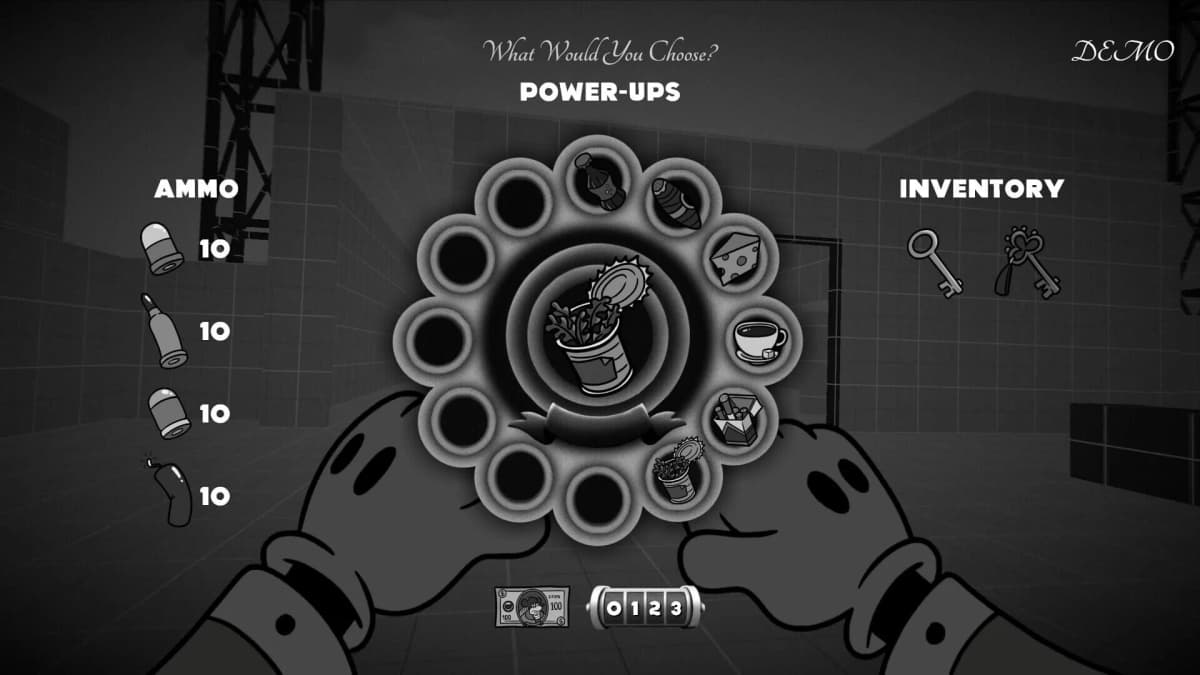
Shops seem to follow the classic small-FPS formula: ammo, health, maybe a new toy or two, all wrapped in characterful dialogue. One shopkeeper is clearly not thrilled to see Jack; there’s an implied history there that the narration and one-liners only half-explain. Posters on the walls, sandwich boards on the sidewalk, throwaway NPC chatter – almost everything is a pun or a twist on a noir cliché, but the world comes across as lived-in rather than random nonsense.
Back in Jack’s office, you can pin evidence from your latest escapade to a corkboard, which serves as both a visual progress tracker and a mood piece. Connecting clues, watching photos and notes stack up, gives you the sense that there’s a case bigger than “go here and shoot everyone.” It’s not full-blown detective simulation – this is still primarily a shooter – but it gets closer to the fantasy of being a PI than most games that just stick “detective” in the title and call it a day.
Detective beats, writing, and why the quiet moments matter
The most encouraging thing in this early slice is the pacing between action and downtime. The secret lab segment is pure gunplay and light puzzling, but once you surface, the game takes its foot off the gas. You’re free to wander a compact city block, poke at environmental details, and chat to assorted rodents with problems. That shift in tempo matters a lot.
Without the calmer stretches, Mouse PI For Hire would risk feeling like a long joke dragged out by good combat. Instead, those slower sections let the premise breathe. They give Troy Baker room for internal monologue that isn’t just “I reloaded and thought about my ex.” And they let the writers pepper the city with jokes that don’t have to fight the chaos of a firefight to be noticed.
From what’s been shown, the humor is affectionate rather than sneering. It pokes fun at noir and at the idea of a tiny mouse being the grizzled veteran in a world of rodents, but it doesn’t feel like it’s mocking the genre. The game clearly loves its inspirations – hard shadows, smoky rooms, sultry poster art – and it leans into them, just shifted a few inches closer to the floor because everyone’s so small.
The actual detective mechanics in the preview look light-touch: gather a few clues in an action level, bring them back, watch them appear on the board, and listen as Jack connects the dots in his narration. The hope is that later cases expand on this with more branching dialogue, optional leads, or alternate level entries based on what you’ve found. Even if it never gets that deep, the mere presence of these systems gives the shooting more narrative weight than “go to the red marker”.
Early concerns: linearity, puzzle depth, and staying power
For all the charm and craft on display, there are a few question marks that only the full game can answer.
First is level variety. The lab in the preview is tightly built but fairly straightforward: corridors, combat arenas, a few puzzle rooms that mostly involve throwing switches or figuring out simple interactions. That works fine as an introduction, but if most levels follow that same “straight line with occasional side alcove” structure, the campaign could start to feel like a stylish theme park ride rather than a world of spaces you learn and re-approach.
Second is how far the detective side goes. Pinning photos to a board and chatting to informants is a great mood-setter, yet if your input always boils down to “play the next level or ignore it”, role-players and mystery fans might bounce off. There’s a sweet spot where the cases feel solvable and interactive without getting in the way of the run-and-gun flow; it’s not clear yet whether Mouse PI For Hire will hit that, or just flirt with it.
Finally, difficulty and length remain big unknowns. Boomer shooters live or die on that satisfying curve from fumbling around to feeling like a god of movement and aggression. We’ve seen just enough combat to know that the fundamentals are strong, but not enough to judge whether the game keeps introducing new wrinkles, enemy types, or weapons to keep things spicy twenty levels in.
None of these are red flags so far; they’re just the natural “let’s see how this lands in the full release” caveats that come with any promising demo.
Who Mouse PI For Hire is really for
If you bounce off old-school shooters because the aesthetics feel drab or aggressively “PC in a basement”, Mouse PI For Hire might be your way in. The tone is playful without being grating, the world is full of visual jokes, and the noir dressing gives it a personality that most retro-inspired FPS games would kill for.
If you already love the modern boomer-shooter wave – games like DUSK, Cultic, or Ion Fury – this looks like a stylish cousin rather than a direct rival. The gunplay seems a touch less punishing, the movement a bit more forgiving, and the structure more curated, with that whole overworld and detective framing layered on. It might not scratch the exact same “master every inch of this absurdly hard map” itch, but it offers something tonally unique.
Fans of noir stories and character-driven games might be surprised by how much there is for them here, too. You do have to be okay with a lot of shooting between the monologues and clue boards, but the writing and performance work look strong enough that this isn’t just another grimdark faceless marine story. Jack Pepper feels like an actual character in a weird little ecosystem, not just a gun with feet.
FinalBoss // Gear
Level up your setup
01Graphics cardson Amazon→02Gaming laptopson Amazon→03High-refresh gaming monitorson Amazon→04Discounted game keyson Kinguin→Affiliate links · As an Amazon Associate, FinalBoss earns from qualifying purchases.
Want to Level Up Your Gaming?
Get access to exclusive strategies, hidden tips, and pro-level insights that we don't share publicly.
Ultimate Reviews Strategy Guide + Weekly Pro Tips