
MU: Pocket Knights: Idle Evolution or Franchise Shortcut?
When Webzen first teased MU: Pocket Knights as a global idle RPG spin-off of their two-decade-old MU franchise, this veteran gamer braced for déjà vu. We’ve seen a tsunami of auto-battlers and idle titles promising pick-up-and-play magic—only to deliver shallow loops peppered with aggressive monetization. But MU isn’t just any IP: it was one of the isometric MMORPGs that defined the early 2000s grind. Could this pocket-sized iteration offer a genuine evolution, or will it simply slap the old logo on another microtransaction-driven shell?
From Hardcore MMO to Casual Idle
It’s remarkable to reflect on how MU began in 2001 as a hardcore, stats-heavy MMO and has now pivoted into idle RPG territory. This is Webzen’s first major experiment in translating that old-school grind into quick-fire mobile sessions. The core pitch? Blend the “fast, low-effort leveling of idle games” with enough depth in character progression to keep series die-hards intrigued. No small feat, considering how easy it is for idle titles to turn repetitive once you’ve seen the same automated battles and reward timers.
Early details point to an approachable loop: assemble a team of pocket heroes, tap through runes and gear upgrades, then let the auto-battle system grind XP in the background. If Webzen can layer in meaningful choices—hero synergies, resource management, timed events that reward strategy over spending—MU: Pocket Knights might stand out. But that balance between “idle convenience” and “real progression” is the tightrope every auto-battler walks, and too many stumble into pay-to-accelerate territory.
Art Style: Cute or Crisis?
Gone are the gritty warriors and gothic landscapes of classic MU. In their place, you’ll find chibi-style knights, sprites, and mages trading their brooding armor for oversized eyes and pastel palettes. This shift mirrors trends set by chibi spin-offs of bigger franchises—think mini-Genshin or MapleStory’s endless mascot parade. It broadens appeal to players who favor collection mechanics and “cute factor,” but it may alienate longtime fans craving the original’s darker fantasy vibe.
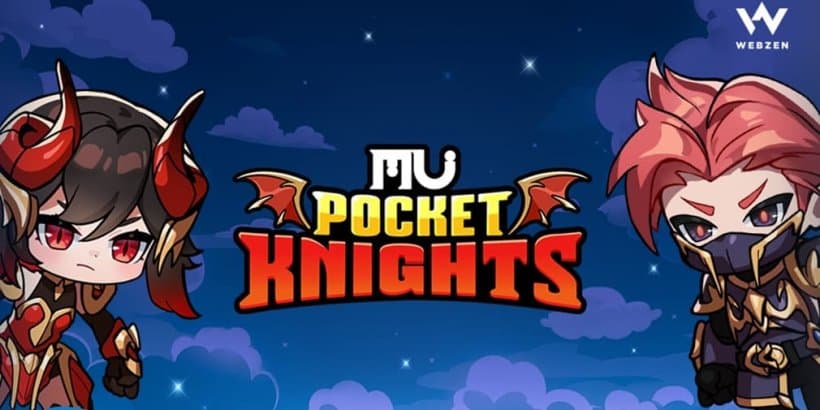
That said, Webzen hasn’t completely abandoned its roots. Look closely and you’ll spot nods like angelic wing motifs in the logo or subtle references to classic MU zones in skill names. For lore enthusiasts, these Easter eggs hint at a tapestry that spans back to the 2001 world of Lorencia. For newcomers, they’re likely to register as stylish design choices rather than franchise call-backs.
Monetization: Measured or Money Grab?
Idle RPGs live and die by their revenue model. Webzen has been tight-lipped on details, but we can anticipate familiar mechanics: timed chests, VIP passes, and premium currency resets. The big question is how far they’ll let players auto-grind before offering “skip timers” at a price. If MU: Pocket Knights leans too heavily on microtransactions, it risks becoming another throwaway idle game. If it uses monetization to fund live-service events, deep character arcs, and genuine balance patches, it could carve out a niche in the market.
One healthy sign is Webzen’s promise of “global first” deployment—no phased region-locked beta limited to Korea or SEA. That suggests confidence in the product’s design and a willingness to respond to international feedback. A staggered rollout can help fine-tune monetization dark patterns before they reach a wider audience. Fingers crossed they use player data to refine fairness, not just maximize daily revenue.
Franchise Implications and Industry Trends
Webzen isn’t alone in repurposing a legacy MMO into an ultra-casual mobile experience. We’ve seen Ragnarok M, Lineage 2: Revolution, and others chase the same model. The upside is clear: tapping established IP can attract initial downloads and social buzz. The downside is rarely discussed—diluting a franchise’s core identity until it’s unrecognizable to original fans.
If MU: Pocket Knights succeeds, it could reinvigorate the MU universe, funneling idle players into other MU online titles or future spin-offs. A flop, however, might leave the brand associated with “yet another microtransaction grind.” For Webzen, the stakes are high: will this experiment be a template for future releases or a cautionary tale about chasing new audiences at the expense of legacy?
For Gamers: Should You Keep an Eye on This?
If you’re a die-hard idle RPG completionist, MU: Pocket Knights might just be another collectible gadget in your phone’s app drawer—unless it brings real innovation in progression systems or social features like guild raids. If you cut your teeth on classic MU, this spin-off will feel light and breezy—more of a nostalgia-flavored distraction than a true sequel. But for players new to the MU universe, the game’s timing could be perfect: idle mechanics lower the barrier to entry, while the brand’s storied history gives depth once you decide to dig in.
My personal hope is for a middle path: an idle framework that respects player time without overselling shortcuts, paired with skill trees, equipment crafting, and seasonal events that reward engagement over spending. If Webzen achieves that, MU: Pocket Knights could become one of the few idle RPGs that transcends its genre and genuinely broadens a classic franchise’s appeal.
TL;DR – What MU: Pocket Knights Brings to the Table
MU: Pocket Knights is Webzen’s gamble on converting a 23-year-old hardcore MMO IP into a global idle RPG. It offers a fresh, cute art style, auto-battle progression, and promises of meaningful depth—but carries the usual idle genre risks around microtransactions and shallow loops. If you’re curious about a low-commitment return to the MU universe, keep this on your radar. If you need the old-school grind and dark fantasy aesthetic, this spin-off may not satisfy. The real test will be whether Webzen uses global feedback to refine systems, or leans on aggressive monetization. For now: intrigued but skeptical.
| Feature | Details |
|---|---|
| Publisher | Webzen |
| Expected Launch | Late 2025 (Global) |
| Genre | Idle RPG, MMORPG-lite |
| Platforms | Mobile (iOS, Android anticipated) |