
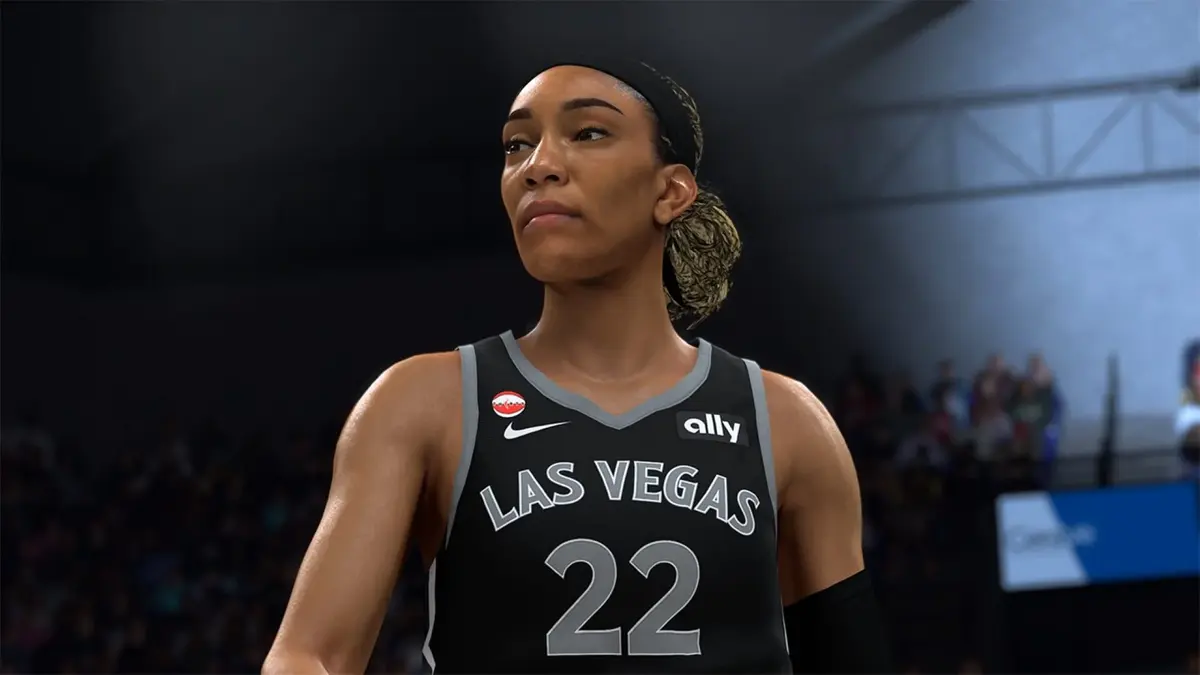
The drive starts cleanly, the lane narrows, and the dunk meter arrives at the exact moment a defender can turn a routine finish into a mistake. That tiny confrontation is where NBA 2K27 makes its strongest case. I want a basketball game to care about who is standing between the ball and the rim, and this one finally gives that choice some consequence.
That sharper sense of resistance carries through the best parts of NBA 2K27. Defensive movement is smoother and more responsive, the timing around steals and blocks matters more, and scoring asks for a little more composure. Then the game pulls me back into MyCAREER, where Fire & Concrete and MyCAREER Eras stretch progression into a chore, while optional purchases and paid random items hang over the modes built to keep players invested. The basketball is better. The surrounding grind remains the problem.
Table of Contents (6)
Defense finally has more authority
NBA 2K27’s most important improvement is that defending a possession has more weight. On-ball defense, help-defense rotations, and the timing windows for steals and blocks all sit at the center of the new gameplay emphasis. The result is a game that treats a defensive stand as a sequence of positioning decisions rather than a desperate scramble for an animation.
That matters because basketball games live or die on whether offense feels earned. A defensive system cannot merely exist as a pile of ratings and badges hidden behind menus; it needs to make the ball-handler read the floor, hesitate on a drive, and respect the extra body rotating into the paint. NBA 2K27 gives those moments more bite. The better possessions are the ones where a stop comes from being in the correct place early, then reacting cleanly when the action changes.
The new dunk meter is the clearest example. It continuously evaluates defender positioning when a player drives to attack the rim, so a contested finish has a more direct relationship with the bodies occupying the lane. I like the bluntness of that design. A dunk attempt should be a decision made against traffic, not a reliable escape hatch whenever a player reaches the restricted area.
Offense still has room to breathe through the Dynamic Layup Engine and Step-Through Up-and-Unders, but NBA 2K27 does not let scoring sit on autopilot. Rhythm Shooting also requires players to hit the green portion of the shot meter on outside jumpers. That stricter requirement puts a little more pressure on the release itself, which is exactly where a competitive basketball game should ask for precision.
No public breakdown supplies exact numerical changes for defensive sliders, badge effects, or animation windows, so the game’s progress is best understood through its feel rather than a spreadsheet. In practical terms, NBA 2K27 plays tighter because good defense has a clearer path to mattering. That is a meaningful upgrade for anyone exhausted by possessions that turn into effortless rim pressure or frantic reaching.
MyCAREER confuses more content with better pacing
MyCAREER is where NBA 2K27 loses control of its own momentum. Fire & Concrete is an 11-chapter cinematic single-player story featuring Vince Staples and recurring hero MP. Eleven chapters give the mode room to establish a bigger arc, but length alone does not create urgency. The presentation keeps pointing toward a major personal journey while the pacing makes that journey feel drawn out instead of driven.
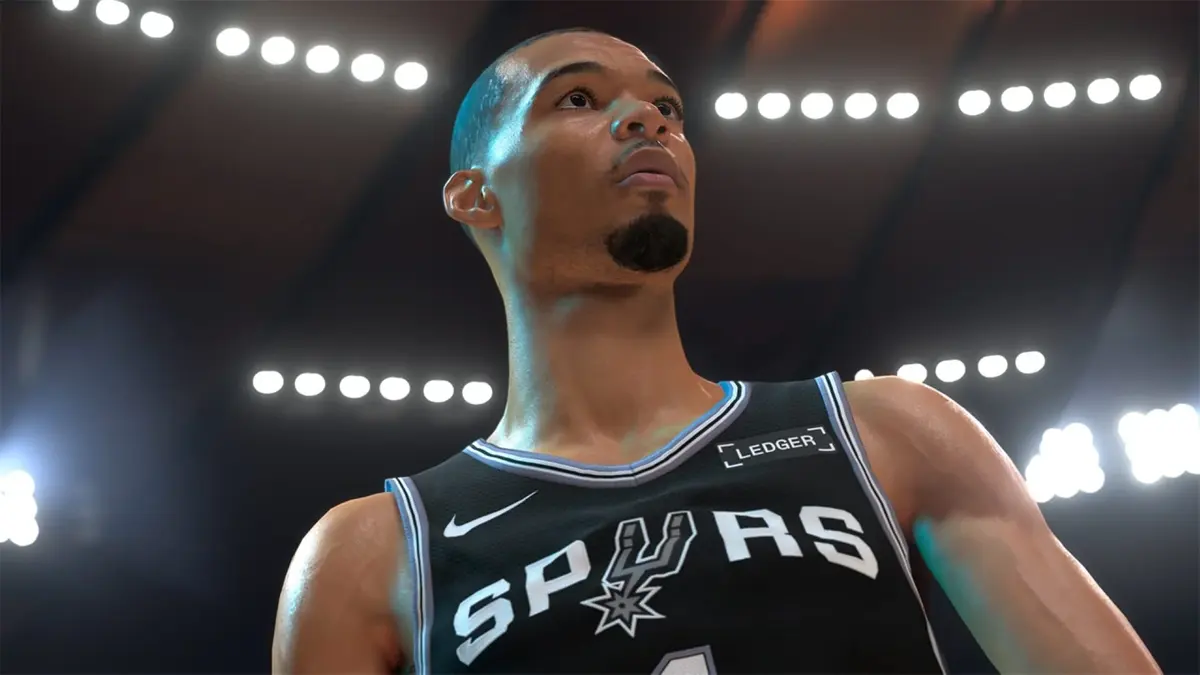
I can appreciate the ambition behind a cinematic career mode. A created player deserves more than a bare menu of games and attribute upgrades. Still, the story has to respect the reason players enter MyCAREER in the first place: they want to get onto the court, shape a player, and build a meaningful basketball career. Fire & Concrete too often makes the route to that payoff feel heavier than the reward.
MyCAREER Eras expands the idea further by allowing a created player to enter one of five historical settings: The Magic vs. Bird Era beginning in 1984, The Jordan Era, The Kobe Era, The LeBron Era, or The Steph Era. It is a strong menu of basketball history, and the basic fantasy is easy to understand. Placing a custom player into an established era should create immediate tension between individual ambition and the league around them.
The problem is the route through that idea. MyCAREER Eras is tedious, and its progression setup compounds the drag. The mode asks players to commit to a lengthy framework before it gives them enough momentum in return. NBA 2K27 repeatedly proves it knows how to make a possession feel alive; MyCAREER repeatedly forgets that a career mode needs to move with comparable purpose.
The City does provide a few welcome attempts at variety. For the first time, it is co-ed, allowing a female MyPLAYER to compete with male MyPLAYERs. MyCAREER also has a co-op option where a friend can join through Running Mate Trace Miller, a custom teammate from the G League. Those are worthwhile additions because they widen the ways players can inhabit the mode. They do not solve the central pacing issue, though. More paths through a slow structure still leave the structure slow.
The grind feels worse beside paid-item incentives
NBA 2K27 explicitly includes optional in-game purchases and paid random items. That fact sits uncomfortably beside modes whose weakest quality is already their sense of drag. I am not arguing that every slow moment is a transaction prompt, because the game’s specific purchase triggers are not laid out here. The real issue is more fundamental: an extended progression loop becomes harder to trust when a paid route exists somewhere next to it.
That tension matters most in MyCAREER, where the desire to improve a player is inseparable from the desire to move past the least engaging parts of the mode. A better defensive system makes me want to create a player capable of thriving in those possessions. A sluggish story and tedious era structure make the journey toward that player feel less like development and more like friction.
MyTEAM receives a concrete quality-of-life change through its Exchange: it can accept any Player Card in a collection for elite rewards, apart from Free Agent cards and cards earned through Season level rewards. That is a useful bit of flexibility. It does not erase the larger issue that paid random items remain part of the game’s economy. NBA 2K27 contains moments of player-friendly design, but it still asks players to navigate a system where time, collection-building, and spending remain closely linked.
MyNBA Legacy lands in the same uneasy territory. It is part of the package, yet its pacing, missing features, and microtransaction-related incentives weaken the mode’s appeal. The missing features are not specified, so I will not invent a checklist for them. What matters is that the game’s single-player ambitions do not consistently receive the same clean attention given to the action on the court.
Choose the version for basketball, not for the promise of less friction
Visual Concepts developed NBA 2K27 and 2K publishes it as the 28th installment in the series. It is listed for PlayStation 5, Xbox Series X|S, Nintendo Switch 2, and PC through Steam. The official worldwide release date is September 4, 2026, while Steam lists September 3, 2026. Early Access begins on August 26, 2026 at 9:00 AM PT for eligible editions.
The Standard Edition costs $69.99, while the Deluxe Edition is priced at $99.99 and the Ultra Edition at $149.99. I would start with the Standard Edition if the improved on-court game is the reason to buy. Nothing in MyCAREER’s pacing or the broader incentive structure makes a more expensive edition feel like the natural answer to the game’s frustrations.
Online-minded players also need to choose their platform with care. Cross-play is limited to PlayStation 5 and Xbox Series X|S, leaving PC and Nintendo Switch 2 outside that cross-platform pool. Online play requires an Internet connection and an NBA 2K Account, while console online modes also require the relevant platform subscription. That makes the full competitive ecosystem a more expensive proposition than the $69.99 entry price alone suggests.
Who should play NBA 2K27
NBA 2K27 is for players who care most about the texture of a basketball possession. If you value on-ball resistance, more purposeful help defense, stricter outside shooting, and a dunk meter that respects interior positioning, the foundation is stronger than the surrounding complaints suggest. The court has enough improvement to make every close game more compelling.
Players looking for a focused solo career mode should be more cautious. Fire & Concrete has scale, MyCAREER Eras has historical appeal, and The City has new co-ed and co-op options, but none of those additions fix the sluggish feeling at the heart of the single-player progression. MyNBA Legacy also carries its own concerns around pacing, missing features, and incentives.
Bottom line
NBA 2K27 earns a 7/10. The improved defensive responsiveness, stricter Rhythm Shooting, and defender-aware dunk meter give the actual sport more tension and more credibility. That is the part I would buy: a basketball game where a smart rotation and a well-timed contest finally have proper authority.
My practical recommendation is simple: buy the Standard Edition if tighter on-court play is enough for you, and wait if a smooth single-player career is your priority. NBA 2K27 has a better game inside it than its MyCAREER pacing and paid-item incentives allow it to be.
FinalBoss // Gear
Level up your setup
01Top-rated gaming headsetson Amazon→02High-refresh gaming monitorson Amazon→03Gaming chairson Amazon→04Discounted game keyson Kinguin→Affiliate links · As an Amazon Associate, FinalBoss earns from qualifying purchases.
Want to Level Up Your Gaming?
Get access to exclusive strategies, hidden tips, and pro-level insights that we don't share publicly.
Ultimate Reviews Strategy Guide + Weekly Pro Tips