
Table of Contents (6)
Why this matters to players right now
Microsoft’s surprise leadership shuffle landed with a thud across the gaming world: Phil Spencer is retiring, long‑time lieutenant Sarah Bond is leaving, and Asha Sharma – until recently president of Microsoft’s CoreAI – is now CEO of Microsoft Gaming. What stuck with me from Sharma’s first public words wasn’t just the change of guard, it was how quickly she went out of her way to promise two things that matter to gamers: a renewed push for “great games” and a hard line against “soulless AI slop.” That combination is an attempt to soothe studios and players while also telegraphing Microsoft will keep AI but use it cautiously.
- Immediate priority: Sharma framed herself as a platform builder who will “earn the right to be trusted” by players and developers – not an exec parachuting in to overhaul creative teams overnight (Variety, IGN).
- Personnel shifts: Phil Spencer retires effective Feb. 23 and will advise through summer; Sarah Bond resigns; Matt Booty promoted to Chief Content Officer to run studios (PushSquare, TheSixthAxis, Steam News).
- AI stance: Sharma, formerly of CoreAI, pledged “no tolerance for bad AI” and warned against “flooding our ecosystem with soulless AI slop,” positioning Microsoft to use AI as tooling, not a replacement for human storytelling (internal memo, Variety).
- Events to watch: Sharma teased announcements at GDC next month and a spring Xbox Games Showcase — the first real test of whether her words match the slate.
Breaking down the shake‑up
Multiple outlets report the same broad strokes: Spencer, the public face of Xbox for years, is stepping back; Sharma is stepping up; Matt Booty — who already runs Xbox Game Studios — moves into the content chief role; and Sarah Bond exits. IGN first published the roster details and Variety ran Sharma’s interviews. The reporting lines line up: Spencer will stay on as an adviser for the handoff, a sign Microsoft wants continuity while it retools leadership.
Why an AI executive matters — and why it doesn’t automatically mean bad things
Sharma’s resume reads like a modern tech CV: early Microsoft marketing, scaling Messenger at Meta, operations at Instacart, and two years leading CoreAI inside Microsoft. That background understandably set off alarm bells in a community worried about AI being used as a cost‑cutting cudgel or to shovel out procedurally generated content that lacks soul.
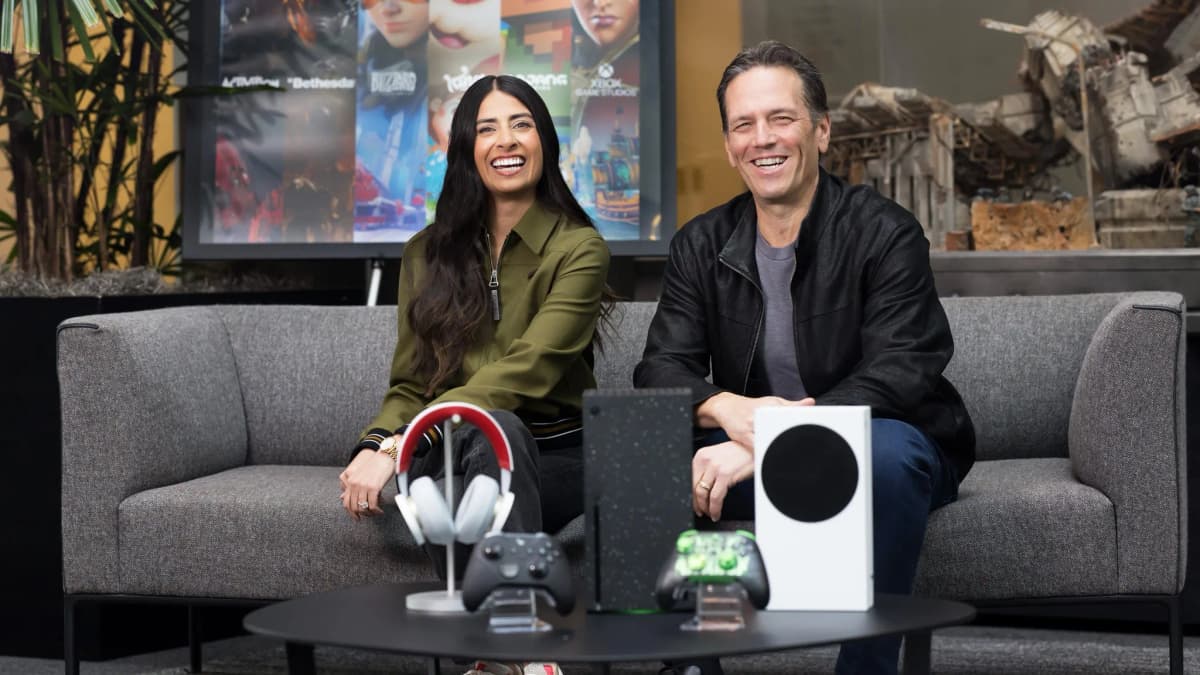
Her message so far is deliberately targeted: she calls herself a platform builder who intends to earn trust, highlights “deep emotional resonance” and human stories as the core of great games, and explicitly told staff she won’t chase short‑term efficiency by flooding the ecosystem with “soulless AI slop.” That phrasing is both smart PR and a meaningful constraint — if followed. It signals Microsoft recognizes the PR risk of heavy‑handed AI in creative content, unlike a few industry peers who’ve leaned into AI‑first marketing.
What this actually means for players and studios
Short term: expect reassurances, organizational memos, and curated messaging. Matt Booty’s promotion matters because studio relationships and green‑lighting remain creative levers; Booty is still the direct link to the teams that make games. Having a content‑focused C‑suite ally reduces the risk of AI executives unilaterally deciding game direction.
Medium term: Sharma’s platform sensibility suggests Microsoft will continue to push Xbox across console, PC, cloud and mobile — areas Spencer championed — but with more emphasis on tooling and systems that scale. That can be positive: better dev tools, smarter QA, and improved PC/cloud interop. The danger is how “AI” gets defined. Are we getting better dev support, NPC behavior improvements, and accessibility features, or are we asked to accept cheaper, recycled content labeled as “AI‑generated”? Sharma’s public lines force developers to tip their hands.
What to watch next
- GDC appearances: Sharma promised teasers there. Listen for concrete examples of AI used as tools for creators, not as a content shortcut (Variety).
- Spring Xbox Games Showcase: The slate and trailers will test whether “great games” are still core to Xbox’s identity or whether strategy veers toward platform and services headlines.
- Developer relations: Watch how quickly studios get clarity on creative autonomy and whether Booty’s new role stabilizes internal decision‑making.
- Execution: Spencer stays on as adviser through summer — that buffer matters. The transition won’t be judged on memos but on the games and support that reach players.
TL;DR
Asha Sharma’s arrival is a big moment: she’s an AI insider promising to prioritize games and avoid “bad AI.” That rhetoric is encouraging, but the proof will be in the slate and studio relationships. GDC and the spring Showcase are the first real tests — and Microsoft has a short runway to turn reassurances into releases that actually feel human-made, not corporate‑engineered.
FinalBoss // Gear
Level up your setup
01Best-selling Xbox Series X|S gameson Amazon→02Xbox controllerson Amazon→03Top-rated gaming headsetson Amazon→04Discounted game keyson Kinguin→Affiliate links · As an Amazon Associate, FinalBoss earns from qualifying purchases.
Want to Level Up Your Gaming?
Get access to exclusive strategies, hidden tips, and pro-level insights that we don't share publicly.
Ultimate Gaming Strategy Guide + Weekly Pro Tips