
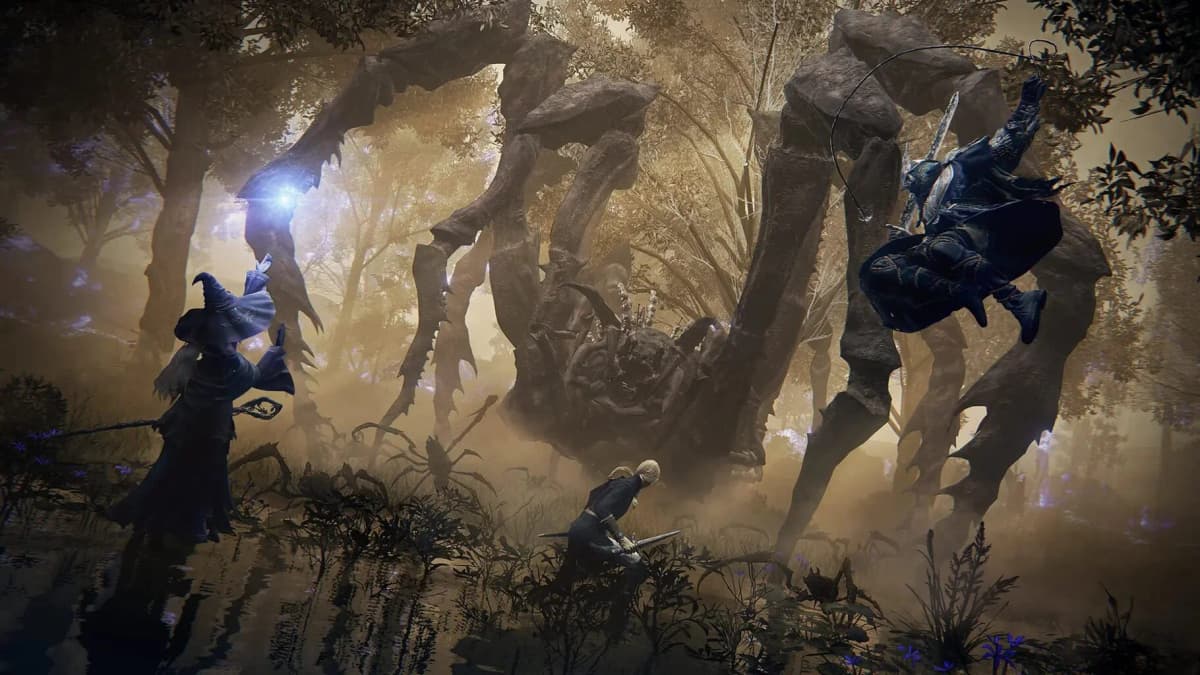
Nightreign forced me to admit FromSoftware still doesn’t respect PC players
Game intel
Elden Ring Nightreign
Elden Ring: Nightreign is a standalone adventure within the ELDEN RING universe, crafted to offer players a new gaming experience by reimagining the game’s cor…
The moment Nightreign snapped my patience
I can live with some of Elden Ring Nightreign’s design annoyances. I can shrug at a lopsided solo loop or awkward progression beats. What I can’t shrug at anymore is FromSoftware’s stubborn, decade-long habit of hobbling its PC releases. Nightreign finally broke me. I’m done pretending this is fine. The fact that I had to mod a 2025 multiplayer game just to get it to run properly on my hardware-only to have its anti-cheat accuse me of heresy-is beyond embarrassing. It’s insulting.
I’ve been in From’s corner since the weird import days of Demon’s Souls on PS3. I’ve poured hundreds upon hundreds of hours into Dark Souls, Bloodborne, Sekiro, Elden Ring. I evangelize these games to my friends, and I still make time for no-hit runs and fashion-souls nonsense like I’m twenty again. But on PC? It’s the same old story: arbitrary caps, missing basics, and a modding community forced to paper over cracks that should never exist. Nightreign doesn’t just highlight From’s biggest flaw-it shoves it in your face the moment you press play.
The thesis: FromSoftware still treats PC as an afterthought
FromSoftware is one of the most important studios in modern gaming. Their design philosophy has re-sculpted the landscape. But when it comes to PC, they keep acting like it’s a side gig. Nightreign’s PC port is the latest proof. We’ve got a hard 60fps cap, no native ultrawide support, and an anti-cheat that treats basic PC tweaks as contraband. If you want your game to run the way every other high-profile PC release does in 2025, you’re pushed into modding—and then punished for it with broken online compatibility. That’s not a technical challenge; that’s a priorities problem.
It’s 2025: a 60fps cap and no ultrawide is indefensible
I play on a 3440×1440 ultrawide, 165Hz, with VRR. That’s not exotic anymore; that’s mid-tier enthusiast gear. My TV supports 120Hz, my phone goes past that. We’ve all moved on. FromSoftware hasn’t. Elden Ring Nightreign still caps the frame rate at 60 and ignores ultrawide aspect ratios as if they’re black magic. If a handful of modders can patch in support within days, don’t tell me it’s impossible or that the engine can’t handle it. Tell me why From won’t handle it. Because that’s what it looks like: a choice.
I’ve heard the talking point for a decade: “physics are tied to frame rate.” Then how come every Souls game on PC has had a mod that removes the cap and, outside of a notorious Dark Souls ladder-slide bug, basically keeps the gameplay intact? If this were a brittle, unfixable engineering limitation, the modders wouldn’t keep solving it in a weekend. And don’t bring up “fairness” when console games now routinely ship with 120Hz performance modes. Input latency is part of fairness too. As someone with a fighting game background who can feel a 16ms difference the way some people feel a draft under a door, I promise you: 120Hz isn’t just a number for marketing slides. It changes how these games feel in your hands. Parry windows, dodges—anything timing-critical—benefits from cleaner frame pacing and lower input lag. That’s the whole genre.
What makes this even more ridiculous? Elden Ring is one of the most played Steam Deck titles and scales beautifully across hardware. The game is flexible by design, which makes the hard cap even more galling. So many people would benefit from an uncapped or at least a 120fps target. Instead, we’re stuck in 2015 while our monitors yawn.
Anti-cheat versus basic features: when security becomes hostility
Nightreign’s big sin isn’t just missing features—it’s how it treats you for trying to add them. Mod your install to unlock ultrawide or uncap frame rates, and the game’s anti-cheat throws a fit. Sure, the community figured out how to disable the anti-cheat, but now you’re severed from anyone playing the stock client. Congratulations: you just invented two incompatible versions of the game and forced friend groups to choose.
Do you know how awkward it is to convince your crew to buy a game after your site ran a 6/10 on it, only to follow up with, “By the way, you’ll need to install mods and disable anti-cheat to make it run properly, then we can play—but only together”? I had that conversation on Discord. Twice. One friend bounced. Another screwed up the install and we spent a Friday night troubleshooting instead of slaying anything. That’s not on them. That’s on From. Anti-cheat cannot be a cudgel you swing at players who just want the basics of PC support.
Mods save Nightreign—but they shouldn’t be essential
Here’s the twisted part: Nightreign is better with mods. I’ve been playing with my partner since launch, and because random matchups were a bust for us, community tools have been a lifeline. A seamless co-op solution let us run as a duo before From patched in a proper option two months later. It scales encounters to our smaller party, smooths out boss spikes, and even lets us engage with Everdark Sovereign events on our schedule because it isn’t tethered to the official servers. Modders have turned Nightreign into the game we wanted on day one.
And I’m grateful. But grateful isn’t the same as satisfied. These aren’t extravagant wish-list features; we’re mostly talking about fundamentals, the things that make PC gaming attractive in the first place. Resolution flexibility, frame rate options, aspect ratios, input latency considerations, open FOV. The modding community shouldn’t be the unpaid live team for one of the most successful studios on Earth. When the only way to get baseline functionality is to accept broken online or drag your entire friendship circle into the same mod configuration, something has gone rotten in the process.
I’ve lived this cycle since DSFix—why are we still here?
Dark Souls: Prepare to Die on PC was the slapstick origin story: locked to 720p internal resolution, 30fps cap, technical gremlins everywhere. Then Peter “Durante” Thoman dropped DSFix, a community patch that did what From wouldn’t. It was so influential it helped spawn a porting studio, PH3 Games. You’d think that would be the turning point.
We saw glimmers of progress. Elden Ring itself was a monster hit on PC, though launch performance was a shader-stutter mess for many of us. Sekiro needed mods to sing on ultrawide and beyond 60. And then, out of nowhere, Armored Core VI landed with ultrawide support and a 120fps cap. It felt like the studio finally understood what PC players expect. We exhaled. We dared to hope.
Nightreign yanked the rug. We’re back to 60fps only, back to letterboxed ultrawide or stretched nonsense, back to mod-or-suffer—and now with an anti-cheat that slaps your hand for even trying. How do you regress from your own best practices? How do you look at the momentum of AC6 and say, “Let’s toss that out”?
FinalBoss // Gear
Level up your setup
01Graphics cardson Amazon→02Gaming laptopson Amazon→03High-refresh gaming monitorson Amazon→04Discounted game keyson Kinguin→Affiliate links · As an Amazon Associate, FinalBoss earns from qualifying purchases.
“But mods break balance” and other excuses that don’t hold up
I know the pushback. “Uncapped frames could mess with physics.” Then make physics deterministic and decouple them properly like countless other studios do, as your own modding community has demonstrated is feasible. “Ultrawide confers an advantage online.” Then offer a limited FOV in competitive modes or a toggle that narrows lateral FOV online while letting players enjoy their hardware offline or in co-op. “QA can’t cover infinite PC configurations.” Sure—no argument there. But you’re telling me a 21:9 aspect ratio and a 120fps cap strains the matrix more than shipping a gigantic open-world action RPG with networked systems? Come on.
And the anti-cheat defense—this is the big one: “We have to protect the integrity of online.” Great. Then build a mod-safe offline mode that is first-class, clearly labeled, and supported, with a clean switch that disables online but allows whitelisted mods, so people can play how they want without risking bans or desyncs. Create a separate “modded realm” for co-op where everyone opts into the same sandbox. These are solvable problems. Plenty of studios have already solved them.
Want to Level Up Your Gaming?
Get access to exclusive strategies, hidden tips, and pro-level insights that we don't share publicly.
Ultimate Gaming Strategy Guide + Weekly Pro Tips
Armored Core VI showed the way. Nightreign squandered it.
Armored Core VI wasn’t perfect on PC, but it was respectful. 120fps cap. Ultrawide. A modern baseline. It told me someone at From got it. That’s why Nightreign stings. It’s not ignorance; it’s inconsistency. It’s a studio that can do the right thing, choosing not to. That undercuts trust in a way no boss nerf or minor balance patch ever could. It makes every new PC release a coin toss: are we getting AC6 From or DS:PTDE From?
What FromSoftware should do—yesterday
- Ship an immediate hotfix that adds an option to disable online and anti-cheat within the launcher, explicitly enabling mod use without risk, and make sure the game still boots.
- Commit to a 120fps cap minimum on PC across all future releases and patch Nightreign accordingly, with a checkbox for an experimental uncapped mode for offline play.
- Implement native ultrawide and super-ultrawide aspect ratios with proper HUD scaling, plus a standardized FOV slider. If competitive balance is a concern, limit horizontal FOV in ranked or invasion contexts.
- Publish a clear mod policy: what’s allowed offline, how to avoid bans, and what hooks are provided. Whitelist popular tools that don’t touch gameplay (FOV, ultrawide, ReShade, frame rate unlockers).
- Port parity checklist: if your engine supports it in one game (AC6), it should be present in the next. Stop resetting to zero every project.
- Hire or empower a dedicated PC lead with veto power over launch features. Make PC functionality a gate, not an optional “nice to have.”
- Open a technical beta branch on Steam for PC-specific features, let the community hammer it for two weeks, and iterate. You already benefit from modders; meet them halfway.
None of this is rocket science. It’s just decided discipline. It’s you taking the platform seriously instead of treating it like a weird cousin you only invite to weddings out of obligation.
Why this matters beyond Nightreign
This isn’t nitpicking. It’s a definition of respect. PC gaming isn’t a monolith; it’s a culture built on flexibility and control. When you ship a game that ignores 21:9, caps frame rates like it’s 2011, and criminalizes the community’s attempts to fix it, you’re not just making technical choices—you’re telling us how you see us. Like we’re second-class. Like we should be grateful the game runs at all.
I’ve watched this pattern for more than a decade. From promised “more care put into PC development” back in the Dark Souls II days. To be fair, the baseline has improved since the disaster of 2012. But “not a disaster” is not the same thing as “great.” We’re still missing basic functionality at launch. We’re still relying on modders to make these games fit the machines we own. We’re still negotiating with anti-cheat for the right to use our hardware properly. And we’re still explaining to our friends why modding a brand-new release is the cost of entry.
Here’s the wider implication: people like me stop buying day-one on PC. We wait. We drift to console where the experience is controlled but at least predictable. We tell our groups to hold off until the patch notes mention ultrawide and higher frame caps. I don’t want to do that. I want to support bold work from studios I love and I want to do it on the platform that lets me experience it at its best. Nightreign made that impossible without hoops.

Counterpoint: “Just play vanilla, it’s good enough.” No.
“Good enough” isn’t a standard to aspire to when the entire industry has moved forward. If I wanted “good enough,” I’d lock my PC to 1080p, 60Hz, and call it a day. I don’t, because I’ve spent years and money building a setup that elevates games. FromSoftware creates some of the most tactile, timing-sensitive combat in the medium. This is exactly the kind of design that blossoms on a high-refresh, low-latency display with the FOV I choose. Why would I accept less? Why should anyone?
Nightreign isn’t unplayable at 60fps and 16:9. It’s not. But that’s not the point. The point is that PC is a platform defined by options, and From keeps removing them—then daring the community to add them back while waving an anti-cheat cattle prod. That’s not stewardship. That’s sabotage dressed as caution.
What this changes for me
I’m not swearing off From’s games. I can’t. They’ve carved too deep into my gaming life, from my Shenmue-fueled obsession with lived-in worlds to my fighting game hardwiring for exact timing and deliberate movement. But I am changing how I engage. I’m done with day-one PC purchases from FromSoftware unless there’s a public commitment—and delivery—on modern PC basics. I’ll wait for patches. I’ll let the modders cook before I buy in. If a friend group insists on starting sooner, I’ll take the hit and play on console, where at least I won’t spend Friday night playing Tech Support Simulator.
That’s not a threat. It’s a consequence. It’s what you earn when you keep asking your most invested players to bend around your blind spots. Nightreign could have been a celebration for PC fans—a victory lap that built on AC6’s momentum. Instead, it’s a reminder that From’s worst habit isn’t gone; it was just hiding.
One last ask, from someone who actually wants to keep playing
FromSoftware: you don’t have to be everything to everyone. But you do have to stop fighting the platform your players chose. Give us a frame rate ceiling that matches modern hardware. Give us ultrawide that doesn’t break the HUD. Give us anti-cheat that respects offline play and whitelists noncompetitive tweaks. Give us policy and parity, not secrecy and regressions. If your own history has taught me anything, it’s that you can change when you decide to. Decide to.
Because here’s the truth that should scare you a little: mods are going to keep fixing your games whether you like it or not. The only question is whether we’ll still be around, waiting to jump through hoops each time, or whether we’ll have moved on to studios that treat our machines—and our time—with respect. Nightreign highlighted your biggest flaw. The next game is your chance to finally fix it.