
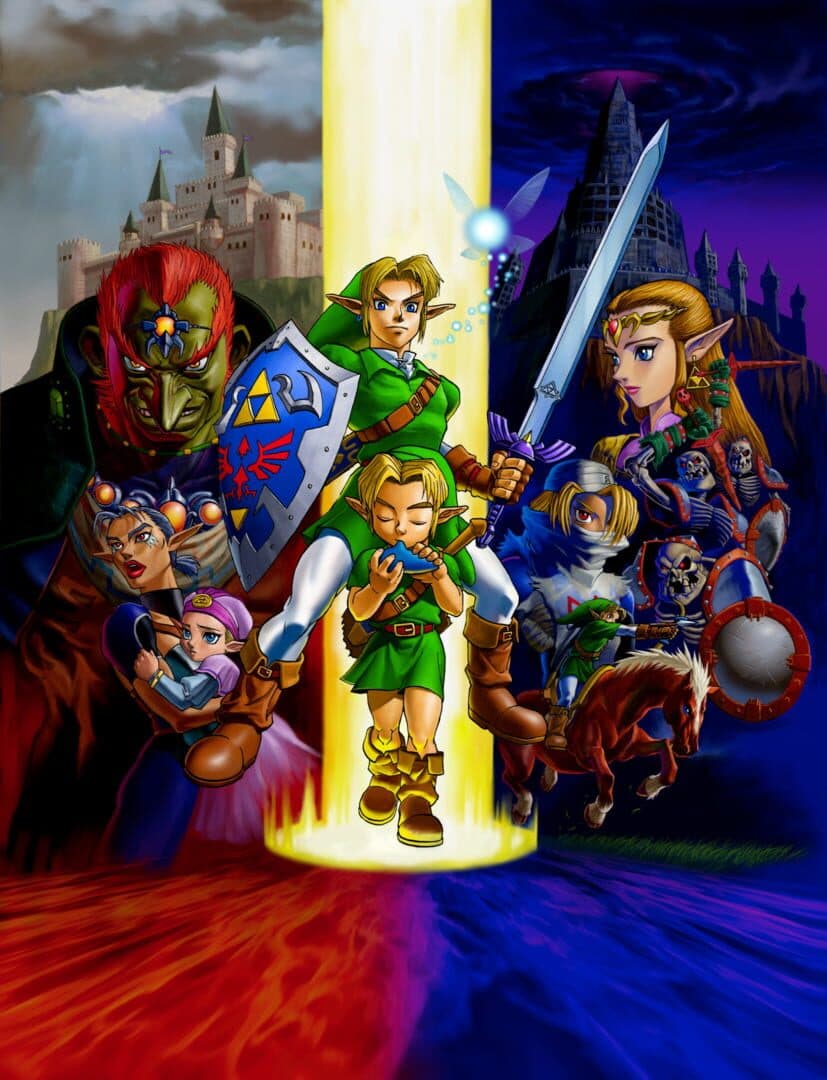
I watched that Nintendo Direct teaser for The Legend of Zelda: Ocarina of Time on Switch 2 with the same conflicted excitement I reserve for returning to my childhood home after twenty years. Link’s new model looked sharp. The lighting had that modern, almost painterly quality. And then, somewhere between the hype and the frame-by-frame analysis, Nintendo silently edited their own marketing copy and stripped away the words “full remake.” No press release. No explanation. Just a quieter description where bolder language used to live. That tiny edit feels bigger than any cinematic trailer because it forces a question I can’t answer yet: what are we actually buying in 2026?
Table of Contents (6)
When “Full” Disappears, What Replaces It?
Let’s get one thing straight: a stealth wording change on a product page does not automatically mean we’re getting a lazy remaster instead of a ground-up rebuild. Nintendo is notoriously paranoid about language. They treat marketing copy with the same precision they apply to Mario’s jump physics. Removing “full remake” could simply be an internal legal or retail caution. Maybe someone realized the phrase implies a scope they’re not ready to legally defend. Maybe it’s a localization cleanup. Maybe the original Japanese wording never carried that emphasis, and the English page was quietly aligned. These are all boring, reasonable explanations.
But boring explanations don’t feel true when you’re staring at a twenty-eight-second teaser with no gameplay. The same industry that confidently calls projects like Resident Evil 2 a “full remake” knew exactly what that phrase signaled: new engine, new geometry, new systems, same soul. When Nintendo backpedals on that language without clarifying what replaces it, the absence becomes a shape. It suggests they’re either unsure of the final scope themselves, or they’re deliberately widening ambiguity to under-promise and over-deliver. Both possibilities are classic Nintendo, and both make me deeply uneasy for completely different reasons.
What this edit cannot mean is a guaranteed downgrade. There is no evidence that this remake has suddenly shifted from a rebuild to a texture-swap. The trailer still shows a visual overhaul far beyond the Nintendo 64 original or the 3DS port. But the removal of “full remake” does mean we can no longer assume anything about the architecture underneath those pretty textures. Is this a ground-up rebuild? A heavily modified original codebase? Something closer to Wind Waker HD, where the bones stayed the same but the skin got a gorgeous new fit? Nintendo isn’t saying. And that silence is the entire story right now.
The Visuals Promise Everything the Text Won’t
The teaser gave us a redesigned Link standing in familiar spaces that looked dramatically more realistic than the toy-like aesthetic of the 1998 original. Some fans immediately celebrated the maturity of it, comparing the visual jump to the kind of overhaul Square Enix attempted with modern remakes. Others felt a sharp pang of loss. The original Ocarina of Time had a specific personality-slightly exaggerated, warmly cartoonish, unmistakably Nintendo. Link’s original model communicated emotion through broad gestures and big, expressive eyes. If this new direction pushes too hard toward realism, we risk trading iconic charm for generic fantasy gloss.
This is where my personal conflict sharpens. I want the Switch 2 to justify its hardware leap. I want Hyrule Field to feel vast and atmospheric, not like a polygonal lobby connecting dungeons. I want the day-night cycle to carry actual weight instead of feeling like a cosmetic flipbook. I want Castle Town to bustle with life instead of hosting six identical NPCs reciting the same line. All of those desires require visual and systemic modernization. But modernization without restraint is how you end up with a game that looks like Ocarina of Time but feels like a fan project that missed the point.
We still have not seen gameplay. That is the wound that won’t close. A cinematic trailer can hide an infinite number of sins. It can hide reused collision data from 1998. It can hide archaic Z-targeting that feels stiff in 2026. It can hide whether Navi still screeches “Hey!” every twelve seconds with no option to shut her up. The visual splendor is undeniable, but without seeing Link draw the Master Sword, swing it, and interact with a modern physics system, the graphics are just wallpaper. And wallpaper is exactly what I’m afraid of if Nintendo is retreating from the “full remake” label because the interactivity hasn’t kept pace with the art.
The Ocarina of Time I Want Doesn’t Exist Yet
The community debate around this remake is split cleanly down the middle, and I genuinely sympathize with both sides. On one hand, you have the preservationists. They argue that the 1998 original is a sacred text, that every dungeon layout and dialog quirk is part of gaming history, and that the best possible remake is the one that gets modern players to experience the original design without the friction of a twenty-year-old interface. They look at Wind Waker HD as the gold standard: quality-of-life upgrades, faster travel, better inventory, but the same heart beating underneath.
On the other hand, you have the architects. They look at the original and see wasted potential. Why does Princess Ruto have so little agency in her own dungeon sequence? Why do save points teleport you back to the beginning of an area instead of letting you resume exactly where you left off? Why is Hyrule Field, the literal center of the world map, an empty green disc with nothing to do? Why does the day-night cycle require standing still and waiting? These aren’t nostalgic quirks to preserve; they’re design limitations that a Switch 2 remake should absolutely address. The architects want selective expansion-new side quests, revised dialogue that doesn’t read like a rushed 1998 localization, more life in Kokiri Forest, and reasons to explore beyond the critical path.
I hover somewhere between these camps, and it’s an uncomfortable place to stand. I want the Water Temple to keep its reputation for brilliance, but I don’t want to pause the game seventeen times to equip and unequip iron boots. I want the story to hit the same emotional beats, but I wouldn’t mind if Ruto got a few extra scenes that made her more than a sass-delivery device trapped in ancient design. The danger is that Nintendo, having removed the “full remake” promise, might now split the difference in the worst possible way: enough changes to annoy purists, not enough changes to satisfy modern players. That is the Star Fox Zero trap. That is what happens when a company knows it needs to “update” a classic but lacks the conviction to fully commit to either preservation or reinvention.
Every Remake Walks a Tighter Rope Than You Think
We have recent blueprints for how to do this right. Capcom’s Resident Evil remakes-particularly RE2 and RE4—are masterclasses in rebuilding from scratch while honoring intent. They changed camera angles, enemy placement, level geometry, and even boss mechanics. What they preserved was tension, pacing, and identity. You never doubted you were playing Resident Evil, even when the experience was wildly different from the PlayStation originals. That is the standard a “full remake” should aspire to.
Then you have Square Enix’s efforts, which prove that throwing modern engines at an old game doesn’t guarantee success. Sometimes the new visual density smothers the original’s clarity. Sometimes the expanded story bloats what was once elegantly simple. Nintendo has the resources to match Capcom’s quality, but they also have a history of being precious with legacy characters to the point of paralysis. Link has never starred in a ground-up remake this ambitious, which is exactly why that missing “full” stings.
Nintendo’s own recent history only sharpens the ambiguity, because they have publicly walked both roads. The Legend of Zelda: Link’s Awakening in 2019 was a genuine ground-up remake—new engine, new art direction, a diorama aesthetic that rebuilt a Game Boy classic from scratch. Metroid Prime Remastered in 2023 went the other way: a gorgeous visual overhaul layered onto the original’s existing structure and design, the very definition of a remaster rather than a rebuild. Both were celebrated, but they are not the same product, and they did not carry the same expectations or, crucially, the same price. When Nintendo quietly deletes “full remake,” the real question becomes which of those two precedents Ocarina of Time is about to follow—and which one we are being asked to pay full Switch 2 money for.
Wind Waker HD taught us that Nintendo knows how to polish without betraying. But Wind Waker HD was a GameCube game getting a second wind on Wii U. It was already modern in structure. Ocarina of Time is not. It’s a Nintendo 64 adventure built on rudimentary AI, aggressive fog, and design assumptions that were outdated by the GameCube era. If this Ocarina of Time remake is anything less than a fundamental mechanical overhaul, we will feel it within the first hour. The question is whether Nintendo is retreating from the “full remake” label because they know it isn’t one, or because they’re afraid of the expectations that label creates.
A Player-First Checklist for the Next Reveal
Since Nintendo has made us detective, here is exactly what I’m looking for to resolve this tension. First, watch the language. If Nintendo starts using words like “enhanced,” “faithful,” or “classic experience,” that signals preservation over reinvention. If they use “rebuilt,” “reimagined,” or “from the ground up,” we’re likely looking at the systemic overhaul fans like me are hoping for. Words matter. They knew exactly what “full remake” meant, which is why they removed it.
Second, look for gameplay systems, not just landscapes. I want to see whether Z-targeting has been modernized. I want to see if Link can jump or climb with the freedom of Breath of the Wild, or if he’s still locked to 1998 animation logic. I want to see whether items are mapped intelligently or whether we’re still pausing to equip the hover boots every ten seconds. If the next footage is another moody cinematic with no HUD, no combat, and no inventory, that absence speaks volumes.
Third, match the “faithful” signals against the actual build. If Nintendo insists this honors the original, check whether that means identical dungeon layouts with prettier textures, or keeping the emotional arc while modernizing the path. There is a massive difference between faithful-to-memory and faithful-to-code. I know which version I’m paying for.
The Uncomfortable Middle
Here is the contradiction I keep circling back to. I am terrified that this remake will be too safe—a beautiful but hollow reskin that banks on nostalgia while delivering the same rigid design I can already emulate on my Switch. And I am equally terrified that it will be too different, a modernized action-RPG wearing the skin of a memory I cherish. The removal of “full remake” has not clarified which nightmare is more likely. It has simply confirmed that Nintendo is not ready to promise either.
I want to believe the Switch 2 can deliver the definitive version of this game, one that stands alongside the original without replacing it. But belief requires evidence, and right now all we have is a shorter adjective and a longer silence. I’m left with the same uneasy tension—half thrilled, half suspicious, unable to look away. If the next showing brings gameplay that matches the visual ambition, I will forget this wording ever changed. But if we get more cautious language and no HUD footage, then we’ll know exactly why “full” had to disappear. And that will hurt more than any Navi prompt ever could.
FinalBoss // Gear
Level up your setup
01Retro consoleson Amazon→028BitDo controllerson Amazon→03Capture cards (Elgato & more)on Amazon→04Discounted game keyson Kinguin→
Affiliate links · As an Amazon Associate, FinalBoss earns from qualifying purchases.
Want to Level Up Your Gaming?
Get access to exclusive strategies, hidden tips, and pro-level insights that we don't share publicly.
Ultimate Gaming Strategy Guide + Weekly Pro Tips