
Table of Contents (8)
The Night I Realised I Was Letting Metacritic Ruin My Fun
I was doomscrolling Metacritic on my phone at 1AM – like a very normal, very healthy person – when it hit me. Hyrule Warriors: Age of Imprisonment, high 70s. Kirby Air Riders, high 70s. Pokémon Legends: Z-A, high 70s. Metroid Prime 4: Beyond, high 70s. A neat little cluster of “good, not great” slapped across some of Nintendo’s biggest series, and my first instinct wasn’t to question the numbers. It was to ask myself: “Is Nintendo slipping… or am I just getting old and bitter?”
I grew up in the “everything Nintendo touches is magic” era. Super Mario Galaxy, Brawl, random shovelware that came free with the Wii – it all ripped. My standards obviously weren’t refined back then, but the joy was real. So when I see four big Nintendo releases landing in that dreaded 76–79 zone, the internet discourse machine says, “See? The golden age is over.”
But here’s the thing: I’ve actually played these games. I’ve sunk stupid hours into Kirby Air Riders. I pushed through the weird pacing of Metroid Prime 4. I did the Lumiose grind in Pokémon Legends: Z-A, and I’ve bathed in bokoblin blood in Age of Imprisonment. And I’m increasingly convinced this “sub-80 crisis” is more about genre ceilings, design choices, and reviewer expectations than any real collapse in quality.
Meanwhile, Pokémon Pokopia – a cozy spin-off – strolls in with a Metacritic average hovering in the high 80s and suddenly becomes “the highest-rated Pokémon game ever” for a minute. Reviewers are calling it one of the best spin-offs Game Freak has ever touched. Fans are staring at ranking charts and going, “Wait, this and Pokémon Y are the franchise darlings?” The whole thing exposes how arbitrary these numbers can be.
I’m not here to say “scores are meaningless” and pretend I don’t compulsively check them. I am saying that using a cluster of high-70s Nintendo games as evidence of some catastrophic decline is lazy as hell. The reality is way messier, and honestly, a lot more interesting.
Metacritic Is A Vibe Check, Not A Quality Scale
Before diving into the games, it’s worth grounding this in what those numbers actually represent. A Metascore in the high 70s basically means: “Most critics think this is good, with caveats, and a few people bounced off it harder than expected.” It doesn’t mean “mediocre trash.” It doesn’t mean “Nintendo has fallen from grace.” It means the game rubbed up against some combination of:
- Genre limitations (musou repetition, racer campaign length, etc.)
- Series baggage (decade-long hype, franchise fatigue, nostalgia wars)
- Design choices that are divisive instead of universally safe
- Performance or pacing issues that matter more to critics than players
What really exposes the gap is the user scores. Metroid Prime 4: Beyond sits around an 8+ from players. Pokémon Legends: Z-A hovers around that same mark. Kirby Air Riders’ user score punches way above its critic Metascore. The people actually living with these games, not racing through them pre-embargo on deadline, tend to land higher.
So when I look at Nintendo’s recent “problem children” on Metacritic, what I see isn’t a quality freefall – it’s a collision between what these series actually are and what critics (and a chunk of the audience) expect them to be in 2026.
Hyrule Warriors: Age of Imprisonment – A Better Game Trapped By Its Own Genre
Let’s start with the easy one: Hyrule Warriors: Age of Imprisonment. Its Metascore floats in that familiar high-70s band, neck and neck with previous Hyrule Warriors entries. On paper, that suggests “more of the same.” In practice, I think that’s bullshit.
I’ve played every Hyrule Warriors release, and Age of Imprisonment is the most polished of the bunch. It finally targets 60fps and actually holds it most of the time, even in handheld. That alone puts it miles ahead of Age of Calamity, which could barely hang on to 30fps and regularly nosedived into a slideshow when the screen got busy. Going back now feels like trying to game on a toaster.
Story-wise, Age of Imprisonment also ditches the bizarre alternate-timeline copout and commits to being a proper canonical prequel to Tears of the Kingdom. The price for that is a less flashy roster – fewer timeline-shenanigan characters, more grounded “who the hell is this knight again?” types – but the trade-off works. The narrative actually matters instead of feeling like a fanfic fever dream.
The real ceiling here isn’t quality, it’s genre. This is still a musou game. You are still mowing down thousands of brain-dead enemies with ridiculous power moves. The Koei Tecmo dev diaries basically admit it’s “fan-service first,” and that’s fine – that’s the assignment. But are critics ever going to hand a 9 or 10 to a Warriors-style game without torching their credibility with readers who equate “depth” with “I never see the same animation twice”?
You can see the trap: if Age of Imprisonment fixed performance, tightened story, and refined systems, yet still sits basically at the same Metascore as its janky predecessor, maybe the number is hitting a ceiling the game already broke through. From where I’m standing, this is a musou doing almost everything it can right. Expecting it to review higher than, say, Wind Waker HD just because it runs better now is disconnected from reality.
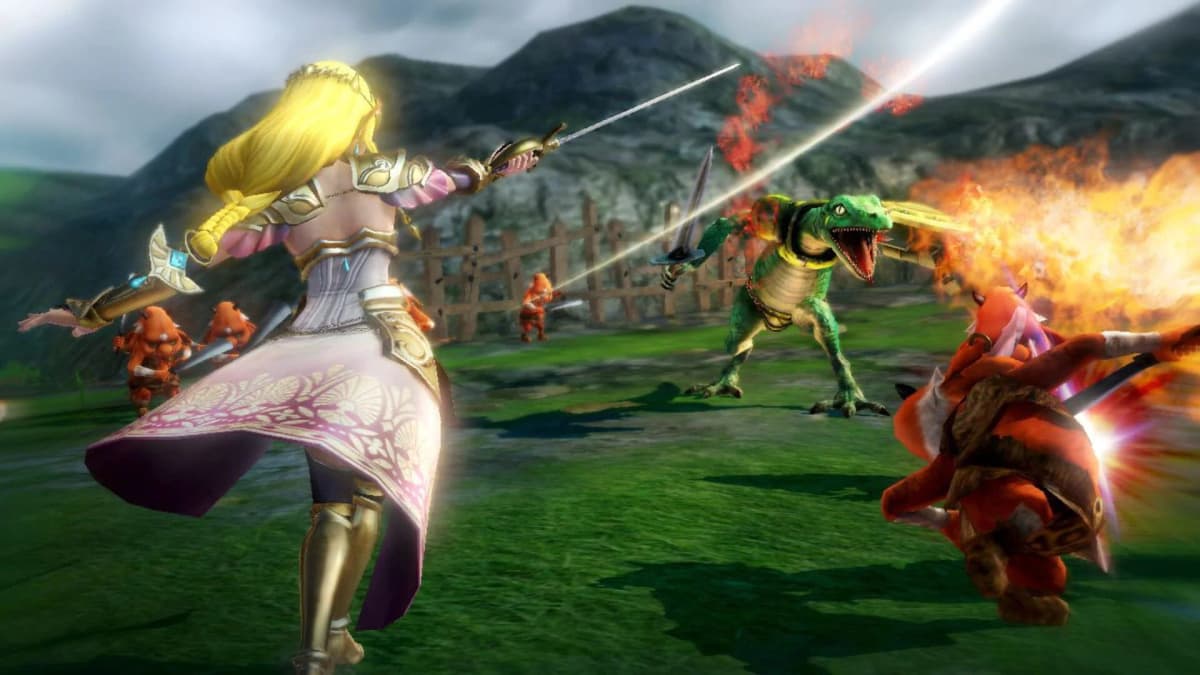
If you point to this game’s 70-something and yell “Nintendo has lost it,” you’re not really talking about quality. You’re talking about your own refusal to accept what a Warriors game can and can’t be. That’s on you, not on the Metascore.
Kirby Air Riders – The 79 That Plays Like An 89
I’m more annoyed about Kirby Air Riders than any of the others, because this is the one I’ve completely lost weeks of my life to. I’m over 150 hours deep. This is, no joke, one of my favorite Switch 2 exclusives full stop. And seeing it chilling in the high 70s while the user score climbs into the high 8s genuinely makes me side-eye a lot of critic takes.
Here’s why it works for me: it feels done. No “don’t worry, the battle pass will fill this out later.” No barebones track list propped up by a promise of future DLC. Air Riders ships with three distinct core modes – Air Ride, Top Ride, and the eternal monster that is City Trial – and each of them is robust enough to be the main course.
City Trial alone is a masterclass in replayable design. Yeah, it’s one big map. But the constant chaos of power-ups, sabotage, build paths and the over 50 possible Stadium events at the end keeps it from feeling stale. One run you’re hoarding top speed for a drag race. The next, you’re desperately trying to find enough defense upgrades because the finale is a boss rush from hell. It’s the kind of mode you boot up “for a couple of rounds” and then realise you’ve lost an evening.
The mechanics are classic Kirby: deceptively simple. Anyone can pick it up and steer, but the skill ceiling is way higher than it looks. Learning each machine’s drift nuances, item timings, and map routes is where it sinks its hooks in. You don’t need to study combo videos just to go online, but you will feel yourself naturally improve just by playing, and that’s always been peak Nintendo design to me.
So why did critics land in the 7s? I can guess. The on-screen chaos is a lot; if you’re reviewing on a deadline, trying every mode in a few sittings, it can be overwhelming or even headache-inducing. There’s no heavy story campaign to wax poetic about. It’s not a live-service game with a five-year roadmap to point to. It’s “just” a mechanically rich, content-complete arcade racer that shows its true value over dozens of hours, not the first ten.
In other words, it’s structurally set up to be underrated. A game like this doesn’t scream “important” on a score sheet, but I promise you it’s going to outlive half the 90+ darlings we all forget about in twelve months. Calling this a “79 game” in any meaningful way just doesn’t square with what it actually offers once it sinks its teeth into you.
Pokémon Legends: Z-A – The Plateau No One Wants To Admit
Now for the awkward one. I don’t think Pokémon Legends: Z-A is secretly a misunderstood masterpiece. I’ve put over 100 hours into it, and on my own personal scale, the base game is a 7/10. With the DLC, I’d honestly nudge it down to a 6. Not because the new content is unplayable, but because it leans into all the worst habits this series has picked up.

The biggest sin is the Lumiose City lock-in. Legends: Arceus felt like an experiment in opening Pokémon up – big zones, field exploration, a sense of moving through a world instead of a diorama. Z-A clamps that back down and chains you to a single urban area for basically the entire runtime, plus DLC. Outside of one late-game area that you can’t even catch Pokémon in, it’s alleyways, plazas, and sewers on repeat.
Visually, the art direction is actually great. I like where they’re going with the style. But instead of using that style to show us forests, caves, waterfalls, and weird out-of-the-way biomes, it mostly gets wasted on slightly different blocks of the same city. It feels like a cost-saving decision more than a creative one, and you can feel that in your bones after a few dozen hours.
Then there’s the lack of voice acting, which would be less annoying if the cutscenes weren’t blocked like a fully voiced RPG. You can see where a line delivery should land; you get nothing but text and music. Climactic moments just… sit there. Combine that with a grind-heavy DLC structure that pads things out instead of enriching them, and yeah, a high-70s Metascore feels pretty fair.
But here’s where the narrative of “Nintendo is declining” breaks apart: this isn’t some shocking new regression. This is where mainline Pokémon and its adjacent projects have been hovering for years. Sword and Shield around 80, Scarlet and Violet way lower thanks to performance, remakes bouncing in the low-to-mid 70s. Z-A sliding in around 78–79 isn’t a collapse, it’s the continuation of the plateau.
And crucially, players seem to be a bit more forgiving than critics here. User scores land around that solid-8 range. People like the battle system, the new Megas, the writing, the soundtrack. They’re just tired of the structural half-measures. So no, this one doesn’t bail Nintendo out of criticism – it deserves the side-eye – but it also doesn’t prove a sudden nosedive in overall quality. It proves Pokémon is still stuck in its own comfort zone.
Metroid Prime 4: Beyond – Victim Of Its Own Legend
Metroid Prime 4: Beyond is the game I was most nervous about. Retro’s involvement, the long restart, the years of silence – this was never just a shooter sequel, it was a referendum on whether Nintendo could still deliver a capital-E Event for a core franchise past its prime (no pun intended).
The opening hours genuinely had me. The atmosphere is nailed. The gunplay is tight. Visors feel great, scanning is back to being interesting instead of homework, and the early environments ooze that lonely sci-fi dread the series thrives on. On a pure technical and aesthetic level, Prime 4 is absolutely a “Nintendo still has it” statement.
Then you hit Sol Valley and the vibe shifts. Hard. Suddenly the game is obsessed with NPCs. Not just the occasional lore dump – whole quest chains, new characters who feel like they wandered in from a different franchise, pacing that stops being “isolated bounty hunter unravels mystery” and starts being “please run errands in this hub for a bit.” The tonal whiplash is real, and I absolutely get why a chunk of players bounced off here. I half did too.
Add to that an ending that, without spoiling it, manages to land emotionally flat and lore-awkward at the same time. It’s not quite Bayonetta 3-level character assassination, but it has the same energy: a dev team that clearly cared about individual pieces of the project, but feels like it ran out of steam or consensus on how to stick the landing. The result is a game that’s incredibly polished in moment-to-moment play but structurally uneven.
A high-70s Metascore here makes sense to me, not as a verdict on quality, but as a reflection of a deeply split reaction. A lot of critics and players still rate it 8 or 9. A noticeable minority are just… done with it by the final act. The user score sitting comfortably above the critic average backs that up: if Prime 4 clicks for you, it really clicks.

And again, context matters. This game has already sold around a million copies across Switch and Switch 2, which isn’t record-shattering but absolutely isn’t a bomb either, especially for Metroid. That’s not the profile of a disaster. It’s the profile of a high-quality, divisive sequel saddled with expectations no game could fully meet. Calling it proof of Nintendo’s decline because it didn’t hit a 90 on an aggregator is lazy shorthand for a much more specific problem.
Genre Ceilings, Expectation Traps, And Why Pokopia Broke My Brain
The more I think about these scores, the more I see patterns instead of problems. Musou spin-offs almost never break into the upper 80s because repetition is baked into the genre. Arcade-style racers rarely climb that high unless they’re reinventing the wheel or dripping prestige. Late-sequel shooters are judged not just against their peers, but against a decade of nostalgia they can never beat.
Then along comes Pokémon Pokopia, a cozy life-sim spin-off made by Omega Force of all studios, pulling in high-80s across the board and briefly topping the entire franchise on Metacritic. Reviewers gush about the exploration, the replayability, the sort-of–Viva Piñata structure, while long-time fans look at the series ranking and go: “Wait, this outranks HeartGold/SoulSilver?”
That disconnect is exactly why I don’t panic when a Kirby racer or Metroid sequel lands in the 70s. Metacritic doesn’t measure “objective quality” – because that doesn’t exist – it measures a cluster of opinions distorted by surprise, fatigue, and genre bias. Pokopia benefits from low expectations and novelty. Z-A gets dinged for being another half‑step. Prime 4 pays for its own myth. Air Riders gets punished for being “just” a sick arcade racer that’ll quietly stay in rotations for years.
I’m not absolving Nintendo here. They absolutely make conservative choices, cut corners, and lean on brand loyalty. Legends: Z-A’s Lumiose prison is indefensible. The amiibo racer nonsense in Air Riders can get in the bin. But when people point at a run of 77–79 scores and scream about a company-wide quality collapse, I can’t take that seriously anymore. That’s not analysis, that’s scoreboard worship.
Where I Draw The Line With Scores Now
After living with these games, this is where I’ve landed: I’m done treating 80 as some magic purity threshold. A polished, confident “7 or 8 out of 10” from Nintendo is still better than most of the bloated, buggy open-world 9s I’ve trudged through from other publishers. I’m way more interested in how a game lands at its number than what the number is.
If a Metroid fan tells me Prime 4 left them cold because of Sol Valley and the ending, that’s useful. If a reviewer says they bounced off Kirby Air Riders because the chaos gave them a headache and they didn’t have time to learn City Trial, that’s useful too. A flat “78” with no context? That’s just noise.
So no, I don’t think Nintendo has secretly fallen into some “mid” era because a bunch of recent releases cluster under 80 on Metacritic. I think we’re seeing the limits of the score system, the friction of aging franchises, and the quirks of genres that don’t fit cleanly into hype cycles anymore.
What it’s changed for me is simple: I’ll still check the numbers, because I’m human and broken like that, but I refuse to let a 77 make my mind up for me. I look at footage, I read actually detailed reviews, I think about what I want from a game right now. That’s why I’m still queuing into Kirby Air Riders every week while Twitter argues about whether Nintendo’s doomed because one of its best musou spin-offs “only” scored a 7-point-something.
If anything is declining, it’s our willingness to think past a color-coded average. The games? They’re still more than worth the time. The numbers just aren’t telling the whole story anymore – if they ever did.
FinalBoss // Gear
Level up your setup
01Best-selling Switch 2 gameson Amazon→02Switch 2 accessorieson Amazon→038BitDo controllerson Amazon→04Discounted game keyson Kinguin→Affiliate links · As an Amazon Associate, FinalBoss earns from qualifying purchases.
Want to Level Up Your Gaming?
Get access to exclusive strategies, hidden tips, and pro-level insights that we don't share publicly.
Ultimate Gaming Strategy Guide + Weekly Pro Tips