
This is not a story about a broken controller becoming officially broken. Everyone with a launch-era Switch already knew Joy-Con drift was real. The meaningful change is that a major European regulator has now put a €35 million price tag on Nintendo’s handling of that defect, and specifically on the gap between when the company allegedly knew and when consumers were properly told. That distinction matters more than the stick itself.
France’s consumer fraud watchdog, the DGCCRF, said on June 8, 2026 that Nintendo of Europe agreed to pay a €35 million fine after investigators concluded the company engaged in misleading commercial practices tied to Joy-Con drift. The regulator’s position is straightforward: Nintendo was aware of the defect as early as 2018, but did not begin communicating about it until 2020, after a complaint from French consumer group UFC-Que Choisir. According to the DGCCRF, the defect came from joystick wear and dirt buildup, causing movement to register without user input. Nintendo accepted the sanction rather than mounting a public fight, while disputing any intentional wrongdoing.
Table of Contents (5)
This fine is about delayed disclosure, not whether drift exists
That is the part worth underlining, because it is where most surface-level coverage stops too early. “Nintendo fined over Joy-Con drift” is true, but incomplete. The French case is not primarily a technical ruling that controllers wore out. It is a consumer-protection ruling about what the company did after it allegedly knew there was a systemic issue.
The DGCCRF’s finding is that players were not informed quickly enough, and that partial or delayed communication led some of them to spend money they might not otherwise have spent. In plain terms: if a company knows a defect is widespread and the public does not, every replacement sale sits under a cloud. That is why the “misleading commercial practices” label matters more than the engineering diagnosis. Wear and contamination inside an analog stick is a hardware problem. Letting consumers discover that pattern the expensive way is a different category of problem.
There is also an uncomfortable detail here that PR would rather keep blurry. By 2020, Joy-Con drift was not some obscure forum complaint. It was already a reputational scar on the Switch. So the French regulator is effectively saying the real failure was not ignorance. It was response timing.
The French regulator is drawing a line on “you should have told people sooner”
Consumer law cases like this usually get flattened into simple morality plays: company bad, watchdog good, everyone goes home. The more useful reading is structural. Regulators are increasingly less interested in whether a defect exists in the abstract and more interested in whether a company’s communication practices shifted the cost of that defect onto consumers.
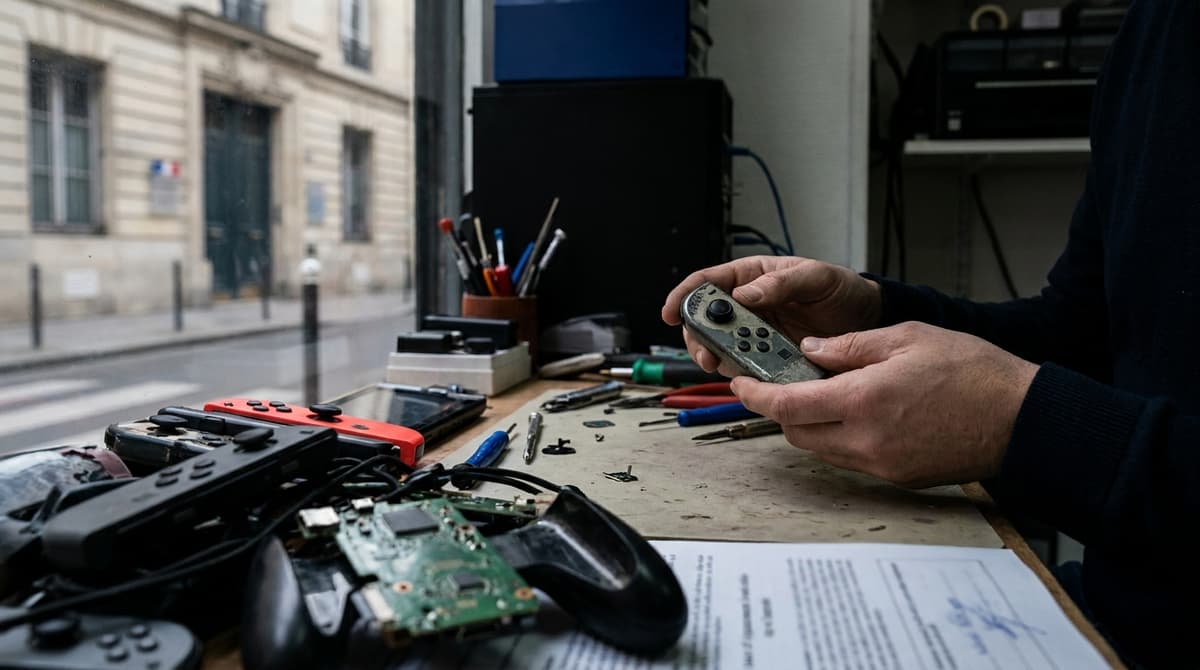
That is why this case travels beyond Nintendo. Hardware defects are common enough. Stick drift, battery degradation, thermal wear, trigger failures, warped housings-none of this is exotic in consumer electronics. What changes the legal exposure is the paper trail between internal awareness and public disclosure. If French authorities are willing to treat delayed transparency as a €35 million issue, every platform holder and peripheral maker operating in Europe should be rereading its customer-support language right now.
The historical anchor is obvious. Joy-Con drift spent years in that familiar games-industry limbo where a problem is big enough to be a meme, expensive enough to frustrate players, but diffuse enough that no single announcement forces accountability. France just turned the meme into an enforcement action. That does not erase the years of drift complaints, but it does reframe them from “annoying hardware reputation problem” into “potentially sanctionable disclosure failure.”
What Nintendo appears to owe French consumers now
The brief public reporting is stronger on the fine than on the exact operational remedy, which is worth being honest about. The core obligation is clear: Nintendo of Europe has accepted a sanction tied to misleading commercial practices in France and is expected to comply with French consumer-protection requirements going forward. The public material indicates this is not just a cash payment; it is also about correcting how defect information is communicated.
What can be said with confidence is this: French authorities expect clearer disclosure around known defects and repair pathways, not vague support-page hide-and-seek. If the detailed compliance terms are not fully public yet, the practical standard is still obvious. A player in France should not have to piece together from Reddit, support forums, and old headlines whether a drifting Joy-Con qualifies for service, whether the issue is recognized, or whether buying a replacement is the only option.
That uncertainty itself has been part of the problem for years. Once a defect becomes common knowledge among users but remains inconsistently stated by the manufacturer, support becomes a lottery of geography, timing, and how stubborn the customer is. Regulators hate that. They should.
The practical player check: repair first, purchase later, document everything
For players, the immediate lesson is less dramatic than the headline and more useful. If a Switch owner in France is dealing with drift now, the smartest move is not to impulse-buy another pair of Joy-Cons. It is to create a clean record first.
- Record the symptom clearly: video of stick movement without input helps.
- Log the timeline: when the issue started, how often it occurs, and whether it affects one or both sticks.
- Keep proof of purchase if available, but do not assume lack of receipt automatically ends the conversation.
- Check Nintendo’s current French support guidance before paying for replacements.
- Save screenshots of any support-page wording in case policies change later.
The reason to be methodical is simple. This case is about delayed disclosure and avoidable consumer cost. Documentation makes it easier to show that the defect existed, that service information was unclear or incomplete, and that a replacement purchase may not have been the necessary first step. Even outside France, that is the right habit whenever a manufacturer-known defect sits in the background.
The other practical question is when replacement makes sense anyway. If a controller is old, heavily used, physically damaged, or already outside any realistic service path in your region, a new purchase may still be the efficient answer. But that choice should happen after checking repair options, not before. The whole point of the French action is that consumers were allegedly nudged toward spending money without timely, complete information.
The real unanswered question is who else gets pressured next
Nintendo is the headline because Joy-Con drift was large, visible, and culturally impossible to bury. The broader issue is whether this becomes a template. If other European regulators take the same view, the industry will have to treat defect disclosure less like reputation management and more like compliance risk. That is a healthier standard than the one gaming hardware has enjoyed for most of the Switch era.
The question I would put to Nintendo’s PR team is not whether drift was frustrating. That answer is already written. It is whether the company now has a uniform Europe-wide threshold for publicly flagging systemic hardware faults once internal data suggests a recurring defect. If that threshold still depends on local legal pressure, then this fine is expensive but not transformative.
What to watch next is fairly specific. First, whether French-facing Nintendo support pages and repair language become more explicit in the near term. Second, whether any other European authority opens or expands similar scrutiny. Third, whether future Nintendo hardware support policies get more proactive the moment a defect pattern starts to harden. That is where this story stops being about an aging Switch problem and starts becoming a test of whether one of gaming’s most careful companies has learned the right lesson from a very public €35 million reminder.
FinalBoss // Gear
Level up your setup
01Racing wheels (PC & PS5)on Amazon→02High-refresh gaming monitorson Amazon→03Gaming chairson Amazon→04Discounted game keyson Kinguin→
Affiliate links · As an Amazon Associate, FinalBoss earns from qualifying purchases.
Want to Level Up Your Gaming?
Get access to exclusive strategies, hidden tips, and pro-level insights that we don't share publicly.
Ultimate Gaming Strategy Guide + Weekly Pro Tips