
One of the most aggressive attempts to lock down a core combat mechanic in modern gaming has just been knocked back by the US government – and not on a technicality, but on the basic question of whether the idea was new at all.
The United States Patent and Trademark Office (USPTO) has issued a non-final rejection of every single claim in Nintendo and The Pokémon Company’s 2025 “summon character to fight” patent, the one widely seen as a future weapon in the Palworld dispute. The office’s own experts essentially concluded: this isn’t a protectable invention, it’s an obvious evolution of things that already existed.
Table of Contents (9)
Key takeaways
- The USPTO has rejected all 26 claims in Nintendo’s 2025 “summon and fight” patent in a non-final decision after a rare reexamination.
- The rejection is based on prior art and obviousness – not any analysis of video games like Pokémon or Palworld.
- This weakens Nintendo’s broader legal posture in the Palworld saga, even though it doesn’t touch the separate Japanese copyright case directly.
- The ruling sends a clear signal: patenting generic gameplay structures is getting harder, even for platform holders.
A rare rebuke from inside the patent system
This didn’t happen through a normal examination. The patent – covering a system where a player summons a secondary character that can auto-battle or be manually controlled — was granted in 2025. The reversal started when the USPTO’s director ordered an ex parte reexamination in late 2025, an extraordinary step the office takes only in a tiny fraction of cases.
Since 1981, roughly 15,000 such reexamination requests have been filed; only about 175 have been granted. For the director to greenlight one means the office itself suspected it had made a mistake in granting the patent in the first place.
Following that reexamination, an examiner issued a non-final rejection in early April 2026, knocking out all 26 claims. “Non-final” in patent language does not mean “minor.” It means the patent holder has a last chance to argue or amend. Unless Nintendo can successfully persuade the examiner or win on appeal, the patent will effectively be dead in its current form.
Adding to the procedural mess: reporting indicates Nintendo even missed an initial response deadline at one stage of the process, which does not help the optics around how robust they believed this patent really was.
What Nintendo was actually trying to own
The patent at the center of this isn’t a broad “monster collecting” claim. It’s more specific, but still aimed squarely at core battle flow. Boiled down, the document describes:
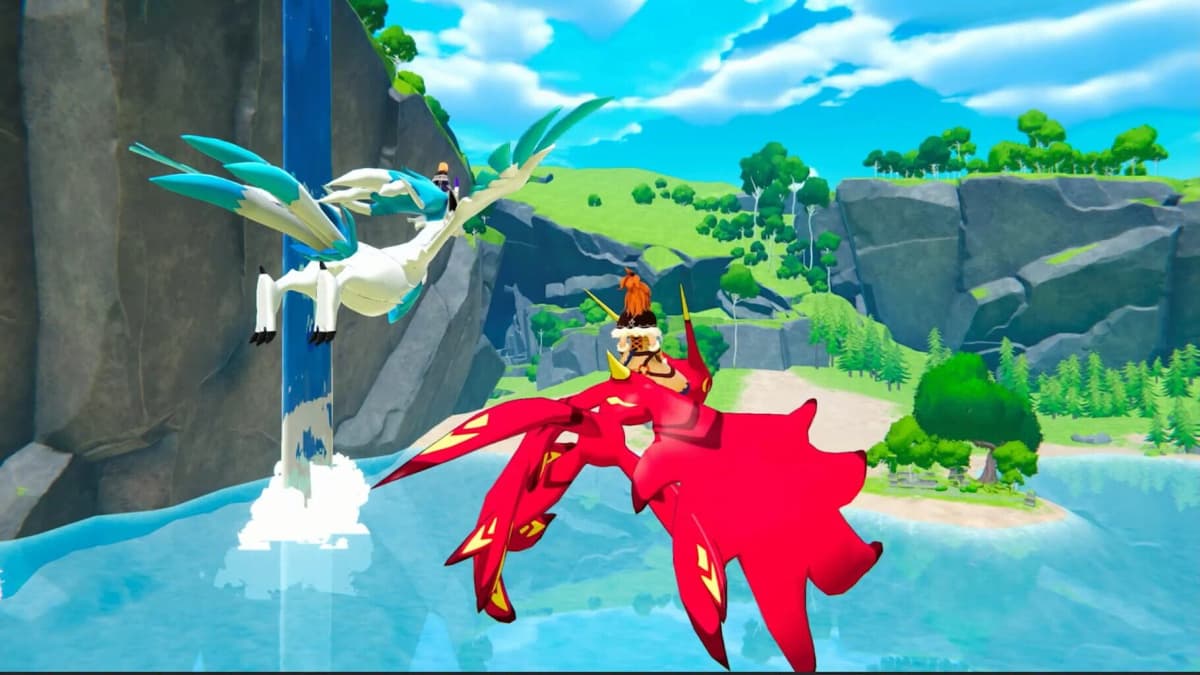
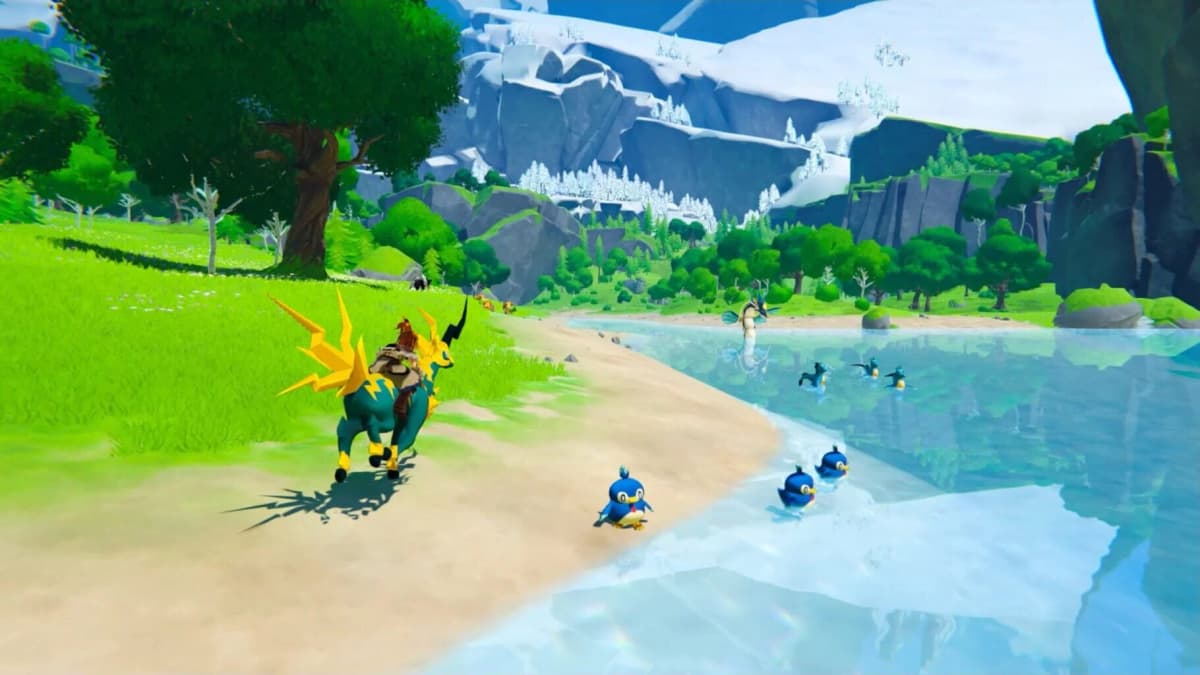
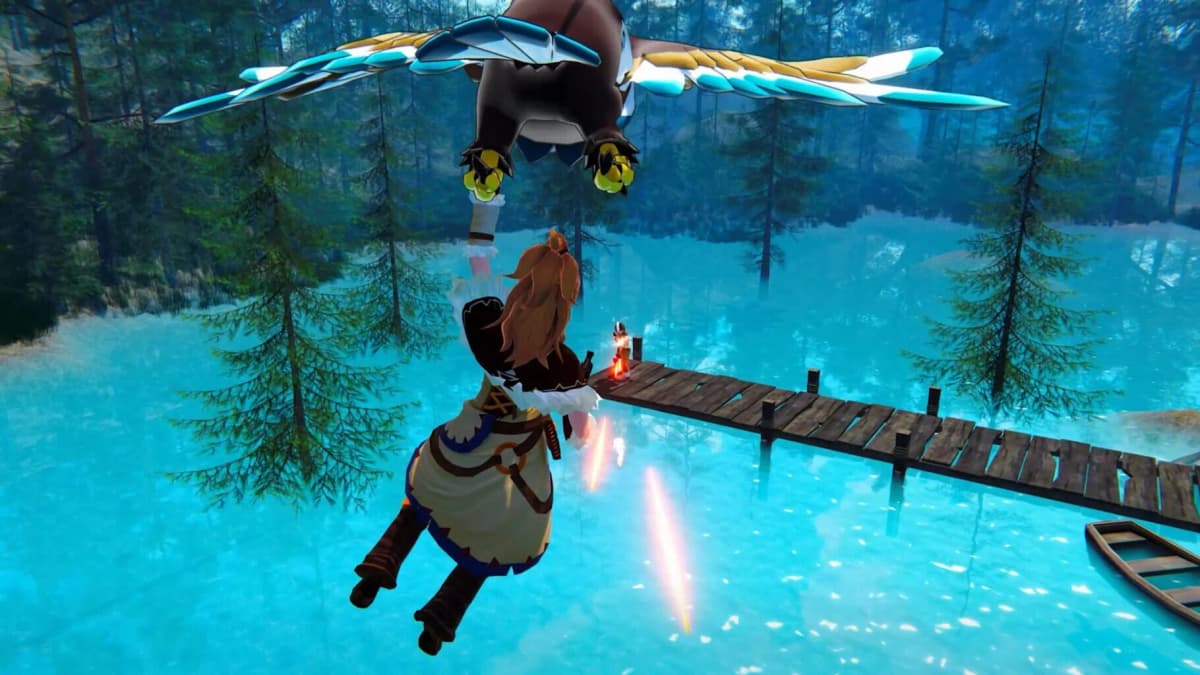
- A main player character able to summon a sub-character (think: creature, ally, or unit) into the field.
- The sub-character then fights automatically based on internal logic, environmental conditions, and enemy state.
- The player can optionally take direct control or issue more specific commands, blending automation and input.
- Various UI and state-management elements governing this switch between auto and manual, position-based attacks, and context-sensitive actions.
If you play RPGs, MOBAs, or action games, none of that sounds revolutionary. That’s the point. Nintendo’s filing tried to package a fairly generic “AI companion + optional direct control” loop into a 20-year legal monopoly, behind a wall of specific diagrams and scenario language.
The uncomfortable question for Nintendo is simple: what is the genuine technical innovation there that wasn’t already present in a decade-plus of party-based RPGs, pet systems, and AI companion mechanics? The USPTO’s answer, for now, is “nothing patentably new.”
Why the USPTO tore it down: prior art and obviousness
Crucially, the examiner did not sit down and play Pokémon, Palworld, or any other game. Patent examiners work from documents, not YouTube compilations. The rejection rests entirely on written “prior art” — earlier patent applications and grants that describe overlapping systems.
According to multiple legal breakdowns, the office cited at least four earlier patents as prior art. Some were from other companies; some were from Nintendo itself. In combination, they were found to anticipate or make obvious every one of Nintendo’s 26 claims:
- Summoning a secondary character to act in the world.
- Using AI to control that character’s attacks and movement.
- Allowing the player to override or refine that behavior.
- Updating states and UI to reflect control changes and actions.
In patent law, “obviousness” doesn’t mean “anyone could have thought of this.” It means that a person skilled in the field, starting from known systems, would find it an expected combination or evolution. That’s exactly how the examiner framed this mechanic: as an unsurprising aggregation of known ideas, not a discrete technical leap.
One particularly damaging detail is that Nintendo’s own earlier filings were part of the prior art matrix. When your new “innovation” can be built by stitching together your past patents, you have a problem arguing it’s non-obvious.
So what does “non-final rejection” really mean?
Legally, Nintendo is not out of moves. A non-final rejection opens a response window — typically about two months, extendable — where the company can:
- Amend claims to narrow the patent to a smaller, more defensible scope.
- Argue that the examiner misapplied or misinterpreted the cited prior art.
- Submit additional evidence or reasoning that their invention is distinct.
If that fails, there’s a ladder of appeals: to the USPTO’s internal appeal board, then potentially to federal court. But turning a complete 26-claim wipeout into a strong, enforceable patent is statistically difficult, especially in a reexamination context where the office has already admitted it may have erred by granting the patent.
Even if Nintendo salvages something, it will almost certainly be much narrower than what they initially filed — and narrower patents are harder to wield as general-purpose weapons against other studios.
Impact on the Palworld fight: posture, not a knockout
This patent has been widely discussed as part of Nintendo’s legal arsenal in its dispute with Pocketpair’s Palworld. It’s important to separate two different battlefields:
- Patent law (US): Protects specific technical implementations and methods. This is where the “summon and fight” patent lives.
- Copyright and unfair competition (primarily Japan in this case): Covers art, characters, music, story, and distinctive expression. This is where Nintendo has filed or threatened actions over Palworld’s creature designs and marketing.
The USPTO decision directly affects only the patent side, and only within the United States. Nintendo’s ongoing and potential cases against Pocketpair in Japan are rooted in copyright and related doctrines, not this US patent.
So this is not a legal “win” for Palworld in the sense of ending the fight. What it does is undercut a narrative Nintendo was clearly building: that it held a proprietary claim to the structure of summoning a creature to auto-battle with optional direct control. That argument now looks much weaker in any forum, legal or public, because the primary US institution in charge of vetting such claims has said the idea is not patentably unique.
It also matters strategically. A strong, broad US patent can be used as leverage even in negotiations that never reach court. A vulnerable patent under reexamination is less intimidating. Any lawyer on the other side will now point to the USPTO file history and ask why they should treat that mechanic as owned by anyone.
The bigger message: gameplay patents are on a shorter leash
Zooming out, this is another data point in a trend that matters to every developer working with familiar genre structures. Patent offices — especially in the US — are getting less tolerant of attempts to capture “vibes” of gameplay wrapped in specific flowcharts and pseudo-code.
We’ve already seen the debate play out around Warner Bros.’ Nemesis system patent, which many designers view as a chilling example of what happens when a publisher secures a broad claim over a structural gameplay idea. The Nintendo/Pokémon patent was moving in the same direction: not protecting a specific optimization or network trick, but a generalized loop for commanding AI allies.
The USPTO’s reasoning here is stark: if your claimed system can be assembled from known components already described in earlier filings — even if no one shipped them in exactly your way — you are at serious risk of an obviousness rejection. That puts a higher burden on big publishers to demonstrate real technical novelty, not just new ways of framing long-standing design patterns.
For indies and mid-tier studios, especially anyone dabbling in creature battlers, AI companions, or pet systems, this is quietly significant. It reduces the threat of being blindsided by a sweeping “you infringed our generic summon-battle patent” claim years after launch. Copyright and trademark fights aren’t going anywhere, but the room to experiment with familiar mechanics looks a little safer on the patent front today than it did when this Pokémon patent was first granted.
What to watch next
The next meaningful inflection point comes on Nintendo’s response deadline, roughly two months from the early-April rejection date (plus any extensions they request). Three things matter there:
- Do they narrow the claims? A heavily amended patent is a sign Nintendo is retreating to a smaller, less aggressive position.
- Do they push for appeal? An immediate, hard-nosed appeal would signal they still see this as a strategically vital asset, not just a nice-to-have.
- Does this patent resurface in future complaints? If Nintendo stops citing it in public or legal filings around Palworld-like mechanics, that will be a practical admission of how much value it’s lost.
Separately, watch whether other publishers now get more conservative about filing broad gameplay patents, or whether they try to thread the needle with more technically specific claims that still give them competitive leverage without triggering this kind of reexamination.
TL;DR
The USPTO has issued a non-final rejection of all 26 claims in Nintendo and The Pokémon Company’s 2025 “summon character to fight” patent, after a rare director-ordered reexamination found the mechanic obvious in light of earlier patents. That weakens Nintendo’s ability to claim ownership over a generic “summon a creature, let it auto-battle, optionally take control” loop and undercuts one potential legal angle in the broader Palworld dispute, even though the separate Japanese copyright case remains untouched. The real significance is systemic: it’s getting harder to patent core gameplay structures, and this decision will be cited the next time a big publisher tries to fence off a genre mechanic as if they invented it from scratch.
FinalBoss // Gear
Level up your setup
01Best-selling Switch 2 gameson Amazon→02Switch 2 accessorieson Amazon→038BitDo controllerson Amazon→04Discounted game keyson Kinguin→Affiliate links · As an Amazon Associate, FinalBoss earns from qualifying purchases.
Want to Level Up Your Gaming?
Get access to exclusive strategies, hidden tips, and pro-level insights that we don't share publicly.
Ultimate Gaming Strategy Guide + Weekly Pro Tips