
I went into Nioh 3: Rise Of half-excited, half-worried. After Nioh 2 and then Team Ninja detouring into Wo Long and Rise of the Ronin, I honestly wasn’t sure if coming back to this series would feel fresh or just like a remaster of old tricks. About 40 hours later, after bouncing between a hulking Samurai tank and a hyper-aggressive Ninja glass cannon, sprinting across “open field” maps and getting deleted by headless cavalry more times than I want to admit, I can say it: this is the most confident, fully realized Nioh yet.
Table of Contents (14)
Key Takeaways
- Combat is still stance-based, fast, and brutally precise-but now split into two distinct styles: Samurai and Ninja, each with their own builds and skill trees.
- The new “open field” map structure hits a sweet spot between classic Nioh levels and a full open world, rewarding exploration without bloated filler.
- Systems like Arts Gauge, Ninjutsu, Guardian Spirits, Soul Cores, and Living Artifact stack into a dense but surprisingly approachable web of customization.
- Difficulty remains unapologetically punishing, but the structure and onboarding make Nioh 3 far more flexible and friendly to experimentation than past entries.
- Visuals are inconsistent and loot is still wildly bloated, but smart quality-of-life tweaks and superb core gameplay more than make up for it.
- Overall verdict: a ferocious, deeply satisfying evolution of the formula and, for my money, the best Nioh so far. Rating: 9/10.
Nioh 3: Team Ninja’s Last Decade in One Ruthless Package
My first impression of Nioh 3 was, “Oh, okay, this is just more Nioh.” There are shrines (your bonfire equivalents), Amrita (the souls you drop on death), stat-scaling weapons, shortcuts looping back on themselves, and the same unforgiving difficulty curve. On paper, it’s still the same soulslike spin you’d expect.
But after a few hours, the influences from Wo Long: Fallen Dynasty and Rise of the Ronin start to surface. The deflect-centric combat rhythm of Wo Long, the more open, exploratory structure of Ronin-Nioh 3 pulls those ideas in, reshapes them, and welds them onto its own stance-based DNA. It feels less like a sequel slapped together after DLC and more like a studio that wandered off for a few years, experimented, and then came back knowing exactly what it wants this series to be.
At its core, Nioh 3 is still a hybrid: part soulslike, part character action game, part historical fantasy. It owes as much to Ninja Gaiden, Tenchu, and Onimusha as it does to Dark Souls, and that blend is sharper here than it’s ever been.
Samurai vs. Ninja: Two Distinct Styles That Actually Matter
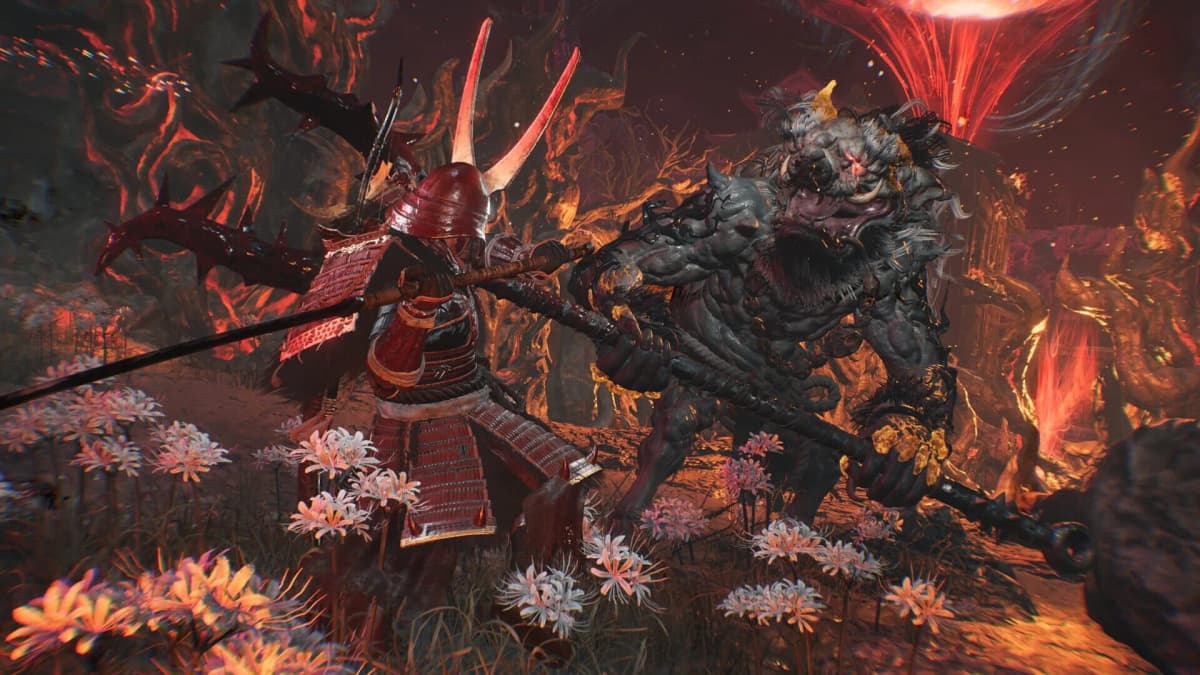
The biggest shake-up is the introduction of two wholly defined combat styles: Samurai and Ninja. Early on, I assumed this would just be a different stance or skill category. It isn’t. Each style is essentially its own build, with its own weapons, armor sets, skill trees, and core mechanics-and you can swap between them instantly.
On my first serious boss, I went in with a pure Samurai loadout: heavy armor, katana, spear, lots of deflects. Halfway through the fight, the boss shifted to a nasty, relentless combo phase I just wasn’t trading well into. One button press later, I was in Ninja style: lighter gear, kusarigama equipped, dancing around attacks instead of trading blows. That mid-fight swap is where it clicked for me—this isn’t just flavor, it’s a genuine dual-identity combat system.
Samurai: Classic Nioh, Sharpened
Samurai is the Nioh you already know, just turned up a notch. You’re dealing with:
- Heavier weapons like katanas, switchglaives, and spears
- Deflects and stance-switching as the backbone of your defense and pressure
- Ki Pulse, where timing a button press post-attack instantly recovers stamina
- A new Arts Gauge that charges as you attack and block, letting you unleash powered-up strong attacks and Martial Arts without spending Ki
Even three games in, this system is still intoxicating. The whole loop—attack string, watch your Ki bar drain, snap a perfect Ki Pulse, switch stance, deflect a blow, punish—is almost musical when it flows. The sound design sells it beautifully: the sharp flash and heavy clang of a clean deflect is one of those little dopamine hits that never gets old.
The Arts Gauge is a deceptively big deal. In longer fights, being able to toss out souped-up Martial Arts without draining Ki lets you stay aggressive in moments where past Nioh games would’ve forced you to back off and recover. It doesn’t make the game easier so much as it gives you more play space within the same punishing ruleset.
Ninja: Speed, Deception, and Style
Then there’s the Ninja style, which honestly stole the show for me. Where Samurai is about control and rhythm, Ninja is all about mobility and pressure. Your toolkit leans heavily into faster weapons: kusarigamas, tonfas, splitstaves, and light armor that lets you dash and weave through attacks.
Instead of Ki Pulse, Ninja gets Mist, a mechanic that lets you instantly evade and leave a shadow clone behind, diverting enemy attention. Ninja also tends to consume less Ki overall, so the loop is more about staying in motion and using Mist to reset when things get hairy, letting your stamina recover while you reposition.
On top of that, Ninja replaces Samurai’s stance depth with a huge pool of Ninjutsu options. These include:
- Throwable tools like shuriken and caltrops
- Offensive ninjutsu such as fireballs and elemental projectiles
- Gap-closing abilities to instantly appear on top of enemies
- Moves and passives that ramp up your backstab and positional damage
It isn’t as mechanically layered as Samurai’s stance interplay, but it doesn’t need to be. Ninja is about feeling like a demon on fast-forward—phasing behind enemies, deleting their health bars from the back, and mist-stepping away before retaliation lands. It’s flashy, it’s deadly, and it gives Nioh 3 a distinct second flavor that’s every bit as satisfying.
Systems on Systems: Arts Gauge, Guardian Spirits, and Living Artifact
Nioh has always been dense with systems, and Nioh 3 doubles down, but in a way that finally feels truly digestible.
Both Samurai and Ninja have deep, separate skill trees. You’re constantly unlocking new Martial Arts, Ninjutsu, passives, and utility skills that let you tune each style to your play preferences. Within a dozen hours, my Samurai had morphed into a high-Ki, counter-focused deflection machine, while my Ninja was specced into bleed and back damage, built to erase bosses in big bursts.
Guardian Spirits and Soul Cores return as another layer of customization. Spirits add elemental affinity and special attacks that can chunk yokai Ki and health, while Soul Cores let you borrow powerful moves from bosses—think brief, high-impact super attacks or ranged spells that can change the tide of an engagement.
The old Yokai Shift has been reworked into Living Artifact. Instead of a raw power fantasy mode, you temporarily embody your Guardian Spirit’s form. Enemy attacks won’t outright kill you during this, and your own offense is infused with your Spirit’s element. It’s a smart panic button: more about buying space and strategy than making you invincible. I used it less as a damage nuke and more as a controlled momentum swing whenever a fight slipped away from me.
On paper, it’s a lot: Arts Gauge, Ki Pulse or Mist, Ninjutsu, Guardian Spirits, Soul Cores, Living Artifact, multiple trees per style. But the pace at which the game introduces each system is surprisingly gentle. Having finished Nioh 1 and bounced off Nioh 2 after about 10 hours, I expected to feel buried. Instead, the onboarding here is measured enough that the whole machine clicks together in your head without becoming noise.
“Open Field” Maps: Not Quite Open World, and Better for It
Nioh 3’s other big swing is its new “open field” structure. This isn’t a single, seamless open world like Elden Ring, and it’s not the tightly linear missions of earlier Nioh games either. Instead, it splits the game into multiple larger maps, each with their own interconnected sub-areas.
The closest comparison is Rise of the Ronin, but with more focus. You still find classic Nioh-style “dungeon” segments: winding paths that unlock shortcuts back to shrines. Those areas then bleed out into wider spaces—cliffside temples, coastal plains, dense villages, cave networks—that invite you to veer off the critical path.
One of my favorite early moments was emerging from a dark cave system and seeing the gargantuan Daidara Bocchi rising from the sea: a towering folktale giant that feels less like a scripted setpiece and more like something you discovered by pushing a little further into the unknown. It’s exactly the kind of payoff this design leans into.
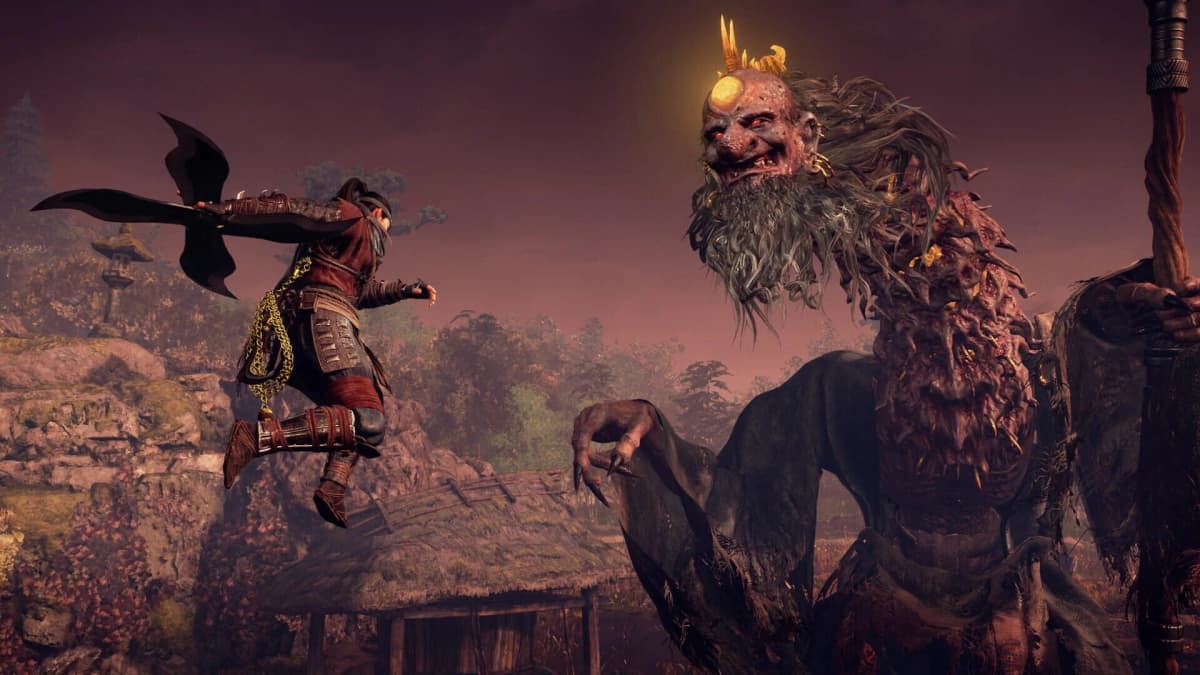
Exploration isn’t just for screenshots either. You’re constantly rewarded with:
- Friendly yokai like Kodama and Chijiko who improve your healing elixirs or unlock new Martial Arts and Ninjutsu
- Enemy encampments and mini-strongholds begging to be cleared for loot and XP
- Side quests that may boil down to “go here, kill these enemies,” but serve as fun combat playgrounds and small narrative beats
It’s curated and dense rather than huge for the sake of being huge, which I appreciate. Where some open worlds feel like checklists, Nioh 3’s maps feel like tightly packed boxes full of horrible surprises and hidden rewards.
Enemies, Eras, and Story: Rich Flavor, Serviceable Plot
Enemy variety is one area where Nioh 3 clearly improves over its predecessors. You’ll fight:
- Giant enemy crabs that demand careful positioning
- Anthropomorphic bats swooping in from awkward angles
- Demonic farmers wielding everyday tools like murder weapons
- Mounted cavalry on headless horses that test your spacing and reaction time
Most of these designs are either lifted straight from Japanese folklore or heavily inspired by it, which gives the best fights a distinct personality. You rarely feel like you’re fighting reskins, even when enemy types reappear in later areas.
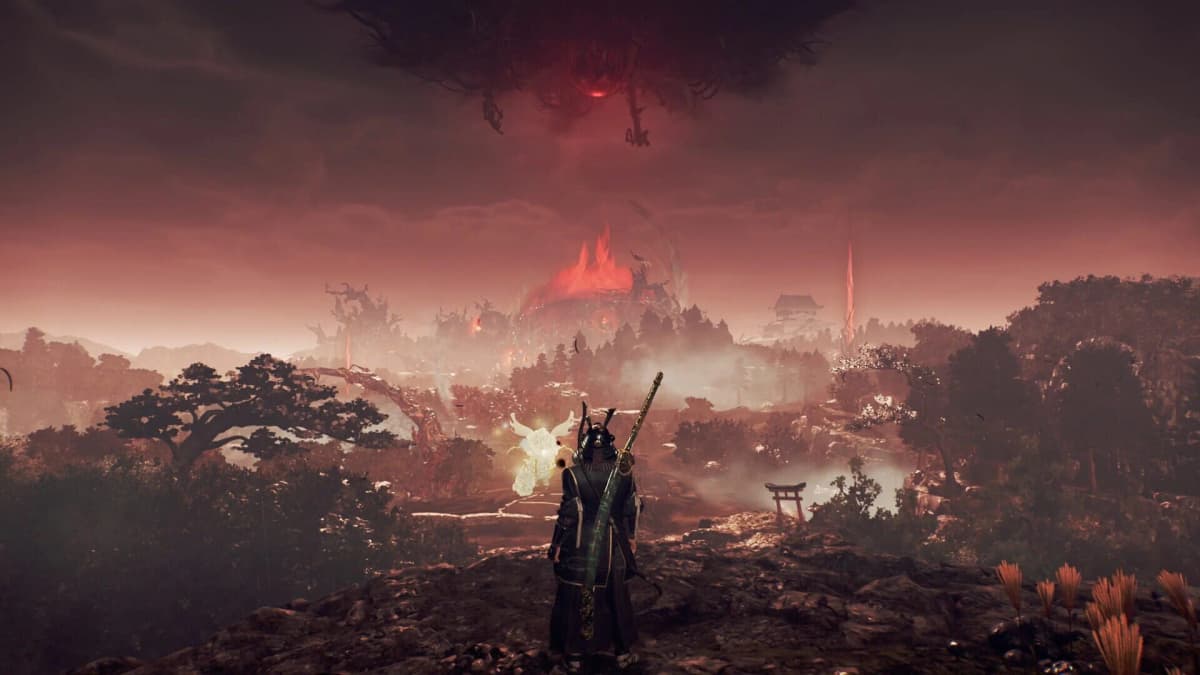
The setting pulls you across multiple periods of Japanese history—Edo, Warring States (Sengoku), Heian, and Bakumatsu. Each era has its own visual identity: vivid reds and ambers of Sengoku battlefields, snow-choked Kyoto in the Heian period, more grounded Edo-town layouts. The game sometimes alternates between striking vistas and noticeably low-res textures in spots you’re clearly not meant to linger in, but when it hits, it hits.
The story does what it needs to: it meshes real historical beats with original characters and supernatural elements, nudging you from one conflict to the next. It’s not bad, but it’s also not what stuck with me. For me, Nioh 3 is still about the combat and the moment-to-moment tension of fighting yokai, not the overarching narrative.
Difficulty and Approachability: Still Brutal, Now More Flexible
This is still very much a Nioh game: enemies hit hard, bosses can shred you in seconds, and you will lose chunks of Amrita to overconfidence or just plain mistakes. The difficulty has not been softened.
What has changed is how you’re allowed to deal with that difficulty. Thanks to the open-field maps, you’re almost never boxed into a single wall. If a boss is flattening you, you can:
- Head off to unexplored parts of the map to find better gear and more Amrita
- Knock out side quests for extra levels and practice
- Experiment with your Samurai and Ninja setups, shifting your build or even your entire playstyle
By the time I came back to a couple of early brick-wall bosses, I was both more powerful on paper and simply more comfortable with the game’s systems. That psychological difference—knowing you can step away and improve instead of bashing your head against a single encounter—is huge.
Combine that with the smoother introduction to systems, and Nioh 3 ends up as the most approachable entry in the series, even though its combat demands haven’t actually eased up.
Performance and Visuals: Function Over Flash
On a base PlayStation 5 running in performance mode, Nioh 3 mostly does what it needs to do: preserve responsiveness. For an action game this dependent on frame-tight timing, that’s vital.
The game typically runs near 60fps, which keeps inputs crisp and combat readable. There are, however, a few problem areas—Ryotan Temple is the standout, where the frame rate takes noticeable dips for reasons that aren’t always clear. They don’t make the game unplayable, but they’re jarring when the rest feels so locked in.
Visually, Nioh 3 is a mixed bag. Some vistas and era-defining hubs look fantastic, and the yokai designs still have that rich, grimy character. At the same time, you’ll spot low-res textures and rougher details in places the camera isn’t meant to linger. It never reaches the sheer spectacle of the best-looking modern action games, but for me, the feel of the combat more than compensates for the occasionally dated visuals.
Loot, Builds, and Quality-of-Life: Still a Goblin, But Less of a Janitor
If you’ve played previous Nioh games, you know: loot is both a blessing and a problem. Nioh 3 keeps the loot geyser flowing and then turns the valve up further by effectively giving you two loadouts (Samurai and Ninja) to feed.
The difference this time is that Team Ninja finally gives you tools to manage the flood. You can set the game to auto-pick up loot and automatically scrap anything under a chosen rarity tier by:
- Selling it outright
- Turning it into Amrita
- Dismantling it into crafting materials
In practice, that means you spend less time manually sorting trash and more time actually tweaking the gear that matters. I still found myself diving into menus to min-max my builds—a Nioh tradition at this point—but the worst busywork is heavily reduced.
That said, I still wish loot felt leaner and more meaningful. There are so many drops that individual pieces rarely feel special, and I’d love either more unique stand-out items or a reduction in overall bloat. Nioh 3 makes the loot problem manageable, but it doesn’t fully solve it.
Who Nioh 3 Is (and Isn’t) For
After living with Nioh 3 for a chunk of weeks, here’s how I’d break it down.
- If you loved Nioh 1 or 2: This is a straight-up upgrade. More depth, more flexibility, cleaner systems, better exploration. It feels like the natural endpoint of the trilogy.
- If you bounced off Nioh before because the systems felt overwhelming: This is the best jumping-back-in point. The onboarding is gentler, and the open-field design gives you space to grow.
- If you mainly care about story-driven action games: You might find the narrative too functional and the loot/combat focus too granular. This is a game for people who want to live in its mechanics.
- If you hate punishing games: Nioh 3 doesn’t compromise on difficulty. It offers better tools and flexibility, but it absolutely still expects you to learn, adapt, and suffer a bit.
Bottom Line
Nioh 3: Rise Of feels like Team Ninja coming back from a long side quest with a full inventory of ideas and dropping all of them into one game—and almost every one of them lands. The dual Samurai/Ninja styles give combat a fantastic new dimension without sacrificing the series’ identity. The open-field maps hit a careful balance between guided level design and freeform exploration. The mountain of systems is dense, but, for once, not suffocating.
The flaws are real: uneven visuals, occasional frame drops, and a loot system that’s better managed but still bloated. Yet in the face of how satisfying it feels to master a boss, to finally nail that perfect string of deflects, pulses, and counters—or to carve through a mob as a blur of Ninja steel—those issues shrink to background noise.
Rating: 9/10. For action-combat obsessives and soulslike fans, Nioh 3 is not just worth your time—it’s the strongest argument yet for why this series deserves to stand alongside the genre’s giants.
TL;DR
- The good: Top-tier stance-based combat with two fully realized styles (Samurai and Ninja), excellent build depth, smart “open field” exploration, and much-improved onboarding and quality-of-life.
- The mixed: Visuals swing between striking and dated; story is serviceable more than memorable.
- The bad: Loot is still overwhelming and occasionally tedious despite new filters; a few areas suffer from performance drops on PS5.
- Verdict: A brutal, rewarding evolution of the Nioh formula that confidently folds in lessons from Wo Long and Rise of the Ronin. If you care about deep, demanding action combat, Nioh 3: Rise Of is essential. 9/10.
FinalBoss // Gear
Level up your setup
01Top-rated gaming headsetson Amazon→02High-refresh gaming monitorson Amazon→03Gaming chairson Amazon→04Discounted game keyson Kinguin→Affiliate links · As an Amazon Associate, FinalBoss earns from qualifying purchases.
Want to Level Up Your Gaming?
Get access to exclusive strategies, hidden tips, and pro-level insights that we don't share publicly.
Ultimate Reviews Strategy Guide + Weekly Pro Tips