
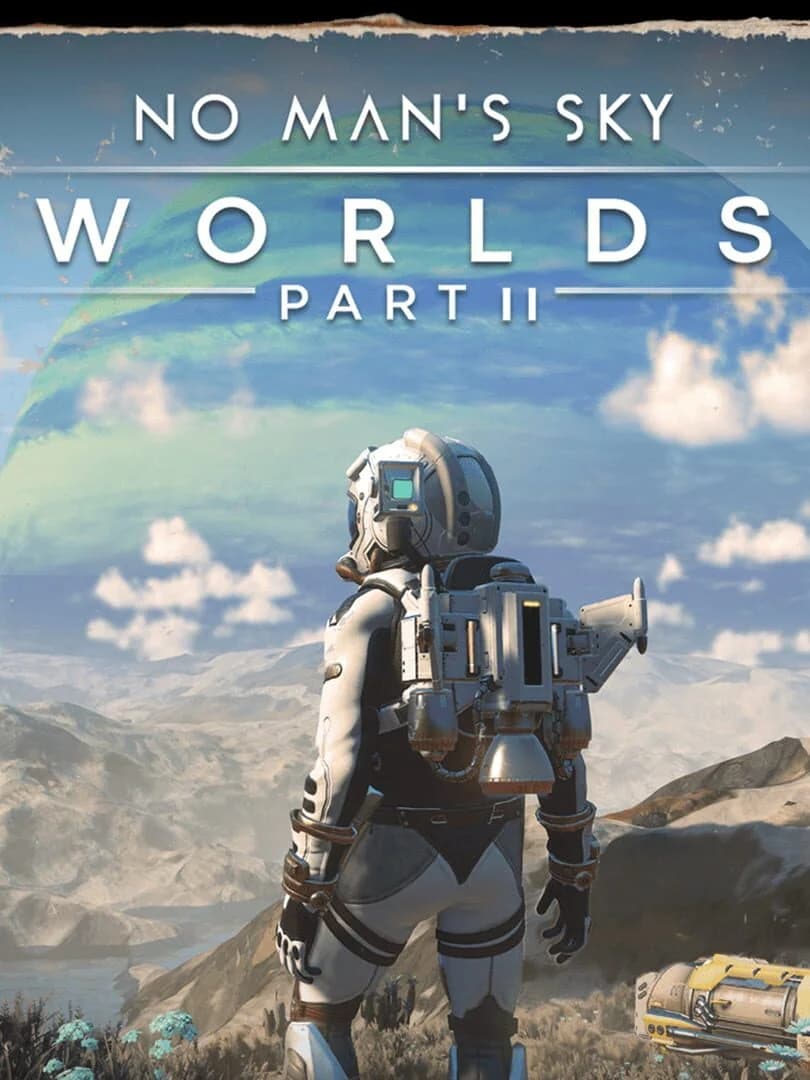
No Man’s Sky spent years escaping the shadow of its launch, and Hello Games did it through a choice that still feels almost alien in modern gaming: it kept adding meaningful new material without slicing the universe into paid expansion tiers. That history matters as Worlds Part II puts the game back in focus. Sean Murray’s argument for free updates has always been about more than being generous with content. It is about preserving a single shared journey.
I think that philosophy is one of the best decisions Hello Games has made, full stop. Paid DLC would make immediate financial sense to plenty of people looking at a game with years of updates behind it. It would also make No Man’s Sky worse for the people still building bases, upgrading ships, maintaining freighters, and convincing friends to start a save in 2026. A sandbox this interconnected gains enormous value from keeping its players on the same version of the universe.
That is the part critics of “free updates only” often miss. The real alternative is not simply “content costs money” versus “content is free.” The alternative is a game where every returning player has to check which expansion they own, whether a friend can access the same activity, and whether the most interesting new systems now belong to a separate ownership tier. No Man’s Sky has avoided that mess for years. It should keep avoiding it for as long as it can.
Table of Contents (6)
Sean Murray’s stance is a design decision with player consequences
Murray’s original position was blunt. Hello Games wanted to add major features, including freighters and bases, without charging existing owners again. His reasoning was simple: players had paid for the game, so the team wanted them to receive those additions without another purchase. He described the approach as “no paid DLC, just patches.”
He later softened the absolute wording, admitting that ruling paid DLC out forever may have been “perhaps naive.” Murray left room for a scenario where Hello Games faced a feature it simply could not afford to make without charging for it. That caveat is sensible. Nobody should demand that a small studio bankrupt itself for the purity of a slogan.
Still, the practical record matters more than the old phrasing. Hello Games has consistently treated major additions as part of the same ongoing game. Murray has also pointed to the team’s relatively small scale, with roughly 12 to 20 people working on No Man’s Sky, as part of what makes the project sustainable. That gives the free-update approach more credibility than a vague promise from a huge publisher with an entire pricing department waiting behind the curtain.
The important distinction is this: Murray’s position is a direction, not a mystical blood oath. If circumstances forced Hello Games to charge for something extraordinary, players could judge that decision on its merits. Until then, the studio has built tremendous goodwill by refusing to turn every major addition into a new checkout screen. I would rather see that standard defended than casually abandoned because somebody thinks every successful game needs an expansion pass.
A unified universe makes co-op dramatically less annoying
No Man’s Sky is full of systems that touch each other. Exploration feeds resources. Resources feed ship upgrades, base construction, freighter investment, and broader progression. Players move between solo wandering and co-op sessions without the game turning those modes into separate products. Once paid expansions enter that structure, every social interaction gets an ownership question attached to it.
That is audience fragmentation, and Murray is right to treat it as a real problem rather than an abstract business concern. In practical player terms, fragmentation means friction. It means one person owns an expansion, another does not, and the group has to negotiate what it can actually do together. It means recommendations come with annoying caveats. It means returning to a game after a long break can involve researching which paid package now contains the current version of the experience.
No Man’s Sky’s free-update approach cuts through all of that. When a new major system joins the game, it joins the whole community’s version of the game. Friends can make plans around the same activities and work toward the same tools without turning a co-op session into a purchase-status audit.
- Co-op stays straightforward: friends do not need to compare expansion libraries before deciding what to do together.
- Returning players stay relevant: an old save can re-enter the modern game without discovering that the important material sits behind a separate paid add-on.
- Community knowledge stays useful: guides, build advice, and discussions operate from a more consistent shared baseline.
That consistency has real value in a game built around long-term attachment. No Man’s Sky asks players to care about a world they shape over time. A base is not a disposable match lobby. A freighter is not a one-evening unlock. Players invest because they expect the universe to remain legible when they return. Free updates make that expectation easier to trust.
Build planning works better when the future is shared
The best argument for Murray’s approach appears when looking at how people actually play a sandbox. Players plan. They decide where to build, which ship to improve, what resources to stockpile, and how much time to spend developing a freighter or a home base. Those choices are part mechanical efficiency and part emotional investment. People want to feel that their work has a future.
Paid expansions can poison that feeling fast. A DLC-exclusive progression system can turn a previously sensible build into a side path. A new paid building set can make the base game’s creative tools feel second-class. A premium ship or freighter system can create the suspicion that the most exciting route forward has been moved behind a separate purchase.
Hello Games has instead treated its additions as universal changes to a shared toolbox. That does not guarantee every patch will preserve every player’s preferred setup. System-heavy games evolve. Balancing changes can disrupt familiar routines. New features can pull attention away from older ones. But there is an enormous difference between adapting to a patch and being told that the future of the game requires buying another product.
Players can plan around change when everybody receives the same change. That creates a healthier kind of meta continuity. The strongest way to explore, build, travel, or progress can shift as updates arrive, yet the conversation remains communal. Nobody is locked out of understanding the current game because they skipped a paid chapter.
Worlds Part II reinforces the value of an evolving save
The attention around Worlds Part II highlights why No Man’s Sky benefits from treating updates as additions to one continuing universe. The game’s appeal has never rested on a neat sequence of disposable content drops. Its appeal comes from the feeling that an old save can still be part of something that keeps expanding.
That is a far better proposition than telling players to wait for a “complete edition” before they invest. The complete edition mindset is poison for a long-running sandbox because it encourages people to sit on the sidelines until the buying decisions stop multiplying. No Man’s Sky gives players a cleaner proposition: buy the game when it offers enough for you, then expect the world around that purchase to keep developing.
That trust was not handed to Hello Games. The game’s early reputation was badly damaged, and the studio had to earn back confidence through sustained work. Free updates became part of that repair. Each substantial addition carried an implicit message that the developer was still trying to improve the same game players had already bought, rather than charging admission to a replacement version of it.
Trust is a gameplay feature in a long-running game. It affects whether people return, whether they recommend the game to friends, whether they keep a save alive, and whether they believe a new update will respect the time they already put in. No Man’s Sky has earned a rare level of trust precisely because its post-launch growth has felt cumulative.
Free updates do not get a free pass on grind
Here is where I refuse to turn Hello Games into a saintly exception that can do no wrong. A free-update model can create its own bad incentives. When a studio avoids selling major content separately, it may try to stretch engagement through longer progression tracks, heavier resource requirements, and systems that take more time to reach than they genuinely deserve.
Free content can still waste a player’s evening. A new feature does not become respectful merely because it arrives without a price tag. If accessing it requires a tedious resource loop, a drawn-out unlock chain, or an unnecessary pile of busywork, players are still paying. They are paying with time, attention, and the energy that makes a big sandbox feel inviting instead of exhausting.
Feature bloat is the other danger. No Man’s Sky has accumulated years of systems, tools, menus, materials, progression paths, and creative possibilities. That abundance is part of its identity, but it can also make returning players feel as though they need a reorientation course before they can enjoy the new material. A unified universe only helps if that universe remains understandable.
The standard should be demanding. Hello Games deserves credit for keeping major updates free. It also deserves criticism whenever an update pads its journey with grind or buries its best ideas under unnecessary complexity. The no-DLC philosophy protects players from one kind of pressure. It does not excuse every other kind.
No Man’s Sky should protect the journey, not turn it into a store map
I side firmly with Murray here. No Man’s Sky would lose something essential if its universe became a collection of paid districts, each with its own progression, feature access, and social barriers. The game works because it feels like one place that keeps changing beneath everyone’s feet. That shared continuity is more valuable than the short-term thrill of selling players another bundle of systems they already expected to inhabit together.
The sensible player takeaway is equally clear. Judge No Man’s Sky by the game it offers today and by whether its updates respect your time, rather than waiting for a hypothetical paid package to make it feel complete. Keep an eye on grind, on feature overload, and on balance changes that hollow out familiar playstyles. But recognize the unusually strong deal at the center of it: an old save remains part of the same living universe, and a friend who buys the game enters that universe without a DLC checklist.
That is worth protecting. Worlds Part II should be another reason for Hello Games to keep building outward from the shared journey it already created, rather than selling doors into separate versions of it.
FinalBoss // Gear
Level up your setup
01Top-rated gaming headsetson Amazon→02High-refresh gaming monitorson Amazon→03Gaming chairson Amazon→04Discounted game keyson Kinguin→Affiliate links · As an Amazon Associate, FinalBoss earns from qualifying purchases.
Want to Level Up Your Gaming?
Get access to exclusive strategies, hidden tips, and pro-level insights that we don't share publicly.
Ultimate Gaming Strategy Guide + Weekly Pro Tips