
Table of Contents (9)
Getting My Face Kicked In By A Triangle In Space
The first 20 minutes I spent with Nova Drift on mobile were just me, a little white triangle, and humiliation.
I’ve played plenty of twin-stick shooters on phone and handheld, so I swaggered in expecting to kite enemies with one thumb and strafe with the other. Nova Drift doesn’t do that. This is old-school Asteroids-style rotation and thrust, with inertia that happily throws you into your own exploding mine if you misjudge it by a hair.
My first few runs ended the same way: a promising weapon upgrade or two, a couple of neat mods, then I’d oversteer, slam into a sniper round, and watch my run evaporate before Wave 20. On a touchscreen, it felt like trying to parallel park a rocket-propelled shopping cart.
But around the one-hour mark, something clicked. The controls stopped feeling like a compromise and started feeling like an instrument I was learning to play. And once that happened, Nova Drift dug in its hooks and wouldn’t let go.
How Nova Drift Actually Plays On Mobile
At its core, Nova Drift is incredibly simple to describe: you spawn as a tiny ship in an empty arena, shoot asteroids for experience, level up every few seconds, and gradually turn your fragile starter craft into some kind of absurd murder-machine. Waves of enemies ramp up in complexity and density, bosses arrive at fixed intervals, and the game just… doesn’t stop until you die. Or until you switch to Endless mode, in which case it just doesn’t stop at all.
Where it differs from a lot of mobile shooters I’ve played is how dense each level-up decision is. Every time you gain a level, you pick from a selection of upgrades that fan out into this sprawling mod web:
- Weapons (lasers, salvo missiles, flak, mines, etc.)
- Shields (reflective, defensive, explosive, regeneration-focused)
- Hull / Body types (fast and fragile, slow and tanky, construct-focused Architect, and more)
- Mods that heavily mutate how those pieces behave
- Allies and constructs that fight alongside you
By Wave 30-40, a good build doesn’t even vaguely resemble the starter ship. On mobile, nothing about that core structure has been cut down. The same sprawling mod combinations and synergies from PC are here, and the game happily lets you pick yourself into bizarre corners if you don’t know what you’re doing yet.
And that’s kind of the magic: every death feels like feedback from a physics sandbox and a deckbuilder at the same time.
Touch Controls That Feel Like The Real Thing (After A While)
I was ready to bounce off the controls in my first session. Nova Drift on mobile gives you a virtual joystick for rotation and thrust, plus a separate area for aiming and firing. There’s a bit of subtle auto-aim and input smoothing, but the game absolutely expects you to learn how to “swing” your ship around with momentum, not pivot on a dime like a twin-stick.
Once I stopped treating it like a twin-stick and started treating it like Asteroids with benefits, it all made more sense. I started pre-emptively rotating before dashing through swarms, using my ship’s drift to sling me around incoming projectiles. Dodging became about planned arcs instead of twitchy tapping.
The best compliment I can give the touch scheme is this: after a couple of nights, I forgot I wasn’t using a physical stick. When I got greedy and threaded my ship through a wall of bullets, the deaths felt like my bad habits, not the screen’s fault.
There are a few small but important details that help:
- Virtual sticks are position-agnostic: you can start your thumb anywhere in their half of the screen and it “locks in”, which cuts down on misinputs during panicked moments.
- There’s just enough rotation acceleration that you can do quick 180s without delicate micro-swipes.
- Sliding your thumb further out from center increases thrust smoothly instead of snapping, which feels more analog than most phone shooters.
If your only experience with mobile shooters is dual-stick auto-fire stuff, it will feel hostile at first. But that’s part of Nova Drift’s personality: it wants you to meet it halfway and actually learn its flight model. Once you do, it becomes second nature, and it’s oddly satisfying to realize you’re actually piloting something with inertia instead of a cursor with hitpoints.
The Joy Of Breaking The Game With Builds
Where Nova Drift completely sold me was the moment I built something utterly busted by accident.
About three hours in, I rolled a run that started with Salvo as my weapon – a system that fires bundled missiles based on how much you’ve “charged” between shots. I grabbed a couple of basic missile buffs, then stumbled into Warp Strike (shots teleport to targets and explode), Barrage (rapid-fire, but lots of recoil and self-damage risk), and some damage-boosting Antimatter-style mods.
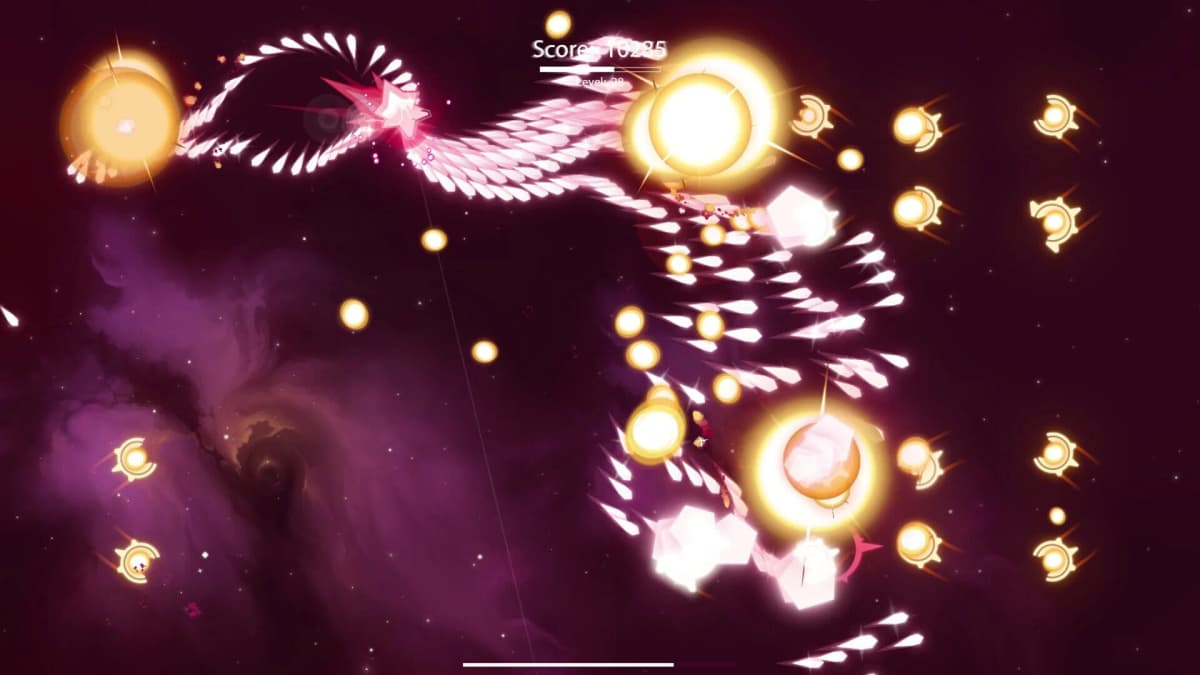
The next boss barely had time to spawn. The screen turned into a melting blizzard of guided explosions, my framerate dipped slightly during the heaviest volleys, and I just sat there grinning like an idiot thinking, “Okay, this is what this game is about.”
Later I tried a very different approach with the Architect body, which focuses on constructs and mines. I patched together a web of explosive mines, allied drones, and splash damage buffs that effectively turned the arena into a minefield. Enemies would rush me, hit the invisible wall of explosives, and disintegrate before ever reaching my hull. I wasn’t even shooting much by the end – just repositioning and watching the fireworks.
The important thing is that those builds weren’t pre-planned “meta” things I copied from a wiki. They emerged from picking what sounded fun and discovering interactions mid-run. The game encourages that with how its upgrade tree fans out – each choice suggests two or three possible directions, and even bad ideas are usually entertaining for at least a few waves.
If you’re a theorycrafter, Nova Drift is pure catnip. You can chase glass-cannon beam setups that erase bosses in seconds, tanky shield reflectors that weaponize incoming damage, or weird hybrid ally builds that clutter the screen with friendly fire. After around 10 hours, I was still having “wait, can I stack that with this?” moments and hopping into another run just to test a hypothesis.
Progression, Unlocks, And Why The Early Grind Works
Roguelikes live or die on how they treat your time between failures. Nova Drift is surprisingly generous, but it doesn’t just shower you with permanent power. Instead, it unlocks options.
Your first couple of hours are spent unlocking the basic foundation: new weapon types, shield variants, and bodies. These don’t make your ship strictly stronger; they just give you more levers to pull in future runs. You’ll quickly go from “I guess it’s the starting gun again” to “do I feel like trying a stealthy mine ninja or a slow, hulking artillery platform tonight?”
On mobile, the full spread of gear, mods, and challenge modes is still a long-term project. Roughly speaking, I’d say:
- 6–10 hours to unlock enough toys to understand what the game is about
- Dozens of hours if you want every last modifier and build enabler
The important part is that it never felt like a slog. Even early, when my build variety was limited, I was learning how to fly better and react to enemy patterns. Progression is layered: yes, you’re unlocking things, but you’re also mentally bookmarking synergies you want to revisit later.
Challenge Modes, Dailies, And Why Wild Metamorphosis Is The Good Kind Of Chaos
Once you’re comfortable clearing the early waves, Nova Drift hands you the keys to its real longevity: modifiers and modes that twist the entire experience.
Some of the big ones that stood out on mobile:
- Hostile Universe – faster wave pacing, more enemies spawning. Great when you want runs that get intense sooner and reward aggressive play.
- Nemesis – tougher, nastier boss-level threats woven into runs.
- Endless – after the standard wave cap (around Wave 120), the game just keeps scaling and your score-chasing brain goes feral.
- Wild Metamorphosis – my personal favorite: a set of “wild mods” that can mutate your run in unpredictable ways, sometimes turbocharging your build, other times scuffing it in hilarious fashion.
Wild Metamorphosis in particular feels almost like a mini-expansion baked into the mode select. Enabling it turns each level-up into a bit of a gamble; you can lean into the chaos and end up with powers that completely rewrite how your build functions halfway through a run. I’ve had solid, sensible missile builds suddenly pivot into a construct zoo because a couple of wild mods synergized in ways I couldn’t ignore.
On mobile, these modes are tucked alongside Practice and Daily runs. Practice is great when you want to test a specific weapon or build without committing to a full high-score attempt. Dailies give you a fixed seed and ruleset for the day, plus leaderboards so you can see how badly other people outclass you with the same tools.
The new arcade-style leaderboards on mobile scratch that old-school high-score itch nicely. It’s not some huge online social layer with elaborate profiles; it’s just “here’s your score, here are some other triangles that did better, go again.” Perfect for a phone game.
Performance And Presentation: Serviceable, Not Spectacular
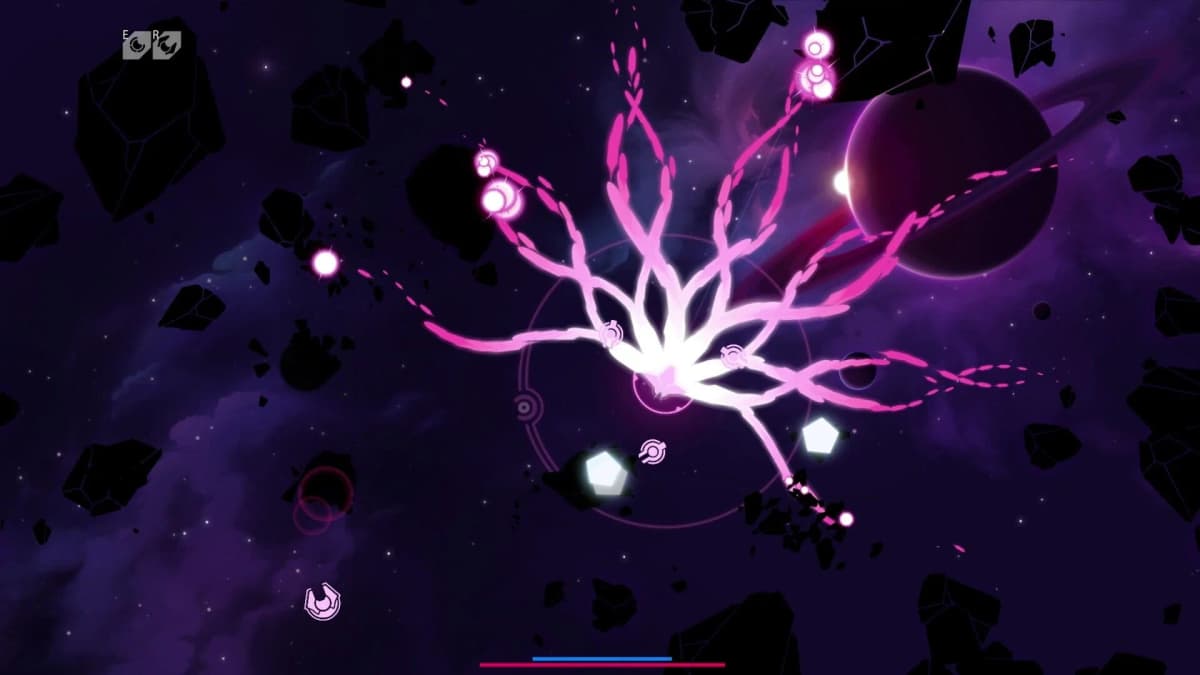
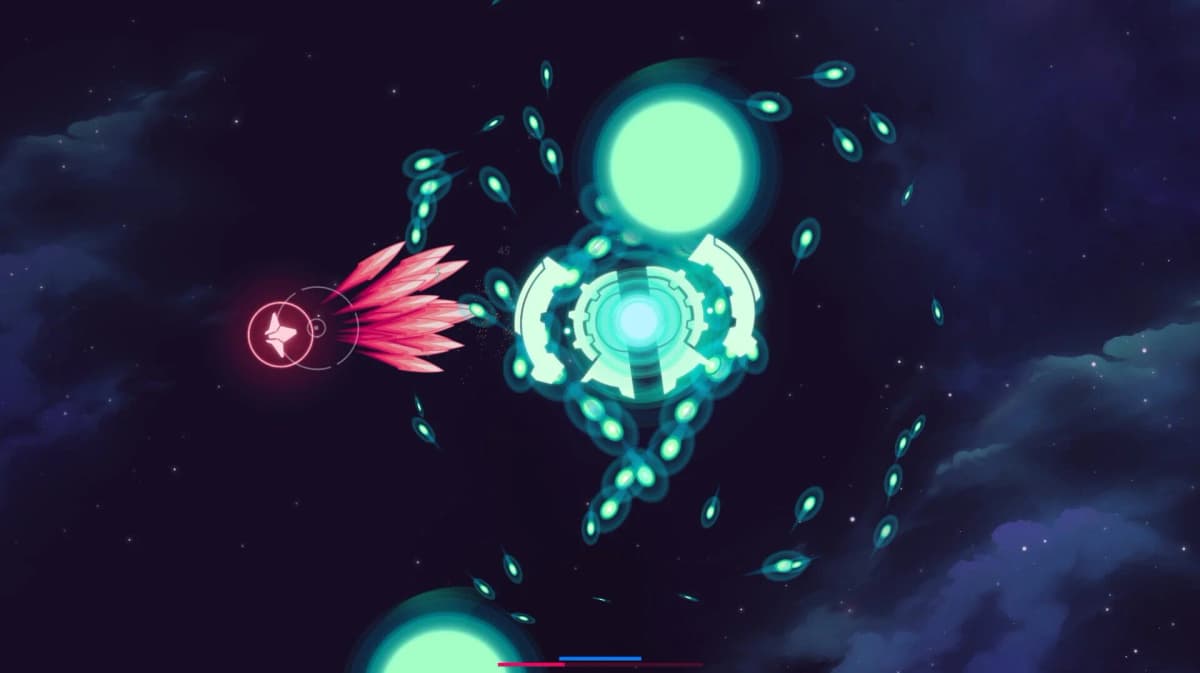
Visually, Nova Drift isn’t going to sell anyone on screenshots. It’s clean, readable, and colorful when things start chaining explosions, but it’s very much in the “functional neon vector” aesthetic. On a phone screen that’s mostly a positive – enemies pop against the background, projectiles are distinct, and it’s easy to tell what’s going on at a glance even when the screen is chaos.
On my device, performance stayed rock solid for 95% of my runs. The only times I noticed any hitching were with utterly degenerate builds – think Salvo + massive AoE mods + screen-wide chain explosions. Even then, it was momentary dips rather than slideshow territory, and honestly, it sort of sold how ridiculous the build was.
Sound design is similarly understated. Weapons have enough punch that you feel the difference between a precise rail shot and a swarm of missiles, and the soundtrack does that pulsing arcade-electronica thing that keeps you zoned in without becoming grating. It’s not the kind of OST I’d listen to on its own, but in the moment it does exactly what it needs to do.
Mobile-Specific Quirks And Annoyances
As much as I’ve come around on the controls, this isn’t a frictionless mobile game.
The biggest hurdle is still that initial learning curve. Because the ship handles like a “real” arcade craft with inertia, people used to modern twin-stick shooters may spend their first hour just feeling clumsy. The game doesn’t really tutorialize momentum management; it just hands you the ship and starts the waves. I personally loved that sink-or-swim attitude, but I can see some players bouncing off before the magic clicks.
The other issue is density of information. The mod system is deep, and while the touch interface does an admirable job with tooltips and highlighting prerequisites, reading tiny upgrade text during a frantic mobile play session isn’t always ideal. I had a few runs where I fat-fingered the wrong mod in a hurry, or misread a conditional and ended up with a synergy that wasn’t what I’d hoped for.
Lastly, while the new mobile leaderboards are welcome, they’re fairly barebones. There’s no rich global stat tracking or fancy friend filters beyond the essentials. For me, that’s fine – I just want a number to beat – but if you’re hoping for deep social integration, this isn’t that.
Who Nova Drift Mobile Is Actually For
After a lot of late-night runs, I’ve come to think of Nova Drift on mobile as a game for a very specific type of player:
- You enjoy old-school arcade ship handling and don’t mind spending an hour or two just getting good at steering.
- You like tinkering with builds and discovering stupidly powerful synergies more than following a meta guide.
- You appreciate short, intense sessions that still feel like they’re contributing to a long-term skill and unlock arc.
- You prefer gameplay depth over presentation; you’re okay with “clean but plain” visuals if the mechanics are rich.
If you primarily play quick gacha RPG dailies or tap-based idle games on your phone, Nova Drift might feel a bit demanding. It’s one of those titles where even a 10-minute session asks for your full attention. But if you’ve been craving something that feels like a real arcade cabinet condensed into your pocket, this hits that nerve in a big way.
FinalBoss // Gear
Level up your setup
01Racing wheels (PC & PS5)on Amazon→02High-refresh gaming monitorson Amazon→03Gaming chairson Amazon→04Discounted game keyson Kinguin→Affiliate links · As an Amazon Associate, FinalBoss earns from qualifying purchases.
Want to Level Up Your Gaming?
Get access to exclusive strategies, hidden tips, and pro-level insights that we don't share publicly.
Ultimate Reviews Strategy Guide + Weekly Pro Tips