
Table of Contents (11)
Nova Roma Isn’t Anno 117 Lite – It’s a Different Kind of Obsession
Nova Roma fooled me at first. From screenshots it looked like someone had taken Anno 117, run it through a voxelizer, and called it a day. Low-poly Romans, chunky buildings, toy‑town colors – it absolutely reads like a demake of Ubisoft’s prestige city-builder.
Once I actually started playing, that idea vanished in about twenty minutes. Nova Roma is not “Anno on a budget”. It’s a tighter, faster, much more volatile city-builder that cares less about photorealism and sprawling supply chains, and more about pressure, tempo and that can’t‑stop‑one‑more‑run feeling.
It’s also very obviously Early Access: some systems grind against each other instead of meshing, and the depth is nowhere near Anno 117’s leviathan economy. But the moment my carefully terraced river system burst its banks because I’d neglected a jealous god, I stopped thinking of this as a cheap Anno clone and started treating it as its own thing.
Key Takeaways
- Looks like an Anno 117 de‑make, but plays like a tense, small‑scale city-builder with a strong “one more mission” pull.
- Water and weather systems (dams, floods, droughts) radically shape how you plan and rebuild your city.
- Jealous Roman gods act like a second economy and a disaster system rolled into one – fun, but sometimes swingy.
- Production chains are relatively simple and the maps are compact, so don’t come here expecting Anno‑level sprawl.
- Early Access build already feels compelling, but pacing, UI clarity and system integration still need work.
- Right now, it’s a fantastic side dish for city-builder fans, not a full replacement for the big AAA heavyweights.
First Impressions: Toy-Town Rome With Surprising Bite
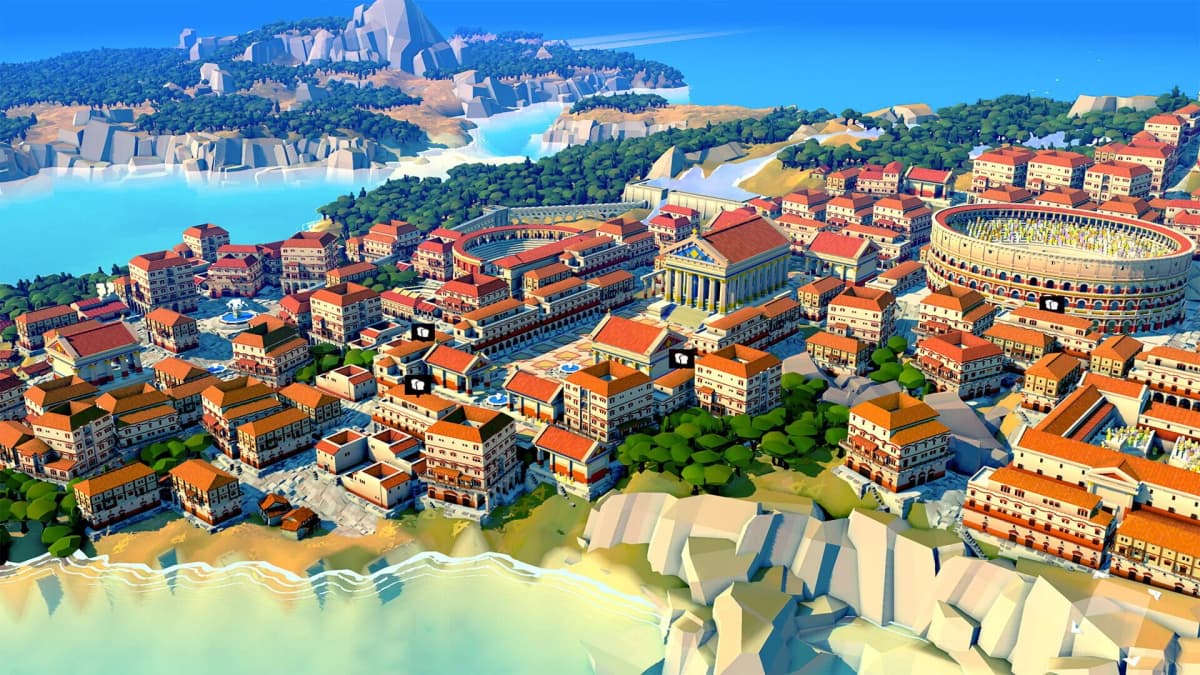
My first impression booting into Nova Roma was honestly: “Oh, this is cute.” A handful of citizens trundle out of a little Roman camp, the terrain is clean and readable, and the UI is deliberately minimalistic. On PC it ran smoothly on a mid‑range GPU; this isn’t the kind of city-builder that will turn your fans into a leaf blower.
Coming straight from Anno 117, the downgrade in visual spectacle is immediate. No sumptuous coastal vistas here, no painterly depth of field. Buildings are chunky, trees are almost Minecraft‑simple, and the overall aesthetic leans hard into clarity over beauty.
That said, the “Wuselfaktor” is absolutely there. Once your settlement starts humming, little Romans scurry between houses, workshops and temples, ox carts creak along dirt tracks, and aqueducts pulse with water. It’s not jaw‑dropping, but it is satisfying to watch, and that matters more in a game you stare at for hours than whether a marble column has ray-traced reflections.
The camera and controls are pleasantly snappy. Drag, rotate, place – nothing fights you. That’s important, because Nova Roma hits you with meaningful decisions far faster than your average laid‑back city sim.
The Core Loop: Small City, Big Pressure
Under the hood, Nova Roma’s loop is classic city-building with a twist. You gather basic resources, build housing, unlock new production chains, and try not to collapse under your own logistics. So far, so familiar.
The twist is how condensed everything feels. Instead of inching along for hours before anything interesting happens, you hit real pressure points quickly. Food, wood, stone, workers – you’re constantly on the edge of running short on something crucial.
Production chains, at least in the current Early Access state, are comparatively simple. Wheat into flour into bread, wood into planks, clay into bricks – you won’t be stacking five‑step luxury chains and cross‑continental trade routes here. Coming from Anno 117, I definitely felt the downgrade in complexity.
And yet, that simplicity is part of why Nova Roma grabbed me. Because the chains are shorter, you feel their impact more immediately. Misplace a lumber camp by a few tiles, and the walk times genuinely hurt your throughput. Overbuild housing without securing food, and you spiral into shortages within minutes rather than hours.
On one early run, I pushed rapid expansion to unlock a shiny new workshop, assuming I could “fix the food later”. Ten minutes later I was tearing down villas to free up workers for farms, while praying to any god that would listen for a timely buff. That kind of tight feedback loop is where Nova Roma shines.
The Water and the Gods: Nova Roma’s Secret Sauce
Two systems elevate Nova Roma from “pleasant indie builder” to “I lost an evening to this”: water and the gods.
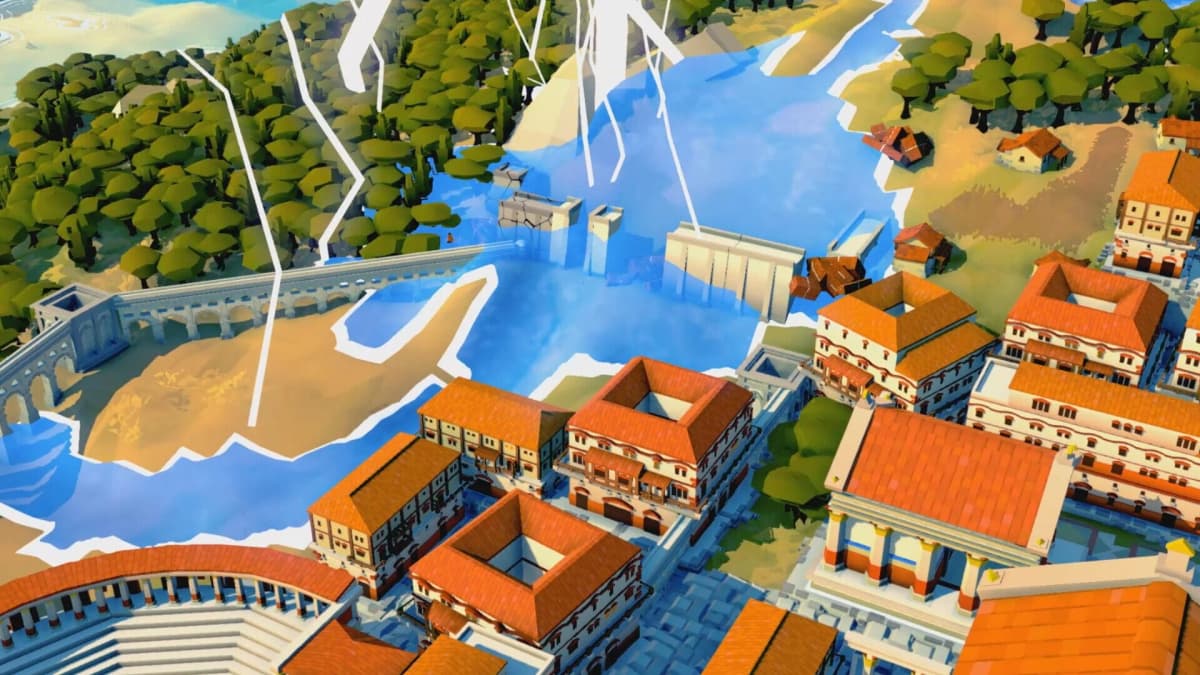
Water isn’t just a decorative river here. It’s a living system you bend to your will. You’ll be diverting streams, building dams, carving canals and trying to ensure that your farms and workshops get what they need without drowning the rest of your town.
Weather plays right into this. When the skies opened during one run, my carefully measured river turned into a battering ram. The dam I’d cheaply thrown together gave way, and a chunk of my lower city went under. Watching my bakery and a set of warehouses slowly submerge was equal parts horrifying and impressive.
The game doesn’t simulate water at a hardcore physics level, but it sells the fantasy enough that I started treating riverbanks like high‑value real estate and floodplains like loaded guns. Planning terraces and backup canals became as important as placing farms.
Layered on top is the pantheon. Roman gods in Nova Roma are needy, useful, and vindictive. You build temples to gain bonuses and, more importantly, divine favor – a kind of spiritual currency that feeds into progression. Think tech tree, but powered by appeasing moody deities instead of just filling a progress bar.
Each god leans into a certain playstyle. Focus on one and you might get juicy buffs to production or protection from disasters, but you’ll also trigger increasingly demanding quests and offerings. Neglect them, and they sulk – and “sulk” often means plagues, storms, or other nasty surprises.
In one particularly memorable case, I’d been milking a god’s productivity buff for ages without giving much back. When their patience snapped, they didn’t just smite a building; they triggered a chain of misfortune that forced me to essentially abandon a district and rebuild uphill. Annoying? Absolutely. Memorable? Also yes.
In one particularly memorable case, I’d been milking a god’s productivity buff for ages without giving much back. When their patience snapped, they didn’t just smite a building; they triggered a chain of misfortune that forced me to essentially abandon a district and rebuild uphill. Annoying? Absolutely. Memorable? Also yes.
🎮 Get This Game at the Best Price
Compare prices instantly and save up to 80% on Steam keys with Kinguin — trusted by 15+ million gamers worldwide.
*Affiliate link — supports our independent coverage at no extra cost to you
This combination of water engineering and divine mood management gives Nova Roma a personality that most “vanilla” historical builders lack. You aren’t just optimizing supply chains; you’re negotiating with a map that actively wants to misbehave and gods that don’t care about your perfect grid.
Early Access Friction: When the Gears Don’t Quite Mesh
For all that I’m hooked on the loop, you can absolutely feel that Nova Roma is still in Early Access.
The biggest issue right now is how some systems overlap in slightly messy ways. Disasters from weather and water, plus divine punishments, plus standard economic swings can sometimes stack into what feels like punishment porn. Losing a district because you misjudged a dam is fair; losing it because a flood, a plague and a resource shortage hit in quick succession feels more random than earned.
Balancing of the favor economy also needs tuning. There were stretches where I felt starved of meaningful progression options because I was drip‑feeding offerings just to prevent divine tantrums. Other times, a single well‑timed quest reward catapulted me forward in a way that trivialized the next 20 minutes.
The UI sits in that slightly awkward indie middle ground: mostly clear, occasionally opaque. Tooltips explain the basics, but some interactions – especially around water flow, elevation, and the exact effects of certain god abilities – take trial and error to really understand. Expect a learning curve that’s not purely “deep system mastery”, but also “figuring out what the game is actually doing behind the scenes”.
Then there’s scale. Maps are on the smaller side and the tech/progression tree, as of this Early Access build, feels more like a strong first act than a complete symphony. I’d hit a point where I understood the available buildings and combos and started craving a second layer of complexity that just isn’t there yet.
None of this kills the fun, but it does cap how long a single settlement stays interesting. Right now, Nova Roma shines brightest in that first 3–5 hours with a city, when you’re still reacting, firefighting and rebuilding. Past that, the rough edges and limited depth start to show.
Comparisons: Anno 117, Pharaoh and the Indie Niche
Because of the Roman theme and the overhead view, Nova Roma will inevitably be compared to Anno 117 and classic city-builders like Pharaoh or Caesar. The reality is: it sits in a different lane.
Anno 117 is all about lush presentation, enormous maps, intricate trade chains and borderline meditative pacing. It’s a multi‑course meal. Nova Roma is more like a strong espresso shot: concentrated, sharp, over before you realize you want another.
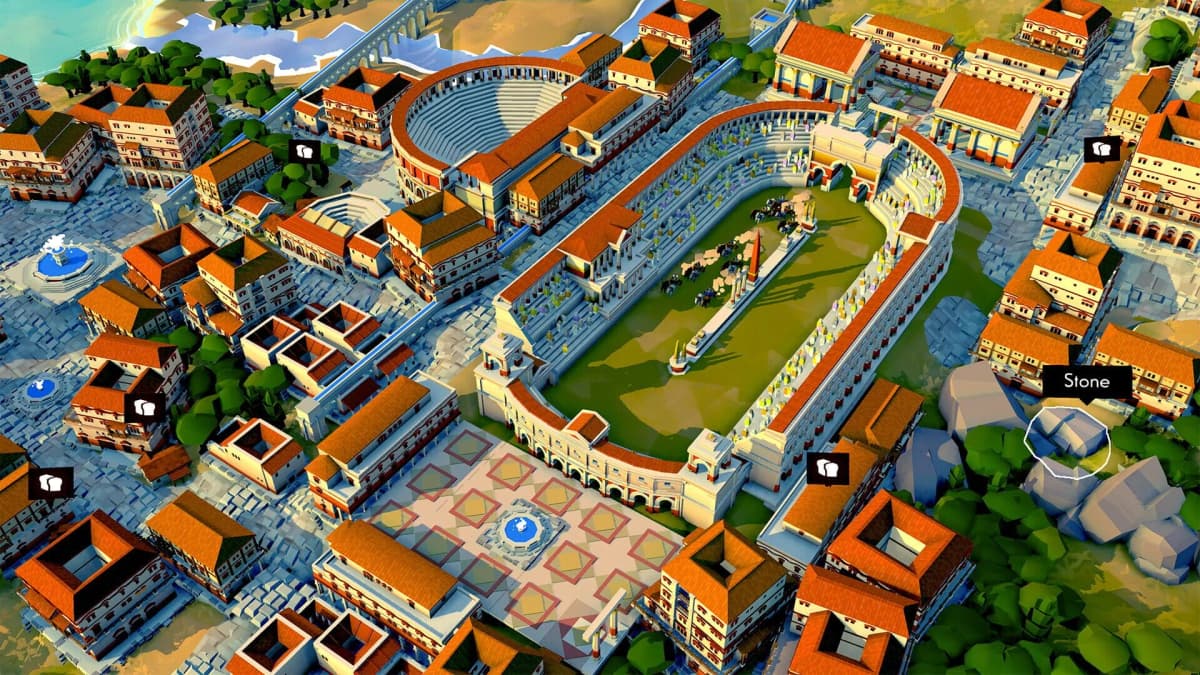
Where Anno 117 excels in long‑term planning and efficient mega‑economies, Nova Roma excels in short‑term crisis management and spatial puzzles. It reminded me more of the tension you get in Frostpunk or Against the Storm than the zen of slowly painting an Anno map with farms.
As an indie, it doesn’t try to compete on spectacle and sheer feature count. Instead, it picks a handful of ideas – water, gods, compact cities under constant pressure – and leans into them. When those ideas sync up, the result is brilliant. When they clash, you see the seams of a three‑person team still stitching things together.
Who Nova Roma Is Really For
If you measure city-builders purely by size, chain complexity and graphical fidelity, Nova Roma will feel like a step down from the big-budget staples. It’s not trying to be your forever game.
Where it makes sense is as a complementary fix:
- Anno and Cities: Skylines veterans who want a more stressful, experimental side project between long campaigns.
- Frostpunk / Against the Storm fans who like being pushed into hard decisions and rebuilding from failure.
- Indie city-builder enjoyers who care more about clever mechanics than postcard visuals.
- Newcomers to the genre who might find Anno’s mega‑chains overwhelming but still want something with bite.
If your dream game is “philosophical chill builder with no real pressure”, Nova Roma is probably not it – at least not in its current Early Access shape. The whole design is built around reacting to crises, not sandbox contemplation.
Bottom Line: A Sharp, Flawed Gem With Room to Grow
Right now, Nova Roma is one of those Early Access games that already feels dangerously addictive despite its rough edges. The moment‑to‑moment decision‑making, the interplay of water and land, the constant juggling of divine favor and material survival – all of that is already strong.
At the same time, the limitations are obvious: shallow-ish production chains, modest map sizes, occasionally brutal randomness and a UI that could stand a lot more transparency. The developers are talking about roughly a year in Early Access, and you can see exactly where that time needs to go.
As it stands today, I’d put Nova Roma at a solid 8/10 for city-builder fans willing to embrace some jank and volatility in exchange for fresh ideas and a gripping loop. It’s not the Roman Anno some people might be dreaming of, but it doesn’t need to be. Its best moments are uniquely its own.
The big question is whether Lion Shield can deepen the systems and smooth the spikes without sanding off the game’s very specific, very sharp personality. That tension between polish and unpredictability is going to define what Nova Roma ultimately becomes.
TL;DR
Nova Roma is an indie Roman city-builder that looks like an Anno 117 de‑make but plays like a tight, pressure‑heavy puzzle of water, gods and survival. Its visuals are basic and its production chains can’t touch Ubisoft’s behemoth, yet the combination of dynamic water systems and moody deities makes for a surprisingly compelling loop. Early Access roughness shows in uneven difficulty, limited depth and some UI opacity, but if you enjoy city-builders that push back and force you to rebuild smarter each time, Nova Roma is already well worth your time – and will only get more interesting as it grows.
FinalBoss // Gear
Level up your setup
01Top-rated gaming headsetson Amazon→02High-refresh gaming monitorson Amazon→03Gaming chairson Amazon→04Discounted game keyson Kinguin→Affiliate links · As an Amazon Associate, FinalBoss earns from qualifying purchases.
Want to Level Up Your Gaming?
Get access to exclusive strategies, hidden tips, and pro-level insights that we don't share publicly.
Ultimate Reviews Strategy Guide + Weekly Pro Tips