
Table of Contents (9)
Oblivion turns 20 today, and I still remember ditching my friends to play it alone
Oblivion turns 20 today, and I can still feel the cheap plastic of that Xbox 360 case in my hands. I’d saved for weeks, walked into a Gamestation that doesn’t even exist anymore, and walked out with The Elder Scrolls IV: Oblivion and a folded paper map of Cyrodiil that genuinely felt like a promise.
My friends came back to mine to “watch me start it.” The moment that camera swooped around the Imperial City and Jeremy Soule’s main theme kicked in, I was already looking for an excuse to kick them out. I didn’t want to share this. I wanted to live in it. Uriel Septim’s voiceover about seeing his own death wasn’t just an intro; it was a line in the sand between the games I’d played before and the RPGs I was about to demand for the rest of my life.
Two decades later, we’ve got Oblivion Remastered, we’ve got DLSS 5 drama, we’ve got Creation storefronts, Crimson Desert horse cosmetics, and a Bethesda that just shipped Starfield – a game that, for me, represents almost everything Oblivion didn’t stand for. And as someone who grew up on Cyrodiil’s jank and genius, I’m going to say the quiet part loud:
If Elder Scrolls 6 leans more toward Starfield’s procedural sludge and monetization schemes than Oblivion’s handcrafted chaos, Bethesda will have completely lost what made their games matter in the first place.
Oblivion was Bethesda in its rawest form – and that wasn’t just marketing fluff
Bethesda’s own creative lead Tim Lamb called Oblivion “what Bethesda games are in the rawest form” for its 20th anniversary. For once, I actually agree with the PR line. Oblivion is the point where Bethesda’s old PC-RPG DNA collided with accessibility and modern console expectations, and instead of exploding, it made something weird and glorious.
I came from the Morrowind crowd. I loved being dumped into a swamp with a knife, a dream, and the absolute minimum of guidance. But let’s not lie: Morrowind also had “wander in vaguely this direction and hope you find the right hill” quest design. Todd Howard has even admitted that adding Oblivion’s compass markers basically “saved their lives” as designers after the confusion of Morrowind. And he’s right. That tiny UI decision changed mainstream RPGs forever.
Here’s the thing: Oblivion added that compass without sanding off all the weird. You still had NPCs with their bizarre Radiant AI routines, wandering off, going to sleep, randomly stealing things and getting themselves killed. You still had quests where the game quietly stepped back and let the systems collide like a drunk chemistry teacher. The signposts improved, but the world didn’t become a checklist.
Modern Bethesda feels terrified of that kind of unpredictability. Starfield is proof. It’s like they took the wrong lessons from the last 20 years: more icons, more systems, more planets, less soul.
Handcrafted quests vs. procedural content: Oblivion still wipes the floor with Starfield
I’ve put hundreds of hours into Oblivion across vanilla, DLC, and modded runs. I forced myself through Starfield for long enough to be fair to it. And when you compare them quest for quest, it’s honestly embarrassing how much more personality the 2006 game has.
Oblivion doesn’t just have “good quests.” It has memorable stories only that game could tell:
- The quest where you get sucked into a watercolor painting to fight spectral trolls in a literal piece of art.
- The Dark Brotherhood’s “Whodunit?” mission, a twisted murder-mystery in a locked manor where you can play serial killer or puppet-master.
- Waking up mid-voyage to discover you’ve basically been hijacked at sea and have to improvise your way out.
None of that is procedural. None of it is “generated” in some algorithmic fever dream. It’s all authored, deliberately paced, and weird enough to stick. You can feel Emil Pagliarulo and the rest of the writers actually trying things, not feeding variables into a content factory.
Starfield, by comparison, feels like it’s trapped under the weight of its own tech. I lost count of the number of times the game asked me to land on Yet Another Beige Rock, walk to a prefab outpost I’d seen twenty times already, and hoover up enemies for the hundredth iteration of “retrieve the thing, bring it back.” You can slap different decorations on those outposts all you like – they still reek of procedural design first, story second.
People keep saying, “But procedural generation gives you infinite content.” I don’t want infinite content. I want finite, intentional content that respects my time. Oblivion had entire factions built around handcrafted arcs – the Dark Brotherhood, the Thieves Guild, the Mages Guild, the Fighters Guild – and they still beat almost anything in Starfield’s galaxies of filler.
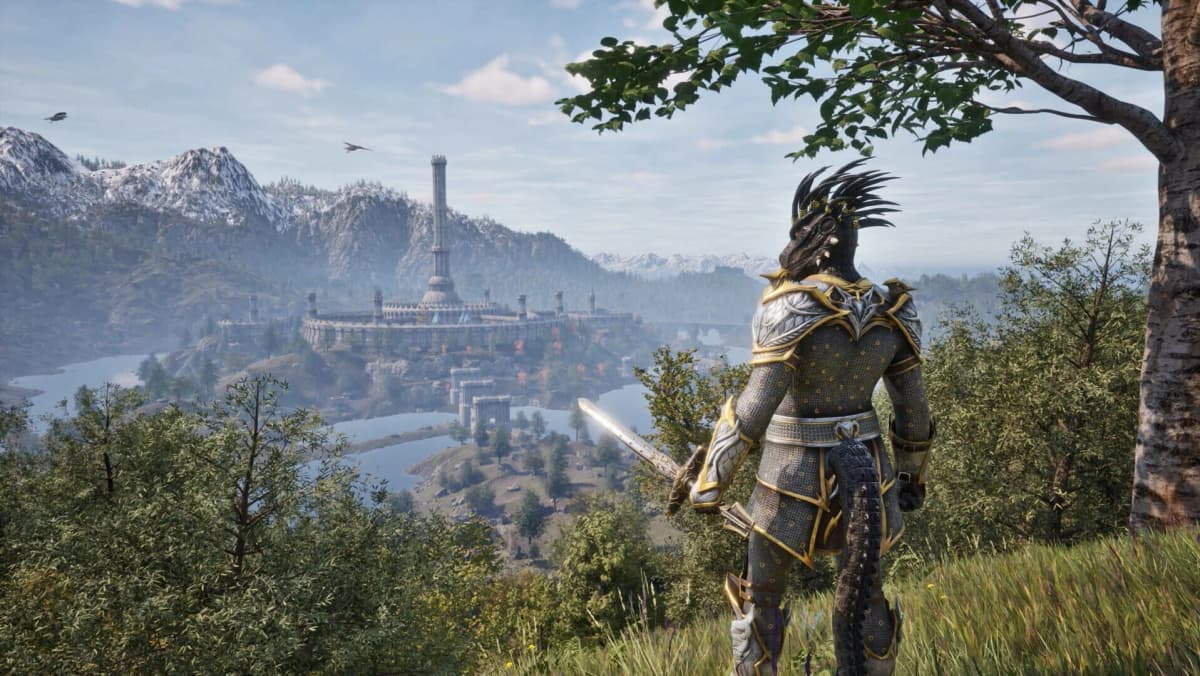
And let’s be honest: newer RPG juggernauts clearly took notes from Oblivion, not Starfield. You can see echoes of its open structure and environmental storytelling in Elden Ring. You can feel its simulationist, grounded approach running through Kingdom Come: Deliverance. Those games doubled down on personality and world coherence, not “land on rock #372B.” That’s the path Elder Scrolls 6 needs to follow.
Oblivion Remastered is fine – but it proves how fragile that magic really is
When Oblivion Remastered dropped in 2025 on modern hardware, I grabbed it instantly. Not because I thought it was essential – honestly, I still think it’s unnecessary if you’ve got a decent PC and access to mods – but because I needed an excuse to dive back into Cyrodiil without wrestling with 20 years of technical debt.
Todd Howard has been clear: this is a remaster, not a remake. They wanted to preserve the original game’s personality, touching up visuals and stability without redesigning armor sets or rewriting systems from scratch. And you know what? On paper, that’s the right approach. The moment you start “modernizing” Oblivion’s design, you risk sanding off exactly the edges that made it special.
But even with a relatively light touch, you can feel how delicate the whole thing is. The NPCs have been given a facelift; the infamous potato faces are a little less potato. The lighting is cleaner, the textures sharper, performance more stable. It’s undeniably nicer to play, but there’s a thin line between “better” and “sterilized.”
This is why the current DLSS 5 discourse hits a nerve for me. Yes, AI upscaling is impressive. Yes, getting more frames for less hardware is cool. But watching Nvidia tech demos airbrush Starfield’s characters into slightly plasticky supermodels makes me nervous about what happens when that mentality gets applied to a game like Oblivion. Those doughy guards with their beady little eyes are part of the aesthetic. If you try to “AI-enhance” everything into a bland, Instagram-ready gloss, you kill the vibe.
I don’t buy into the idea that every game has to be frozen in 2006 fidelity for “purity,” but the remaster underlines something important: you can’t algorithm your way to charm. You can’t patch in soul. Oblivion works because its tech, its writing, its systems, and its jank are all pulling in the same direction – towards this strange, earnest, slightly broken fantasy world that you kind of fall in love with in spite of yourself.
I don’t buy into the idea that every game has to be frozen in 2006 fidelity for “purity,” but the remaster underlines something important: you can’t algorithm your way to charm. You can’t patch in soul. Oblivion works because its tech, its writing, its systems, and its jank are all pulling in the same direction – towards this strange, earnest, slightly broken fantasy world that you kind of fall in love with in spite of yourself.
🎮 Get This Game at the Best Price
Compare prices instantly and save up to 80% on Steam keys with Kinguin — trusted by 15+ million gamers worldwide.
*Affiliate link — supports our independent coverage at no extra cost to you
Horse armor was ridiculous… and also the blueprint for everything that sucks now
We can’t talk about Oblivion turning 20 without mentioning the most infamous piece of digital nonsense in RPG history: horse armor.
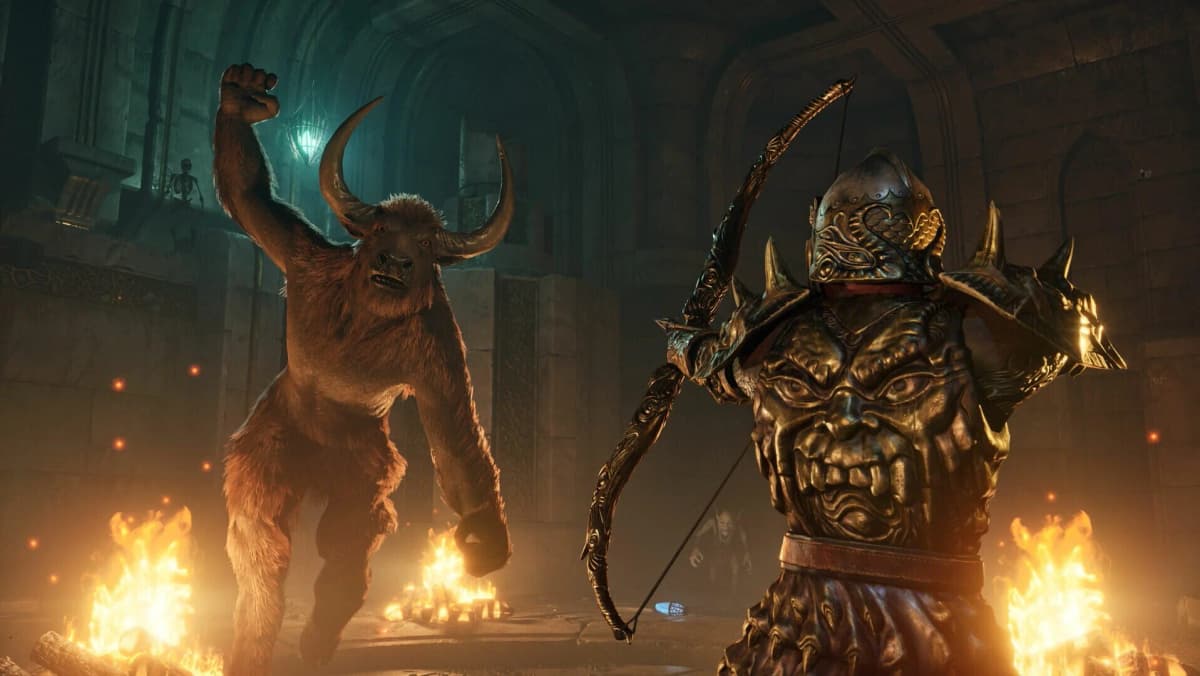
Back in 2006, paying real money for a cosmetic set of gaudy golden armor for your in-game horse felt like a parody. Forums roasted it. Friends joked about it. It was the canonical example of “what publishers will try if you let them.” It also quietly became the origin story for modern microtransactions.
Fast-forward twenty years and tell me horse armor still feels funny. Bethesda has the Creations storefront now, essentially a more elaborate, semi-curated version of the same idea. Crimson Desert just launched with a deluxe edition that includes an exclusive horse tack set – Exclaire saddle, stirrups, nice silver trim instead of Oblivion’s gold, but the principle’s identical. We normalized the joke.
I don’t think adding tasteful cosmetic DLC automatically corrupts a game. I’m not naïve; development costs ballooned, and studios want recurring revenue. But I absolutely do not trust the industry line that “these things are optional and don’t affect the game.” Of course they affect the game. If you know you can sell armor sets, why not make base gear feel just a little more generic? If you know you can sell convenience, why not tune the grind just a bit higher?
Oblivion’s horse armor was stupid, but it didn’t infect the design. It was a weird little add-on to a fundamentally complete game. That’s the key difference. When Elder Scrolls 6 finally staggers onto the scene, I fully expect some version of horse armor to return via Creations. Fine. Whatever. But if I can smell the monetization model in the way quests are structured or loot is tuned, that’s where I’m out.
Starfield showed us the wrong future for Elder Scrolls 6
I went into Starfield hoping for “Oblivion in space.” What I got was “spreadsheet tourism with great art direction.” I didn’t hate everything – there are flashes of cool ideas buried in there – but as a long-time Elder Scrolls sicko, I came away shaken by just how far Bethesda had drifted from what made their worlds sing.
Procedural planets. Template dungeons. NPCs with fewer unique behaviors despite infinitely more horsepower. Exploration that mostly happens in loading screens and fast-travel menus instead of in your feet and your curiosity. A system built for quantity that constantly undermines quality. That’s the exact opposite of Oblivion’s strengths.
And this is why Oblivion turning 20 right now matters. We’re staring down the barrel of Elder Scrolls 6 speculation. Community threads are already predicting trailers around this anniversary window, even if Bethesda is publicly in “no rush” mode. The design decisions getting locked in right now are going to define how we talk about RPGs in the 2030s.
If they double down on Starfield’s procedural backbone, Elder Scrolls 6 might technically be “bigger” than any game they’ve made. It’ll also be emptier. Because the second you put procedural systems at the foundation, every handcrafted quest, every bespoke dungeon, has to fight the engine just to be special. Starfield’s best moments felt like they were wading through mud to reach me.
Oblivion, by contrast, built from the other direction. The core experience was cities, guilds, dungeons, and questlines that were explicitly authored. Systems – Radiant AI, leveled loot, day-night cycles – were there to create emergent stories around that content, not replace it. That’s the formula Bethesda needs to rediscover, not the one they’ve been chasing.
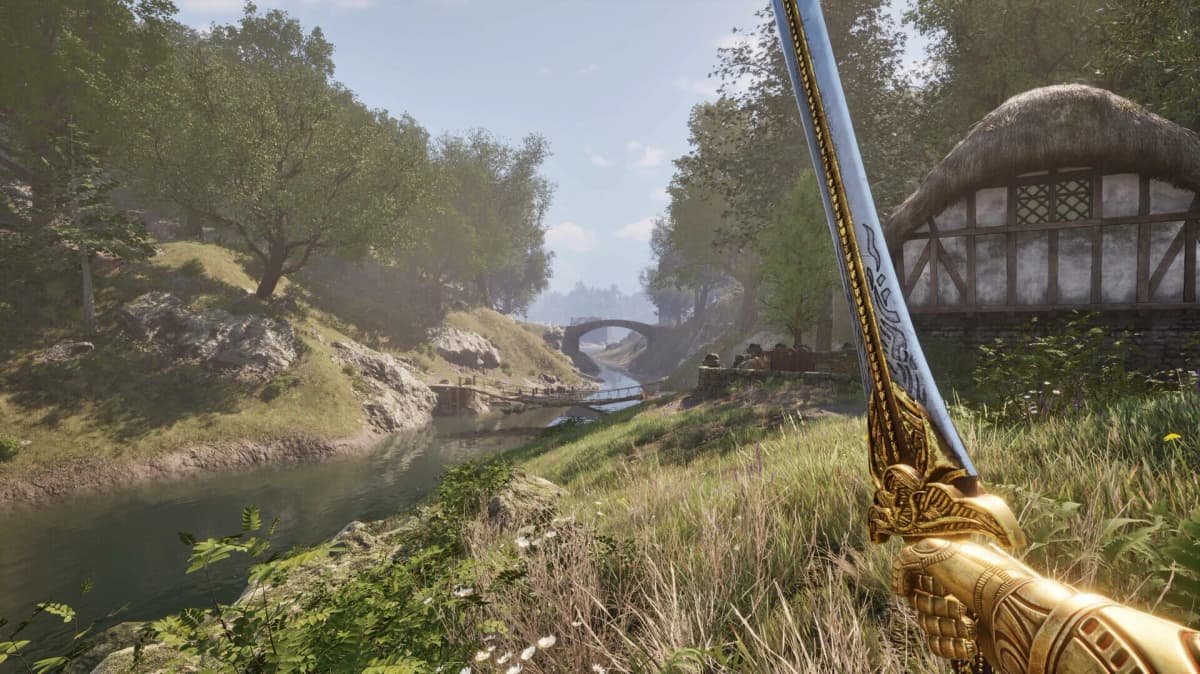
What Elder Scrolls 6 needs to steal from Oblivion (and what it should leave behind)
So, what do I actually want from Elder Scrolls 6, as someone who’s been poking around Cyrodiil’s caves since I was a teenager?
- Handcrafted factions with real arcs. Give me guild lines like Oblivion’s Dark Brotherhood again – not just a checklist of radiant tasks stapled together. I want twists, betrayals, moral dilemmas, and set-pieces that feel written by humans, not rolled on a table.
- Systems that make NPCs feel alive, not efficient. Bring back weird Radiant AI behavior. Let towns break a little. Let schedules matter. I don’t care if an NPC occasionally bugs out; I care if I can tell they’re not just theme-park animatronics waiting for me to press “talk.”
- Exploration that respects walking. Fast travel is fine, but Oblivion’s wilderness felt dangerous and discoverable in a way Starfield’s planets never did. Put more love into what’s over the next hill instead of the next star system.
- Quests you remember 10 years later. Every Elder Scrolls game should have at least a handful of “painting world,” “murder mansion,” “ship hijacking” level quests – the ones your friends still talk about years after the credits.
- Monetization that stays in the damn corner. Put Creations in a tidy front-end menu and design the actual game like it has to stand alone. No “soft pressure” through grindy progression, no deliberately drab base cosmetics.
And yes, Oblivion had flaws we don’t need back. Level scaling that turned bandits into Daedric-clad super-soldiers. Dialogue writing that occasionally felt like it was beamed in from a school play. Every face looking like it was sculpted from mashed potatoes. I’m not asking Bethesda to freeze in amber.
What I’m asking – what Oblivion at 20 is practically screaming – is that they remember why we fell in love with their worlds in the first place. Not because they had the most planets, or the shiniest DLSS implementation, or the best-value cosmetic pack. Because they were messy, specific, human RPGs that let us carve out strange little lives in them.
Twenty years later, Oblivion still feels more human than most modern RPGs
Booting up Oblivion Remastered this past year was like opening a time capsule. Not just to my own teenage obsession, but to a version of Bethesda that seemed genuinely more interested in making stories than pipelines.
It hit me when I installed it. No disc. No warped plastic wrap. Just a sterile alphanumeric Steam code and a digital download. My beloved paper map of Cyrodiil replaced by a mini-map overlay and maybe a deluxe-edition digital artbook if I cough up extra. The whole process felt clinical in a way that jarred against the scruffy warmth of the game itself.
That contrast is exactly where my anxiety about Elder Scrolls 6 lives. The further we go into live services, AI upscaling, procedural everything, and monetized anything-that-moves, the harder it is to keep that human fingerprint intact. Oblivion is one of the clearest reminders we have that Bethesda can strike that balance – between accessibility and depth, between authored and emergent, between selling you a product and inviting you into a world.
Uriel Septim says in the intro, “I have seen the gates of Oblivion.” Twenty years on, so have we – and we’re now watching an industry that seems desperate to pry them back open for every revenue stream and technical gimmick it can cram through.
Oblivion turns 20 today, and it’s still more alive than most shiny new releases. If Bethesda wants Elder Scrolls 6 to matter – not just sell, but matter – they need to stop chasing procedural infinity and remember why we kicked our friends out of the room just to hear that Imperial City theme in peace.
Close the gates. Go back to Cyrodiil’s messy, handcrafted heart. That’s where the future of Elder Scrolls actually is.
FinalBoss // Gear
Level up your setup
01Best-selling Xbox Series X|S gameson Amazon→02Xbox controllerson Amazon→03Top-rated gaming headsetson Amazon→04Discounted game keyson Kinguin→Affiliate links · As an Amazon Associate, FinalBoss earns from qualifying purchases.
Want to Level Up Your Gaming?
Get access to exclusive strategies, hidden tips, and pro-level insights that we don't share publicly.
Ultimate Gaming Strategy Guide + Weekly Pro Tips