
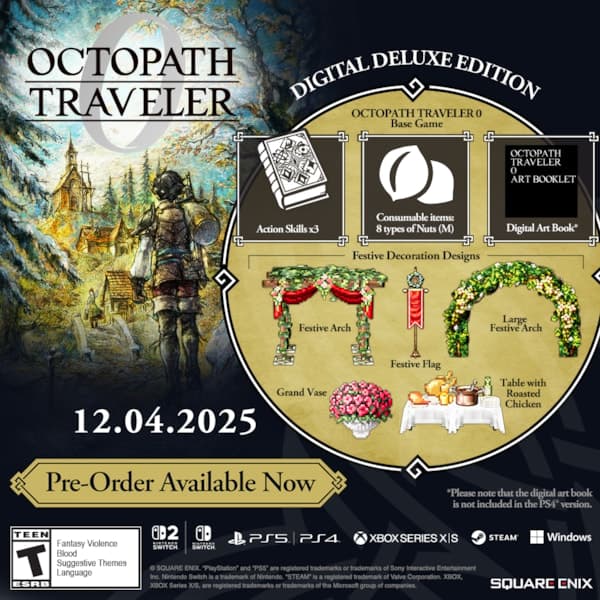
Octopath Traveler 0 scales its village by platform — smart design or content tax?
Game intel
Octopath Traveler 0
All the definitive elements of the Octopath Traveler series return in this exciting prequel set in the realm of Orsterra. Embark on a brand new adventure of yo…
Square Enix’s boldest Octopath experiment is also its most divisive
Octopath Traveler 0 caught my eye for two reasons: the new village-building system looks genuinely cool for an HD-2D RPG, and Square Enix is tying how big that village can get to your hardware. That’s not just a graphics toggle-that’s gameplay capacity changing by platform. As someone who’s sunk way too many hours into Octopath and Bravely Default, I’m intrigued and a little wary.
- Release date: December 4; an HD-2D prequel focused on rebuilding after your hometown is destroyed.
- Village-building is core-and the max size varies by platform (250-500 buildings).
- Over 30 recruitable characters, turn-based battles with front/back line management for up to eight active party members.
- Yasunori Nishiki returns with an orchestrated score; Square says there’s substantial content new to consoles compared to the mobile entry it draws from.
Breaking down the announcement
Octopath Traveler 0 is positioned as a prequel to the first game, swapping eight preset protagonists for a fully customizable lead-a first for the series. You’ll recruit more than 30 companions, each with unique skills, and dive into classic turn-based combat with formation tactics: up to eight characters split across front and back lines, swapping to exploit weaknesses and survive boss pressure. Expect the usual HD-2D feast for the eyes and ears—sprite art over cinematic lighting, and an orchestral score by Yasunori Nishiki that’s done heavy lifting for the series’ identity.
Square also says the game includes a significant chunk of new content relative to Champions of the Continent, the mobile title it draws inspiration from—roughly 40% of the adventure is new. That’s a promising number, but it raises a fair question: how much of the remaining content is reworked versus reused? We’ll need hands-on time to judge how “fresh” it feels.
The platform split: 250 vs. 400 vs. 500 buildings
Here’s the lightning rod. The village you build—homes, shops, infrastructure that feeds back into your progression—has a hard cap based on platform. The original Switch tops out at 250 buildings. PS4 and what publishers are broadly treating as the “next” Switch hardware are listed at 400. PS5, Xbox Series X|S, and PC hit 500.
On paper, Square frames this as a technical constraint alongside resolution and frame rate. In practice, it’s a substantive design lever. The cap doesn’t just change how pretty the village looks; it dictates how many systems you can support at once. In a 250-cap playthrough, you’ll be forced to specialize—lean into commerce, crafting, or defenses—whereas 500 lets you attempt a “have-everything” metropolis with fewer tradeoffs. That will ripple into drop rates, resource flow, job unlock pacing, and how quickly you can kit out a full eight-person roster.
Is this inherently bad? Not necessarily. Strategy games have scaled unit or asset limits forever. But it’s unusual to see explicit, content-relevant caps in an RPG series where console parity has been the norm. If you’re picking a platform, this is no longer “graphics only”—it’s a meaningful difference in how you plan your run.
FinalBoss // Gear
Level up your setup
01Top-rated gaming headsetson Amazon→02High-refresh gaming monitorson Amazon→03Gaming chairson Amazon→04Discounted game keyson Kinguin→Affiliate links · As an Amazon Associate, FinalBoss earns from qualifying purchases.
Why this matters for real players
If you love tinkering, min-maxing facilities, and smoothing out the grind, the 500-cap versions (PS5/Series/PC) look like the definitive way to play. You’ll get to experiment with overlapping building synergies and likely shorten late-game gearing. On 250 (original Switch), expect tougher choices: do you invest in an apothecary district to support sustain-heavy boss fights, or lean into commerce to fund weapon upgrades? That friction could be fun—forced identity for your village—or it could feel like hitting design walls other platforms sail past.
Two things I want Square to clarify before launch: first, will any quests, unique items, or character upgrades require hitting higher village tiers that are unreachable on 250? If so, that’s content fragmentation, not just optimization. Second, will there be cross-save? If I start on a handheld and later move to PC, can my 250-cap town expand to 500, or am I stuck with my original ceiling? Those answers determine whether this is a smart scalability solution or a long-term tax on early adopters.
The good stuff still sounds very good
Underneath the platform drama, there’s a lot to like. Octopath’s turn-based DNA shines when the game pushes party composition and turn economy, and an eight-slot formation system invites deep experimentation—think front-line burst with back-line support rotating in to break shields and reset tempo. More than 30 recruitable characters suggests a healthy sandbox of passives and synergy hunts. If the village layer ties into that—say specific buildings enabling advanced job boards or unique crafting paths—that’s exactly the kind of meta progression that keeps HD-2D RPGs sticky.
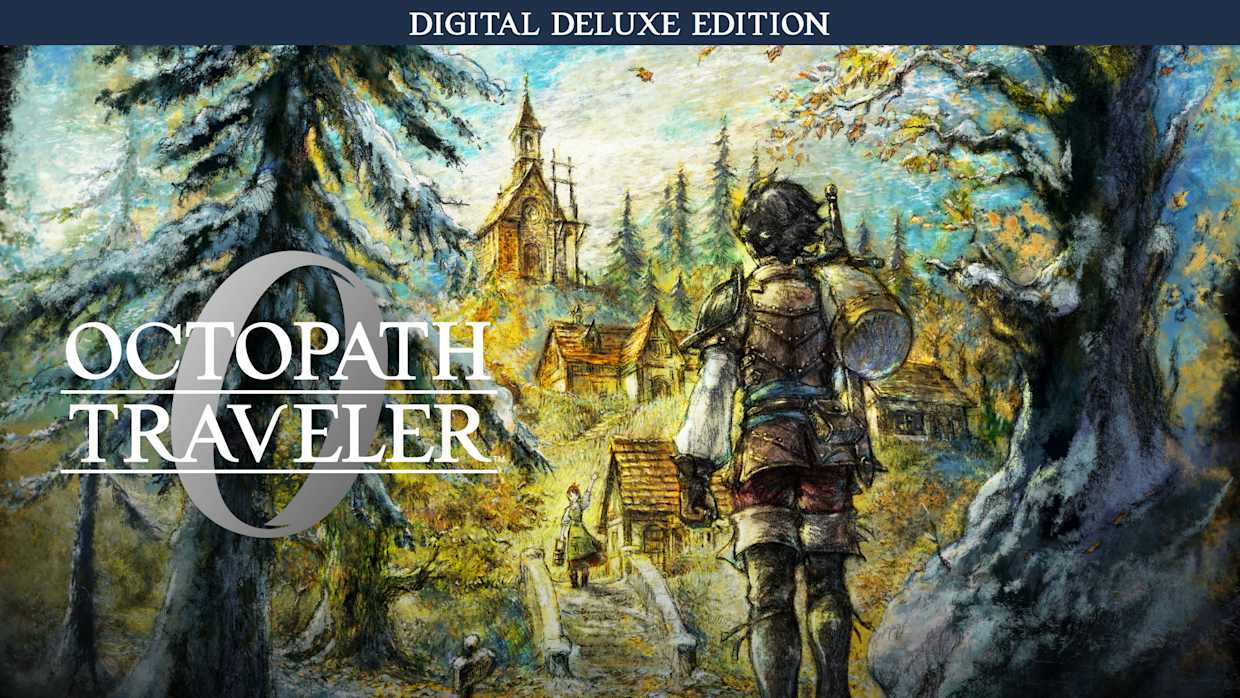
And yes, the aesthetic still slaps. Nishiki’s scores elevate even routine battles, and HD-2D remains one of the few styles that feels both modern and timeless. If Square can marry that charm with meaningful new story content (not just recycled mobile arcs), this could be the most ambitious Octopath yet.
Skepticism check and what to watch
A note on hardware chatter: claims about performance parity for unlaunched systems should be treated cautiously until we see real builds. What matters most is that story and core systems remain fully playable regardless of platform. If the 250-cap versions are balanced around their limit—with adjusted costs, alternative progression hooks, and no missing quests—then fine. If not, this will feel like an avoidable split in the player experience.
TL;DR
Octopath Traveler 0 looks like a strong evolution—custom protagonist, deeper party tactics, and a village meta that could meaningfully shape your run. But the platform-based building cap is a real design difference, not just a settings slider. If you care about maximal tinkering, lean PS5/Series/PC; if you’re going handheld, expect tighter, more specialized town-building—and keep an eye on how Square balances it at launch.