
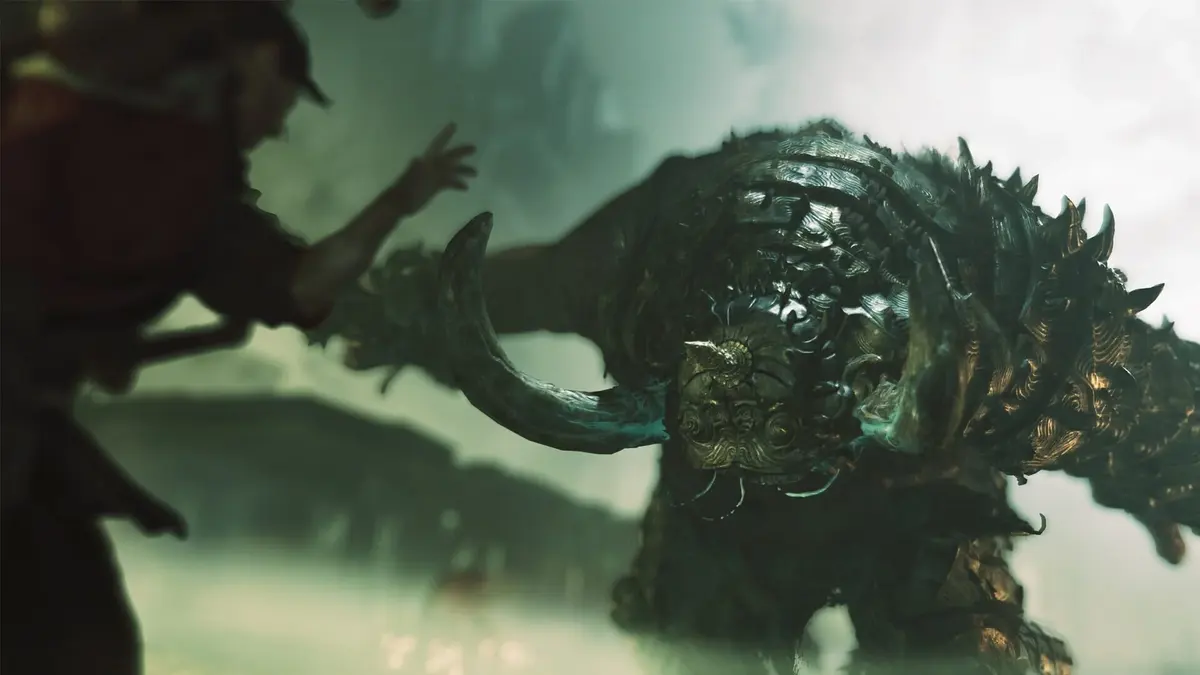
There are 54 Power Stones and 54 Oni Stones available in each playthrough of Onimusha: Way of the Sword, but the two trees do not have the same endpoint. Power Stones can eventually max every Basic Skill in one run. Oni Stones cannot fully complete the Special Skill tree in a single playthrough. The most efficient mid-game build so prioritises permanent parry tools, Blaze support, and resource collection before spending heavily on narrower damage options.
The strongest general-purpose setup is a parry-centric katana build: unlock Blazing State early, strengthen Deflect and the Issen line, improve soul absorption, then add Oni Vision and Oni Power Gauge upgrades. Keep the sword, clothing, and Oni Gauntlet upgraded in parallel. These equipment systems use separate materials, so concentrating entirely on one leaves damage, stamina, and soul economy behind for no material-saving benefit.
Table of Contents (11)
The recommended Onimusha: Way of the Sword best build
This build is designed for the point where standard enemies begin punishing held guard and bosses demand consistent counters. Its loop is direct: parry to build the Blaze Gauge, enter Blazing State, convert the added Blue Soul drops into Oni Armament use, and use Issen timing to turn stagger windows into decisive damage.
- Primary combat focus: Blazing State, Deflect, Issen Multiplier, Break Issen, and One-Handed Power.
- Resource focus: Soul Absorption, Absorption Range+, Move Absorption, and Oni Power Gauge+.
- Survival focus: Health Pool upgrades and Stamina Regen.
- Exploration focus: Oni Vision: Treasures, Treasures 2, and Search Range.
- Equipment rule: Maintain sword, clothing, and gauntlet upgrades together rather than overlevelling one category.
Blazing State is the key purchase because it makes good defense self-sustaining. Successive parries fill the Blaze Gauge. Once full, Musashi’s sword gains blue flame, increasing both damage and stamina damage while causing enemies to drop more Blue Souls. That gives a precise defensive action three returns at once: safer enemy control, stronger katana damage, and more fuel for Oni Armaments.
Skill tree priority: buy the parry engine before specialist damage
Power Stones feed Basic Skills such as Deflect, Issen, and Soul Absorption. Oni Stones are reserved for Special Skills, including Oni Vision and Oni Awakening. Treat the Basic tree as the foundation of the build and the Special tree as a choice between exploration economy, Armament uptime, and burst damage. Since there are only 54 Oni Stones per run, avoid buying every appealing Special Skill as soon as it appears.
First major purchase: Blazing State and Blaze retention
Prioritise Blazing State, or its first available Blaze-related equivalent, over early pure-damage splurges. It pays off during every encounter where an enemy can be parried. Follow it with Blaze Gauge Retention when Red Souls allow; this upgrade costs 2,200 Red Souls and prevents the gauge from completely collapsing after Musashi takes a hit. That protection matters in mid-game arena fights, where one stray strike should not erase several correct parries.
Blaze does not replace clean fundamentals. It magnifies them. A held guard steadily consumes stamina, and extended blocking can leave Musashi unable to guard effectively. Use Guard for the precise parry timing, then disengage or counter instead of treating block as a permanent shield. Arrows can also be parried or deflected; a properly timed deflection sends the projectile back toward its attacker.
Second priority: Deflect and the Issen line
Deflect improves the defensive action that starts the build’s entire resource cycle. The Issen line then converts close timing into large damage. Once acquired, Issen reduces the need to rely on repeated blocking or evasive resets, and a flawless chain can cut through groups in seconds. Issen Multiplier I and One-Handed Power are efficient early katana purchases because light attacks are fast enough to keep pressure on staggered enemies without giving up positional control.
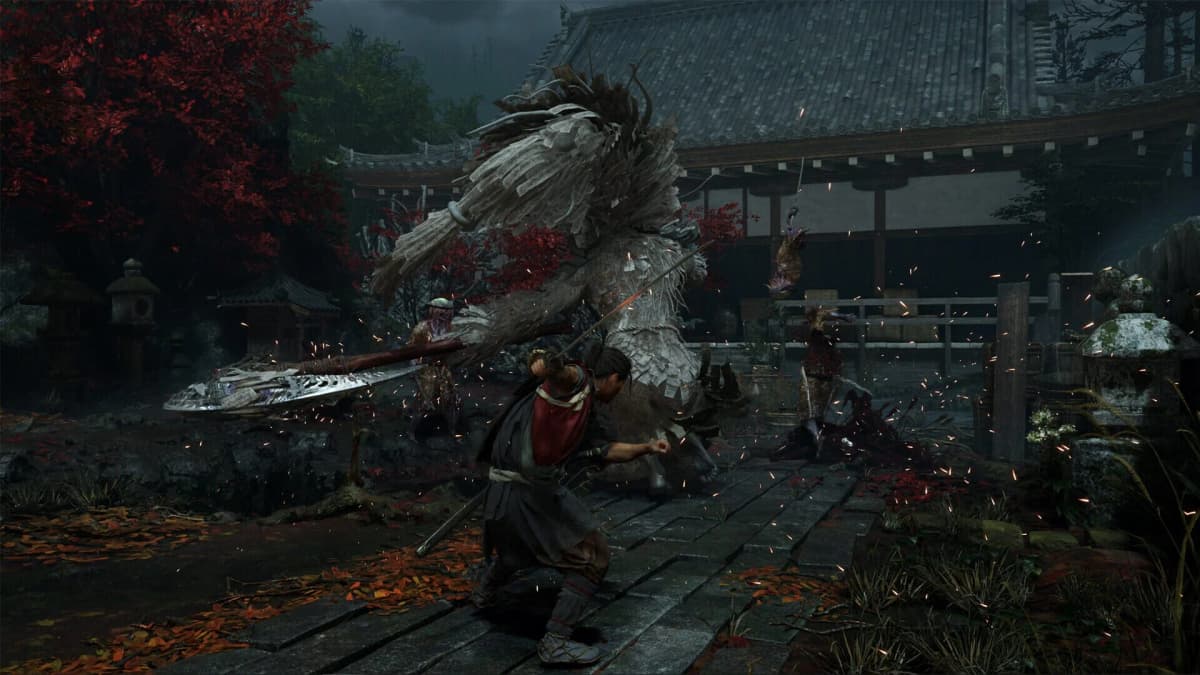
Use simple light-to-heavy strings when a target is vulnerable: light attack into heavy attack, or two light attacks into heavy attack. Heavy attacks are slower, two-handed commitments. They are better used after a parry, posture break, or finisher setup than thrown out during neutral movement. Blade Barrage also rewards weapon contact, creating a follow-up that changes according to whether the initiating strike was light or heavy.
Third priority: soul collection and survival nodes
Take Soul Absorption, Absorption Range+, and Move Absorption before expensive late-tree damage upgrades. Mid-game fights become unstable when dropped souls sit in dangerous positions or vanish while Musashi is forced to reposition. A wider absorption range and moving pickup allow the build to keep generating Red Souls, Blue Souls, and purple souls without pausing in the center of a crowd.
Health Pool I, Health Pool II, and Stamina Regen are equally practical investments. Their Red Soul costs are modest compared with high-end damage nodes: one early priority route places Health Pool I at 150 Red Souls, Stamina Regen I at 400, and Health Pool II at 700. Extra health provides room for imperfect counter timing; stamina regeneration keeps Musashi able to attack, dodge, and parry rather than collapsing into a defensive loop.
Oni Vision is an early economy upgrade, not a late collectible tool
Unlock Oni Vision: Treasures, Treasures 2, and Search Range early in the Special tree. Oni Vision identifies items, treasures, enemies, hidden paths, ambushes, environmental hazards, and traps. Its treasure upgrades also expose the Power Stones, Oni Stones, and upgrade materials that fund the rest of the build. Skipping this branch slows both skill progression and equipment reinforcement, which is why a combat-only allocation often feels resource-starved midway through the campaign.
Oni Vision Duration+ is a reasonable early utility purchase when its 250 Red Soul cost fits the budget. Do not delay Blazing State, Deflect, or core health upgrades for every Vision node, but secure the treasure and range functions before committing to expensive Special Skills. The return compounds through the whole run because hidden materials remain useful even after the immediate fight is over.
Onimusha upgrade priority: reinforce all three equipment tracks
Equipment upgrades provide immediate strength, but their materials are separated. Sword forge ranks use Tamahagane, with 25 Tamahagane available per run. Clothing reinforcement uses Fine Silk Cloths, with 25 available per run. The Oni Gauntlet has its own reinforcement materials. Upgrade each track as materials arrive; a sword improvement never consumes the Fine Silk needed for clothing, and clothing reinforcement never competes with gauntlet materials.
| Upgrade track | Priority benefit | Why it supports the parry/Blaze build |
|---|---|---|
| Sword / blade forge | Raw katana damage and stronger Issen payoff | Blazing State damage scales better when the underlying sword damage stays current. |
| Clothing | Armor, health, and stamina-related durability | More stamina and hit tolerance preserve parry attempts during crowded encounters. |
| Oni Gauntlet | Soul collection and Oni resource capacity | Improves the resource flow that powers Armaments and supports Oni Awakening. |
A balanced equipment track is more reliable than a maximum sword with neglected clothing. The extra attack from a forge rank has limited value if low stamina forces defensive play, while maximum armor does not solve slow soul collection or weak counter damage. Aim to take one available sword level, one clothing reinforcement, and one gauntlet reinforcement as their respective materials become available.
Use the build correctly in mid-game fights
Parry is performed on the Guard button with precise timing, with directional input available to steer the result. A successful parry staggers the target, builds Blaze, and can throw enemies into other enemies or nearby surroundings. This creates openings for chain finishes rather than merely stopping one incoming attack. Weaken several enemies before beginning a finisher sequence; Musashi can move from one vulnerable target to another after each finish instead of leaving the rest of the group at full strength.
Use the two dodge types for different situations. Direction plus dodge is the regular evasive movement for leaving an attack’s path. Dodging without a direction is a stationary evade for attacks where moving would put Musashi into another enemy or hazard. The Een counter follows an immediate dodge with an attack and removes a substantial portion of posture. Perfect dodges also fill the Reflex meter; a full meter turns the next successful dodge into a slow-motion Reflex combo opportunity.
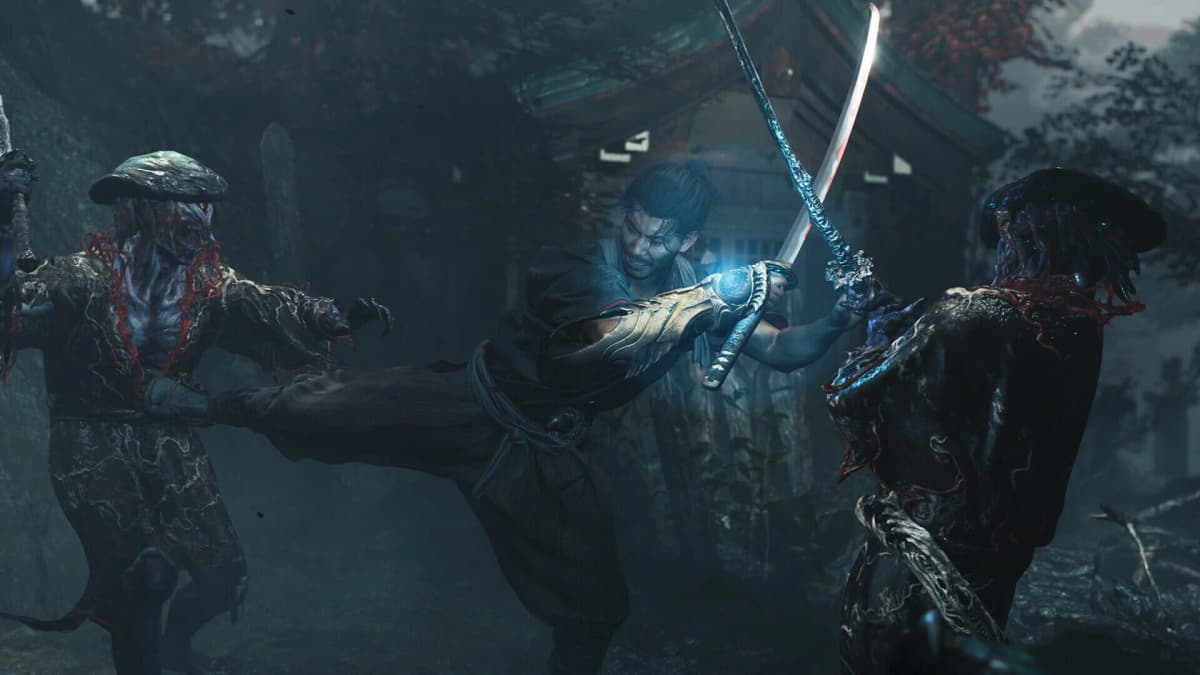
Against bosses, target severable limbs when their attacks are the immediate problem. Breaking a limb grants the benefit connected to its purple section and temporarily disables its associated attack, though some bosses can regrow the part. Attacking purple body sections also damages the soul reserve at roughly half normal damage, producing soul explosions that can be absorbed for healing and Blue-meter recovery. This is the cleanest point to spend Armament charges or activate an Oni Awakening damage window.
Build variations after the core priorities are covered
The parry-and-Blaze setup is the best broad build because it improves the actions used against nearly every enemy. Once its foundation is complete, the remaining Oni Stone allocation can move toward one specialised lane. These options change emphasis, not the requirement to maintain Deflect, Issen, survivability, and Oni Vision economy.
| Build lane | Additional investment | Best use case |
|---|---|---|
| Parry / Blaze | Blaze Gauge Retention, Deflect, Issen and Break Issen | Telegraphed enemies, boss counters, and sustained katana pressure. |
| Earth-Shakers generalist | Oni Vision economy, Earth-Shakers upgrades, Issen support | Crowds and broad mid-game progression, with careful charge timing. |
| Awakening-focused | Still Water, purple soul generation, Oni Awakening enhancements | Players using Oni Awakening as a regular boss damage cooldown. |
Earth-Shakers are effective but require timing discipline. Charging leaves Musashi open, so they should be used after control has already been established rather than as a panic answer. Wind-Whipper remains useful for crowd situations, while The Flashing Void offers a safer ranged approach. None of these Armaments replaces the basic defensive loop; their value rises when Blue Soul generation from Blaze and absorption upgrades is already stable.
New Game+ changes what is worth buying
Skill trees carry into New Game+. Unlocked Basic Skills, Special Skills, sword arts, and enhanced Awakened Oni abilities remain available from the start of the next run. This makes Power Stone and Oni Stone spending the safest long-term investment in Onimusha: Way of the Sword, particularly because the Special tree cannot be maxed with its 54 Oni Stones in one playthrough.
Pouch upgrades and charm upgrades also carry over. A reinforced Hozuki Pouch preserves its improved recovery-item capacity, while retained charms preserve their passive value. These systems are worth developing whenever their upgrades are available because they improve the opening hours of every later run rather than only the current chapter.
Equipment levels do not carry over. Sword forge ranks, clothing reinforcements, Oni Gauntlet reinforcements, Tamahagane, Fine Silk Cloths, and other equipment materials reset for New Game+. Rebuild them for the current run, but do not sacrifice permanent skill progress merely to force a late-game equipment spike. The efficient order remains permanent skills first, parallel gear reinforcement second, then specialist upgrades once the parry-and-Blaze loop is complete.
What to upgrade first and what carries into New Game+
Upgrade Blazing State first, then Deflect, Issen Multiplier I, soul absorption tools, Health Pool, and Stamina Regen. Take Oni Vision treasure and search-range upgrades early enough to improve the full-run material economy. For equipment, upgrade sword, clothing, and gauntlet together because their materials are separate. This avoids the common mid-game failure state of strong attack power paired with weak stamina, low armor, or unreliable soul collection.
All unlocked skills and techniques carry into New Game+, including Basic Skills, Special Skills, sword arts, and Awakened Oni enhancements. Hozuki Pouch and charm upgrades also persist. Sword, clothing, and gauntlet levels reset, so they must be rebuilt each run. That split is the central upgrade rule: permanent skill-tree investment compounds across playthroughs, while equipment reinforcement should be kept balanced for the immediate campaign.
FinalBoss // Gear
Level up your setup
01Top-rated gaming headsetson Amazon→02High-refresh gaming monitorson Amazon→03Gaming chairson Amazon→04Discounted game keyson Kinguin→
Affiliate links · As an Amazon Associate, FinalBoss earns from qualifying purchases.
Want to Level Up Your Gaming?
Get access to exclusive strategies, hidden tips, and pro-level insights that we don't share publicly.
Ultimate Guide Strategy Guide + Weekly Pro Tips