

Spoiler warning: this guide starts spoiler-safe, then moves into the full ending, the final character outcomes, the after-credits scene, and what unlocks once the credits finish.
Onimusha: Way of the Sword builds its Kyoto-set Genma conflict around Miyamoto Musashi and the Oni Gauntlet, then resolves that story through one deliberately fixed finale. There are no dialogue choices, collectible thresholds, morality scores, or New Game+ requirements that change the result. Once you beat the final mission, every player receives the same ending and the same short post-credits extension.
Table of Contents (10)
Before the Ending: The Point of No Return
The final mission is “The Clash at Rendaino.” You begin it by speaking with Ono no Takamura at Rokudou Chinno-ji in Rakuto. Accepting the mission temporarily locks free-roam and side content until the credits roll, so this is the right moment to stop and decide whether you want a clean first completion or a more thorough pre-finale save.
Keep a manual save before talking to Takamura if you are working through the game’s sidequests, upgrades, or all 274 collectible locations. That precaution is about convenience rather than permanent missables: after the ending, using Continue returns you to free-roam immediately before “The Clash at Rendaino.” You can then resume cleanup, farm resources, or replay the last mission without starting the entire campaign over.
- Finish side content first if you want the clearest progression route before the finale.
- Make a manual save before accepting “The Clash at Rendaino.”
- Do not chase a supposed true-ending requirement. No collectible total, score, difficulty setting, or optional fight changes the outcome.
- Watch through the credits on your first clear. The ending includes an additional scene afterward.
Does Onimusha: Way of the Sword Have Multiple Endings?
No. Onimusha: Way of the Sword has one campaign ending, followed by one fixed after-credits scene. There is no good ending, bad ending, secret ending, or separate true ending. The final battle always leads to the same cutscenes, and dying during the finale only sends you back to the mission checkpoint.
This also means difficulty has no narrative effect. Action difficulty and Carnage New Game+ use the same story scenes. Carnage makes the replay more demanding and changes your progression context, but it does not reveal an extra conclusion for Musashi, Dokyo, Ganryu, Shizuka, or Okuni.
The common “true ending” confusion usually comes from treating the post-credits scene as secret content. It is not. It is part of the intended ending sequence and plays automatically after any full clear of “The Clash at Rendaino.”
The Final Fight: Yoshitsune’s Three-Phase Conclusion
The ending proper begins with Musashi’s three-phase duel against Minamoto no Yoshitsune. This is not a branching finale dressed up as a boss rush. It is one ordered fight with three distinct steps, and each step changes both the combat rhythm and the story tone.
Phase 1: A Straight Duel That Teaches Yoshitsune’s Baseline
The opening phase is the cleanest version of the fight. Mechanically, it plays like a hard sword duel built around Yoshitsune’s core pressure. The safest approach here is to respect his blade strings, avoid the soul-stealing grab, and take short punish windows instead of trying to force long combos. If you get greedy, the fight reminds you very quickly that Yoshitsune is not the kind of boss who lets overcommitment slide.
Narratively, this phase matters because it frames the ending as a true contest between rivals rather than a gimmick encounter. Musashi is not skipping straight to spectacle. He has to meet Yoshitsune head-on first, read him, survive him, and prove he can stand in the same arena before the fight escalates.
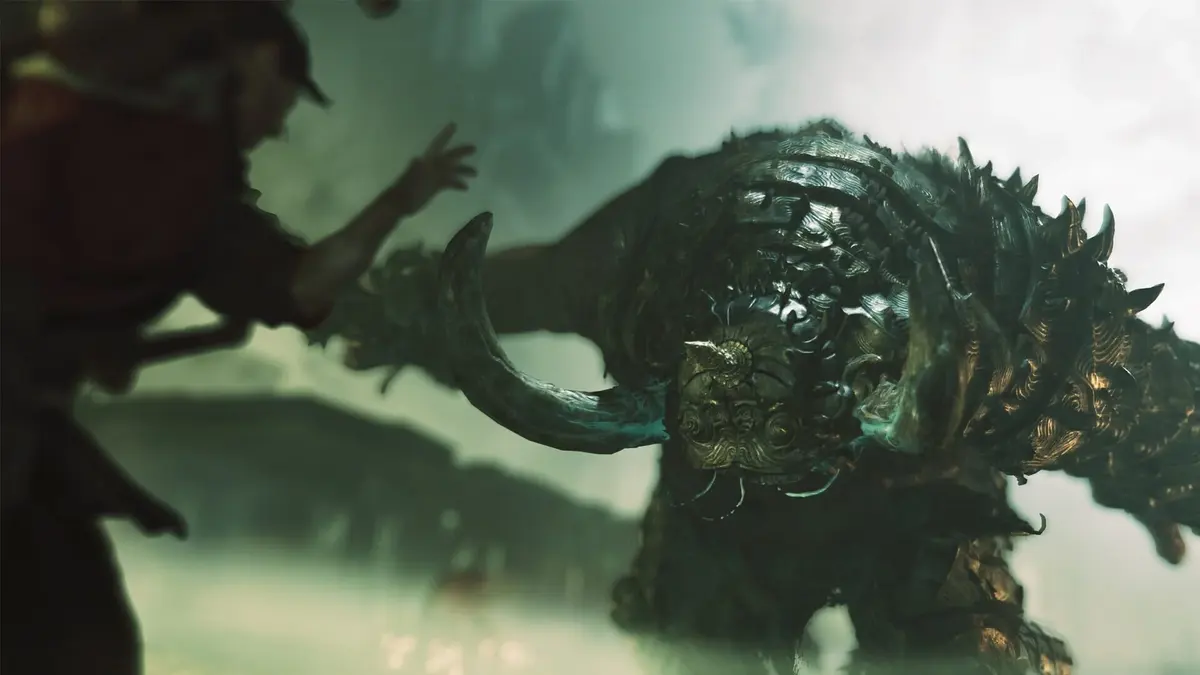
Phase 2: More Mobility, More Pressure, Less Margin for Error
The second phase is where the duel stops feeling clean and starts feeling oppressive. Yoshitsune becomes more aggressive, more mobile, and harder to damage consistently. In practical terms, this is the section that pushes you toward tighter defense, better gauge management, and more reliance on deflections rather than extended offense. A deflection here is the timed guard that turns defense into control, and in phase two it becomes less of a nice bonus and more of a survival skill.
This is also the phase that turns the battle into a resource check. Healing, meter, and patience all start to matter more because the fight is no longer simply asking whether you learned Yoshitsune’s patterns. It is asking whether you can hold together while he powers up. That change gives the duel its middle-act tension: Yoshitsune is not just resisting defeat, he is forcing Musashi to endure a version of him that feels increasingly beyond normal reach.
Phase 3: The Oni Awakening Payoff
The third phase is the decisive break. Normal attacks stop working effectively, and the encounter becomes an Oni Awakening check. In other words, the rules shift. You need that transformed state and its stored gauge ready, because regular damage no longer carries the same weight. This is the hardest part of the fight for a reason: it asks for execution, timing, and preparation all at once.
It is also the mechanical payoff for the whole campaign. The Oni Gauntlet has shaped Musashi’s journey from the start, and the final phase forces that system into the center of the ending instead of treating it like a side mechanic. The fight resolves when Musashi wins this last test outright. There is no hidden choice, no alternate route, and no special branch waiting behind collectibles. Beat phase three, and the story moves forward.
When Yoshitsune finally falls, he dissolves and passes out of the cycle that bound him to endless conflict. That release closes his role in the story: Yoshitsune gets the decisive battle he sought, but he does not survive it as a continuing antagonist. The game treats his disappearance as a release rather than a simple battlefield death.
Shizuka’s part of the ending is similarly final for this chapter. With the immediate crisis resolved, she returns to hell to restore its order. Her departure explains why she does not remain alongside Musashi after the destruction of Shanaoh Castle; her responsibilities lie beyond the earthly conflict the campaign has just resolved.
Dokyo’s Reveal: Why Yoshitsune Was Never the Whole Plan
The central twist of the Onimusha Way of the Sword ending comes after Yoshitsune’s defeat, when Dokyo reappears as Shanaoh Castle starts to collapse. Rather than reacting to Yoshitsune’s erasure as a failure, she declares that her “magnum opus” is complete. The scene makes the hierarchy clear: Yoshitsune’s war was useful to Dokyo, but it was never the full extent of her ambition.
Dokyo shatters Shanaoh Castle and releases the souls trapped within it. Those freed Oni souls are drawn into Musashi’s Oni Gauntlet, satisfying the gauntlet’s hunger at last. The accumulated power fully heals Musashi, restores his control over his own body, and allows the gauntlet to loosen enough for him to remove it.
That moment is the story’s biggest mechanical payoff. Soul absorption has defined the Oni Gauntlet throughout the campaign, and the finale turns that familiar system into Musashi’s escape from it. Musashi does not die in the destruction of Shanaoh Castle. He survives, healed and freed from the gauntlet that has shaped his journey.
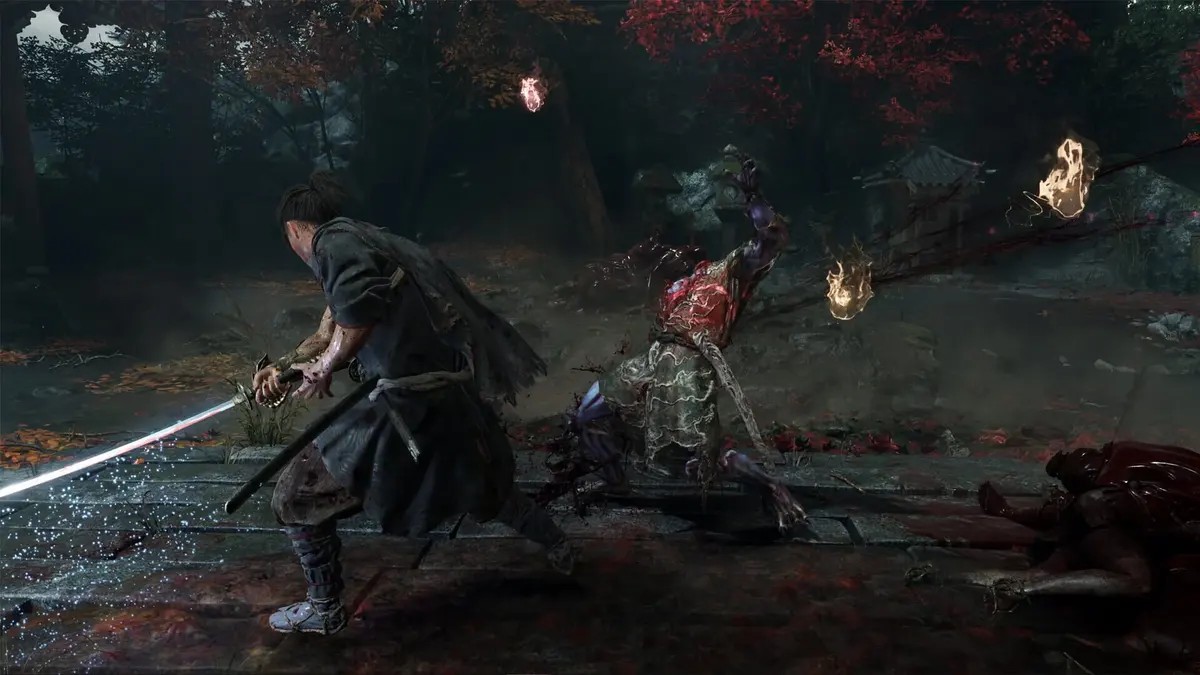
Dokyo, meanwhile, escapes. Her survival matters more than the castle’s collapse because she leaves having achieved the result she wanted. Her exact long-term purpose remains unresolved, but the ending establishes her as the architect of a larger Oni-Genma crisis that extends beyond Yoshitsune’s defeat.
Ganryu’s Fate and the Onimusha Sequel Tease
Sasaki Ganryu is alive at the end. He is revived and escapes alongside Dokyo, which prevents Musashi’s rivalry with him from receiving a final resolution in this game. Yoshitsune is gone, but Ganryu remains an active threat, and Dokyo now has both her freedom and the results of her completed plan.
The after-credits scene then returns to Musashi and Okuni after Shanaoh Castle’s destruction. Musashi confirms that he is going after Ganryu, while Okuni remains behind. It is a compact scene, but it gives the ending a clear direction: Musashi’s next journey is a pursuit, Ganryu is the immediate target, and Dokyo remains the larger unresolved danger.
That is the Onimusha sequel tease. The story strongly points toward a follow-up centered on Musashi’s hunt for Ganryu and the consequences of Dokyo’s actions. Even so, the ending itself does not confirm a sequel title, setting, or release window. Its purpose is to leave the rivalry open rather than provide a complete second-story outline.
Where Every Major Character Stands at the End
| Character | Ending status | What it means |
|---|---|---|
| Miyamoto Musashi | Alive, fully healed, and freed from the Oni Gauntlet | He survives Shanaoh Castle and leaves to pursue Ganryu. |
| Minamoto no Yoshitsune | Dissolves after the three-phase final battle | His cycle of conflict ends, closing the game’s central warlord arc. |
| Shizuka | Returns to hell | Her role in the Kyoto crisis is complete, and she departs to restore order there. |
| Dokyo | Escapes after completing her plan | She remains the key unresolved mastermind behind the wider threat. |
| Sasaki Ganryu | Revived and escapes with Dokyo | He becomes Musashi’s immediate future target and the clearest sequel hook. |
| Okuni | Remains behind after the final conflict | Her scene with Musashi provides the bridge into the after-credits setup. |
What Unlocks After the Credits?
Finishing the campaign opens three practical post-game paths: free-roam cleanup, final-mission replay, and Carnage New Game+. The important distinction is that Continue and Carnage serve different purposes. Continue returns you to the pre-finale world on your completed save; Carnage begins a new, harder run.
- Replay “The Clash at Rendaino”: Continue returns you to the point before the final mission, letting you refight Yoshitsune and rewatch the full ending whenever you want.
- Finish post-game cleanup: Side content and collectible hunting become available again, so nothing is permanently lost by entering the finale early.
- Farm resources: The returned free-roam state allows continued farming before you commit to another campaign run.
- Unlock Carnage difficulty: A full clear makes Carnage available when creating a New Game+ file.
Carnage functions as the game’s high-stakes New Game+ mode. It carries over abilities, Hozuki Pouches, charms, outfits, and Boss Rematch progress, while resetting the main story and sidequest progression. It is designed for players who want to re-enter the campaign with retained power but tougher encounters, including farming in Malice-warped Kyoto.
Choose Carnage carefully: once selected for that New Game+ file, the difficulty cannot be changed mid-playthrough. You also cannot convert an existing standard save into Carnage. Start a new NG+ file only when you are ready for the higher-difficulty commitment.
FinalBoss // Gear
Level up your setup
01Top-rated gaming headsetson Amazon→02High-refresh gaming monitorson Amazon→03Gaming chairson Amazon→04Discounted game keyson Kinguin→
Affiliate links · As an Amazon Associate, FinalBoss earns from qualifying purchases.
Want to Level Up Your Gaming?
Get access to exclusive strategies, hidden tips, and pro-level insights that we don't share publicly.
Ultimate Guide Strategy Guide + Weekly Pro Tips