
The useful update here is not that Outbound’s developer apologized. Apologies are cheap, especially in the 48 hours after a Steam launch goes sideways. What matters is that Square Glade’s post-launch review controversy exposed two separate problems at once: a game that appears to have missed player expectations on substance, and a studio response that managed to make a normal rough-launch backlash look like an integrity problem.
That distinction matters if you are deciding whether to buy Outbound now, wait, or write it off. A buggy Early Access launch can recover. Plenty do. But once a studio is seen asking unhappy players to edit or remove negative Steam reviews while pursuing refunds, the issue stops being “the build needs work” and becomes “can this team be trusted to handle criticism without trying to massage the public record?” That is a harder fix.
Table of Contents (5)
This was not just bad community management
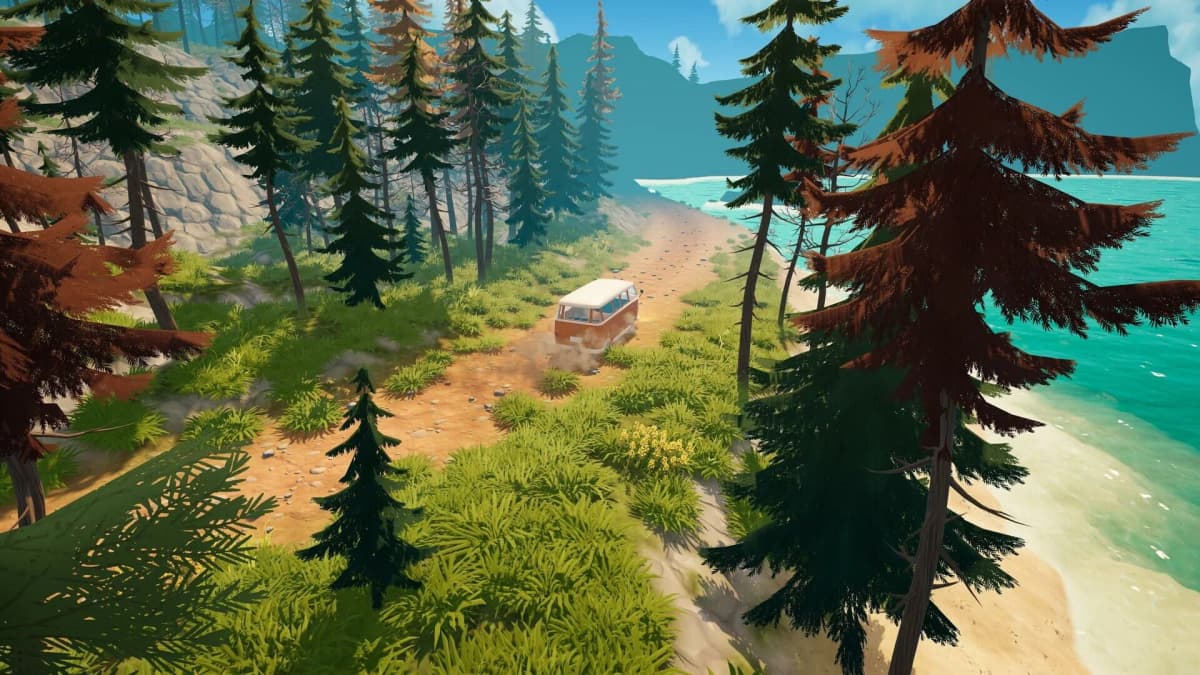
The basic sequence is clear. Outbound, a cozy open-world van-life survival game from Square Glade Games, launched on Steam in Early Access on May 11 after building serious momentum through a popular demo and roughly 1.5 million wishlists. Then the mood flipped fast. Players complained about repetitive progression, shallow mechanics, short playtime relative to expectations, slow driving, technical issues, and a price point that suddenly looked much less charming once the game was in their hands.
That part is ordinary. It is ugly, but ordinary. Steam has seen this exact arc before: strong demo buzz, wishlist mountain, launch-day reality check. The unusual part came after. According to screenshots shared by players and reported across European gaming outlets, developer replies on Steam encouraged dissatisfied users to change, amend, or remove negative reviews while seeking refunds. One widely circulated example boiled the message down to the worst possible version of it: remove the review and get a refund.
Even if the intent was clumsy customer support rather than outright manipulation, the effect is the same. Steam reviews are one of the few public, platform-level consumer warning systems PC players have. Trying to clean up those warnings at the same moment people are asking whether the game is worth the money is exactly the sort of thing that detonates trust.
And yes, this is the uncomfortable observation the PR team would rather frame as a “miscommunication”: it is not enough to say the wording was unfortunate. The behavior looked like an attempt to trade refunds for cleaner optics. On Steam, those optics are not cosmetic. They affect discoverability, recommendation algorithms, and the confidence of the next buyer in line.
The apology addresses tone, not the underlying risk
Square Glade has now apologized and said this approach will not be repeated. That is necessary. It is also the absolute minimum. An apology can clarify policy going forward, but it does not retroactively answer the bigger question that sparked the backlash: were players reacting mainly to a phrasing disaster, or to a launch where the actual game simply was not close to the fantasy being sold by the demo, store page expectations, and wishlist momentum?
That is the question buyers should stay focused on. Because if Outbound were in better shape, this controversy would still be bad, but survivable. Players forgive a lot when the core loop is strong. They do not forgive nearly as much when the core complaint is that the game feels thin, repetitive, or undercooked. In that scenario, the review-removal scandal reads less like an isolated PR blunder and more like panic after the market gave an honest answer.
This is also why the “cozy” label is doing no protective work here. Cozy games are often treated by outsiders as soft-focus, low-stakes releases with calmer communities. In practice, cozy audiences are brutally clear when a game oversells comfort, freedom, or lifestyle fantasy and delivers grind, emptiness, or friction instead. The pitch for Outbound was specific: a relaxing road-life sandbox with exploration appeal. If players are instead finding shallow survival loops and technical instability, the backlash is not a mystery. It is product-market mismatch, visible in public.

Why Steam review manipulation hits harder in 2026
Steam reviews have become more than a comments section. They are part consumer guidance, part reputation ledger, part platform infrastructure. Recent high-profile cases across PC gaming have shown how volatile that system can be. Games get hammered by review bombs over patches, balance changes, regional anger, or platform politics. Developers know that. Players know that. Which is exactly why a studio trying to influence review visibility through refund-related nudging is treated as radioactive.
The broader context is simple: trust in platform feedback systems is already thin. When players suspect that reviews are being massaged, they assume the worst, because they have learned to. Not every negative score wave is fair, and not every dogpile reflects the actual state of a game. But the answer to that problem is not to privately or semi-publicly encourage unhappy customers to tidy up their criticism on the way out.
If anything, Square Glade stepped directly into the one trap that makes a shaky launch look shadier than it may have been. A rough build says, “we shipped too soon.” A refund-for-review-removal screenshot says, “we care what the score says more than why the score happened.” Those are very different messages, and players react accordingly.
The real unanswered question is whether the game improves fast enough
Here is the question I would put to the studio, because it matters more than another apology paragraph: what is the first concrete patch plan that addresses the complaints behind the reviews, not the reviews themselves? Specifically, what changes are coming for gameplay depth, session variety, progression pacing, and technical stability – and on what timeline?
That is the line between a recoverable stumble and a cautionary tale. If Square Glade follows this with fast, targeted updates that directly address repetition, bugs, and missing-feeling systems, then the controversy may eventually be remembered as the launch-week mistake that nearly buried a fixable Early Access game. If the roadmap stays vague while the studio keeps talking about communication lessons, then players should assume the core product issues are harder to solve than the PR issue.
- Watch for patch notes that address gameplay structure, not just crash fixes.
- Watch whether the studio publishes clearer refund and review-response guidelines for staff.
- Watch the recent review trend over the next two to four weeks, not just the overall score.
- Watch player concurrency after the first major update; that is usually where goodwill either returns or evaporates.
What buyers should do now
The practical read is straightforward. Do not buy Outbound because of the apology. Buy it later only if the patch cadence and player response show that the launch complaints were genuinely fixable. Right now, the safest interpretation is that the game launched into a credibility deficit on two fronts: the product disappointed a visible chunk of its audience, and the developer handled that disappointment in a way that made the review system itself part of the scandal.
For current owners, the useful signal is not sentiment on Reddit or a polished statement on social media. It is whether the next updates materially improve the experience described in those negative reviews. For everyone else, this is a wait-and-verify situation. Wishlist momentum got Outbound to launch. It will take harder evidence than an apology to get cautious buyers over the line.
FinalBoss // Gear
Level up your setup
01Graphics cardson Amazon→02Gaming laptopson Amazon→03High-refresh gaming monitorson Amazon→04Discounted game keyson Kinguin→Affiliate links · As an Amazon Associate, FinalBoss earns from qualifying purchases.
Want to Level Up Your Gaming?
Get access to exclusive strategies, hidden tips, and pro-level insights that we don't share publicly.
Ultimate Gaming Strategy Guide + Weekly Pro Tips