
Owlcat’s Warhammer 40,000: Dark Heresy Aims for BG3-Level Choice in the Grimdark
Game intel
Warhammer 40.000 : Dark Heresy
Become an acolyte of the Inquisition in this grim dark, party-based, story-driven cRPG. Lead investigations, uncover grand conspiracies, master tactical combat…
BG3’s choice density meets 40K’s bleakest faction-sign me up (carefully)
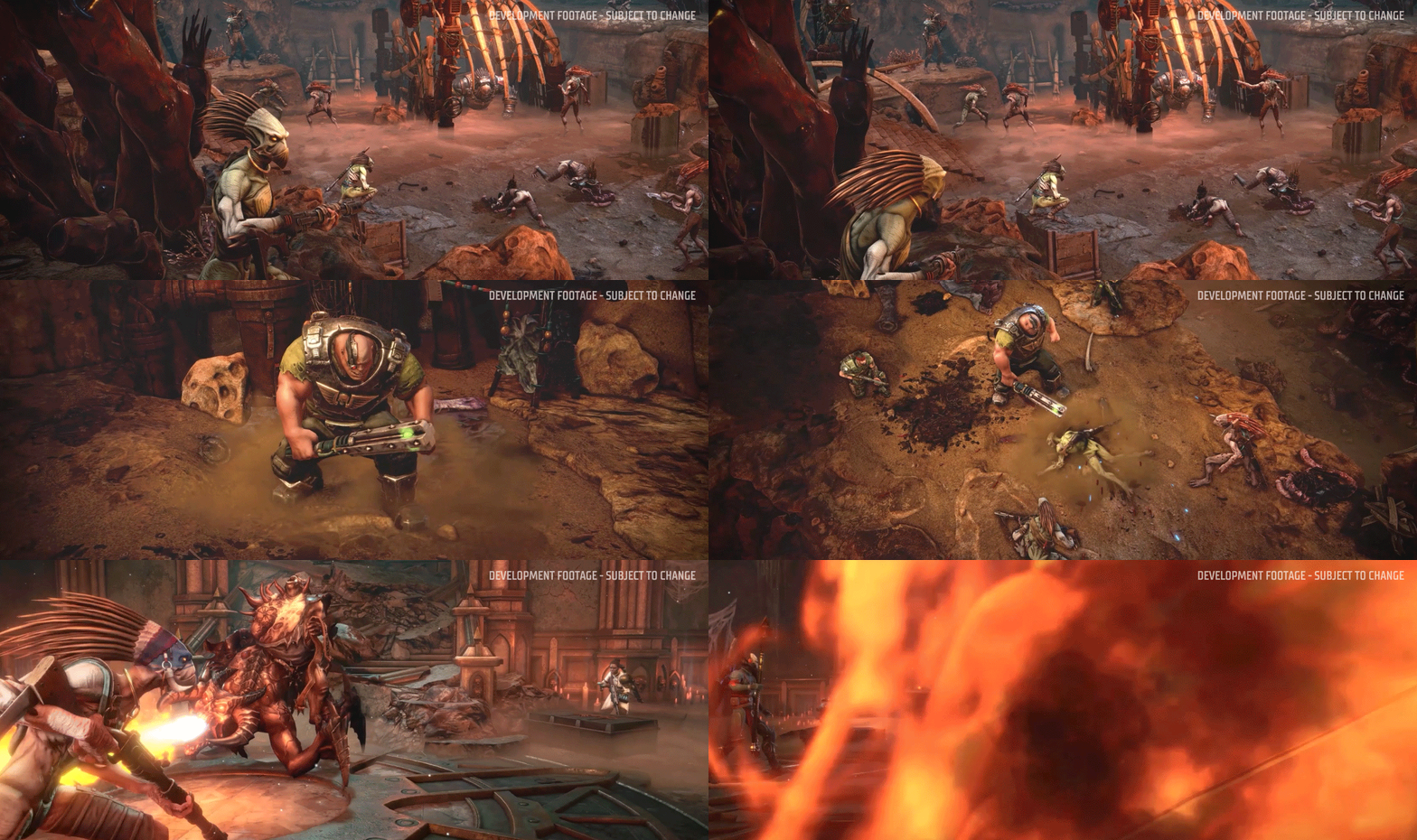
This caught my attention because the Inquisition fantasy is tailor-made for a proper cRPG. Warhammer 40,000: Dark Heresy puts you in the boots of an Acolyte serving an Inquisitor, promising investigations, ugly moral trade-offs, and turn-based combat that punishes sloppy play. That’s a far cry from another bolter power fantasy-and closer to a Baldur’s Gate 3-style “your choices actually matter” experience. On paper, it’s exactly the corner of 40K I’ve wanted to role-play for years.
Key Takeaways
- Single-player, party-based cRPG focused on investigations and conspiracies in the Calixis Sector.
- Turn-based combat with targeted weak points and a morale layer that can force surrenders.
- Fully voiced companions-including Imperials and a xenos Kroot—bring ideological friction to the squad.
- Choices can be messy; you can even accuse the wrong person and live with the fallout.
Breaking down the announcement
Dark Heresy draws directly from the tabletop RPG lineage, not the miniature wargame. That’s important. The table version was all paranoia and paperwork, where a signed order could doom a hive as efficiently as an Exterminatus. Translating that to a video game means the “game” isn’t just who you shoot—it’s who you trust, who you blame, and how far you’ll bend Imperial law before it breaks you.
The pitch centers on a genuine investigation system. You interrogate suspects, collect evidence, and string threads together to unmask cults, rogue psykers, and xenos plots. Crucially, the team says you can get it wrong—either by mistake or by design. That lands squarely in the BG3 wheelhouse of reactivity, but skewed through 40K’s iron-fisted bureaucracy. Expect outcomes that feel consequential rather than cleanly “good” or “evil.” In 40K, you don’t save everyone—you decide who gets sacrificed.
Combat shifts to turn-based tactics with emphasis on planning and squad synergy. Owlcat’s pedigree suggests chunky buildcraft, talent trees, and crunchy modifiers. Here, targeting weak points and managing morale isn’t window dressing: the idea is that enemies (and allies) can crack under pressure, changing the flow without wiping the board. If that morale layer is tuned well, fights could reward suppression, intimidation, and nonlethal control—very Inquisition.
Companions are fully voiced and varied, from grizzled Imperial Guard veterans to a Kroot mercenary. If you played Owlcat’s Warhammer 40,000: Rogue Trader, you know they aren’t afraid of putting ideological tinder in the same party and letting it spark. A xenos alongside an Inquisitorial retinue isn’t just edgy flavor; it’s a built-in role-play pressure cooker. I want choices that make the puritans in your crew bristle, the radicals nod, and your Inquisitor’s eye twitch.
Why this matters now
We’ve had plenty of 40K action games, but the setting’s best stories live in whispered accusations, dog-eared dossiers, and the horror of being almost sure. A proper Inquisition cRPG lets the license breathe beyond chainswords and bolters. The Calixis Sector—classic Dark Heresy territory—gives Owlcat a playground of hive worlds, void stations, and noble courts where every handshake could be heresy. That’s fertile ground for systems-driven storytelling.

It also rides the wave BG3 kicked up: players now expect cinematic stakes and mechanical freedom in equal measure. If Dark Heresy nails that balance—with investigations that aren’t just “click the glowing clue,” companions who react believably to radical choices, and battles that reward brains over brute force—it won’t just be “BG3 in space.” It’ll be the grimdark detective RPG we keep asking for.
Want to Level Up Your Gaming?
Get access to exclusive strategies, hidden tips, and pro-level insights that we don't share publicly.
Ultimate Gaming Strategy Guide + Weekly Pro Tips
Hype check: reasons to be excited—and cautious
Excited because Owlcat knows how to build sprawling cRPGs with legit reactivity. Kingmaker and Wrath of the Righteous delivered huge decision trees, and Rogue Trader proved they can handle 40K’s tone without flinching. The promise of full VO companions and an investigation-first loop is exactly the right pivot for the license.
Cautious because Owlcat launches can be rough. Their games historically arrive feature-rich but bug-prone, with balance passes needed over months. Ambitious investigation mechanics are notoriously brittle—branching logic breaks easier than stat blocks. And if you’re hearing “like Baldur’s Gate 3,” temper expectations on cinematic scope; Owlcat’s strengths are systems and writing depth, not mo-cap grandeur.

The big design question: will investigations genuinely drive the campaign, or will they be a thin layer over familiar combat loops? If accusing the wrong suspect changes faction standing, party loyalty, and mission availability, great. If it just flips a dialogue line before another firefight, less great. The Inquisition fantasy demands structural reactivity, not just flavor text.
What to watch before you pledge your faith
- Depth of the casework: clue linking, red herrings, and outcomes beyond “right/wrong.”
- Companion ideology clashes: meaningful conflicts, not canned bickering.
- Combat pacing: morale and targeting systems that reduce slog and reward control play.
- Stability at launch: Owlcat has improved over time, but early patches often matter.
- Difficulty and UI options: their cRPGs shine when you can tailor the crunch.
TL;DR
Dark Heresy is the right slice of 40K for a choice-heavy cRPG: investigations, grim morality, and tense turn-based tactics. If Owlcat turns the Inquisition’s paranoia into real mechanical stakes—and ships it stable—this could be the most compelling 40K RPG yet. I’m cautiously optimistic, rosarius at the ready.