
Table of Contents (8)
Mods Aren’t Just “Extras” Anymore – So Why Do We Tiptoe Around Them?
The best RPG I played in the last decade didn’t launch on Steam, didn’t have a marketing budget, and technically wasn’t even a “game.” It was a free total conversion mod that most major outlets barely touched, and even a lot of YouTubers treated like this weird side dish instead of a main course.
That disconnect – between how much time we actually spend in some of these mods and how seriously they’re covered – has bugged me for years. I’ve burned hundreds of hours inside modded Bethesda sandboxes, from Oblivion overhaul packs to Fallout 4 settlement monstrosities that melted my GPU. I’ve seen patches that fix what the studio shipped, quest lines better written than the base game, and yes, I’ve seen “mods” that are flat-out broken scam bait.
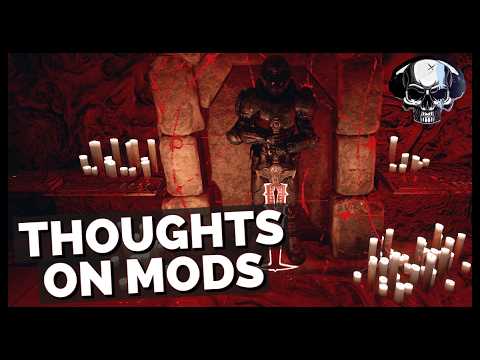
So when Mortismal Gaming’s Mortem dropped a video explaining his thoughts covering mods – and why he’s changing his policy for some of them – I perked up. This is a guy whose RPG coverage I trust. When he says, “I’m not really interested in reviewing things that don’t typically cost money,” that’s not some throwaway line. That’s his entire approach to what deserves the full critical treatment.
And now, thanks to the rise of paid mods and Bethesda’s Verified Creators program, even he’s being forced to redraw the line. Honestly? He’s mostly right to do it. But I also think he’s still playing it a bit too safe for where modding is actually headed.
Mortem’s Rule: Don’t Punch Down on Free Volunteer Mods
Mortem’s original stance is pretty simple: he uses mods, he likes mods, but he doesn’t review them. Not the way he reviews Baldur’s Gate 3 or Starfield or whatever big RPG is sucking the air out of the room this month.
His logic is actually very human. Most mods are free and made by volunteers. He straight up says he doesn’t feel comfortable being hyper-critical on a large platform of a project that is… done by volunteers and is of no cost to you. That’s not some corporate dodge; that’s a guy looking at a tiny team of hobbyists on Nexus Mods and deciding he doesn’t want to beam a million angry eyeballs at them because their free passion project had jank animations.
I get that in my bones. I’ve looked at some of these projects and thought, “If this was a $40 AA release, I’d tear it apart… but it’s literally two students making something for fun after work.” There’s a real “punching down” problem when big channels dogpile free community stuff. And frankly, there’s also the brutal time economics: in Mortem’s words, his normal work already keeps him busy. Diving into every overhaul mod people scream about would mean less coverage of actual releases.
So he sidestepped mods. He’d mention them when they were a big deal for a game – like showcasing Baldur’s Gate 3 mods he enjoyed – but he explicitly avoided turning that into full critical reviews. No score, no heavy expectations, no “this is a consumer product you should buy or skip.” Just, “Hey, this thing is cool if you want to tinker.”
On paper, that’s reasonable. It draws a line between professional work sold as a product and free volunteer tinkering. The problem is that line has been quietly eroding for years, and Bethesda just took a sledgehammer to what’s left.
Paid Mods Turned Modders Into Studios – Whether We Want That or Not
Bethesda has been trying to monetize modding for a long time. Remember the 2015 paid mods fiasco with Skyrim on Steam? That went down like a lead balloon – creator pay concerns, asset theft, the whole Nexus Mods civil war. They walked it back, but the idea never really died.
Then came Creation Club, their “these aren’t mods, they’re mini DLC” experiment. Officially sanctioned, curated bits of content made by contractors. And finally, in the Starfield era, we land on the current iteration: the Creations platform and the Verified Creators program. Modders can now become verified, make premium content for games like Skyrim, Fallout, and Starfield, and get an actual revenue share.
It’s not just random one-off creators anymore. You have full-blown teams operating like indie studios inside Bethesda’s ecosystem. Kinggath Creations is the poster child here: an 11-person team that grew out of the Sim Settlements 2 mod for Fallout 4. They’re not just dropping loose armor packs. They’re making expansion-sized projects like:
- Watchtower: Orbital Strike Fleet Command for Starfield – quests, dungeons, ships, systems, the works.
- Bards College Expansion for Skyrim – new music mini-games, a whole skill system, voice work.
- East Empire Expansion for Skyrim – economy-flavored systems and automated services.
These aren’t “I added a sword from Witcher 3” level mods. These are paid, densely packed expansions with design docs and team meetings behind them. Kinggath even runs a “Bethesda Mod School” series teaching people how to use the Creation Kit properly. That’s not a hobbyist – that’s basically a boutique studio specializing in one publisher’s tools.
They’re not alone either. Parts of the legendary Skyrim mod Lordbound have already gone semi-canon via a Bethesda-approved add-on called Legacy of Orsinium, sold through Creations for about ten bucks. Two of its devs spun that into a proper indie studio. That’s the road map now: start as a massive fan mod, end up getting paid and folded into the “official” ecosystem.
Even Todd Howard has said their current issue with paid Creations isn’t whether they should exist, but “getting that content in front of more people.” Translation: they’re all in on this. They want these paid mods to be seen and bought like traditional DLC.
And if Bethesda is going to treat these like DLC, then I don’t see why critics and YouTubers shouldn’t.
Mortem Opening the Door to Paid Mod Reviews Is the Only Logical Move
This is where Mortem’s stance shifts. After talking to Kinggath Creations – King himself and another team member – he realizes this isn’t just “a modder and their buddies.” This is an actual company, with 11 people, royalty agreements, and deep cooperation with Bethesda.
That’s a different ethical situation than dunking on a free quest mod someone hacked together in their dorm room. Players are now paying real money for these expansions. They sit on a marketplace next to other premium add-ons. Some of them are large enough that, as Mortem points out, a video covering all the content would actually be materially useful.
So he does the sane thing: he carves out an exception. For sizable, paid mod projects made by established, almost studio-like teams – Kinggath is the obvious example – he’s now open to covering them in the style of a proper review. Not just a passing “hey, this exists,” but a real breakdown of content, design, strengths, and flaws.
Honestly, that’s the bare minimum I expect from anyone serious about RPG coverage now. Once there’s a price tag and an organized team, the “but they’re just volunteers!” shield drops. If you’re charging people for content, you’re playing in the same league as other paid DLC. You deserve the exact same scrutiny. Bugs, balance issues, lazy design – all of it is fair game.
Honestly, that’s the bare minimum I expect from anyone serious about RPG coverage now. Once there’s a price tag and an organized team, the “but they’re just volunteers!” shield drops. If you’re charging people for content, you’re playing in the same league as other paid DLC. You deserve the exact same scrutiny. Bugs, balance issues, lazy design – all of it is fair game.
🎮 Get This Game at the Best Price
Compare prices instantly and save up to 80% on Steam keys with Kinguin — trusted by 15+ million gamers worldwide.
*Affiliate link — supports our independent coverage at no extra cost to you
From a player’s perspective, this is exactly what we need. The Creations storefront is already stuffed with thousands of items, many of them tiny. Being able to say, “OK, these handful of expansion-tier releases from verified teams are worth a deep review” gives people a way to navigate the noise. It solves part of the discoverability mess even Todd Howard admits they have.
So on that front, I’m fully in Mortem’s corner. Paid mod? Organized team? Expansion scale? Treat it like a game. No caveats.
Where I Think Mortem Is Still Too Gentle: The Enderal Problem
But here’s where I start to disagree with him – and where I think a lot of coverage is still stuck in the past.
Mortem uses Enderal as the example everyone keeps badgering him about. It’s a monstrous Skyrim total conversion that might as well be its own full RPG. He acknowledges people want him to cover it. He even says he plans to take a look at some of these huge, free overhaul mods.
Then he draws that old line again: because they’re free, he’s not going to treat them as “reviews.” He’ll highlight them, talk about them, but stops short of calling it a full review because “they don’t cost anything.”
That’s where I think he’s being too nice for the audience’s own good.
If a mod is a tiny gameplay tweak someone pushed in a weekend? Sure, spotlight, don’t review. If it’s a single quest that adds 20 minutes of content? Same deal. But if a mod is functionally a full game that eats 40–80 hours of your life, it doesn’t matter to me whether it’s free or paid. Players deserve the same depth of criticism because the real currency we’re spending there is time.
I’ve played free total conversions that were more ambitious, more daring, and frankly more broken than a lot of AA games. Some of them were mind-blowing. Some of them wasted entire weekends because the final act fell apart or a major quest chain simply didn’t fire. Telling people, “Well, it’s free, so I don’t feel right reviewing it,” doesn’t help the person who just committed an entire holiday break to that experience.
Being honest and critical about a massive free mod doesn’t have to be “punching down.” It’s about context and tone. If you frame it as, “This is an insanely ambitious free project; here’s where it soars, here’s where it collapses under its own weight,” that’s not cruelty. That’s respect. You’re taking the work seriously enough to evaluate it on its own terms.
Right now, there’s a weird double standard: a janky $10 paid Creation gets the flamethrower treatment, while a free total conversion that could unironically be someone’s GOTY gets tiptoed around because we’re afraid to hurt feelings. From the player’s side, that’s backwards. We need harder, not softer, information when something’s big enough to demand dozens of hours.
My Own Line: If It Walks Like a Game and Eats My Weekend, I’m Reviewing It
Here’s where I land, after years buried in Nexus pages and Bethesda.net listings.
For me, the test isn’t “Does it cost money?” It’s:
- Does this mod try to function as an expansion or a full game?
- Is there an organized team behind it, even if they’re unpaid?
- Will a normal player sink 20+ hours into this?
If the answer is yes, I’m treating it like a game. I’ll praise it like a game, I’ll tear into it like a game, and I’ll recommend or avoid it like a game. Because at that point, it is a game – the label “mod” is just a historical accident about how it’s distributed.
Paid mods from teams like Kinggath Creations? Absolutely, that’s squarely in review territory. Players are spending money, Bethesda is pushing discoverability, and creators are getting royalties. That’s indistinguishable from micro-DLC in 2026. Mortem’s move to cover those under his normal “this costs money, I will review it” rule is not only sensible, it’s overdue.
But I’m not going to pretend gigantic free projects don’t deserve the same level of scrutiny just because they’re free. If I’m about to recommend that someone drop 60 hours into Enderal instead of replaying The Witcher 3, I owe them more than a polite “spotlight.” I owe them my full, unfiltered thoughts covering mods that have essentially become full-blown games.
That doesn’t mean hounding a solo creator off the internet because a free questline bugged out. It means acknowledging that the mod scene has grown beyond tinkering. Some of the most important RPG experiences happening right now aren’t shipping as boxed products. They’re hiding on mod pages, in Bethesda’s Creations storefront, and behind that flimsy little word: “mod.”
Mods Are No Longer Side Dishes – They’re Part of the Main Course
I’ve watched this ecosystem evolve from goofy texture packs in Morrowind to fully voiced, studio-grade expansions in Starfield. I’ve seen mod teams turn into actual companies, watched their work get folded into quasi-canon DLC, and heard the director of Bethesda say their biggest problem with paid mods is that people aren’t seeing them enough.
We’re past the point where creators can pretend mods are just “optional extras” that don’t require real coverage. Mortem adjusting his stance for large, paid, verified projects is a solid step in the right direction. It respects the reality that when you accept money and operate like a studio, you step into the spotlight with everyone else who does.
But the next step – the one that will actually match how players use these games – is to judge mods by the size of the experience they demand, not just the price tag attached. If it’s DLC-sized, treat it like DLC. If it’s a full game, treat it like a full game. Paid, free, Bethesda-blessed, or totally rogue on Nexus – once a mod starts competing for the same hours as a “real” release, it earns the right to be taken seriously. Which includes being told, without flinching, when it isn’t good enough.
Because at the end of the day, there’s only one truly finite resource in this hobby – our time. Any project that wants a chunk of that deserves the same blunt honesty, whether it’s stamped “AAA,” “indie,” or “mod.”
FinalBoss // Gear
Level up your setup
01Graphics cardson Amazon→02Gaming laptopson Amazon→03High-refresh gaming monitorson Amazon→04Discounted game keyson Kinguin→Affiliate links · As an Amazon Associate, FinalBoss earns from qualifying purchases.
Want to Level Up Your Gaming?
Get access to exclusive strategies, hidden tips, and pro-level insights that we don't share publicly.
Ultimate Gaming Strategy Guide + Weekly Pro Tips