

A Pal Sphere looks harmless until its purpose becomes clear. It captures a creature, converts that creature into an asset, and places it inside a survival economy that immediately asks what it can produce. Mining. Farming. Crafting. Defending a base. Fighting beside the player. Palworld puts that entire transaction in plain view, then builds its progression around making it more efficient.
I play Palworld because it does not bother disguising the ugliness at the center of its catch-and-train formula. The cute designs are deliberate bait. They invite the familiar impulse to collect, name, and care for a creature. Then the game hands over a production line and asks the player to decide which Pal should spend its existence hauling materials between stations.
That moral friction is Palworld’s strongest idea. The firearms get the headlines. The industrial labor systems are the part that makes the game worth examining.
Table of Contents (5)
The Pal Sphere Turns Affection Into Logistics
Creature-collection games usually rely on a soft promise: a captured companion will become a partner. Palworld understands that promise well enough to weaponize it. A Pal can join the player in combat, but it can also become labor assigned to a base. The same creature designed to look cuddly can be put to work producing ammunition, gathering ore, watering crops, or maintaining the machinery that supports expansion.
The key detail is the speed of that transition. Capture is rarely the end of a relationship. It is the beginning of workforce management. A new Pal enters the base and its value is immediately measured through utility: what task can it perform, how quickly can it perform it, and whether another Pal can do the same job better.
That creates a harsher player mindset than the game’s bright colors initially suggest. The Pal stops being an individual almost as soon as it becomes part of a functioning base. It becomes a worker slot, a combat option, a breeding input, or a resource-efficient replacement for another worker. Palworld does not force cruelty on the player, but it rewards the kind of optimization that makes cruelty easy to rationalize.
There is no sentimental layer placed between the player and that decision. The system does not pause to make the transaction feel noble. It lets efficiency carry the argument. That is why the discomfort works. Palworld is not confused about what it is asking from the player.
The Factory Is the Real Moral Mechanic
Base automation is where Palworld’s design becomes most revealing. A well-built base reduces manual labor. Pals mine resources, transport goods, craft supplies, grow food, and keep production moving while the player explores the Palpagos Islands. The reward is obvious: less busywork, faster progression, and a stronger sense that the base has become self-sustaining.
But a self-sustaining base is only self-sustaining because its creatures are doing the work. The player’s comfort is built on the constant labor of beings whose visual design encourages attachment. Palworld makes that contradiction functional rather than decorative. The better the base operates, the more clearly the player sees what has been extracted from the Pals living inside it.
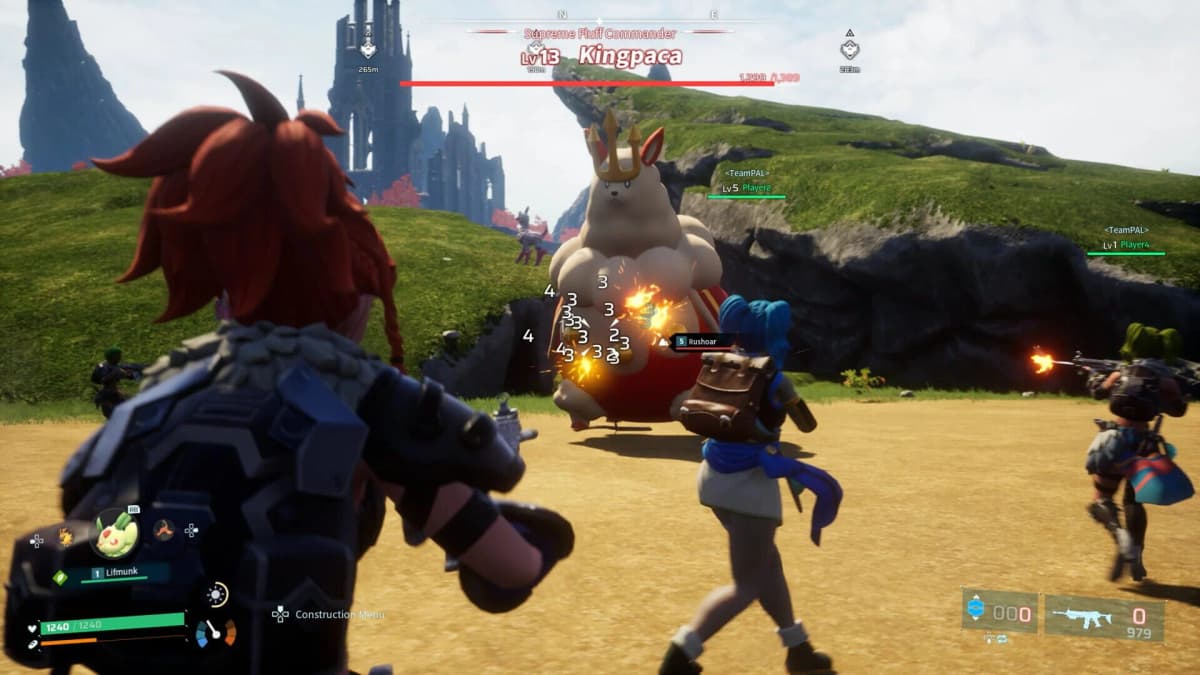
The escalating workload systems sharpen that point. Higher output can come with greater pressure placed on the Pals. The game makes productivity an active choice, and players who want faster results are given tools to demand them. That is not a background detail. It is a statement embedded directly in the progression loop.
A game can place factories in its world without saying anything. Palworld goes further because the factory workers are the creatures the player has captured. The design joins affection, ownership, violence, and industrial output into one loop. The player gains convenience; the creatures absorb the cost.
This is the part some discussions flatten into a cheap joke about cute monsters carrying guns. Guns are blunt visual shorthand. Labor is the deeper system. A firearm makes a Pal look absurd for a moment. A production chain makes the player confront the fact that they have built an economy around a creature’s usefulness.
The Cute Design Makes the System Harder to Ignore
If Palworld’s workers looked like machines, the entire setup would be ordinary survival-game arithmetic. Machines mine. Machines carry supplies. Machines operate production stations. There is little emotional residue in that arrangement because the player is not encouraged to see a machine as a companion.
Pals are designed to resist that detachment. They are expressive, rounded, colorful, and visibly alive. They make the player feel the gap between “I caught this because I liked it” and “I assigned this to grind through repetitive labor because it improved my output.” Palworld needs that gap. Without it, the base systems would be efficient but morally empty.
The game’s cartoony presentation also prevents players from pretending they did not understand the transaction. The contrast is too loud. A charming creature is captured with a Pal Sphere, brought home, and immediately evaluated according to its labor value. The absurdity gives the system a clinical clarity.
That clarity is more useful than a game delivering an obvious lecture about exploitation. Palworld does not need a morality meter to tell the player that treating living creatures as disposable labor is ugly. The player already knows. The design asks whether that knowledge changes anything once faster crafting, smoother resource gathering, and a more powerful base are on offer.
Palworld 1.0 Makes the Machine Bigger
The 1.0 release expands the scale of that system rather than moving away from it. Palworld adds 72 new Pals, bringing the total to 287. It adds seven small islands across volcano, desert, and ruins biomes. Sunreach, the floating-island setting, and the World Tree give the game’s expanded story and exploration structure more space. Tower bosses and watchtowers extend the sense that the player is moving through a world built for conquest, extraction, and escalation.
That is a substantial rollout. New Pals mean more creatures to collect and more possible roles within a base. New areas mean more materials, new routes, and more pressure to build systems capable of supporting longer expeditions. Awakening and Mutation mechanics add another layer to the process of turning creatures into stronger or more specialized tools.
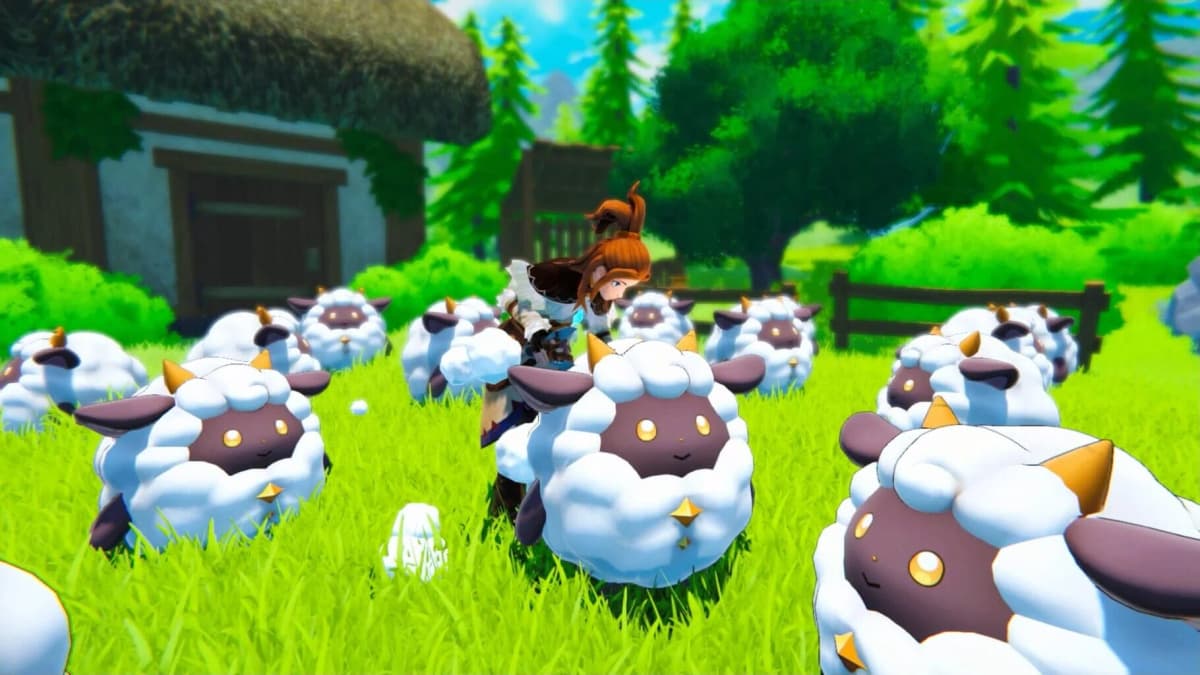
The update also brings extensive balance work, multiplayer improvements, and broad audio and visual upgrades. Those changes make the experience more complete, but they do not change the core proposition. Palworld’s expanded content still runs through the same uncomfortable calculation: every new resource loop becomes easier when a Pal is available to perform the work.
Some of the game’s broader problems remain visible. Parts of the world can feel barren. Settlements can lack life. Base building still carries jank, especially when building placement rules interfere with the player’s plans. Those issues matter because the base is where Palworld’s most distinctive systems live. When construction becomes frustrating, the game undermines the very labor network it wants the player to manage.
Still, the rough edges do not erase the point. They make Palworld feel unfinished in places, not ideologically unclear. The game knows that its most useful creatures are also the ones it asks the player to commodify.
The Discomfort Can Become Empty if the Player Stops Seeing It
Palworld does not automatically become insightful because it lets players overwork cute creatures. There is a shallow version of this idea, and the game sometimes drifts close to it: throw something adorable into a brutal situation, wait for the player to laugh at the mismatch, and mistake that reaction for satire.
I do not think that is the whole of Palworld, because the labor systems are too central and too rewarding to dismiss as surface-level shock. But the game carries an obligation to make the friction endure. If the player stops seeing Pals as creatures and sees them only as production stats, the ethical tension collapses into ordinary min-maxing. At that point, the ugliness has become background decoration.
That risk is built into the design. The most efficient player will often be the player who gets comfortable treating Pals as interchangeable. The game does not force remorse. It tests whether remorse survives contact with a better crafting queue and a steadier supply of materials.
Palworld has reached about 40 million players roughly two and a half years after its early access launch. That figure measures players rather than copies sold, but it still shows how widely this loop has spread. A vast number of people have encountered the same quiet decision: keep a Pal as a companion, or turn it into infrastructure.
The 1.0 version, including its PlayStation 5 launch on July 10, 2026, gives that decision a larger world, more creatures, and more systems. Every additional Pal expands the collection. It also expands the labor pool. Palworld’s best feature is that it refuses to let those two ideas stay separate.
FinalBoss // Gear
Level up your setup
01Top-rated gaming headsetson Amazon→02High-refresh gaming monitorson Amazon→03Gaming chairson Amazon→04Discounted game keyson Kinguin→
Affiliate links · As an Amazon Associate, FinalBoss earns from qualifying purchases.
Want to Level Up Your Gaming?
Get access to exclusive strategies, hidden tips, and pro-level insights that we don't share publicly.
Ultimate Gaming Strategy Guide + Weekly Pro Tips