
Paralives is selling two fantasies at the same time, and only one of them feels ready. The first fantasy is the one life-sim fans have been starving for: a charming alternative to The Sims, flexible building that doesn’t feel trapped in 2004, expressive customization, and a studio publicly committing to free updates instead of nickel-and-diming players forever. That part is exciting, and I mean genuinely exciting. The second fantasy is that this early access launch already delivers the full “finally, we have a real Sims competitor” moment. That part is where I slam on the brakes.
I like Paralives a lot more than I trust the hype around it. Those are not the same thing. Public reporting around launch has the early access price at €39.99 on PC and Mac, with the team reiterating that it does not plan to sell paid DLC and will instead deliver free updates. In a genre poisoned by expansion fatigue, that sounds almost suspiciously generous. But “no paid DLC” is not a magic spell. It does not instantly make an unfinished game feel complete, and it definitely does not make missing life-sim pillars hurt any less when they are missing on day one.
Table of Contents (5)
No paid DLC matters, but it does not finish the game for you
I’m not going to undersell the importance of Paralives rejecting paid DLC. That promise matters. It matters because The Sims 4 has spent years turning basic fantasy-living features into a long, expensive scavenger hunt. Pets become a separate purchase. Seasons become a separate purchase. Everyday depth gets carved into premium slices until the whole thing starts to feel less like a life sim and more like a subscription to your own patience. So when Paralives says, in effect, “buy the game and get the updates,” my first instinct is to applaud. The genre desperately needed somebody to say that out loud.
But here is where the sales pitch can get slippery if we are not honest about it. “No paid DLC” tells me something important about the studio’s values. It does not tell me the current version is the right buy for everyone. It does not put pets into the game. It does not create weather, pools, cars, richer social events, or whatever other systems end up being crucial to the daily rhythm of actually living in this world. The absence of paid DLC lowers the future cost anxiety. It does not erase the present-tense incompleteness.
That distinction matters because life sims are not judged the way most early access games are judged. If a survival game launches with a great crafting loop but only one biome, plenty of players will shrug and say the core is there. In a life sim, the “core” is a lot messier. The genre lives and dies on layers. Routine, chaos, surprise, social friction, environmental variety, and those tiny domestic details that turn a system into a vibe. Missing enough of those, and it stops feeling like a life sim with room to grow. It starts feeling like a very promising foundation that still needs its house built on top of it.
€39.99 is fair for the ambition, but not generous for the current gaps
I don’t think €39.99 is a rip-off. Let me be clear about that. Paralives is not some cynical asset flip trying to coast on anti-EA sentiment. It is an ambitious indie project from a small team, widely reported as having grown out of Patreon support, and the feature set it does have is not cheap-looking. The build tools, character creation, and overall identity seem like the work of people who actually understand why life-sim fans have been grumbling for years. This is not bargain-bin design pretending to be revolutionary because it has pastel colors and nice marketing.
Still, €39.99 is also not impulse-buy territory for a genre built on long-term attachment. That price asks me to evaluate Paralives as more than a curiosity. It asks me to judge whether I want to live in it now, not just admire what it could become later. And that is where my enthusiasm starts fighting with my standards. If this were twenty bucks, I would be far more forgiving. At forty, I start measuring what is absent with a harsher eye, because life sims are not one-weekend games. They are routine games. They are games people move into. When major pieces of that routine are still on the roadmap, the value proposition becomes personal rather than universal.
That is the real early access calculation here. Not fear that the base game will suddenly cost more later, and not fear that you will be gouged through paid expansions if the studio sticks to its promise. The real issue is whether paying full early access price for an incomplete life sim fits the way you play these games. For me, that answer is much more cautious than the marketing glow suggests.
The parts that already work are exactly why this game is hard to dismiss
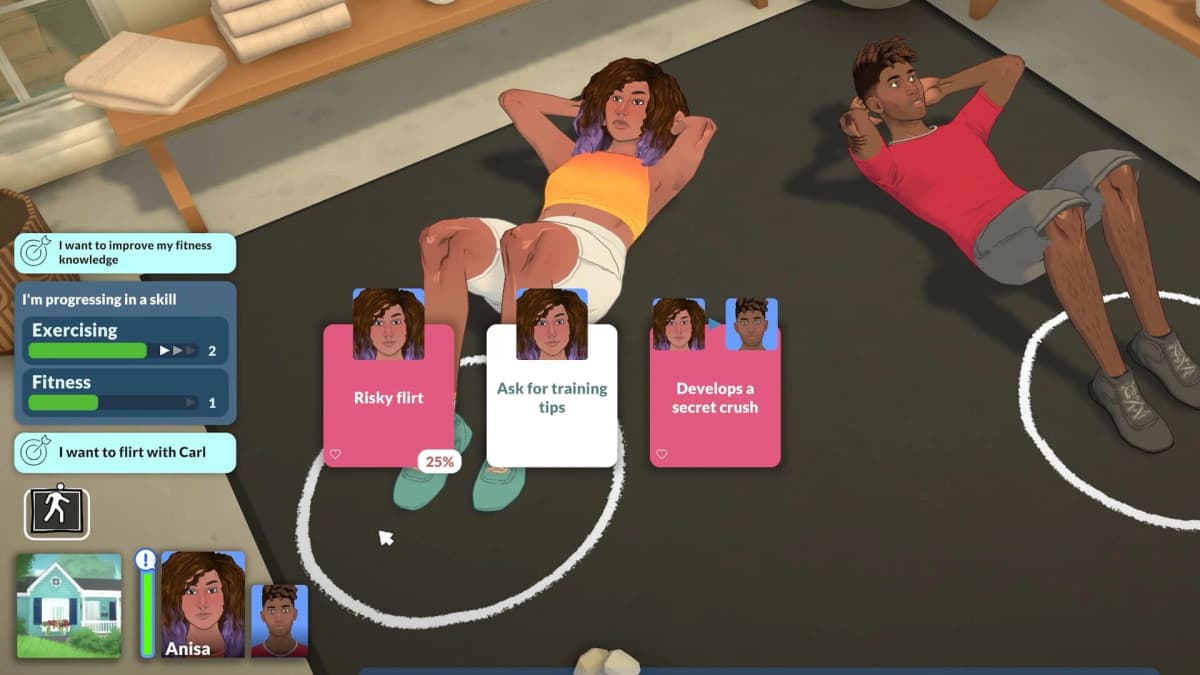
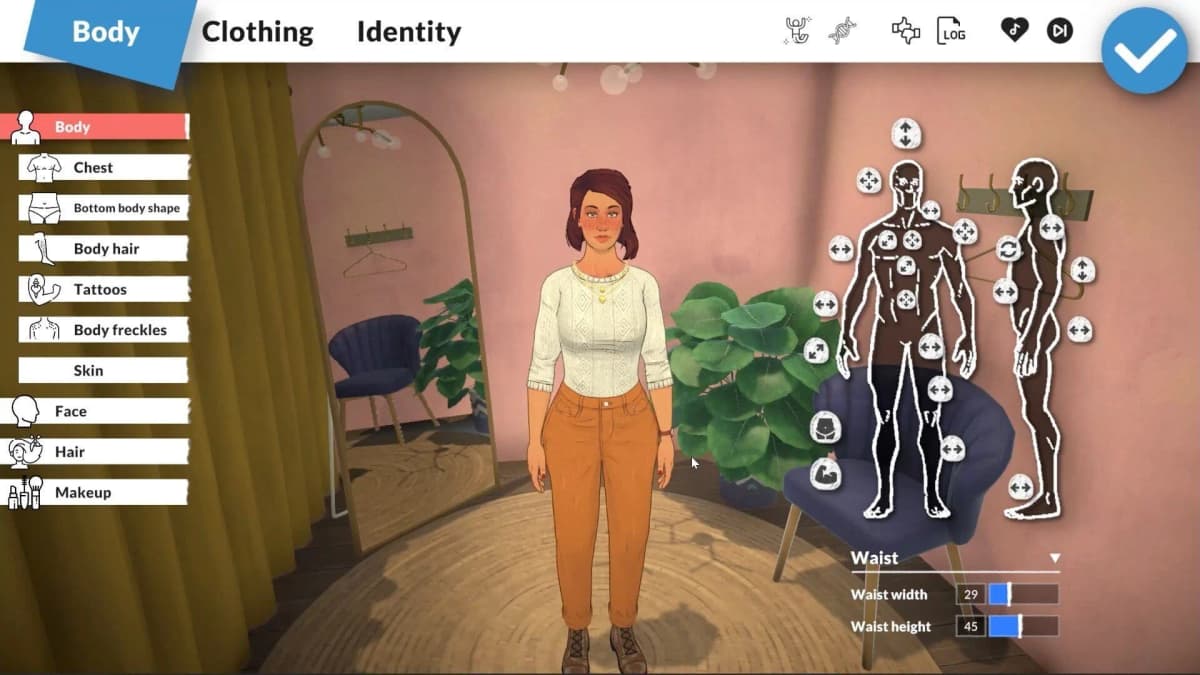
The frustrating thing about Paralives is that the stuff it gets right is the stuff I have wanted for years. The non-grid building is not a tiny bullet point; it is a statement of intent. I have zero patience left for life sims that make furniture placement feel like filing taxes. Paralives seems to understand that creative freedom in a home-building game should feel playful, not bureaucratic. Its character creator has the same energy. Everything I have seen and read suggests a game that wants expression first, friction second. That is the correct instinct, and frankly, it makes some legacy genre leaders look lazy.
There are also signs that Paralives is trying to think beyond cloning. PC Gamer’s early-access coverage highlighted the game’s Build, Buy, and Live modes, and pointed out a conversation meter that limits repeating the same interactions over and over. I like that a lot in theory. It suggests a team trying to avoid the dead-eyed button-spam social design that can make life sims feel like task automation with cute wallpaper. Public reporting has also described performance as generally okay, even if bugs are part of the package right now. In early access terms, “promising, distinctive, and playable” is not nothing. That is a real achievement.
This is why I cannot join the cynical crowd that dismisses Paralives as “just indie Sims.” That is lazy criticism. The game appears to have taste. It has personality. It seems to know what players are tired of. And by the look of the launch response, players were absolutely ready for it. One post-launch report said Paralives sold 250,000 copies in eight hours and reached a Steam concurrency peak above 78,000 players. Even if those numbers shift as reporting evolves, the bigger point is obvious: the appetite for an alternative is enormous, and Paralives has already proven it is not shouting into the void.

The missing features are not side dishes in a life sim
Now for the part fans do not always like hearing. Pets, seasons, pools, cars, and richer event layers are not luxury toppings in this genre. They are structure. They are the difference between a dollhouse and a world. When people list those features, they are not nitpicking from a wishlist made of impossible dreams. They are describing the systems that create variation over time. A life sim without enough long-tail variety can feel wonderful for ten hours and strangely hollow by hour twenty-five. That is not because the player is spoiled. It is because repetition arrives faster in this genre than almost any other.
Take seasons alone. Weather is not just visual spice. It changes routines, clothing, events, mood, and the emotional texture of a save file. Pools are similar. On paper they sound small, almost silly to treat as a big deal. In practice they are part of how players author stories, build homes, create social spaces, and turn neighborhoods into something more than a set of pretty boxes. Cars carry the same weight. They are about movement, status, personality, and the fantasy of modern everyday life. Strip too many of these layers away at once, and even good foundational systems start revealing their emptiness.
That is why I get wary when people talk about missing features as if they are optional “later” content rather than central pillars. In an action RPG, I can tolerate missing endgame systems if the combat loop is already amazing. In a life sim, the loop is the accumulation of little systems. That is the game. If the roadmap reportedly stretches over the next two years, as early coverage has suggested, then waiting is not cowardice or negativity. Waiting is a perfectly rational way to buy the version of Paralives that better matches what the genre is supposed to be.
Early access trust comes down to cadence, not slogans
I respect Paralives more because its promise is cleaner than most. No paid DLC. Free updates. A small team not pretending to be a mega-publisher. That goes a long way with me. Public reporting after launch also said the studio framed its early sales as enough to support ongoing development, which is reassuring on a practical level. If the team can stay sustainable without carving the game into premium slices, that is one of the most encouraging stories this genre has seen in years.
But I have played enough early access games to know where the real danger lives. The danger is not always greed. Sometimes it is drift. Sometimes it is a roadmap that makes sense on paper but moves too slowly for how people actually consume games. Sometimes it is bugs that are tolerable in month one and exhausting in month six. Sometimes it is a mountain of goodwill slowly being eaten by the fact that players bought in for the dream and then had to sit with the skeleton. That is why I refuse to treat “they said updates will be free” as the end of the conversation. Free updates are great. Timely, meaningful, well-prioritized updates are what actually protect the game’s reputation.
And to be fair, a small team can be both admirable and constrained. I do not hold Paralives to the output pace of a giant publisher. I do, that said, hold it to the basic truth of the genre it chose. Life sims need density. They need the feeling that today in your save can become tomorrow in a different way. If that density is still mostly potential, then buying now is a vote of faith. Nothing wrong with that. I simply think people should admit that is what they are doing.
FinalBoss // Gear
Level up your setup
01Top-rated gaming headsetson Amazon→02High-refresh gaming monitorson Amazon→03Gaming chairson Amazon→04Discounted game keyson Kinguin→
Affiliate links · As an Amazon Associate, FinalBoss earns from qualifying purchases.
Want to Level Up Your Gaming?
Get access to exclusive strategies, hidden tips, and pro-level insights that we don't share publicly.
Ultimate Gaming Strategy Guide + Weekly Pro Tips