
Path of Exile 2’s May 29 update matters for one reason above all else: Grinding Gear Games is no longer just stuffing early access with more things to do. It is trying to prove the post-campaign game actually has a shape. Return of the Ancients, patch 0.5.0, is being framed as the last major early access update before 1.0, and that makes this less of a content drop than a live-fire test of whether PoE 2’s endgame can stop feeling like a pile of systems and start feeling like a game people want to live in.
The headline numbers are big enough to do their own marketing: more than 50 hours of endgame content, a complete Atlas overhaul, 15 bosses including Pinnacle fights, two new Ascendancies, expanded crafting, and the new Runes of Aldur league mechanic. But the real signal is the structure underneath it. GGG is moving PoE 2 toward a more guided, finishable, quest-driven endgame loop instead of the usual action-RPG assumption that “infinite grind” is automatically depth. That is the interesting part.
Table of Contents (4)
This is GGG admitting the old endgame wasn’t enough
Studios do not “completely rework” Atlas progression because things are going great. They do it because they know the current version is not landing the way it needs to. Return of the Ancients reportedly rebuilds the Atlas skill tree, adds new nodes, and ties progression to a new location called The Fortress, accessed through Precursor Towers with new enemies and mechanics. That is a pretty blunt statement of intent: less vague wandering, more defined progression, more reasons to keep pushing.
And honestly, that is the right call. One of the easiest traps in loot-driven RPGs is confusing scale for direction. Players can tolerate complexity. PoE players practically wear it as a badge. What they will not tolerate forever is friction without payoff. If the endgame asks for obsessive investment, it needs to return that investment with momentum, clarity, and a real sense of escalation. Reworking the Atlas this late in early access says GGG knows it still had a problem there.
There is also a useful contrast here with Blizzard’s recent Diablo 4 expansion-era approach. Diablo keeps adding endgame layers and seasonal hooks, but often in a way that feels curated to avoid scaring off the middle of the audience. PoE 2 is doing almost the opposite: making the machine bigger, but also trying to make the route through that machine more legible. That balance is hard. If GGG pulls it off, it will have something Diablo still struggles with: a deep endgame that feels intentional instead of merely extensible.
The boss count is nice; the finishable endgame is the bigger deal
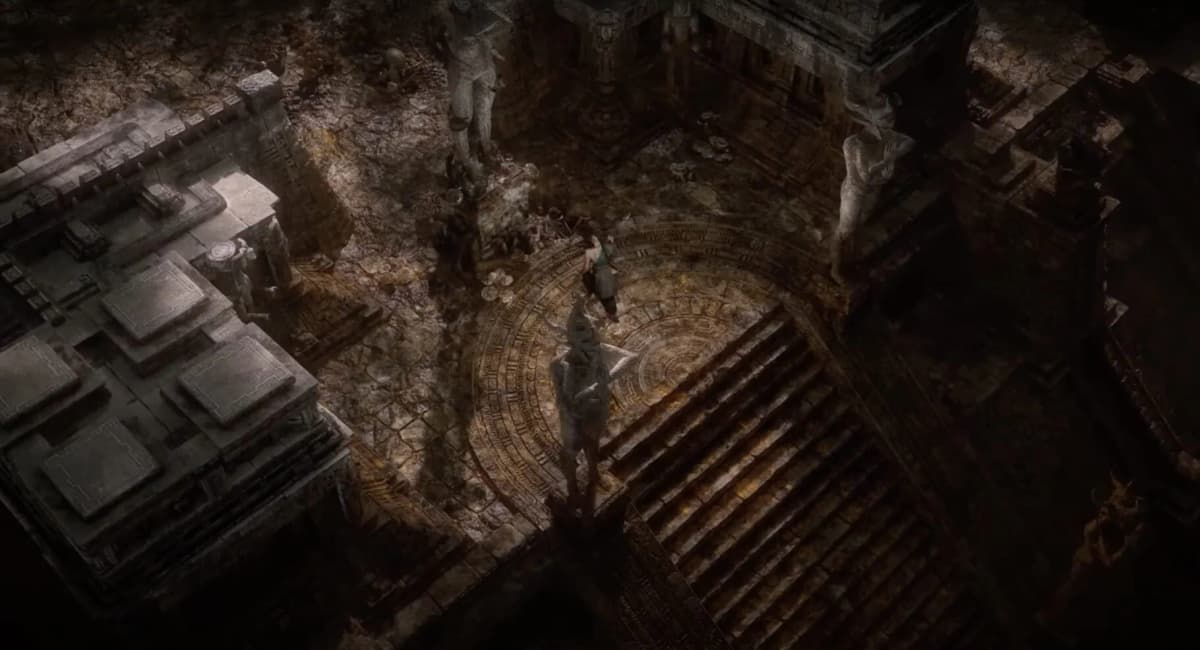
Fifteen bosses and four Pinnacle encounters sound great on a feature list, and for the sickos who judge an ARPG by how often it can kill them with screen-filling nonsense, that is real value. But the more important detail is that the update appears to give the endgame an arc. Several reports describe five new storylines, fixed or assigned endgame zones for major mechanics, and a central progression route that can actually be completed rather than extended forever by default.
That is not a small philosophical change. ARPG endgames have spent years selling infinite replayability as the holy grail, when in practice it often becomes infinite sameness with better tooltips. A finishable path does not make an endgame smaller. It makes it legible. It gives the player goals beyond “farm until your eyes glaze over.” If Return of the Ancients really lets players reach a meaningful endpoint and then choose whether to keep grinding, that is a smarter structure than the genre usually delivers.
The uncomfortable question GGG should have to answer is how these new bosses are gated. Are they meaningfully earned through varied progression, or are they still buried behind enough repetition that most of the player base will only ever see them through YouTube thumbnails and build guides? Because “15 new bosses” is exciting right up until access to half of them becomes a second job.
Two new Ascendancies and more crafting options are not side dishes
New Ascendancies always get attention because they are the flashy part of buildcraft, but in a patch like this they matter for another reason: they test whether PoE 2’s class identity is still flexible enough to support the game GGG is now building. Adding two more Ascendancy classes this late tells you the studio is still expanding the outer edges of what the metagame can be, not just tuning numbers inside a locked box.
Crafting may be the bigger long-term story. Return of the Ancients expands item access and adds rune-based systems through Runes of Aldur, including runesmithing and a secondary Runic Ward resource. One report even highlighted a crafting interaction weird enough to summon skeletons that attack you during the process, which is exactly the kind of deranged PoE energy this audience tends to appreciate. More importantly, it suggests GGG still believes crafting should be risky, expressive, and slightly unhinged rather than a sanitized upgrade station.
That said, expanded crafting only helps if acquisition rates and system readability are under control. PoE has a long history of brilliance colliding headfirst with needless opacity. If rune systems become another spreadsheet hobby for the top 2% while everyone else waits for a streamer to explain why their item bricked, the feature will be technically deep and practically wasted.
What GGG is really testing before 1.0
The studio has been unusually clear that 0.5.0 is the final major early access patch before 1.0, assuming players respond well to the endgame changes. That caveat matters. It means launch timing is now tied less to content volume and more to whether this redesign actually sticks. In other words, GGG is not asking “do we have enough stuff?” It is asking “does the game’s long-term loop finally work?”
That is the right question, and it is one a lot of live-service games ask far too late. We have seen plenty of ARPGs and online RPGs push toward release with endgames that were technically large and structurally mushy, then spend the next year pretending that roadmap cadence was a substitute for foundation. Return of the Ancients looks like GGG trying not to make that mistake.
- Watch how players talk about Atlas progression after the first weekend, not just the patch notes. If the conversation shifts from confusion to route planning, GGG probably got the redesign right.
- Watch boss accessibility. If most players can realistically reach the new Pinnacle content without absurd gating, the new structure is doing its job.
- Watch early sentiment around runesmithing and Runic Ward. If crafting discussion becomes “interesting choices” instead of “please explain this UI crime,” that is a win.
- Watch whether GGG starts speaking more confidently about the 1.0 window after launch. If the studio still sounds hesitant in June, the overhaul likely needs more iteration than advertised.
So yes, Return of the Ancients is huge on paper. But the paper is not the point. The point is whether Path of Exile 2 finally has an endgame strong enough to carry the weight of a full release. May 29 is not just another patch day. It is the audition for 1.0.
FinalBoss // Gear
Level up your setup
01Top-rated gaming headsetson Amazon→02High-refresh gaming monitorson Amazon→03Gaming chairson Amazon→04Discounted game keyson Kinguin→Affiliate links · As an Amazon Associate, FinalBoss earns from qualifying purchases.
Want to Level Up Your Gaming?
Get access to exclusive strategies, hidden tips, and pro-level insights that we don't share publicly.
Ultimate Gaming Strategy Guide + Weekly Pro Tips